How Long You Should Keep Your Financial Records
Learn exactly how long to keep tax, banking, loan, insurance, and investment records so your finances stay organized and audit-ready.

Keeping your financial paperwork for the right amount of time protects you in case of audits, disputes, or fraud, and it keeps your money life organized and less stressful. This guide walks you through exactly how long to keep different financial records, plus simple systems to store and eventually shred them.
Why Keeping Financial Records Matters
Financial records are the paper (or digital) trail of your money decisions. When you keep them long enough and in the right place, you can:
- Prove income, expenses, and deductions if the tax authority questions your return.
- Resolve billing errors, bank mistakes, or fraudulent charges.
- Support insurance claims and warranty requests.
- Track your net worth, debt payoff, and savings progress over time.
- Make estate and inheritance processes smoother for your loved ones.
Tax agencies generally recommend that you keep records used to prepare a tax return for at least three years, but sometimes longer depending on the situation. Financial regulators and consumer agencies also stress the importance of maintaining statements and confirmations long enough to verify transactions and balances.
How Long To Keep Different Types of Financial Records
Not all documents need to be kept forever. Some can be shredded after a quick check, while others should be stored permanently. Use the guidelines below as a practical rule of thumb, and always check local rules where you live.
Short-Term Records: Keep 1 Year or Less
Short-term documents are mainly useful for budgeting, reconciling accounts, and resolving minor errors.
- ATM receipts and deposit slips: Keep until you confirm the transaction on your bank statement or mobile app, then shred.
- Credit card receipts: Keep until the charge appears correctly on your statement and any returns or disputes are resolved.
- Monthly bank and credit card statements (paper): Keep for 1 year for budgeting and to check for unauthorized transactions, unless needed longer for tax or business purposes.
- Utility, phone, and internet bills: Keep for 1 year, or longer if needed to prove residency or for tax-deductible home office expenses.
- Pay stubs: Keep until you receive your annual wage statement and have confirmed that all amounts match accurately.
If any of these documents support information on your tax return, keep them with your tax records for the full recommended tax period.
Medium-Term Records: Keep 3–7 Years
Medium-term records are about tax compliance, major purchases, and legal protection.
- Tax returns and supporting documents (W-2s/other income slips, 1099s, expense receipts, charitable donation receipts, and tax credit documentation):
- Keep for at least 3 years from the date you filed the return or the due date, whichever is later.
- If you understated income significantly or filed late, you may need to keep them for 6 years or more, depending on local rules.
- If you filed a fraudulent return or never filed, authorities may have no time limit; in that case, keep records indefinitely.
- Records for tax-deductible expenses (self-employment costs, business mileage logs, home office, education expenses): Keep with the relevant tax return for the same 3–7 year period.
- Documents related to major purchases (appliances, electronics, furniture, jewelry, art): Keep as long as you own the item, or at least for the full warranty period, plus any time needed if used as collateral or for insurance claims.
- Home improvement records (receipts, invoices, contractor agreements): Keep for as long as you own the home, then at least 3–7 years after you sell, as they may adjust your cost basis for tax purposes.
- Medical bills and insurance Explanation of Benefits (EOBs): Keep for 1 year if you are only verifying payments. If you use them for tax deductions or disputes, keep them with your tax return for the full 3–7 year period.
Long-Term & Permanent Records
Some documents are either very difficult or impossible to replace, or they are needed for many years to prove ownership or legal rights. Treat them as long-term or permanent.
- Property deeds and closing documents: Keep for as long as you own the property, and then for several years after selling, as they may be needed for tax or legal questions.
- Mortgage and loan agreements: Keep until the loan is fully paid off, then retain payoff statements and satisfaction of mortgage letters permanently.
- Investment purchase records (trade confirmations, purchase contracts, and basis information): Keep for as long as you hold the investment, then with the tax return for the year you sell.
- Retirement account records (account opening documents, annual summaries, basis in after-tax contributions): Keep permanently or at least until the account is fully distributed and any related tax issues are closed.
- Insurance policies (life, auto, home, disability, health): Keep current policies and riders for the entire time the policy is active. Retain claim-related records for several years after a claim is settled.
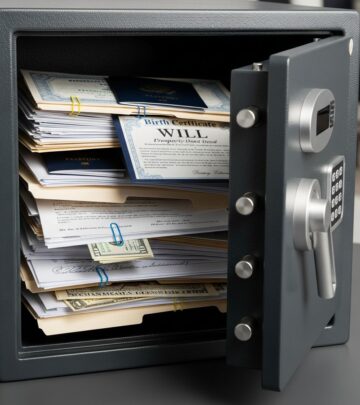
- Legal and identity documents (birth certificates, Social Security or national ID cards, passports, marriage/divorce decrees, adoption papers, wills, powers of attorney): Keep permanently and store securely.
Summary Table: How Long To Keep Common Records
| Type of Record | Recommended Retention | Notes |
|---|---|---|
| ATM & deposit receipts | Until reconciled | Shred after confirming on statement. |
| Credit card receipts | 1 month–1 year | Keep until statement is accurate and disputes are resolved. |
| Bank & credit card statements | 1 year | Longer if needed for taxes or business. |
| Utility & phone bills | 1 year | Keep longer if used to itemize or prove residency. |
| Pay stubs | Until annual wage statement | Verify earnings and deductions. |
| Tax returns & supporting docs | 3–7 years | Depending on audit rules and circumstances. |
| Home purchase & improvement records | Ownership period + 3–7 years | Affects cost basis and gain calculation. |
| Loan & mortgage documents | Until payoff; key proofs permanently | Keep payoff letters and releases. |
| Investment records | Holding period + with tax return | Needed to establish cost basis. |
| Insurance policies | While active + claim period | Store with other long-term documents. |
| Vital & legal documents | Permanent | Keep original copies safe and secure. |
Paper vs Digital: What Format Is Best?
You do not have to keep everything on paper. Many official agencies and regulators accept accurate digital copies of documents as long as they are complete, legible, and accessible on request.
In general:
- Original paper is best for critical legal documents (wills, deeds, titles, certain contracts).
- Digital copies are often fine for statements, receipts, and confirmations, especially when stored securely and backed up.
- If you rely on electronic statements from banks and investment firms, download and store key annual statements in case online access changes.
How To Safely Go Paperless
- Scan documents clearly and save as non-editable formats (for example, PDF).
- Use secure, password-protected storage such as encrypted cloud storage or an encrypted external drive.
- Organize files with consistent naming (e.g., 2025-04_bank-checking-statement.pdf).
- Back up digital files in at least two separate locations.
How To Organize Your Financial Records
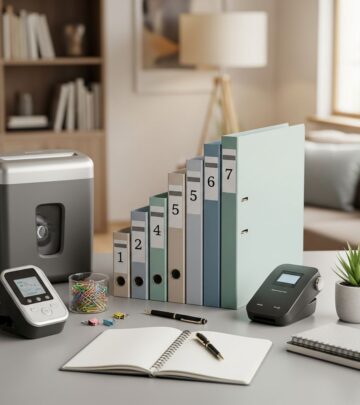
A simple organization system makes it easier to find what you need and to know when you can safely discard old documents.
Set Up Categories
Group your documents by broad category so you can see your full financial picture at a glance:
- Income: pay stubs, wage statements, business income records.
- Banking: checking, savings, money market, and certificate of deposit statements.
- Debt: credit cards, student loans, auto loans, personal loans, mortgages.
- Investments & retirement: brokerage, mutual funds, employer retirement plans, individual retirement accounts.
- Housing & property: leases, property tax bills, home purchase and improvement records, insurance.
- Insurance: health, life, disability, auto, renters, homeowners.
- Taxes: past returns and all supporting documents for each year.
- Legal & identity: IDs, certificates, estate planning documents.
Create a Simple Filing Structure
You can organize either in physical folders, digital folders, or both. Aim for:
- Master folders for each category.
- Subfolders by year for time-sensitive items like statements and tax records.
- Permanent folder for long-term documents that never get discarded.
Review your files annually, ideally after completing your tax return, to shred what you no longer need and move older documents into long-term storage.
How To Store Financial Records Safely
Because financial records often contain sensitive personal and account information, safe storage is essential to reduce the risk of identity theft and fraud.
Best Practices for Physical Documents
- Use a fire-resistant, water-resistant safe at home for your most important papers.
- Store backup copies of essential records in a separate secure location if possible.
- Limit access to trusted people only, and keep the safe combination or key in a secure place.
- For less critical paper, use labeled folders in a filing cabinet, away from humidity and direct sunlight.
Best Practices for Digital Documents
- Protect devices with strong passwords and updated security software.
- Turn on multi-factor authentication for cloud storage and financial accounts when available.
- Encrypt storage drives that contain sensitive files.
- Back up important digital records regularly.
When and How To Shred Old Records
Once a document has passed its recommended retention period and you have confirmed that you no longer need it for legal, tax, or personal reasons, dispose of it securely.
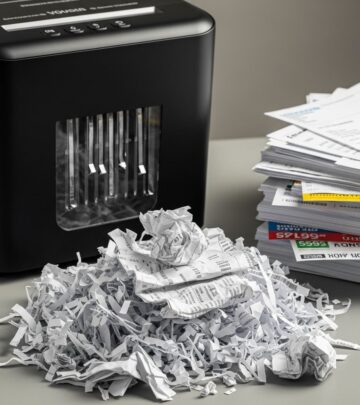
- Use a cross-cut shredder for paper documents containing personal or financial details.
- For digital files, empty the recycle bin and, for highly sensitive information, use tools that securely erase data.
- Do not discard intact bank statements, credit card offers, or documents with your full name and account numbers in regular trash.
Financial Records and Your Net Worth
Organized records also make it easier to calculate and track your net worth—everything you own minus everything you owe. Regularly updating this figure helps you see whether your financial situation is improving and supports long-term planning, including retirement and major life goals.
- Use bank and investment statements to tally your assets.
- Use loan statements and credit reports to list your debts.
- Keep past summaries so you can see trends in your progress over time.
Frequently Asked Questions (FAQs)
Q: How long should I keep my tax returns?
A: Many tax authorities recommend keeping tax returns and all supporting documents for at least three years, and up to six or seven years in situations where income was understated or other special conditions apply.
Q: Is it okay to scan financial documents and throw away the paper?
A: For most statements, receipts, and confirmations, clear digital copies stored securely are acceptable and often easier to manage, but you should keep original paper copies of key legal documents such as property deeds, wills, and some contracts.
Q: Do I need to keep paper bank statements if I get them online?
A: You do not have to keep paper copies if your bank provides reliable electronic access, but it is wise to download and save important annual or year-end summaries in case your online access changes over time.
Q: Which documents should I never throw away?
A: Keep identity documents, birth and marriage certificates, adoption records, property deeds, major loan payoff confirmations, and estate planning documents permanently, ideally in a secure place such as a fire-resistant safe.
Q: How often should I review and clean up my financial files?
A: Once a year is usually enough for most people. Many choose to review and purge old files right after completing their tax return while all financial information is already gathered.
References
- Recordkeeping — Internal Revenue Service. 2024-03-15. https://www.irs.gov/businesses/small-businesses-self-employed/recordkeeping
- How Long Should I Keep Records? — Internal Revenue Service. 2023-12-01. https://www.irs.gov/faqs/interest-dividends-other-types-of-income/other-types-of-income/how-long-should-i-keep-records
- Managing Your Accounts and Services — Consumer Financial Protection Bureau. 2023-06-20. https://www.consumerfinance.gov/consumer-tools/bank-accounts/managing-your-accounts-and-services/
- Keeping Records and Identifying Your Investments — Financial Industry Regulatory Authority (FINRA). 2022-11-10. https://www.finra.org/investors/personal-finance/keeping-records-identifying-your-investments
Similar Articles








Read full bio of Sneha Tete