How Long Is a Check Good For? Check Expiration
Learn about check expiration dates, stale checks, and what to do with old checks you've found.
How Long Is a Check Good For?
Discovering an old check in a drawer can raise questions about whether it’s still usable. The answer depends on several factors, including the type of check and when it was issued. Understanding check expiration dates is essential for managing your finances and ensuring you don’t lose money due to overlooked deadlines.
Personal Check Expiration Timeline
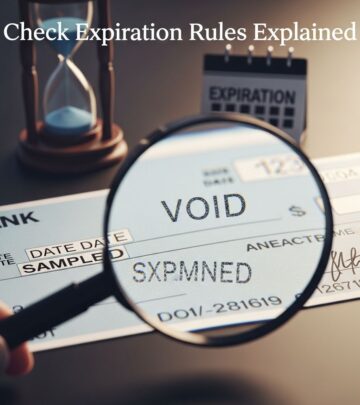
Personal checks, the most common type of check used in everyday transactions, have a standard validity period. A personal check is generally good for six months (180 days) from the date it was written. After this period expires, the check is considered “stale,” and financial institutions are not legally required to honor it.
However, this doesn’t mean your check is absolutely worthless after six months. Some banks and credit unions may choose to accept checks older than the standard six-month window, though they are under no obligation to do so. The decision often depends on individual bank policies and the circumstances surrounding the check. If you’ve held onto a personal check beyond the six-month mark, it’s worth contacting both your bank and the issuing bank to inquire about their specific policies regarding stale checks.
The best practice to avoid any complications is to cash or deposit personal checks as soon as you receive them. This ensures smooth processing and eliminates any uncertainty about whether the check will be accepted.
Other Types of Checks and Their Validity Periods
While personal checks follow the six-month rule, other check types have different expiration guidelines. Understanding these variations can help you manage various types of checks appropriately.
Business and Payroll Checks
Business checks, including those issued for payroll or vendor payments, typically follow the same guidelines as personal checks. These checks are generally good for six months or 180 days from their issuance date. Although some business checks may display “void after 90 days,” most banks and credit unions will still honor these checks beyond that timeframe. As with personal checks, individual bank policies may vary, so contact your financial institution if you have questions about a specific business check.
U.S. Treasury Checks
U.S. Treasury checks, issued by federal government agencies for purposes such as tax refunds, stimulus payments, or Social Security benefits, have a longer validity period than personal checks. These checks must be cashed within one year from the date of issue. If the check expires without being cashed, the Treasury Department automatically voids it and transfers the funds back to the issuing federal agency.
If you’ve missed the one-year deadline, don’t despair. You can request a replacement check from the federal agency that originally issued it. In fact, expired Treasury checks can be reissued within six years of the original issue date, so you have a substantial window to recover your funds if needed.
State and Local Government Checks
The expiration dates for state and local government checks vary depending on your jurisdiction. Generally, these checks are valid for anywhere from six months to one year after issuance. Common examples include tax refunds and benefit checks from state or local agencies.
If your state or local government check has expired, you should contact the issuing agency directly to request a replacement. These agencies typically maintain records of issued checks and can provide updated checks for expired ones.
Cashier’s Checks
Cashier’s checks present a more complex situation regarding expiration. The validity period varies significantly by bank and local laws. Some cashier’s checks have no specific expiration date and should theoretically remain valid as long as the issuing bank continues to operate. Other cashier’s checks may become stale after 60 to 180 days.
Most banks that issue cashier’s checks with expiration dates print “void after X days” directly on the check itself. If you’ve located an old cashier’s check, look for this disclaimer to determine its validity. After the expiration date passes, the bank may consider the funds unclaimed property and transfer them to the state in a process called “escheatment.”
Certified Checks
Certified checks, which are personal checks verified by the issuing bank as backed by sufficient funds, typically do not carry an expiration date. However, an uncashed certified check may eventually be turned over to a state’s unclaimed property agency at some point, so it’s still wise to deposit or cash certified checks promptly.
Traveler’s Checks and Money Orders
These payment instruments often have different rules regarding expiration. While some traveler’s checks may not expire, money orders typically must be used within a specific timeframe, often ranging from one to three years depending on the issuer.
What Happens When a Check Becomes Stale?
When a check passes its expiration date and becomes stale, several scenarios may occur:
- Your bank and the issuing bank might honor the check despite its age
- Your bank might refuse to cash or deposit the stale check
- Your bank might cash the check, but the issuing bank could reject it later
- The checking account associated with the expired check might lack sufficient funds, resulting in a bounced check and returned check fees
- The account might be closed, preventing payment
These varied outcomes highlight why it’s crucial to address old checks promptly rather than leaving them in a drawer indefinitely.
What to Do With an Expired Check
If you’ve discovered an old check that has passed its validity period, you have several options:
Contact Both Banks
Reach out to your own bank and the bank that issued the check. Ask about their specific policies regarding stale checks. Some institutions may accommodate your request despite the check’s age.
Request a Replacement
If the check cannot be honored due to age, contact the person or organization that issued the original check and request a replacement. In most cases, the issuer will be happy to provide a new check.
For Government Checks
If the expired check is a government-issued check (Treasury, state, or local), contact the appropriate government agency directly to request a replacement check.
Documentation
Keep any documentation related to the original check, such as correspondence or receipts, which can help facilitate the replacement process.
Check Expiration by Type: Quick Reference
| Check Type | Validity Period | Key Notes |
|---|---|---|
| Personal Check | 6 months (180 days) | Some banks may accept beyond this period; not legally required |
| Business/Payroll Check | 6 months (180 days) | “Void after 90 days” markings often not strictly enforced |
| U.S. Treasury Check | 1 year | Can be reissued within 6 years; transferred to agency if uncashed |
| State/Local Government Check | 6 months to 1 year | Varies by jurisdiction; contact issuing agency for replacement |
| Cashier’s Check | 60-180 days or no expiration | Varies by bank; check for “void after X days” marking |
| Certified Check | No standard expiration | May be turned over to state unclaimed property over time |
Best Practices for Managing Checks
To avoid complications with expired checks, follow these recommendations:
- Cash or deposit checks promptly: Don’t delay cashing or depositing checks you receive. The sooner you process them, the sooner funds become available and the less risk of expiration.
- Keep organized records: Maintain a system for tracking checks, especially large ones or those from government agencies.
- Note important dates: For large checks or those from unfamiliar sources, note the issue date and set a reminder to deposit them before expiration.
- Review your bank’s policies: Understand your specific bank’s approach to stale checks and discuss any concerns with your banker.
- Store checks securely: Keep checks in a safe place where you won’t forget about them.
- Report lost checks: If you receive a check and then misplace it, notify the issuer so they can stop payment and issue a replacement.
Frequently Asked Questions
Q: Can I cash a check that’s more than six months old?
A: While the check is considered “stale” after six months, some banks may still honor it at their discretion. Contact your bank and the issuing bank to inquire about their policies. There’s no guarantee they will accept it, but it’s worth asking.
Q: What’s the difference between a stale check and an expired check?
A: These terms are often used interchangeably. A stale check is one that has passed its validity period (typically six months for personal checks). Banks are not legally required to honor stale checks, though some may choose to do so.
Q: How long is a cashier’s check good for?
A: Cashier’s check validity varies by bank and may range from 60 to 180 days, or the check may have no expiration date. Look for a “void after X days” marking on the check. If you’re unsure, contact the issuing bank.
Q: What should I do if I find an old government check?
A: For U.S. Treasury checks, you have up to one year to cash them. For expired Treasury checks, you can request a replacement from the issuing federal agency. The replacement can be issued up to six years after the original check date. State and local government checks should be redeemed through the appropriate state or local agency.
Q: Can a bank refuse to cash an old check?
A: Yes. After a check becomes stale (typically six months for personal checks), banks and credit unions are not legally obligated to honor it. Some may choose to accept it anyway, but others may refuse. Always contact your bank if you’re unsure.
Q: What happens to uncashed government checks?
A: If a U.S. Treasury check is not cashed within one year, the Treasury Department automatically voids it and transfers the funds back to the issuing federal agency. You can request a replacement within six years of the original issue date.
The Bottom Line
Understanding check expiration dates helps you manage your finances more effectively and avoid losing money on forgotten checks. While personal checks are good for six months, other check types have varying expiration periods ranging from 60 days to one year or longer. If you discover an old check, don’t assume it’s worthless—contact the relevant banks or agencies to explore your options. The key takeaway is to cash or deposit checks as soon as you receive them to eliminate any uncertainty about their validity and ensure your funds are readily available.
References
- Do Checks Expire? How Long Are They Good For? — PNC Insights. 2024. https://www.pnc.com/insights/personal-finance/spend/do-checks-expire.html
- How Long Is a Check Good For? Do Checks Expire? — Citizens Bank. 2024. https://www.citizensbank.com/learning/how-long-is-a-check-good-for.aspx
- How Long Are Checks Good For? — Experian. 2024. https://www.experian.com/blogs/ask-experian/how-long-are-checks-good-for/
- Uniform Commercial Code § 4-404 — National Conference of Commissioners on Uniform State Laws. 2022. https://www.law.cornell.edu/ucc/4/4-404
- Consumer Financial Protection Bureau: Understanding Check Hold Policies — U.S. Consumer Financial Protection Bureau. 2023. https://www.consumerfinance.gov
- Federal Reserve Regulation CC: Availability of Funds and Collection of Checks — Board of Governors of the Federal Reserve System. 2023. https://www.federalreserve.gov/bankinforeg/regcc.htm
Similar Articles








Read full bio of medha deb