How Long Closed Accounts Remain on Credit Reports
Discover the timelines for closed accounts on your credit report and strategies to manage their impact on your financial health effectively.

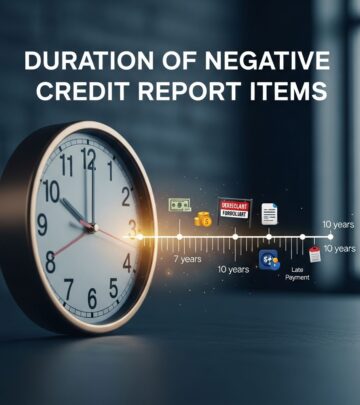
Closed credit accounts typically remain visible on your credit reports for periods ranging from seven to ten years, with the exact duration influenced by the account’s condition at closure. Positive accounts in good standing can persist for up to a decade, potentially aiding your credit scores, while those with delinquencies drop off after seven years from the first missed payment.
Understanding Credit Report Retention Rules
Credit bureaus like Experian, Equifax, and TransUnion adhere to federal guidelines under the Fair Credit Reporting Act (FCRA), which dictate how long various account types stay on reports. These rules ensure transparency while protecting consumers from indefinite negative marks. Accounts closed without issues contribute to your credit history length, a key scoring factor comprising about 15% of FICO scores.
The retention period begins from the closure date for clean accounts or the initial delinquency date for problematic ones. This distinction prevents prolonged harm from past mistakes while rewarding responsible behavior.
Timelines for Accounts Closed in Good Standing
Revolving accounts such as credit cards or lines of credit that are current—meaning no overdue payments at closure—stay on reports for up to 10 years. These entries showcase your history of timely payments, positively influencing factors like payment history (35% of FICO) and credit age.
- Positive impact persists as the account ages gracefully.
- Helps maintain longer average account age, boosting scores.
- No rush to remove; they benefit your profile.
For instance, a credit card you responsibly managed and closed years ago continues signaling reliability to lenders.
Handling Delinquent Closed Accounts
Accounts closed due to missed payments follow a stricter seven-year clock starting from the first 30-day late payment in the delinquency sequence. This applies regardless of subsequent closure by the issuer or charge-off.
Collection accounts, stemming from unpaid debts transferred to agencies, also adhere to this seven-year rule from the original delinquency date, not the collection opening. Both the original and collection entries vanish simultaneously, simplifying report cleanup.
| Account Type | Retention Period | Start Date |
|---|---|---|
| Good Standing Closure | 10 years | Closure date |
| Delinquent Closure | 7 years | First missed payment |
| Collections | 7 years | Original delinquency |
Bankruptcies and Their Unique Timelines
Bankruptcies introduce separate retention rules. Chapter 7 filings, the most common for individuals, remain for 10 years from the discharge or dismissal date. Chapter 13 repayment plans stay for seven years.
Accounts included in bankruptcy may accelerate removal if not delinquent prior. Otherwise, they align with standard delinquency timelines. Public records like these significantly weigh on scores, emphasizing prevention.
Why Closed Accounts Continue to Matter
Even inactive, closed accounts shape your credit utilization, mix, and history length. Positive ones elongate your profile, countering new accounts’ shorter age. Negative ones drag scores until expiration, underscoring timely management.
Lenders review full histories during applications. A mix of old, positive closed accounts demonstrates longevity and stability.
Strategies to Remove Closed Accounts Early
Automatic drop-off is standard, but proactive steps can expedite for negatives.
- Dispute Inaccuracies: If fraudulent or erroneous, file disputes with bureaus via mail, online, or phone. Provide evidence; investigations must resolve within 30 days.
- Goodwill Requests: Politely ask creditors in writing for voluntary removal of minor lates on otherwise solid accounts. Success varies; persistence and good current standing help.
- Monitor Regularly: Access free weekly reports at AnnualCreditReport.com to verify accuracy.
Success isn’t guaranteed for accurate info, but these methods work for goodwill or errors.
Optimizing Credit Despite Closed Accounts
While waiting, build positives: pay on time, keep utilization under 30%, diversify accounts responsibly. New positive activity outweighs aged negatives over time.
- Maintain low balances relative to limits.
- Avoid new delinquencies.
- Consider secured cards if rebuilding.
Credit monitoring tools track changes and scores like FICO, alerting to issues early.
Frequently Asked Questions
Do closed accounts hurt my credit score?
Positive ones help; negative ones harm until they age off. Focus on current habits to mitigate.
Can I remove a positive closed account?
Not recommended, as it shortens history. Only if inaccurate.
What if an account was current but had old lates?
Lates drop after seven years; the rest stays 10 years post-closure.
How do closures affect utilization?
Closed limits count toward totals if reported, potentially raising ratios. Keep others active.
Are there differences between bureaus?
Timelines match FCRA, but reporting variations exist. Check all three.
Long-Term Credit Building After Closures
Post-drop-off, your profile refreshes. Sustain gains with automated payments, budgeting apps, and annual reviews. Educate on inquiries: hard pulls matter more than soft.
For severe histories, credit counseling from nonprofits aids structured recovery without fees.
In summary, patience pairs with action: let positives linger, address negatives strategically, and prioritize ongoing responsibility for peak scores.
References
- How Long Do Closed Accounts Stay on Your Credit Report? — Experian. 2023-01-15. https://www.experian.com/blogs/ask-experian/when-are-closed-accounts-deleted/
- How Long Do Closed Credit Accounts Stay on Your Credit Report? — SoFi. 2024-05-20. https://www.sofi.com/learn/content/how-long-do-closed-credit-accounts-stay-on-your-credit-report/
- Can Closed Accounts Be Removed from Credit Report? — Bankrate. 2025-02-10. https://www.bankrate.com/personal-finance/credit/can-close-accounts-be-removed-from-credit-report/
- How Long Do Closed Accounts Stay on Your Credit Report? — American Express. 2024-08-05. https://www.americanexpress.com/en-us/credit-cards/credit-intel/how-long-do-closed-accounts-stay-on-your-credit-report/
- How Long Do Closed Accounts Stay on Your Credit Report? — Discover. 2024-11-12. https://www.discover.com/credit-cards/card-smarts/how-long-closed-accounts-stay-on-your-credit-report/
- How Long Does Information Stay on my Equifax Credit Report? — Equifax. 2025-03-01. https://www.equifax.com/personal/education/credit/report/articles/-/learn/how-long-does-information-stay-on-credit-report/
- How long does information stay on my credit report? — Consumer Financial Protection Bureau. 2026-01-20. https://www.consumerfinance.gov/ask-cfpb/how-long-does-information-stay-on-my-credit-report-en-323/
Similar Articles








Read full bio of Sneha Tete