How Do Your Savings Stack Up in 2026?
Discover if your emergency fund measures up to national averages and learn proven strategies to boost your savings growth in today's high-rate environment.

In an era of economic uncertainty, maintaining a robust savings portfolio is more critical than ever. With interest rates hovering at attractive levels in 2026, many Americans are reevaluating their cash reserves to ensure they align with recommended benchmarks. This comprehensive guide examines current savings landscapes, compares average balances across demographics, highlights premier high-yield options, and provides practical steps to elevate your financial position.
Understanding National Savings Benchmarks
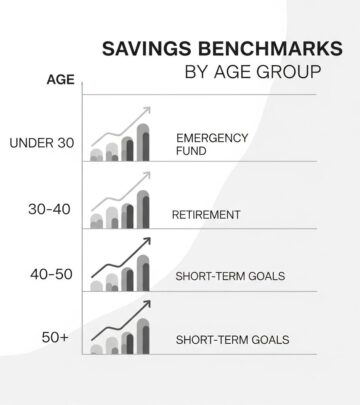
Savings benchmarks serve as vital indicators of financial health. Financial experts consistently advocate for an emergency fund covering 3-6 months of essential expenses, tailored to individual circumstances like job stability and family size. Recent data reveals a wide disparity in adherence to these ideals.
The median transaction account balance—encompassing checking, savings, money market, and similar accounts—stands at approximately $8,000 for U.S. households. However, averages skew higher due to high-net-worth individuals, reaching around $62,410. These figures underscore that while many maintain basic liquidity, substantial growth opportunities exist for most.
| Demographic Group | Median Balance | Average Balance |
|---|---|---|
| All U.S. Households | $8,000 | $62,410 |
| By Age: Under 35 | $5,400 | $20,540 |
| By Age: 35-44 | $7,500 | $45,000 |
| By Age: 45-54 | $8,700 | $71,340 |
| By Age: 55-64 | $10,000 | $95,703 |
| By Age: 65+ | $13,400 | $110,428 |
| By Income: Under $50K | $2,500 | $10,000 |
| By Income: $50K-$99K | $7,500 | $30,000 |
| By Income: $100K+ | $25,000 | $200,000+ |
These statistics highlight trends: balances generally increase with age and income, reflecting accumulated wealth and disciplined habits. Younger savers often prioritize debt repayment, while retirees emphasize liquidity for fixed incomes.
Why Your Savings Balance Matters
Adequate savings act as a buffer against job loss, medical emergencies, or market downturns. Insufficient funds can force reliance on high-interest credit, perpetuating debt cycles. Conversely, optimal savings earn compound interest, accelerating wealth building.
In 2026, with inflation moderating but uncertainties lingering, aligning savings with benchmarks reduces stress and enhances opportunities like home purchases or education funding. Regularly assessing your position against peers fosters proactive adjustments.
High-Yield Savings: Unlocking Superior Returns
Traditional savings accounts languish at 0.41% APY nationally, but high-yield variants from online banks offer 3.30% to 5.00%, amplifying growth exponentially. For instance, $10,000 at 0.41% yields mere $41 annually, versus $435 at 4.35%.
These accounts maintain liquidity and FDIC insurance up to $250,000, combining safety with competitive earnings. Key perks include no monthly fees, minimal deposit requirements, and digital tools for goal tracking.
Top High-Yield Savings Accounts for 2026
| Bank/Institution | APY | Min. Deposit | Monthly Fees | Standout Features |
|---|---|---|---|---|
| Newtek Bank Personal High Yield Savings | 4.35% | $0 | $0 | Highest no-minimum rate; NerdWallet’s top pick |
| Varo Bank | Up to 5.00% | $0 | $0 | 5% on balances up to $5,000 with direct deposit |
| Axos Bank | 4.21% | $0 | $0 | Top rate overall; no balance requirements |
| EverBank Performance Savings | 3.90% | $0 | $0 | Integrated checking/CDs; ATM reimbursements |
| SoFi Checking & Savings | Up to 4.00% | $0 | $0 | Promo boost with direct deposit; vaults for goals |
| Marcus by Goldman Sachs | 3.65% | $0 | $0 | Proven stability; easy app access |
| CIT Bank | 3.75% | Varies ($5K for max) | $0 | Tiered rates for larger balances |
Selections based on 2026 data from leading aggregators. Rates variable; confirm current terms.
Actionable Steps to Boost Your Savings
- Automate Transfers: Set recurring deposits post-paycheck to harness dollar-cost averaging and reduce spending temptation.
- Consolidate Funds: Move idle cash from low-yield accounts to high-yield options for immediate APY uplift.
- Track Expenses: Use apps to categorize spending, identifying cuts that redirect 10-20% of income to savings.
- Leverage Bonuses: Direct windfalls like tax refunds or raises straight to savings, compounding faster.
- Review Quarterly: Adjust goals based on life changes; ladder with CDs for portions needing fixed terms.
Demographic Insights: Tailoring Savings Strategies
Savings needs evolve by life stage. Millennials and Gen Z benefit from aggressive high-yield pursuits to offset student debt. Gen X focuses on college funding and mortgages, while Boomers prioritize healthcare buffers.
- Young Professionals: Aim for 3 months’ expenses; prioritize employer 401(k) matches before taxable savings.
- Families: Target 6 months; separate sinking funds for vacations or repairs.
- Pre-Retirees: 12+ months; diversify into TIPS or short-term bonds alongside HYSAs.
Common Pitfalls and How to Avoid Them
Many fall into traps like rate chasing without considering fees or access limits. Transaction caps (six per month) on savings accounts necessitate paired checking. Ignoring taxes on interest—reportable above $10 via 1099-INT—erodes gains; high earners may prefer Roth IRAs for tax-free growth.
Inflation risk persists: even 4% APY may trail rising costs. Regularly benchmark against CPI and adjust allocations.
Future-Proofing Your Savings in 2026
With Fed rate cuts anticipated, locking portions into CDs or Treasuries hedges declines. Robo-advisors like Wealthfront offer automated cash management at competitive yields. Digital banks continue innovating with AI-driven insights and round-up features.
Frequently Asked Questions (FAQs)
What is a good savings account balance for my age?
It varies, but aim for 3-6 months’ expenses. Medians range from $5,400 (under 35) to $13,400 (65+).
Are high-yield savings accounts safe?
Yes, FDIC-insured up to $250,000 per depositor per bank. Verify insurance status.
How much more do high-yield accounts earn?
Up to 10x the national average: 4.35% vs. 0.41% on $10K yields $395 extra yearly.
Can I access high-yield savings anytime?
Liquidity is high via transfers (1-3 days); avoid excess withdrawals to preserve rates.
Should I move all savings to one high-yield account?
Diversify across 2-3 to stay under FDIC limits and match liquidity needs.
Empowering your financial future starts with awareness. By benchmarking your savings, selecting optimal accounts, and implementing disciplined habits, you position yourself for resilience and prosperity in 2026 and beyond.
References
- Best High-Yield Savings Accounts 2026: Top 10 Rates, Perks — GreenFi. 2026-01. https://www.greenfi.com/resources/best-high-yield-savings-accounts-2026
- Best High-Yield Online Savings Accounts — NerdWallet. 2026-03. https://www.nerdwallet.com/banking/best/high-yield-online-savings-accounts
- Best High-Yield Savings Accounts Of March 2026 — Bankrate. 2026-03. https://www.bankrate.com/banking/savings/best-high-yield-interests-savings-accounts/
- The top high-yield savings rates: Up to 5.00% on March 12, 2026 — Fortune. 2026-03-12. https://fortune.com/article/best-savings-account-rates-3-12-2026/
Similar Articles








Read full bio of medha deb