How Your Debt-to-Income Ratio Affects Getting a Mortgage
Understand how your debt-to-income ratio shapes mortgage approval odds, loan size, and interest rates so you can plan smarter.
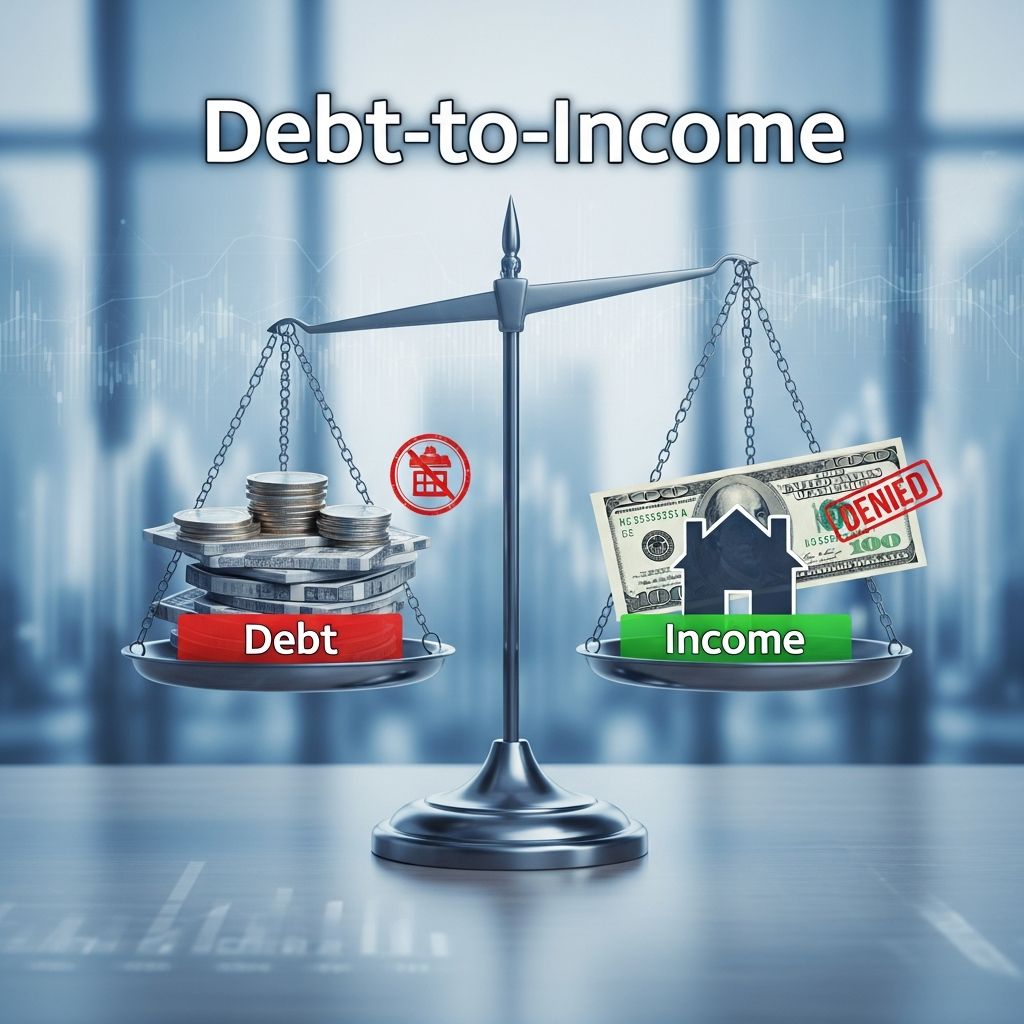
Your debt-to-income (DTI) ratio is one of the most important numbers mortgage lenders review when deciding whether to approve your home loan and on what terms. It tells lenders how much of your monthly gross income is already committed to debt payments, and therefore how much additional mortgage payment you can realistically handle.
Understanding how DTI works can help you estimate how much house you can afford, improve your chances of approval, and potentially qualify for better interest rates.
What Is Debt-to-Income Ratio?
Debt-to-income ratio is a percentage that compares your total monthly debt payments to your gross monthly income (income before taxes and deductions). Lenders use it as a key measure of your capacity to take on and repay new debt.
In simple terms, DTI answers this question: Out of every dollar you earn before tax, how many cents are already committed to debt payments?
Front-End vs. Back-End DTI
When it comes to mortgages, lenders often look at two related DTI measures:
- Front-end DTI: Only your housing costs (principal, interest, property taxes, homeowners insurance, and sometimes HOA dues).
- Back-end DTI: Your total monthly debt obligations, including housing plus other debts like car loans, credit cards, student loans, and support payments.
Back-end DTI is generally the more important number when determining overall mortgage eligibility.
How to Calculate Your Debt-to-Income Ratio
The basic DTI formula is straightforward:
DTI = (Total Monthly Debt Payments ÷ Gross Monthly Income) × 100
Step 1: Add Up Monthly Debt Payments
Include the required minimum payment due each month for qualifying debts:
- Mortgage or rent (including principal, interest, taxes, insurance, HOA where applicable)
- Auto loans and leases
- Student loans
- Personal loans or installment loans
- Credit card minimum payments
- Alimony or child support obligations
- Other court-ordered or legally binding monthly payments
Do not include variable expenses like groceries, utilities, or entertainment, because DTI focuses on fixed debt obligations.
Step 2: Determine Gross Monthly Income
Gross monthly income is what you earn before taxes and other deductions. It may include:
- Base salary or hourly wages
- Regular overtime, bonuses, or commissions (if documented)
- Self-employment income (average over a qualifying period)
- Social Security or pension payments
- Documented support or other recurring income
Step 3: Apply the Formula
Once you have your totals, divide total monthly debt payments by gross monthly income and multiply by 100 to get a percentage.
Example:
- Total monthly debt payments: $1,800
- Gross monthly income: $5,000
DTI = 1,800 ÷ 5,000 = 0.36, or 36%. That means 36% of your before-tax income goes toward debt each month.
Why Debt-to-Income Ratio Matters for Mortgages
When you apply for a home loan, lenders must evaluate whether you can realistically manage the new mortgage payment alongside your existing debts. DTI is a simple, standardized way to do that.
Mortgage lenders use your DTI ratio to:
- Assess your ability to repay the loan over the long term.
- Decide whether you meet their underwriting guidelines.
- Estimate the maximum payment and loan amount you can safely handle.
- Set interest rate offers and other loan terms based on perceived risk.
A lower DTI suggests a stronger capacity to manage new debt, while a higher DTI signals you may already be stretched thin financially.
Regulatory and Risk Considerations
In the U.S., certain mortgages are classified as “qualified mortgages” and must meet federal standards designed to reduce the risk of borrower default. One standard commonly referenced is an upper DTI limit around 43% for many qualified loans, though specific program rules can vary and some exceptions exist.
What Is Considered a Good DTI Ratio for a Mortgage?
There is no single universal cutoff, because acceptable DTI limits differ by lender, loan type, and overall borrower profile. However, there are general guidelines widely used in the industry.
| DTI Range | General Assessment | Typical Mortgage Implications* |
|---|---|---|
| Below 36% | Low to moderate debt load | Often considered strong for approval and competitive rates, assuming credit and income are solid. |
| 36%–43% | Manageable but higher debt | Many borrowers can still qualify; considered near or at common limits for qualified mortgages. |
| Above 43% | Elevated risk | Approval becomes harder; special programs or strong compensating factors may be required. |
| 50%+ | High financial strain | Often flagged as a sign of financial difficulty; many lenders will not approve without significant changes. |
*Guidelines vary by lender and loan program. Other factors like credit score, down payment, and reserves also matter.
How DTI Influences Mortgage Approval and Terms
Your DTI affects more than just whether you get a yes or no. It shapes the size of the mortgage you can qualify for and often the interest rate and costs you are offered.
1. Approval Odds
Lenders typically set maximum DTI thresholds in their guidelines. If your ratio is above that limit, your application may be denied or require significant modification (such as a smaller loan amount or debt payoff) before it can be approved.
2. Maximum Loan Amount and Home Price
Because DTI directly limits how much of your income can go toward the mortgage payment, it effectively caps your maximum loan size.
- A lower DTI leaves more room in your budget for a higher mortgage payment, which can support a larger loan or more expensive home.
- A higher DTI forces the lender to limit your mortgage payment, which reduces the maximum principal you can borrow.
Lenders often run scenarios to determine the highest monthly mortgage payment that keeps your DTI below their internal limit, and then work backward to calculate a maximum loan amount based on interest rate and term.
3. Interest Rate and Pricing
DTI is also part of a broader risk assessment that influences your interest rate and closing costs.
- Borrowers with lower DTI ratios may qualify for more favorable pricing, alongside strong credit scores and stable income.
- Higher DTI ratios can push you into a higher-risk category, which may mean higher interest rates or additional requirements, even if you are still approved.
Factors That Affect Your DTI Ratio
Your DTI is influenced by both sides of the equation: debt payments and income.
Debts Included in DTI Calculations
Most lenders include the following when computing DTI for a mortgage:
- Proposed new mortgage payment (principal, interest, taxes, insurance, and HOA if applicable)
- Existing mortgage or rent (if you are keeping another property)
- Auto loans and leases
- Student loans (often using the documented monthly payment or a calculated amount if deferred)
- Personal and installment loans
- Minimum required credit card payments
- Alimony, child support, or other legal obligations
Income Considered for DTI
On the income side, lenders usually count stable, verifiable gross income such as:
- Salary and hourly wages (typically averaged over a consistent work history)
- Bonuses, commissions, and overtime with a documented track record
- Self-employment income, averaged over a qualifying period with tax returns
- Retirement, pension, or Social Security income
- Court-ordered or otherwise documented recurring support payments received
Irregular or undocumented income streams may not be fully counted, which can raise your calculated DTI even if your actual cash flow is higher.
Strategies to Improve Your Debt-to-Income Ratio
If your DTI is higher than your lender’s guidelines—or if you simply want to improve your mortgage terms—focusing on this metric before you apply can make a meaningful difference.
1. Pay Down or Eliminate Debts
Because DTI is driven by monthly payment amounts, reducing or eliminating payments can quickly lower your ratio.
- Target debts with higher monthly payments, such as auto loans or personal loans.
- Consider paying down credit cards enough to significantly cut minimum payment requirements.
- Avoid taking on new installment loans right before applying for a mortgage.
2. Avoid New Credit Obligations
Opening new loans or credit lines typically adds to your monthly obligations and can increase your DTI.
- Postpone major financed purchases, such as cars or large furniture buys, until after your mortgage closes.
- Limit new credit card accounts or balance transfers that could raise minimum payments.
3. Increase Your Gross Income (Where Possible)
Boosting your income can improve DTI even if your debts remain the same, because a higher denominator lowers the overall ratio.
- Seek additional hours, overtime, or a raise in your current role.
- Develop a side income that is stable and well documented.
- Ensure all eligible income sources are captured and documented for underwriting.
Remember that most lenders require a history of receiving a particular type of income (for example, overtime or self-employment income over 1–2 years) before they will fully count it in DTI calculations.
4. Adjust Your Homebuying Budget
If your DTI remains high even after making improvements, you may need to consider lowering your target home price so that the projected mortgage payment fits within acceptable limits.
- Run different price and down payment scenarios to see how they affect the projected mortgage payment and resulting DTI.
- Discuss options with your lender, such as longer loan terms, that can reduce the monthly payment (though possibly increasing total interest paid).
Debt-to-Income Ratio vs. Credit Score
While DTI focuses on how much of your income goes to debt today, your credit score reflects your past and current borrowing behavior, such as payment history, credit utilization, and length of credit history.
- DTI measures capacity—whether you can handle more debt now.
- Credit score measures creditworthiness—how reliably you have managed debt in the past.
Mortgage lenders evaluate both. A strong DTI cannot fully offset a very poor credit history, and an excellent credit score will not always compensate for a DTI that is beyond program limits.
Practical Example: How DTI Shapes Home Affordability
Consider two borrowers each earning $6,000 in gross income per month:
- Borrower A: Total monthly debt payments (including projected mortgage) of $1,800 → DTI = 30%.
- Borrower B: Total monthly debt payments (including projected mortgage) of $3,000 → DTI = 50%.
Assuming similar credit scores and down payments, Borrower A is likely to:
- Have an easier time qualifying for a mortgage.
- Be approved for a higher loan amount.
- Possibly receive better pricing due to a lower risk profile.
Borrower B may need to reduce existing debts, increase income, or choose a less expensive home to bring their DTI into an acceptable range.
Frequently Asked Questions (FAQs)
Q: What is a good DTI ratio for getting a mortgage?
Most lenders prefer a DTI of 36% or below, though some will approve borrowers with ratios up to about 43% for certain qualified mortgages, depending on the overall profile.
Q: Are rent payments included in my DTI if I am buying my first home?
Yes. While you are still renting, your monthly rent payment is typically included in your debt obligations when calculating your current DTI. Once the new mortgage is in place, the projected mortgage payment replaces rent in the calculation.
Q: Do utility bills and everyday expenses count toward DTI?
No. DTI focuses on recurring debt payments like loans, credit cards, and support obligations. Regular living expenses such as utilities, groceries, and transportation are not included, although lenders may still review them informally as part of broader affordability discussions.
Q: Can I get a mortgage with a high DTI if I have excellent credit?
Strong credit can help in marginal cases, but many loan programs have hard DTI caps. If your ratio exceeds those limits, you may still need to reduce debt, increase income, or lower your target loan amount to qualify.
Q: How quickly can I improve my DTI ratio?
You can improve DTI as soon as you reduce your required monthly debt payments or document higher gross income. Paying off a loan, consolidating debt into a lower-payment structure, or securing higher verifiable income can all change your ratio relatively quickly, though lenders may require a documented history for certain income types.
References
- What is a debt-to-income ratio? — Consumer Financial Protection Bureau. 2024-02-05. https://www.consumerfinance.gov/ask-cfpb/what-is-a-debt-to-income-ratio-en-1791/
- Debt-to-income ratio — Legal Information Institute, Cornell Law School. 2021-07-01. https://www.law.cornell.edu/wex/debt-to-income_ratio
- Why Your Debt-to-Income Ratio Matters for Your Mortgage — Equifax. 2023-06-15. https://www.equifax.com/personal/education/loans/articles/-/learn/why-debt-to-income-ratio-for-mortgage-matters/
- What is Debt-to-Income (DTI) Ratio & Why is It Important — Bank of America. 2023-09-10. https://bettermoneyhabits.bankofamerica.com/en/credit/what-is-debt-to-income-ratio
- Calculate your debt-to-income ratio — Wells Fargo. 2023-08-01. https://www.wellsfargo.com/goals-credit/smarter-credit/credit-101/debt-to-income-ratio/
- Homebuying decoded: What is a debt-to-income ratio? — U.S. Bank. 2022-11-20. https://www.usbank.com/financialiq/manage-your-household/home-ownership/what-is-debt-to-income-ratio.html
- What Debt-to-Income Ratio Means and Why It’s Important — Sallie Mae. 2023-04-18. https://www.salliemae.com/blog/debt-to-income-ratio/
Similar Articles








Read full bio of medha deb