Debt Consolidation Loans: How To Save On Interest In 2025
Master debt consolidation: Learn how to combine multiple debts into one manageable loan.
Understanding Debt Consolidation Loans
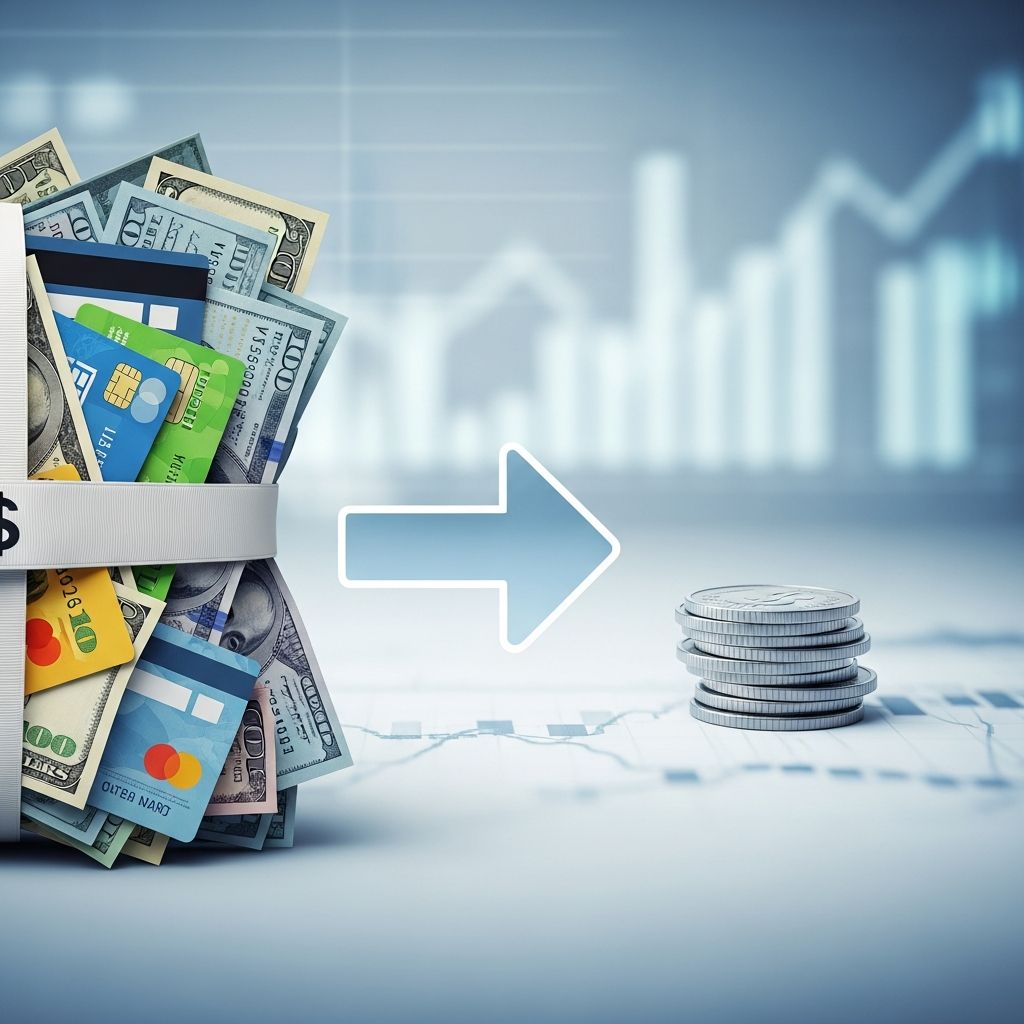
Debt consolidation loans are installment loans specifically designed to combine multiple debts into a single loan with a fixed monthly payment. Rather than juggling several credit card balances or personal loans with different interest rates and due dates, consolidation allows you to streamline your finances by merging everything into one manageable payment. This approach can simplify your financial life significantly, especially if you’re struggling to keep track of multiple creditors and payment schedules.
The fundamental concept behind debt consolidation is straightforward: you take out a new loan to pay off existing debts, then focus on repaying that single new loan. This strategy works best when the new loan offers favorable terms compared to your current debt obligations. Before proceeding with consolidation, it’s essential to understand how the process works and whether it aligns with your financial goals.
How Debt Consolidation Works: A Step-by-Step Process
The first step with any debt consolidation loan is to decide how much debt you want to consolidate. The decision isn’t simply about combining all your debt; rather, it’s about identifying which debts make sense to consolidate. Generally, it usually doesn’t make sense to consolidate debt unless you can secure a lower interest rate on the new loan compared to your current obligations.
Here’s how the process typically unfolds:
- Assess your current debts and their interest rates
- Determine the total amount you need to borrow
- Shop for consolidation loans from various lenders
- Compare terms, interest rates, and fees
- Apply for the loan that best fits your situation
- Use the funds to pay off existing debts
- Begin making payments on your new consolidation loan
Real-World Example: Understanding Your Savings Potential
Let’s examine a practical scenario to illustrate how consolidation works. Suppose you’re consolidating credit card debt with the following balances and Annual Percentage Rates (APRs):
| Credit Card | Balance | APR |
|---|---|---|
| Card 1 | $5,000 | 20% |
| Card 2 | $2,000 | 25% |
| Card 3 | $1,000 | 16% |
| Total | $8,000 | Average 20.3% |
With this debt profile, your financial outcomes differ significantly depending on your chosen repayment strategy:
- Paying cards separately with minimum payments: You’ll pay over $12,000 in total interest alone
- 5-year consolidation loan: Your monthly payment drops by $40.33, you’ll save over $9,800 in total interest, and your debt will be paid off in exactly 60 months
- 2-year consolidation loan: If you can afford the $150 monthly payment increase, you’d save over $11,000 in total interest
This example demonstrates how consolidation can provide substantial savings, particularly when combined with a commitment to disciplined repayment. The key is understanding your current interest costs and comparing them against consolidation loan terms.
Calculating Your Potential Savings
To accurately determine whether consolidation makes financial sense for your situation, you’ll need to calculate your potential savings. Fortunately, this process is more accessible than ever with readily available online tools. Use a credit card payoff calculator to determine how long it would take to pay off your current debts and how much interest you’d pay. Then, use a personal loan calculator to simulate the costs of a consolidation loan with various terms and interest rates.
When comparing scenarios, consider factors such as:
- The APR offered on the consolidation loan
- The loan term (typically ranging from 2 to 7 years)
- Any origination fees or prepayment penalties
- Your ability to maintain consistent monthly payments
- The temptation to accumulate new debt after consolidation
The comparison between paying cards separately versus consolidation often reveals significant differences in total interest paid. The longer your consolidation loan term, the lower your monthly payment but the more interest you’ll pay overall. Conversely, shorter terms mean higher monthly payments but substantial interest savings.
Interest Rate Considerations
One of the primary advantages of debt consolidation is the potential for a lower interest rate. As of November 2025, the average credit card rate stands at 19.87 percent, while the average personal loan rate is 12.25 percent. Of course, rates vary depending on your credit score, loan amount, and term length. However, if you have average credit or better, you’ll likely qualify for a lower interest rate with a debt consolidation loan than what you’re currently paying on credit cards.
Those with excellent credit often receive the lender’s most competitive rates, sometimes dropping below 7 percent depending on the lender. However, if your credit score is on the lower end, lenders may view you as a higher default risk, resulting in higher rates that could actually exceed your current debt obligations. In such situations, consolidation might not be the optimal financial move.
Debt Repayment Strategies for Consolidation
Once you’ve consolidated your debt, your approach to repayment can impact your long-term financial success. The primary advantage of a consolidation loan is the fixed repayment schedule, which means you know exactly when your debt will be eliminated. However, understanding different repayment philosophies can help you stay motivated and potentially save money.
The Debt Avalanche Method
The debt avalanche payoff method focuses on paying off the highest-APR debts first while making minimum payments on others. This mathematically optimal approach means starting with your highest-interest debt and working your way down. By targeting the highest-interest obligations first, you can save more money on interest compared to other strategies. This method works particularly well when consolidating multiple credit cards with varying rates, as you’re essentially prioritizing the most expensive debt.
The Fixed Repayment Advantage
With a consolidation loan, you benefit from a fixed repayment schedule regardless of which strategy you employ. This consistency means predictable monthly payments, making budgeting significantly easier. You know precisely when your debt will be paid off—whether it’s in 24, 36, 48, or 60 months—allowing you to plan other financial goals with confidence.
Key Benefits of Consolidation Loans
Understanding the advantages of debt consolidation helps determine if it’s the right choice for your situation. The primary benefits include:
- Lower interest rates: Consolidation loans typically offer lower rates than credit cards, especially for those with fair credit or better
- Faster debt repayment: With a fixed repayment plan and potentially lower rates, you can pay down debt more quickly
- Simplified finances: Instead of managing multiple payments to different creditors, you make one monthly payment
- Fixed repayment schedule: Consistent monthly payments make budgeting more straightforward and predictable
- Credit score improvement: Timely payments on a consolidation loan and reduced credit utilization can improve your credit score over time
Important Considerations Before Consolidating
While consolidation offers substantial benefits, it’s not appropriate for everyone. Consolidating your debt likely isn’t the best move if you have a low credit score and can’t secure a lower interest rate on your new loan. Your debt consolidation loan could potentially come with more interest than you currently pay on your debts due to your credit profile or other factors.
Additionally, consolidation only addresses the symptoms of debt, not the underlying spending behaviors. If you consolidate your credit cards and then continue accumulating new balances, you’ll find yourself in worse financial condition than before. Successful consolidation requires a commitment to avoid new debt and stick to your repayment plan.
Exploring Alternatives to Traditional Consolidation
While consolidation loans are powerful tools, they’re not the only option available. Balance transfer credit cards offer an alternative for borrowers with strong credit profiles. These cards allow you to combine debts from other credit cards at a temporary interest rate, sometimes even 0 percent for a promotional period. However, balance transfers typically have strict eligibility criteria and only make sense if you can pay off your balance before the promotional period expires.
Other consolidation options include home equity loans for homeowners with significant equity, peer-to-peer loans for those with lower credit scores, and debt management plans for those in credit distress. Each option carries different advantages and potential impacts on your credit profile, so it’s worth exploring which best fits your circumstances.
Frequently Asked Questions About Debt Consolidation Loans
Q: What’s the difference between secured and unsecured consolidation loans?
A: Unsecured consolidation loans don’t require collateral and are based on your creditworthiness, typically offering higher interest rates. Secured loans require collateral like a home or vehicle, usually resulting in lower rates but putting your asset at risk if you default.
Q: How long does the consolidation process typically take?
A: The timeline varies by lender. Some can fund loans within one business day if sent to you directly, or up to two weeks if the lender makes payments directly to your creditors. The application and approval process typically takes a few days to a week.
Q: Will consolidation hurt my credit score?
A: Initially, you may experience a small dip due to the hard inquiry and new account. However, consolidating typically improves your credit score over time as you reduce credit utilization and make consistent payments on your new loan.
Q: What fees should I expect with a consolidation loan?
A: Common fees include origination fees (typically 1.85% to 9.99%), late fees (usually around $10), and returned check fees. Always review the loan agreement to understand all associated costs before committing.
Q: Can I consolidate if I have bad credit?
A: Yes, but your options may be more limited and rates higher. You can work with lenders specializing in bad credit consolidation, apply with a cosigner, or explore alternatives like peer-to-peer loans or debt management plans.
Q: Should I close my credit cards after consolidation?
A: It’s generally recommended to keep cards open but unused after consolidation to maintain your credit utilization ratio and credit history. However, avoid accumulating new balances, as this defeats the purpose of consolidation.
References
- How Debt Consolidation Loans Work — Bankrate. 2025. https://www.bankrate.com/loans/personal-loans/how-debt-consolidation-loans-work/
- Pros and Cons of Debt Consolidation: Is It a Good Idea? — Bankrate. 2025. https://www.bankrate.com/personal-finance/debt/pros-and-cons-of-debt-consolidation/
- How Do You Qualify for a Debt Consolidation Loan? — Bankrate. 2025. https://www.bankrate.com/loans/personal-loans/how-do-you-qualify-for-a-debt-consolidation-loan/
- How Bankrate Experts Used Credit Card Consolidation Loans — Bankrate. 2025. https://www.bankrate.com/loans/personal-loans/do-credit-card-consolidation-loans-help-credit/
- Secured Vs. Unsecured Debt Consolidation Loan — Bankrate. 2025. https://www.bankrate.com/loans/personal-loans/secured-vs-unsecured-debt-consolidation-loan/
- Debt Consolidation Without a Loan: Your Options — Bankrate. 2025. https://www.bankrate.com/loans/personal-loans/debt-consolidation-loan-alternatives/
Similar Articles








Read full bio of Sneha Tete