How Credit Limit Cuts Impact Your Credit Score
Discover why reduced credit limits can harm your credit score and learn strategies to protect and recover your financial standing effectively.
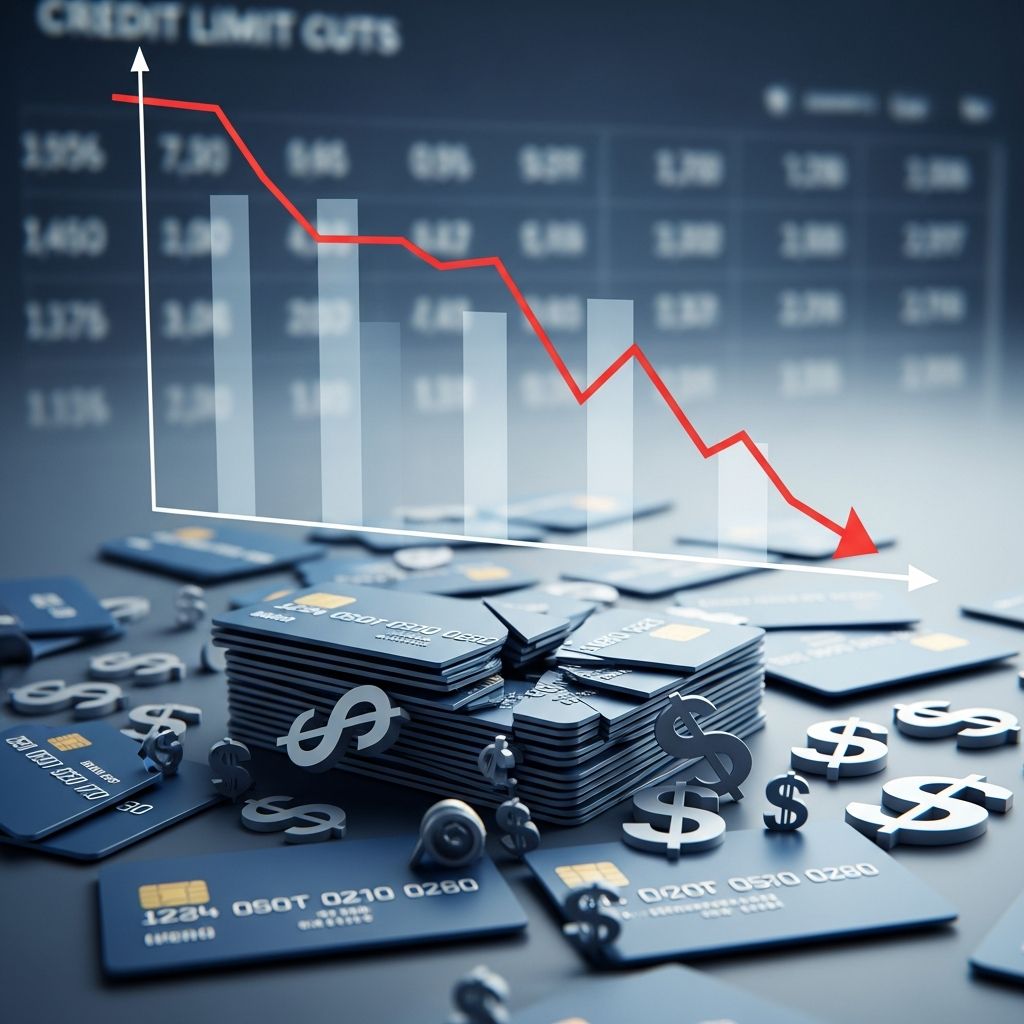
Credit limit reductions by issuers or self-requested can elevate your credit utilization ratio, a key factor in scoring models like FICO and VantageScore, often leading to score declines if balances remain unchanged.
Understanding Credit Limits and Their Role in Scoring
Credit limits represent the maximum borrowing amount on revolving accounts such as credit cards. They directly influence your credit utilization ratio, calculated as total balances divided by total limits across accounts. This ratio accounts for about 30% of FICO scores and is similarly weighted in VantageScore models.
Lenders assess utilization to gauge risk; ratios under 30% signal responsible habits, while higher ones suggest overextension. A sudden limit cut shrinks available credit, inflating this ratio even without increased spending.
Primary Mechanisms Behind Score Changes
The core issue arises when limits drop but balances persist. For instance, a $10,000 limit with $2,000 balance yields 20% utilization. Halving the limit to $5,000 pushes it to 40%, potentially dropping scores by tens of points depending on overall profile.
- Per-account utilization: High on affected card hurts more than aggregate.
- Total revolving utilization: Across all cards; major cuts amplify effects.
- No direct penalty: Scoring models penalize high utilization, not the cut itself.
Account closure accompanying cuts removes the limit entirely, worsening ratios and shortening credit history length if aged.
Why Issuers Reduce Credit Limits
Card companies can lower limits anytime to manage risk, per account agreements. Common triggers include:
- Inactivity over months, signaling disuse.
- Changed spending patterns, like high balances or cash advances.
- Delinquencies elsewhere or economic shifts prompting portfolio reviews.
- Low credit scores or high overall debt.
Even on-time payers face cuts during issuer risk assessments, as seen in post-pandemic adjustments.
Self-Requested Limit Reductions: A Risky Choice
Some seek lower limits for spending control, but this backfires if balances stay. A drop from $10,000 to $5,000 with $1,500 owed raises utilization from 15% to 30%, harming scores.
Experts advise against unless simultaneously reducing balances to maintain low ratios (ideally under 25-30%).
Quantifying the Potential Damage
Impact varies by profile. MyFICO analysis shows scores may fall, rise, or stabilize post-cut, influenced by:
| Factor | Effect on Score |
|---|---|
| Size of reduction | Larger cuts = higher utilization spike |
| Pre-existing balances | Higher balances amplify damage |
| Other report changes | New activity can offset |
| Overall utilization | Staying <30% minimizes harm |
Examples: $3,000 cut on $4,000 balance across $10,000 total limits jumps aggregate from 28% to 42%, risking notable drops.
Immediate Steps After a Limit Decrease
Act swiftly to mitigate:
- Review statements: Confirm balances and new limits.
- Pay down debt: Target affected card to restore low utilization.
- Contact issuer: Ask rationale and request restoration, providing positive payment history.
- Monitor scores: Free weekly reports from AnnualCreditReport.com.
Avoid new applications initially, as inquiries compound issues.
Long-Term Strategies for Protection
Build resilience:
- Maintain multiple cards for diversified limits.
- Keep utilization below 10% ideally, 30% max.
- Use cards regularly but lightly to prevent inactivity cuts.
- Request increases judiciously; hard inquiries cause temporary dips but lower utilization long-term if approved.
Closed accounts linger 7-10 years, aiding history length if positive.
Alternatives When Limits Are Slashed
For big purchases post-cut:
- Shift spending to higher-limit cards.
- Explore personal loans for fixed needs, avoiding revolving debt.
- Cut non-essential expenses temporarily.
Building credit via secured cards or credit-builder loans offers controlled growth without high utilization risks.
FAQs
Does who closes the account matter?
No, FICO scores ignore closure initiator; effects stem from utilization and history changes.
Can I prevent limit decreases?
Not fully, but active use, low balances, and good payments reduce likelihood.
How long do effects last?
Until utilization normalizes via payments or new limits; closed accounts affect 7-10 years positively if aged.
Is requesting a higher limit always good?
Often yes for utilization, but inquiries ding scores short-term; time requests wisely.
What if the cut seems unfair?
Dispute with issuer citing history; escalate to CFPB if needed.
Key Takeaways for Credit Health
Proactive management trumps reaction: low utilization, diverse credit, steady payments fortify scores against limit volatility. Regular monitoring empowers timely responses.
References
- How credit limit decreases can affect your score — myFICO. 2023. https://www.myfico.com/credit-education/credit-scores/credit-limit-decrease-affect-fico-score
- Can a Credit Limit Decrease Hurt Your Credit Score? — Experian. 2023-10-01. https://www.experian.com/blogs/ask-experian/can-credit-limit-decrease-hurt-credit-scores/
- How Will a Lowered Credit Limit Affect My Credit Scores? — Equifax. 2024. https://www.equifax.com/personal/education/credit/score/articles/-/learn/lowered-credit-limit-credit-scores/
- Can A Credit Limit Have An Affect On A Credit Score? — Loqbox. 2023. https://www.loqbox.com/en-gb/blog/what-is-a-credit-limit-can-it-positively-or-negatively-affect-my-credit-score
- What To Do If Your Credit Card Issuer Lowered Your Limit — Bankrate. 2024-02-15. https://www.bankrate.com/credit-cards/issuers/how-to-prevent-your-credit-limit-from-being-lowered/
- Does Requesting a Lower Credit Limit Hurt My Credit Score? — Experian. 2023. https://www.experian.com/blogs/ask-experian/requesting-lower-credit-limits-could-hurt-scores/
- Why did your credit card limit decrease? — Chase. 2024. https://www.chase.com/personal/credit-cards/education/credit-score/why-did-your-credit-limit-decrease
Similar Articles








Read full bio of Sneha Tete