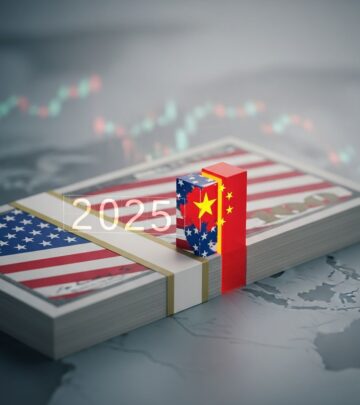
How China Influences The U.S. Dollar: Key Insights For 2025
Explore China's strategic impact on U.S. dollar strength through currency policy and market intervention.
How China Influences the U.S. Dollar
The relationship between China and the U.S. dollar represents one of the most consequential dynamics in global finance. As the world’s second-largest economy and a major holder of dollar reserves, China wields substantial influence over the dollar’s value and its role in international commerce. Understanding this relationship is essential for investors, policymakers, and anyone interested in global economic trends.
China’s influence on the U.S. dollar operates through multiple channels, including currency market interventions, foreign exchange reserve management, and increasingly, through deliberate de-dollarization strategies. These mechanisms shape not only the dollar’s exchange rates but also its fundamental position as the world’s reserve currency.
The Mechanism of China’s Currency Intervention
China’s central bank, the People’s Bank of China (PBOC), is the world’s largest central bank by assets and actively intervenes in currency markets to maintain control over the yuan’s value. Understanding how this intervention works is crucial to comprehending China’s impact on the dollar.
When Chinese authorities want to keep the yuan cheap and boost export competitiveness, they employ a straightforward but powerful mechanism. The PBOC prints Chinese currency (CNY) and uses it to purchase U.S. dollars from commercial banks. These dollars are then used to buy U.S. Treasury securities in open markets. This two-step process has dual effects: it increases the supply of yuan, keeping its value low, while simultaneously increasing demand for U.S. dollars, supporting the dollar’s value globally.
This intervention strategy extends beyond simple currency management. By aggressively buying dollars, China effectively props up the dollar’s value across all currency markets. The PBOC’s demand for dollars is substantial enough to distort equilibrium prices in foreign exchange markets, creating artificial support for the dollar that would not exist based on market fundamentals alone.
Currency Manipulation and Trade Dynamics
One of the most contentious aspects of China’s influence on the U.S. dollar involves accusations of currency manipulation. For decades following China’s accession to the World Trade Organization, Beijing maintained the renminbi at artificially low levels compared to its market value.
Many economists argue that China deliberately kept the yuan’s value suppressed by accumulating massive U.S. dollar reserves. A weaker renminbi serves multiple purposes for China’s economic strategy:
- Makes Chinese exports more affordable in foreign markets, boosting sales and market share
- Makes imported goods and U.S. products more expensive within China, protecting domestic manufacturers
- Contributes to China’s large trade surplus and rapid foreign exchange reserve accumulation
- Supports employment in China’s export-dependent manufacturing sectors
The impact on the United States has been significant. By keeping the yuan artificially cheap, China effectively makes the U.S. dollar more expensive relative to its true value, contributing substantially to America’s persistent trade deficit. Under the Trump administration’s first term, the U.S. government formally designated China as a currency manipulator for the first time in decades, recognizing the strategic nature of these interventions.
China’s Dollar Reserve Holdings and Their Global Impact
China maintains one of the world’s largest foreign exchange reserves, with a substantial portion denominated in U.S. dollars. These holdings give China considerable leverage in global financial markets. When China’s central bank buys or sells dollar-denominated assets, particularly U.S. Treasury securities, the movement creates ripple effects across international financial markets.
The scale of China’s dollar holdings means that decisions about reserve management directly influence:
- Interest rates on U.S. Treasury securities
- The dollar’s exchange rate against other major currencies
- Capital flows into and out of the United States
- U.S. borrowing costs and deficit financing conditions
China’s strategic management of these reserves gives Beijing a form of financial leverage that extends beyond conventional trade relationships. The interconnectedness of Chinese financial institutions with the U.S. dollar system means that moves by the PBOC reverberate throughout global markets.
De-dollarization: China’s Strategic Shift
In recent years, China has initiated a more deliberate strategy to reduce its dependence on the U.S. dollar through a process known as de-dollarization. This represents a fundamental shift from previous decades when Chinese economic policy was largely compatible with dollar dominance.
Beginning around 2017, as U.S.-China relations deteriorated amid trade tensions and geopolitical competition, China’s dollarization rate began persistently falling. The PBOC has systematically reduced the U.S. dollar’s weighting in its CFETS currency basket from 19.83% to 18.903% by 2025, while simultaneously adjusting weightings for other currencies.
This measured but persistent de-dollarization reflects several strategic considerations:
- Sanctions Risk: Western sanctions on Russia following the Ukraine invasion heightened Chinese concerns about potential future sanctions on Chinese financial institutions. If the U.S. could freeze Russian central bank assets denominated in dollars, China recognized similar vulnerabilities in its own position.
- Financial Autonomy: Reducing dollar dependence allows China to operate its financial system with less exposure to U.S. policy decisions and potential economic coercion.
- Yuan Internationalization: By promoting cross-border yuan usage and building parallel financial infrastructure, China aims to enhance its currency’s global role independent of the dollar system.
- Trade Relationships: Chinese banks now report surge in cross-border yuan business, with institutions seeing nine-fold growth in cross-border yuan transactions, particularly with Russia and Iran as Western sanctions accelerated these initiatives.
The Renminbi Appreciation Challenge
Interestingly, China has allowed the renminbi to appreciate against the U.S. dollar by approximately 25% since certain pressures mounted, though this appreciation has proceeded at a pace slower than many trading partners would prefer. This gradual appreciation reflects the inherent tension in China’s exchange rate policy: maintaining export competitiveness while managing inflationary pressures and responding to international criticism.
The U.S. Treasury Department has repeatedly pressured China to allow faster renminbi appreciation and greater currency flexibility in line with market forces, though it has sometimes stopped short of formally designating China as a currency manipulator. This reflects the complex balance between advocating for fair trade practices and recognizing China’s strategic importance in global financial markets.
China faces what economists call the “impossible trinity” problem: it cannot simultaneously maintain a fixed exchange rate, free capital flows, and independent monetary policy. By choosing to prioritize exchange rate management and monetary autonomy, China restricts capital account convertibility, maintaining capital controls that support its currency policy objectives.
De-dollarization Through Alternative Arrangements
China’s de-dollarization strategy extends beyond unilateral actions. Bilateral agreements with major trading partners demonstrate Beijing’s systematic effort to reduce systemic dependence on U.S.-controlled financial networks. Iran and Russia have agreed to completely stop using the U.S. dollar in bilateral trade, instead conducting commerce in their respective national currencies or alternative arrangements.
This represents a significant departure from decades of dollar dominance in international commerce. While these bilateral arrangements alone may not fundamentally challenge the dollar’s global role, they signal the direction of Chinese strategy and the willingness of other nations to participate in de-dollarization initiatives, particularly those under U.S. sanctions pressure.
The Paradox of Chinese Financial Integration
Despite deliberate de-dollarization efforts, China’s financial system remains deeply interconnected with the dollar financial system. This creates a paradox: China’s financial institutions cannot rapidly exit the dollar system without disrupting their own operations and creating financial instability.
Chinese financial markets’ connectivity with the dollar is deeply influenced by Beijing’s approach to managing the renminbi’s exchange rate. To maintain market confidence that renminbi held outside mainland China is readily convertible into dollars, Chinese authorities must maintain substantial dollar reserves and preserve dollar market functioning. This interconnectedness means that despite strategic de-dollarization efforts, China remains vulnerable to potential U.S. economic sanctions.
The depth of these financial interlinkages has actually deterred U.S. policymakers from implementing harsh economic sanctions against China’s largest banks, as such measures could disrupt U.S. financial stability as well.
Broader Implications for Dollar Dominance
China’s evolving relationship with the U.S. dollar reflects broader questions about the future of the dollar’s role in global finance. While China alone cannot dethrone the dollar as the world’s primary reserve currency, its actions materially influence the dollar’s value, its appeal to other central banks, and the sustainability of dollar dominance.
The trajectory of China’s approach suggests movement toward what might be termed “managed erosion” of dollar hegemony rather than a direct challenge. Instead of confrontational default or rapid de-dollarization, Chinese policymakers have opted for a sophisticated strategy of building parallel financial infrastructure while maintaining engagement with existing dollar-based systems. This approach combines market forces, state intervention, and strategic patience.
Whether the next decade witnesses gradual erosion of dollar dominance or continued dollar resilience will depend partly on how successfully China executes this strategy and whether other nations join in systematic de-dollarization efforts. The distinctive Chinese model of managed capitalism and strategic patience suggests that developments will likely continue surprising both optimistic and pessimistic analysts.
Comparison: China’s Dollar Influence vs. Historical Precedents
| Factor | China’s Current Approach | Historical Precedent |
|---|---|---|
| Currency Intervention | Systematic PBOC buying of dollars; manages exchange rate actively | Post-WWII Bretton Woods fixed exchange rates |
| Reserve Management | Holds massive dollar reserves; gradually reducing dollarization | Cold War era Soviet Union (limited dollar access) |
| Trade Strategy | Weak yuan supports exports; large trade surplus | 1980s-90s Japan’s export-driven model |
| De-dollarization | Building alternative payment systems; bilateral non-dollar trade | 1970s de-dollarization efforts (limited success) |
| Financial Integration | Deep interconnection with dollar system while reducing exposure | Unique to modern era of financial globalization |
Frequently Asked Questions (FAQs)
Q: How does China’s currency intervention directly affect the U.S. dollar value?
A: When the PBOC buys dollars in currency markets, it increases demand for dollars globally, supporting the dollar’s value across all currency pairs. Simultaneously, printing yuan to purchase dollars increases yuan supply, keeping it weak relative to the dollar.
Q: Why does China maintain such large dollar reserves despite de-dollarization efforts?
A: China must maintain substantial dollar reserves to ensure that renminbi held internationally remains readily convertible into dollars, preserving market confidence in the currency. Rapid dollar exit would destabilize China’s own financial system.
Q: What is de-dollarization and why is China pursuing it?
A: De-dollarization refers to reducing dependence on the U.S. dollar in financial transactions and reserve holdings. China pursues this strategy to reduce vulnerability to U.S. sanctions, enhance monetary autonomy, and promote the international use of its currency, the renminbi.
Q: Has China been officially designated as a currency manipulator?
A: Yes, the Trump administration formally designated China as a currency manipulator in 2019, though the U.S. Treasury Department has sometimes been cautious about using this designation in other periods, reflecting complex diplomatic considerations.
Q: Could China’s de-dollarization efforts fundamentally weaken the U.S. dollar?
A: While China’s de-dollarization efforts matter, the dollar’s global dominance rests on multiple factors beyond China’s actions, including the size and depth of U.S. financial markets, the dollar’s use in global trade, and the absence of viable alternatives. China’s strategy represents gradual influence rather than a direct challenge.
Q: How do U.S. sanctions on Russia relate to China’s dollar policy?
A: Western sanctions on Russia, including freezing central bank dollar assets, alarmed Chinese policymakers about potential future sanctions on their own dollar holdings. This accelerated Chinese efforts to de-dollarize and build alternative payment systems.
References
- China’s Challenge to US Dollar: From 2009 Warning to 2025 — Tavakoli Structured Finance. 2025-06-15. https://www.tavakolistructuredfinance.com/2025/06/china-dollar-dominance-challenge-2025/
- China’s Effect on US Dollar Performance in Global Currency Markets — New York University Stern School of Business. 2024. https://www.stern.nyu.edu/sites/default/files/assets/documents/con_042962.pdf
- The U.S.-China Trade Relationship — Council on Foreign Relations. 2024-11-15. https://www.cfr.org/backgrounder/contentious-us-china-trade-relationship
- China’s Dollar Dilemma — Carnegie Endowment for International Peace. 2024-10-01. https://carnegieendowment.org/research/2024/10/chinas-dollar-dilemma?lang=en
- China’s Currency Policy Explained — Brookings Institution. 2024. https://www.brookings.edu/articles/chinas-currency-policy-explained/
- De-dollarization: The end of dollar dominance? — J.P. Morgan. 2024. https://www.jpmorgan.com/insights/global-research/currencies/de-dollarization
Similar Articles








Read full bio of medha deb