How Business Loans Work for Small Businesses
Understand how business loans work, key types of financing, eligibility, and how to choose the right loan for your company’s needs.

Business loans are a core tool for funding a company’s launch, day-to-day operations, and long-term growth. In a business loan, a lender provides funds that your business repays over time, usually with interest and fees, under a contract called a loan agreement. These loans can take many forms, from classic term loans and lines of credit to government-backed SBA loans and more specialized products like equipment financing or invoice-based funding.
Understanding how business loans work helps you choose the right type of financing, qualify for better terms, and avoid unnecessary costs that can strain your cash flow.
What Is a Business Loan?
A business loan is a form of commercial credit in which a lender—such as a bank, credit union, online lender, or government-backed program—provides money to a business for specific purposes. In return, the business agrees to repay the principal (the amount borrowed) plus interest and fees over a defined period.
Businesses commonly use loans to:
- Launch a new company or open a new location
- Cover working capital needs, like payroll, rent, and inventory
- Purchase equipment, vehicles, or technology
- Buy commercial real estate or renovate existing space
- Fund marketing campaigns or expansion projects
Repayment structures vary by loan type. Some loans require fixed monthly installments, while others—such as lines of credit or merchant-style products—offer more flexible repayment based on usage or revenue.
How Business Loans Generally Work
Although there are many types of business loans, most follow a similar basic process.
- Application: You submit a loan request with financial documents such as business and personal tax returns, bank statements, financial statements, and a business plan.
- Underwriting: The lender evaluates your credit, revenue, cash flow, time in business, industry risk, and collateral to assess your ability to repay.
- Approval & terms: If approved, the lender issues an offer specifying loan amount, interest rate, fees, repayment schedule, and any collateral or personal guarantee requirements.
- Funding: You receive funds as either a lump sum or access to a revolving credit limit.
- Repayment: You make payments over time—weekly, monthly, or daily—until the loan and all charges are paid in full.
Key loan terms you will encounter include:
- Principal: The amount you borrow, before interest and fees.
- Interest rate: The cost of borrowing, usually expressed as an annual percentage.
- APR (Annual Percentage Rate): A broader measure of cost that includes interest plus certain fees.
- Loan term: The length of time you have to repay.
- Repayment schedule: How often you make payments (e.g., monthly, weekly, daily).
- Time to funding: How long it takes from approval to receiving money.
Secured vs. Unsecured Business Loans
Business loans are usually classified as secured or unsecured, depending on whether collateral backs the loan.
| Type | Definition | Pros | Cons |
|---|---|---|---|
| Secured loan | Backed by collateral such as equipment, inventory, receivables, or real estate. |
|
|
| Unsecured loan | Not tied to specific collateral; based primarily on credit and cash flow. |
|
|
Even when loans are unsecured, many lenders still ask owners to sign a personal guarantee, making them personally responsible if the business cannot repay.
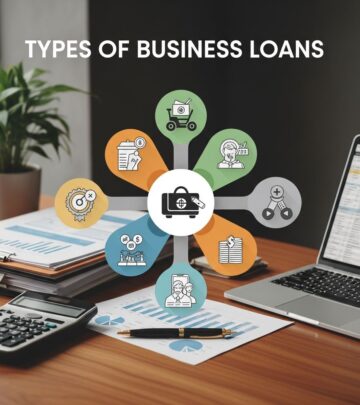
Main Types of Business Loans
Different loan structures serve different business needs. Below are common types of business financing.
Term Loans
A term loan is one of the simplest and most common business loan types. You receive a lump sum and repay it with interest over a fixed period (the term), often with equal monthly payments.
- Use cases: Expansion, large purchases, renovations, refinancing higher-cost debt.
- Term length: From one year to 10+ years, depending on lender and purpose.
- Interest: Fixed or variable, based on market rates and your risk profile.
Business Lines of Credit
A business line of credit is a flexible funding option that works similarly to a credit card but often with higher limits.
- The lender approves you for a maximum credit limit.
- You can draw funds as needed during the draw period, up to the limit.
- You pay interest only on the amount you actually use.
- As you repay, funds become available again, making it revolving credit.
Lines of credit are commonly used for:
- Smoothing cash-flow gaps
- Covering seasonal expenses or inventory
- Managing unforeseen short-term costs
SBA Loans
SBA loans are business loans that are partially guaranteed by the U.S. Small Business Administration but funded by participating lenders like banks and community development organizations.
- Lower risk for lenders: The SBA guarantee reduces lender risk, often resulting in longer terms and more favorable rates for borrowers.
- Common programs: 7(a) loans, 504 loans for real estate and major fixed assets, and microloans for smaller funding needs.
- Use cases: Working capital, equipment, real estate, business acquisition, and more.
- Requirements: Strong documentation and stricter eligibility criteria than many conventional or online loans.
Equipment Financing
Equipment loans are designed specifically to purchase or refinance business equipment such as machinery, vehicles, or technology.
- The equipment itself often serves as collateral, making this a form of secured loan.
- Terms usually align with the expected useful life of the equipment.
- May allow you to preserve cash while acquiring essential assets.
Invoice and Receivables-Based Financing
Invoice financing (or accounts receivable financing) allows you to borrow against outstanding customer invoices.
- A financing company advances a percentage of your unpaid invoices, frequently up to around 80–90% or more.
- When the customer pays, you repay the borrowed amount plus fees.
- Your invoices serve as collateral, which can help businesses with limited physical assets access credit.
This type of financing can be useful for businesses with long payment cycles that need to accelerate cash flow.
Other Alternative Financing Options
In addition to the major categories above, businesses may encounter several alternative options:
- Merchant cash advance–style products: Advance funding repaid through frequent debits from your account or a percentage of card sales. These products can be extremely expensive, especially when fees are converted to an annualized rate.
- Business credit cards: Revolving credit useful for smaller everyday expenses, with potential rewards but generally higher APRs than traditional loans.
- Microloans: Smaller loans offered by nonprofits, community lenders, and SBA intermediaries, often targeted to startups or underserved businesses.
How Lenders Evaluate Business Loan Applications
Approval and pricing depend on how lenders assess your risk. Common factors include your credit profile, business performance, and the specifics of the loan request.
Key Eligibility Criteria
While exact requirements vary by lender and product, typical criteria include:
- Credit history: Both business and personal credit scores, especially for closely held companies.
- Time in business: Many lenders prefer at least 1–2 years in operation; startups may face more limited options.
- Revenue and cash flow: Lenders look at your income and cash flow coverage to ensure you can comfortably make payments.
- Debt-to-income or debt-service coverage: How existing debt obligations compare to your income or cash flow.
- Collateral: Available assets that can secure the loan if required.
- Industry risk: Some sectors are viewed as higher risk and may face stricter standards.
The Underwriting Process
After you apply, the loan enters underwriting, where the lender analyzes your application and verifies information.
- Review of financial statements (profit and loss, balance sheet, cash flow statements).
- Verification of income, assets, and existing debts.
- Assessment of collateral, including appraisal for real estate or high-value equipment when applicable.
- Review of tax returns, bank statements, and, for SBA or larger loans, a detailed business plan.
Underwriting timelines can range from a few hours with some online lenders to several weeks for complex or SBA-backed loans.
Costs of Business Loans: Interest, Fees, and APR
The cost of a business loan is more than just the stated interest rate. Understanding total cost helps you compare offers accurately.
- Interest rate: The base cost of borrowing. Rates may be fixed or variable, often tied to benchmarks such as the prime rate.
- Origination or processing fees: One-time charges for creating the loan.
- Closing costs: Common with real estate–backed and some term loans.
- Maintenance or draw fees: Sometimes charged on lines of credit, even if you do not draw funds.
- Prepayment penalties: Fees for paying off a loan early, sometimes used in longer-term or fixed-rate products.
Because of these additional costs, comparing the APR (Annual Percentage Rate) across loans can provide a clearer picture of total cost.
Business loan interest rates and APRs vary widely based on loan type, lender, economic conditions, and borrower risk profile.
Choosing the Right Business Loan
The best loan for your company depends on your funding purpose, how quickly you need money, and your financial profile.
- Clarify your goal: Short-term working capital versus long-term asset purchase requires different loan structures.
- Match the term to the asset: Use shorter terms for short-lived expenses and longer terms for long-lived assets like real estate.
- Compare total costs: Look at APR, fees, and repayment frequency, not just the interest rate.
- Assess cash flow impact: Ensure projected payments fit comfortably within your expected cash flow.
- Consider documentation and speed: Bank and SBA loans may offer better terms but require more paperwork and time; online lenders trade speed and convenience for potentially higher costs.
Pros and Cons of Business Loans
Like any financial tool, business loans carry both advantages and risks.
| Pros | Cons |
|---|---|
|
|
Frequently Asked Questions (FAQs)
How much income do I need to qualify for a business loan?
There is no single income threshold. Lenders review your overall revenue and cash flow to ensure you can afford loan payments with a reasonable margin of safety. Strong, consistent revenue generally improves approval odds and may help secure better terms.
Can I get a business loan with a new or startup business?
Startups have fewer options because they lack a track record of revenue and credit. However, some SBA microloans, community lenders, and certain online lenders do work with newer businesses, often relying more heavily on the owner’s personal credit, collateral, and business plan.
What are the typical repayment terms for business loans?
Repayment terms vary widely. Short-term loans may last 3–24 months, general term loans often range from 1–7 years, and some real estate–backed or SBA loans can extend 10–25 years, depending on purpose and program.
Is a business line of credit better than a term loan?
Neither is universally better. A line of credit offers flexibility for ongoing or unpredictable expenses, while a term loan is usually more appropriate for one-time, larger investments. The right choice depends on your cash-flow needs, the size and timing of expenses, and available terms.
Do I always need collateral for a business loan?
Not always. Some loans are unsecured and rely primarily on credit and cash flow, though they may still require a personal guarantee. Secured loans that use collateral—like equipment, inventory, or property—can sometimes offer lower rates and larger amounts, but they put pledged assets at risk if you default.
References
- Loans — U.S. Small Business Administration. 2024-01-05. https://www.sba.gov/funding-programs/loans
- What is a Business Loan and How Do I Get One? — Bank of America Business. 2023-10-12. https://business.bankofamerica.com/en/resources/what-is-business-loan-and-how-do-i-get-one
- How Do Business Loans Work? — NerdWallet. 2024-06-18. https://www.nerdwallet.com/business/loans/learn/how-do-business-loans-work
- How Does a Business Loan Work? — SoFi. 2023-09-20. https://www.sofi.com/learn/content/how-do-business-loans-work/
- How Do Small Business Loans Work? — Experian. 2024-03-08. https://www.experian.com/blogs/ask-experian/how-do-small-business-loans-work/
- How Do Business Loans Work? A Complete Guide — Square. 2023-11-02. https://squareup.com/us/en/the-bottom-line/starting-your-business/a-guide-to-business-loans
Similar Articles








Read full bio of medha deb