How Banks Share Your Checking Account History
Understand the laws, risks, and your rights when banks share your checking account data with others.

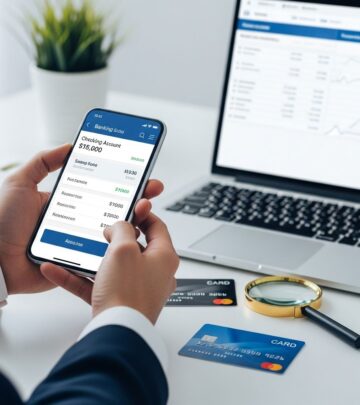
Your checking account history—deposits, withdrawals, overdrafts, and balances—is valuable data that banks collect and sometimes share. While it’s your money, the data belongs to the bank, governed by federal laws like the Gramm-Leach-Bliley Act (GLB Act). This article explains how sharing works, who gets access, your rights to control it, and risks involved.
Who Owns Your Checking Account Data?
Intuitively, you might think your transaction history is yours. However, banks own the data generated from your account. As Ed Mierzwinski from U.S. Public Interest Research Group notes, ‘You don’t. You totally don’t.’ Banks use this data for fraud monitoring, credit decisions, and marketing.
Under federal regulations, banks must protect nonpublic personal information (NPI), including account balances, payment history, and purchase details. Public data like names or addresses can be shared freely, but NPI requires safeguards.
Laws Governing Bank Data Sharing
Several federal laws regulate how banks share checking account history:
- Gramm-Leach-Bliley Act (GLB Act, 1999): Core law with Financial Privacy Rule (disclosure limits), Safeguards Rule (security programs), and Pretexting provisions (no false access). Banks must disclose privacy policies and offer opt-out for non-affiliate sharing.
- Fair Credit Reporting Act (FCRA): Controls sharing credit-related info with affiliates. Consumers can opt-out of affiliate marketing use. Banks must notify on adverse actions based on shared data.
- Electronic Fund Transfer Act (EFTA): Requires disclosures on sharing practices for checking/savings accounts with electronic transfers, including to holding company subsidiaries.
- Bank Secrecy Act (BSA): Mandates monitoring and Suspicious Activity Reports (SARs), which are confidential and limit closure explanations.
These laws balance bank operations with consumer privacy, prohibiting shares of sensitive data like SSN or exact balances without consent.
How Banks Share Data with Affiliates
Affiliates (e.g., same parent company’s subsidiaries) can receive your checking history for joint marketing or transactions. GLB allows this if you receive notice and don’t opt-out. FCRA permits ‘experience’ data (your account performance) without opt-out, but application data requires it.
Example: If your bank shares overdraft history with an affiliate lender, it informs credit decisions. Banks must detail this in annual privacy notices.
Sharing with Non-Affiliated Third Parties
Banks share NPI with non-affiliates only under exceptions:
- Service providers (e.g., statement printers) under contract.
- Joint marketing (if disclosed and no opt-out).
- Legal requirements or fraud prevention.
- Consumer-authorized apps via secure APIs, not risky screen-scraping.
Screen-scraping—where apps log in with your credentials—is discouraged due to security risks, likened to giving house keys to a plumber. Modern APIs in EU’s PSD2 provide safer access.
ChexSystems and Checking Account Reporting
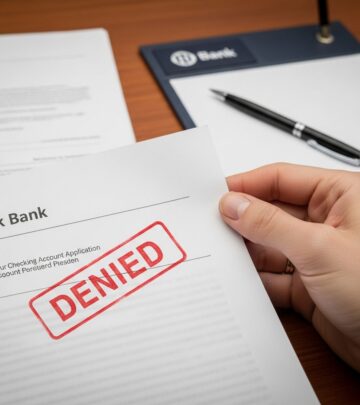
Banks report checking history to consumer reporting agencies like ChexSystems or Early Warning Services. This includes overdrafts, NSF checks, unpaid fees, and account closures.
ChexSystems scores predict risk; negative reports (e.g., involuntary closure) can block new accounts for up to 5 years. Banks check these before opening accounts, creating a ‘blacklist’ effect. Unlike credit reports, consumers get one free annual disclosure.
| Aspect | ChexSystems | Credit Bureaus (Equifax, etc.) |
|---|---|---|
| Data Type | Checking/deposit history, closures | Credit loans, payments |
| Duration | Up to 5 years | 7-10 years |
| Free Report | Annual | Weekly (current) |
| Dispute Process | Online/mail | Online |
4.6 million SARs filed yearly incentivize cautious reporting.
Third-Party Access and Open Banking
Fintechs like Mint request data via APIs or credentials. Banks prefer APIs for security; some like JPMorgan negotiate direct access. U.S. lacks mandates unlike EU PSD2, which requires balance/transaction sharing.
Portable data boosts competition but risks privacy; lenders may deny based on full history. Shared Access (e.g., U.S. Bank) allows delegates view-only transaction views, limited actions for business.
Your Rights: Opt-Out and Controls
Key rights include:
- Privacy Notices: Annual disclosures detail sharing. Opt-out of non-affiliate marketing.
- Opt-Out Requests: Call or visit bank site; effective in 30 days.
- Free Reports: ChexSystems (chexsystems.com), credit bureaus.
- Disputes: Challenge inaccuracies within 30 days.
- GLB Complaints: FTC or CFPB.
Proposed bills seek national standards for more control.
Risks of Data Sharing
Sharing enables services but risks breaches, identity theft, or denials. SAR confidentiality hides closure reasons. Non-banks may lack safeguards.
Protecting Your Checking Account Privacy
Tips:
- Review privacy notices yearly.
- Opt-out promptly.
- Use bank APIs for apps.
- Monitor ChexSystems.
- Avoid frequent overdrafts.
Frequently Asked Questions (FAQs)
Q: Can I stop my bank from sharing my checking history with affiliates?
A: Yes, via GLB opt-out for marketing, but FCRA allows experience data sharing.
Q: How long does negative checking history stay on ChexSystems?
A: Up to 5 years, but disputes can remove inaccuracies.
Q: Is screen-scraping safe for sharing account data?
A: No, banks warn it’s risky; prefer APIs.
Q: Do banks share data without my permission?
A: Only under exceptions like service providers or if no opt-out.
Q: What if my account is closed and reported?
A: Check ChexSystems; build positive history elsewhere.
Changes and Future of Data Sharing
Open banking grows; U.S. may adopt EU-like rules for consumer control. Banks prioritize security amid fintech rise. Stay informed via CFPB.
References
- Is your bank data yours? — Politico. 2017-10-11. https://www.politico.com/agenda/story/2017/10/11/who-owns-financial-data-000538
- Share and share alike: How banks share personal information — First Keystone Community Bank. 2023-01-01. https://www.fkc.bank/blog/information-sharing-by-banks-is-highly-regulated-process/
- Existing Privacy Laws Already Regulate Information Sharing — American Bankers Association. 2024-06-15. https://www.aba.com/banking-topics/consumer-banking/privacy/privacy-information-sharing
- Why Making Banking Data Portable Isn’t Always Good for Borrowers — Yale School of Management. 2023-05-10. https://insights.som.yale.edu/insights/why-making-banking-data-portable-isnt-always-good-for-borrowers
- What can a Shared Access user see and do? — U.S. Bank. 2025-01-01. https://www.usbank.com/customer-service/knowledge-base/KB0070087.html
- The Truth About Account Closures — Bank Policy Institute. 2024-03-20. https://bpi.com/the-truth-about-account-closures/
- Privacy Rule Handbook — FDIC. 2024-11-15. https://www.fdic.gov/bank-examinations/privacy-rule-handbook
Similar Articles








Read full bio of Sneha Tete