Household Debt: 5 Strategies To Manage Debt In 2025
Understand how high interest rates reshape household debt, risks, and smart strategies to stay financially resilient.
Household Debt in a High-Rate Economy
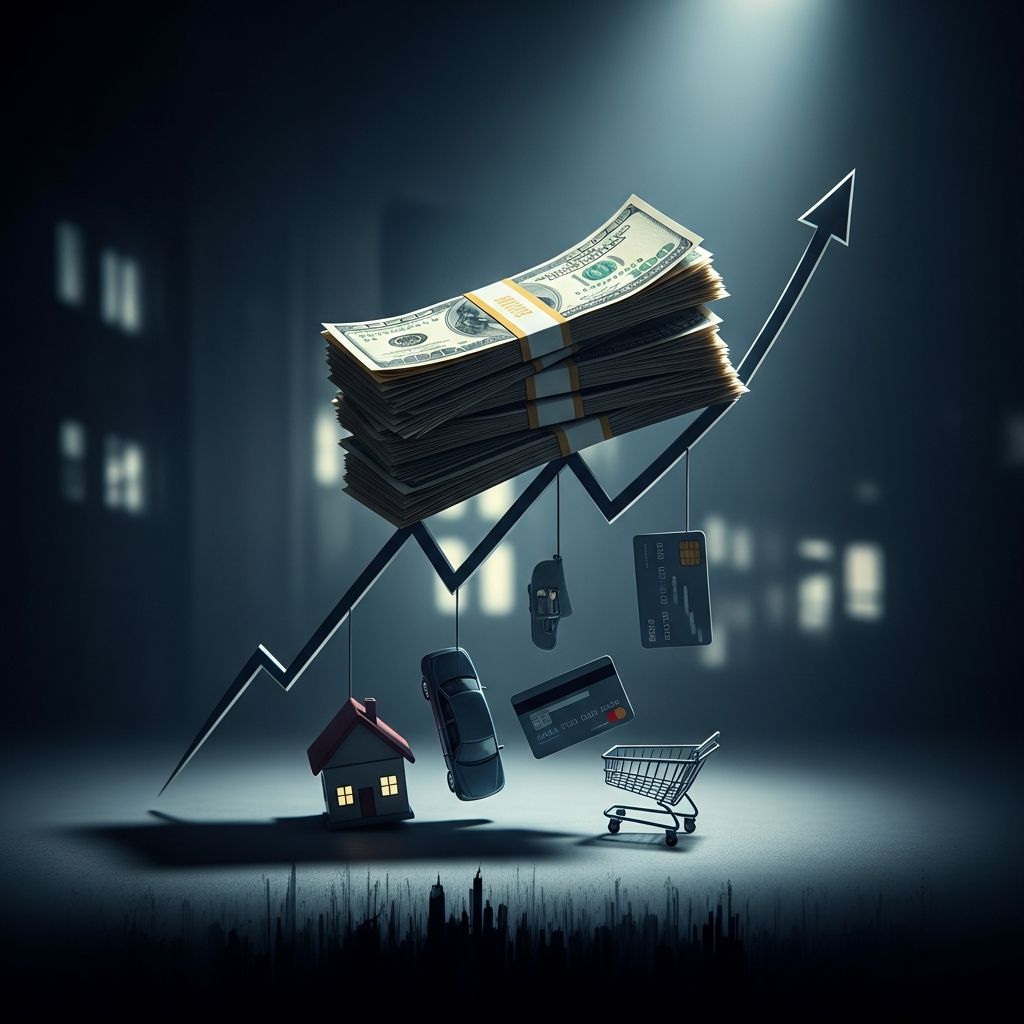
After years of historically low borrowing costs, many households now face a very different reality: a high interest rate environment that makes every dollar of debt more expensive. Rising policy rates have filtered through to mortgages, credit cards, auto loans, personal loans, and other forms of consumer credit, reshaping family budgets and long-term financial plans.
Understanding how higher rates affect your existing debts, your monthly cash flow, and your future borrowing decisions is essential for making smart choices and staying financially resilient. This article explains how we got here, what it means for different types of household debt, and what practical steps you can take to navigate this new landscape.
How We Reached a High-Interest Environment
Central banks around the world, including the U.S. Federal Reserve, increased interest rates aggressively starting in 2022 to bring down inflation that had reached its highest levels in decades. As policy rates rose, borrowing costs for households also climbed.
Key features of this shift include:
- Rapid rate hikes: Policy rates moved from near zero to multi-decade highs in a relatively short period, driving up rates on variable-rate and newly issued loans.
- Persistent inflation pressures: Although inflation has eased from its peak, central banks have signaled that rates may stay higher for longer to ensure price stability.
- Higher yields across the credit spectrum: From government bonds to consumer credit, lenders now demand higher interest to compensate for inflation and risk.
At the same time, household debt levels have continued to rise. For example, in the United States, total household debt reached $18.59 trillion in the third quarter of 2024, up $197 billion from the previous quarter, according to the New York Fed’s Household Debt and Credit Report. Mortgage balances, auto loans, and credit card balances all contributed to this increase.
The State of Household Debt Today
Household borrowing has not only grown in volume; it has also become more expensive to service. Several trends stand out:
- Rising mortgage balances: Average mortgage balances in mid-2025 were more than 30% higher than pre-2019 levels, reflecting both higher home prices and borrowing costs.
- Growing credit card usage: Higher living costs and inflation have led many households to lean more heavily on revolving credit for day-to-day expenses.
- Increased delinquencies in some segments: Early-stage delinquencies have risen in certain regions and among specific borrower groups, especially where debt burdens are high and savings buffers are thin.
Despite these pressures, some indicators suggest that, on aggregate, households are not yet at a breaking point. For example, the ratio of household debt payments to disposable income in the U.S. remains below its long-run average, suggesting some remaining capacity to absorb higher costs so long as the labor market remains solid.
How High Interest Rates Affect Different Types of Debt
Not all debts respond to higher interest rates in the same way. The impact depends on whether the loan has a fixed or variable rate, its term, and when it was originated.
| Debt Type | Typical Rate Structure | Impact of Higher Rates |
|---|---|---|
| Mortgages | Fixed or adjustable | New or adjustable-rate loans become more expensive; fixed-rate loans unchanged but refinancing is costly. |
| Credit Cards | Variable (tied to prime/base rate) | Interest charges on revolving balances rise almost immediately as base rates increase. |
| Auto Loans | Usually fixed | New loans carry higher rates; monthly payments for recent buyers increase compared with prior years. |
| Student Loans | Fixed (federal), fixed/variable (private) | New borrowers face higher rates; some variable private loans become costlier over time. |
| Personal Loans | Usually fixed | New consolidation or personal loans may be more expensive but can still reduce costs versus very high-rate credit cards. |
Mortgages
For households with fixed-rate mortgages, payments remain the same even as rates rise. The main challenge is for new buyers or those who need to move or refinance: they face much higher monthly payments for the same loan amount than they would have just a few years ago. Higher rates also pressure home affordability and can slow housing market activity.
Adjustable-rate mortgages (ARMs) are more sensitive. When their rate resets, monthly payments can jump sharply, straining budgets and increasing the risk of delinquency, especially if incomes have not kept pace with rising costs.
Credit Cards
Credit cards are among the most directly and rapidly affected by rising interest rates. Most cards carry variable rates linked to a benchmark, meaning that as policy rates increase, card APRs also rise. This has several consequences:
- Higher interest on existing balances: Even if you do not add new charges, the cost of carrying a balance increases with each rate hike.
- Slower progress on repayment: A larger share of each payment goes to interest instead of principal.
- Greater risk of persistent debt: Households that only make minimum payments may see their payoff timelines stretch significantly.
Auto Loans
Auto loans are typically fixed-rate, but the rate you receive is heavily influenced by prevailing interest rates and your credit profile. As borrowing costs have risen, monthly payments on new car loans have become substantially higher, especially when combined with elevated vehicle prices.
For many households, this means:
- Opting for longer loan terms to keep monthly payments manageable.
- Considering used vehicles instead of new to reduce the loan amount.
- Re-evaluating the total cost of owning and operating a vehicle.
Student Loans
Federal student loans in the U.S. generally have fixed rates set at origination, so existing borrowers are shielded from immediate rate spikes. New cohorts, however, face higher fixed rates, which can raise the long-term cost of education financing.
Private student loans can carry either fixed or variable rates. Borrowers with variable-rate private loans may see their payments rise over time as interest benchmarks increase. Recent data show that new student loan delinquencies have risen among certain age groups, especially older borrowers whose payment moratoriums have ended.
Personal Loans and Other Consumer Credit
Personal loans, lines of credit, and other consumer products often become more expensive in a high-rate environment. However, a fixed-rate personal loan can still be a useful tool to consolidate high-interest debts, such as revolving credit card balances, into a single payment at a lower rate.
Why Debt Feels Heavier When Rates Are High
When interest rates rise, the burden of existing and new debt increases in several ways:
- Higher monthly payments: For variable-rate or newly originated loans, every rate increase raises the amount you must pay each month to stay current.
- More income diverted to interest: Housing, credit card, and auto payments can absorb a larger share of disposable income, leaving less for savings and discretionary spending.
- Reduced financial flexibility: Households have less room to absorb shocks like job loss, medical emergencies, or unexpected expenses.
- Increased delinquency risk: As debt-servicing costs rise, financially stretched borrowers are more likely to miss payments, especially in segments where balances have grown rapidly.
Despite these challenges, aggregate measures still show some resilience. The Bank of America Institute notes that the ratio of household debt payments to disposable income remains below its historical average, indicating that many households still have some capacity to manage their obligations, assuming labor markets remain relatively strong.
Who Is Most Exposed to High Interest Rates?
The impact of a high-rate environment is uneven. Certain groups and regions are more exposed than others:
- Borrowers with variable-rate debt: Those holding variable-rate mortgages, credit cards with high utilization, and variable-rate private loans feel the effect of rate hikes quickly.
- Lower-income households: Households with limited savings and higher reliance on credit for everyday expenses face greater risk when debt service costs rise.
- Recent homebuyers and car buyers: Those who borrowed at higher rates or with small down payments may find that their debt burdens leave little room in their monthly budgets.
- Regions with rapid price growth: Areas where housing or living costs surged during low-rate years may now see higher delinquency rates as local borrowers struggle with larger balances.
Strategies to Manage Household Debt in a High-Rate Economy
While you cannot control macroeconomic interest rates, you can take concrete steps to manage your own debt more effectively. A structured plan can reduce financial stress and lower the total cost of your borrowing over time.
1. Take Inventory of All Your Debts
Start by compiling a complete list of what you owe. For each debt, note:
- Outstanding balance
- Interest rate (APR)
- Type of rate (fixed or variable)
- Minimum monthly payment
- Remaining term (if applicable)
This overview helps you identify which debts are most expensive and which pose the greatest risk if rates rise further.
2. Prioritize High-Interest and Variable-Rate Debts
In a high-rate environment, focusing on high-APR and variable-rate accounts can yield meaningful savings. Common approaches include:
- Debt avalanche: Pay extra toward the debt with the highest interest rate while making minimum payments on others. Once that is paid off, target the next highest-rate debt.
- Debt snowball: Prioritize the smallest balances first to build momentum and improve motivation, then move on to larger debts.
From a purely financial standpoint, the avalanche method typically minimizes total interest paid, which is particularly valuable when rates are elevated.
3. Explore Debt Consolidation Options
Debt consolidation can simplify repayment and may reduce your overall interest costs, especially if a large portion of your debt is on high-rate credit cards. Common consolidation tools include:
- Fixed-rate personal loans: Convert multiple card balances into a single fixed-rate loan with a defined payoff schedule.
- Balance transfer credit cards: Some cards offer promotional low or 0% APR periods on transferred balances, though fees and conditions must be carefully reviewed.
- Home equity loans or lines: For homeowners with sufficient equity, secured borrowing can sometimes offer lower rates, but it also puts your home at risk if you cannot repay.
In a high-rate environment, the potential savings from consolidation depend on your credit profile and available offers. It is important to compare the new rate, fees, repayment term, and impact on your overall financial risk.
4. Strengthen Your Financial Resilience
Managing debt is only one piece of the puzzle. Building resilience can help you withstand a prolonged period of higher rates:
- Increase emergency savings: Aim to set aside several months of essential expenses in a liquid account.
- Maintain or improve your credit score: On-time payments and lower credit utilization can unlock better rates and terms.
- Review discretionary spending: Reallocating funds from non-essential expenses to debt repayment can accelerate your progress.
- Consider income diversification: Side work, upskilling, or career moves may enhance your ability to service debt and save.
5. Stay Informed About Economic and Policy Changes
Expectations for inflation, economic growth, and central bank policy influence the path of interest rates. Economic outlooks suggest that growth in advanced economies may remain modest, with ongoing uncertainty about inflation and monetary policy over the next few years. Keeping an eye on these developments can help you decide when to lock in fixed rates, refinance, or adjust your financial plans.
Frequently Asked Questions (FAQs)
Q: Why did interest rates rise so quickly in recent years?
A: Central banks raised policy rates to combat high inflation and restore price stability. As inflation surged to multi-decade highs, authorities concluded that maintaining low rates risked entrenching inflation and undermining long-term economic health.
Q: Are households more indebted now than before the pandemic?
A: Yes, in many countries overall household debt levels are higher than pre-2019. In the U.S., for example, total household debt reached $18.59 trillion in Q3 2024, up significantly from before the pandemic, with mortgages, auto loans, and credit cards all contributing to the increase.
Q: Should I prioritize paying off my mortgage or my credit card debt?
A: For most households, high-interest revolving debts such as credit cards should be prioritized before extra payments on low-rate fixed mortgages. Credit card APRs are typically much higher and more sensitive to rate hikes, so reducing those balances usually generates larger savings.
Q: Is debt consolidation still useful when rates are high?
A: It can be, but the benefits depend on your current rates and the terms available. If you can replace multiple high-rate credit card balances with a lower fixed-rate loan or promotional balance transfer, you may still reduce interest costs and simplify repayment, even in a high-rate environment.
Q: What happens if interest rates fall again in the future?
A: If rates decline, new borrowing may become cheaper, and opportunities to refinance certain debts at lower rates could emerge. However, relying on future rate cuts is risky; it is generally wise to manage current debt prudently and treat any future rate relief as a bonus rather than a certainty.
References
- Where is debt growing? — Bank of America Institute. 2025-08-01. https://institute.bankofamerica.com/economic-insights/growing-debt.html
- Household Debt and Credit Report — Federal Reserve Bank of New York, Center for Microeconomic Data. 2024-11-19. https://www.newyorkfed.org/microeconomics/hhdc
- Will 2026 bring stability or shock? Bryant economists weigh in — Bryant University News. 2025-01-06. https://news.bryant.edu/will-2026-bring-stability-or-shock-bryant-economists-weigh
- Global Economic Prospects — World Bank Group. 2024-06-01. https://www.worldbank.org/en/publication/global-economic-prospects
- World Economic Outlook — International Monetary Fund. 2024-04-16. https://www.imf.org/en/Publications/WEO
Similar Articles








Read full bio of medha deb