EV Range In Hot Weather: 5 Ways To Reduce Summer Loss
Discover how summer heat influences electric vehicle efficiency, battery health, and driving distance with practical strategies to optimize performance.
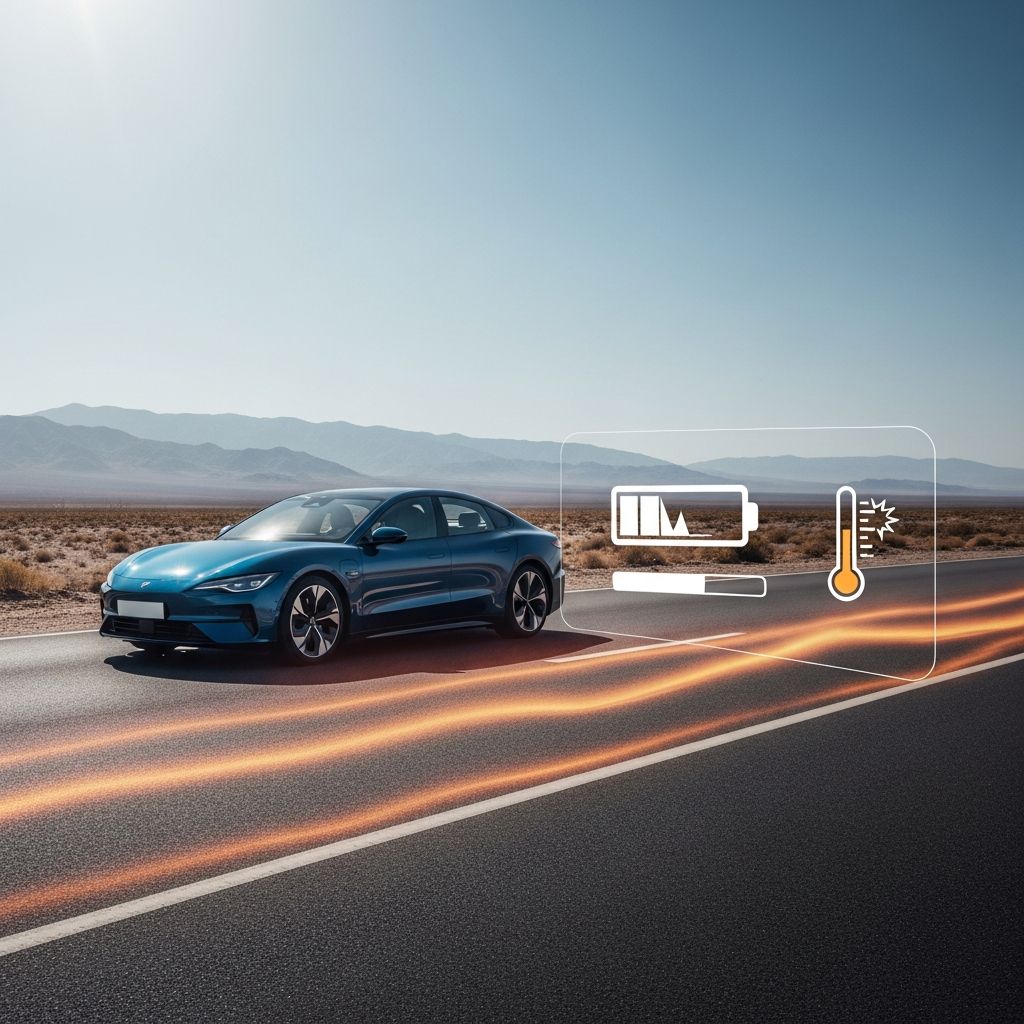
Electric vehicles generally experience a modest reduction in driving range during hot weather, primarily due to the energy demands of air conditioning and battery thermal management systems. Real-world data indicates losses of about 5% at 90°F (32°C), escalating in extreme heat above 100°F.
The Science Behind Heat and EV Performance
EV batteries operate optimally within a narrow temperature band, typically 20-25°C (68-77°F), where efficiency peaks for both range and charging. When ambient temperatures climb, lithium-ion batteries generate internal heat from chemical reactions, necessitating active cooling to prevent degradation. This process consumes power that would otherwise propel the vehicle.
Unlike internal combustion engines, which dissipate heat through exhaust and radiators, EV batteries require sophisticated liquid or air cooling loops. These systems activate more frequently in heat, drawing 2-5% of total energy under normal summer conditions.
Quantifying Range Loss in Summer Heat
Studies from large EV fleets reveal consistent patterns. At 80°F, range dips by roughly 3%; at 90°F, it’s 5%; and in 100°F+ scenarios, losses can reach 17-31% depending on the model and conditions. For a 300-mile rated EV, this translates to 15 miles lost at 90°F—often imperceptible for daily commutes but notable on long trips.
| Temperature (°F) | Average Range Loss (%) | Example: 300-mi EV Real Range (mi) |
|---|---|---|
| 70-80 | 0-3 | 291-300 |
| 90 | 5 | 285 |
| 100+ | 17-31 | 249-207 |
Data aggregated from thousands of vehicles shows most models achieve 100% or more of rated range between 50-88°F, with heat effects milder than cold weather’s 40%+ drops.
Air Conditioning: The Primary Culprit
Cabin cooling via AC is the biggest range drain in summer, using 5-10 kWh per hour in extreme heat—equivalent to 15-30 miles of driving. Battery preconditioning for comfort and safety adds to this. Interestingly, vehicles with heat pumps, optimized for winter, may lose slightly more range in summer as their systems prioritize cold-weather efficiency.
- Passenger AC: Cools the interior, consuming steady power.
- Battery Cooling: Maintains pack at 25-40°C to avoid thermal runaway risks.
- Auxiliary Loads: Fans, pumps, and electronics amplify the effect.
Battery Chemistry and Heat Sensitivity
Not all batteries react equally. Nickel-manganese-cobalt (NMC) cells degrade faster above 40°C if charged hot, accelerating lithium plating and capacity fade. Lithium-iron-phosphate (LFP) batteries tolerate heat better, losing less capacity when parked in sun or low-charge states for weeks.
Prolonged exposure above 80% state-of-charge (SoC) in 100°F+ heat speeds degradation, shortening long-term battery life. Occasional hot charges are fine, but daily habits in desert climates matter.
Real-World Factors Amplifying Heat Effects
Beyond temperature, variables compound losses:
- Highway Speeds: Aerodynamic drag rises with speed, worsened by hot, denser air.
- Solar Loading: Dark-painted cars absorb more heat, triggering cooling sooner.
- Payload/Tires: Extra weight or underinflated tires from heat expansion increase rolling resistance.
- Parking Duration: Long sun exposure preheats batteries, spiking initial AC draw.
Fleet data confirms 70°F as the efficiency sweet spot, with summer averages outperforming winter by 20-30%.
Strategies to Combat Summer Range Loss
Drivers in hot regions like Arizona or Texas can mitigate impacts through targeted habits.
- Precondition While Plugged In: Cool cabin and battery on charger to avoid draining driving range.
- Shade Parking: Garages or trees reduce solar gain, cutting AC needs by 10-20%.
- Eco Mode Activation: Limits power to motor, prioritizing range over acceleration.
- Moderate Speeds: Stay under 70 mph; smooth driving saves 5-10% energy.
- Charge Overnight: Avoid daytime hot charging; aim for 20-80% SoC daily.
These steps can reclaim most lost range, making EVs viable even in scorching conditions.
Model-Specific Performance Insights
Range loss varies by design. Heat-pump EVs like some Teslas may underperform in 100°F tests compared to resistance-cooled rivals. LFP-equipped models (e.g., certain BYDs) excel in sustained heat. Always check owner forums or apps for localized data, as software updates refine thermal management.
Long-Term Battery Health in Hot Climates
While range loss is temporary, chronic heat accelerates calendar aging—capacity fade even when parked. Studies show batteries in Phoenix lose 2-3% more capacity yearly than in milder zones. Counter this with garage storage, solar shades, and firmware-monitored cooling.
Modern EVs include safeguards like charge throttling above 113°F (45°C), preventing damage but pausing sessions.
Comparing Heat to Cold Weather Effects
| Condition | Range Loss (%) | Main Cause |
|---|---|---|
| Hot (90°F) | 5-18 | AC + Battery Cooling |
| Extreme Heat (100°F+) | 17-31 | Intensified Cooling |
| Cold (32°F) | 16-46 | Heater + Battery Heating |
| Freezing (5°F) | ~46 | High Resistance Heating |
Heat impacts are less severe, allowing summer road trips with minimal planning.
Future Innovations for Hotter Climates
OEMs are advancing: advanced heat pumps for bidirectional efficiency, passive cooling materials, and AI-optimized preconditioning. LFP adoption grows for its heat resilience, promising better parity with gas cars in extremes.
Frequently Asked Questions
Is it safe to charge EVs in hot weather?
Yes, with built-in protections. Avoid frequent full charges in 100°F+; optimal is overnight in shade.
How much does AC reduce EV range?
Typically 5-10% in 90°F heat, less with preconditioning.
Do all EVs lose the same range in heat?
No; LFP batteries fare better, heat pumps vary.
Can hot weather permanently damage my EV battery?
Occasional yes, chronic exposure accelerates wear—mitigate with best practices.
What’s the best temp for EV efficiency?
20-25°C (68-77°F).
References
- How Hot Summer Weather Affects EV Range — Recurrent. 2023. https://www.recurrentauto.com/research/what-a-c-does-to-your-range
- How Do Hot & Cold Temperatures Affect EV Range? — Mazda USA. 2024. https://www.mazdausa.com/resource-center/evs-hot-cold-weather
- How Is an EV Affected by Hot Weather? — Car and Driver. 2024-07-15. https://www.caranddriver.com/features/a61678587/how-is-an-ev-affected-by-hot-weather/
- Top EV Range Factors Impacting Fleet Efficiency — Geotab. 2023. https://www.geotab.com/blog/ev-range/
- Tips for Charging Electric Cars in Hot Weather — Pod Point. 2024. https://podenergy.com/guides/tips-for-using-electric-cars-in-hot-weather
- How far can electric cars REALLY go in EXTREME heat? — What Car? (YouTube). 2023. https://www.youtube.com/watch?v=5G1KQhCotSI
- Electric vehicles can take the heat: best practices — FLO. 2023. https://www.flo.com/insights/electric-vehicles-can-take-the-heat-best-practices-to-follow-in-hot-weather/
Similar Articles








Read full bio of Sneha Tete