Homeownership vs Renting in America
Explore the latest trends in U.S. home buying and renting, demographic insights, state variations, and future forecasts shaping housing decisions.
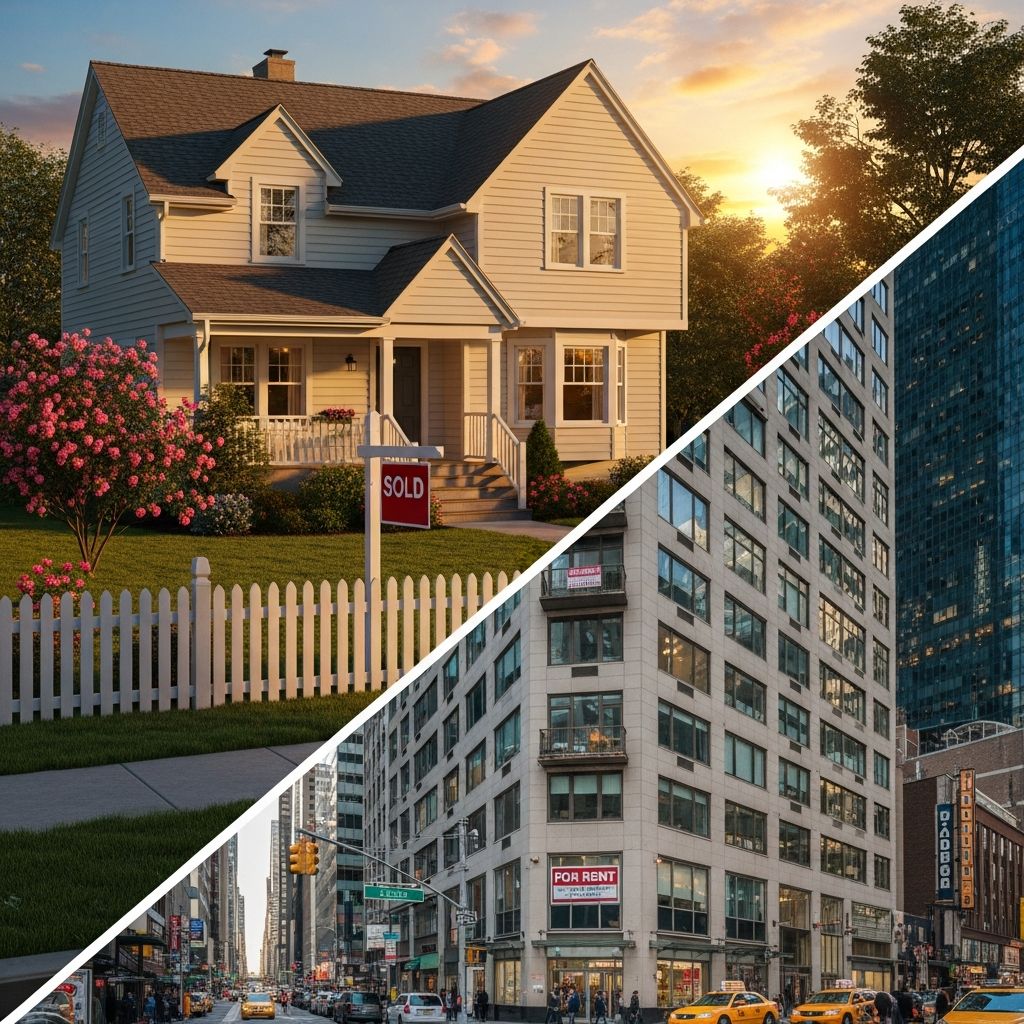
The U.S. housing landscape reflects a complex balance between owning and renting, influenced by economic conditions, demographics, and regional factors. As of late 2025, the national homeownership rate stands at 65.7%, hovering near the 25-year average of 66.3% but facing pressures from rising costs and affordability hurdles. This rate indicates that about 35% of households rent, highlighting a persistent divide in wealth-building opportunities and living stability.
Current National Homeownership Landscape
Homeownership has remained relatively stable over decades, fluctuating around 64-65% since the 1960s. Recent data from the U.S. Census Bureau shows the rate at 65.7% in Q4 2025, a slight uptick from earlier in the year but still below long-term norms. Despite a pandemic-driven surge in 2020 that pushed rates over 67%, subsequent years saw declines due to high prices and interest rates.
Owner-occupied households comprise roughly 60.6% of all units, even as record homebuying occurred amid economic disruptions. Projections for 2026 suggest a dip to 64.8%, as renting becomes more attractive with expected rent declines offsetting modest buying cost improvements. Investors snapping up over 10% of recent purchases further crowds out individual buyers.
Demographic Breakdown: Who Owns and Who Rents
Homeownership varies significantly across demographics, revealing deep inequities. Younger adults under 35 saw the largest gains, with rates rising from 36.3% to 37.9% in one year, signaling millennial and Gen Z entry despite barriers.
| Demographic Group | Homeownership Rate | Key Insight |
|---|---|---|
| White Households | 73.7% (Q1 2020) | Nearly 75% own outright in some data. |
| Black Households | 44% (Q1 2020) | 40% less likely than white counterparts. |
| Hispanic New Owners | 277,000 in 2019 | 51% of growth since 2009. |
| Singles | 23% (2020 peak) | Highest rate increase from 6.4%. |
These gaps underscore systemic challenges: Black families face steeper hurdles, while Hispanic growth shows progress. Singles’ rise reflects changing household formations.
State-by-State Variations in Ownership
Homeownership rates differ widely by state, driven by economics, population density, and policy. West Virginia leads with 72.5% in recent data and 53.9% mortgage-free homes—the highest nationally. New York trails at 53.7%, reflecting urban rental markets.
High-ownership states include those with affordable housing stocks, while coastal areas lag. California sits at 55.2%, burdened by high costs despite population size. The South sees rapid growth in mortgage-free ownership in metropolitan counties.
- Top Ownership States: West Virginia (72.5%), clustered in rural areas.
- Low Ownership States: New York (53.7%), urban hubs like California.
- Populous Influences: Texas, Florida, California house most owners due to scale.
Maryland has the lowest mortgage-free rate at 29.0% (excluding D.C.), while every state saw increases since 2014.
Rising Trend of Mortgage-Free Homeownership
A notable shift is the growth in homes owned outright, reaching 39.4% of owner-occupied units in 2020-2024, up from 34.4%. This equates to nearly 40% of homeowners without mortgages in 2024, fueled by high interest rates discouraging sales and refinances. West Virginia tops at 53.9%, Maryland bottoms at 29.0%.
This trend locks in older owners, reduces market inventory, and stabilizes communities but exacerbates shortages for buyers. Non-mortgage costs like insurance and utilities have risen 35% since 2019, straining even paid-off owners.
Renting Realities and Vulnerabilities
Renters, at 35% of households, face heightened risks. About 40 million are eviction-prone, with 43% in serious danger versus 5% of owners. Affordability crises hit renters hardest, as 21 million owners (and implied more renters) spend over 30% of income on housing.
2026 forecasts note renting’s appeal: declining rents versus persistent buy costs keep many sidelined. Investor activity sustains rental supply but inflates prices.
Emerging Influences: Climate and Economic Pressures
Climate change reshapes decisions, with 49% of owners considering moves due to weather risks; 93% expect damage soon. Florida (58%) and California (52%) are most avoided for extremes. 80% anticipate local price hikes in 2026.
Home prices surged 50% since 2020; J.P. Morgan predicts 0% growth in 2026 as demand balances supply. These factors compound affordability, pushing rates down.
Pros and Cons: Owning vs Renting
| Aspect | Owning | Renting |
|---|---|---|
| Wealth Building | Equity growth, tax benefits | No equity, but flexibility |
| Costs | Mortgage, maintenance, taxes | Rent hikes, no control |
| Stability | Fixed payments possible | Eviction risks higher |
| Mobility | Harder to relocate | Easier moves |
Owners build long-term wealth but face upfront barriers; renters prioritize flexibility amid uncertainties.
Frequently Asked Questions (FAQs)
What is the current U.S. homeownership rate?
As of Q4 2025, it’s 65.7%, near the 25-year average.
Which state has the highest homeownership?
West Virginia at 72.5%.
Are more homes being owned mortgage-free?
Yes, up to 39.4% in 2020-2024.
Will homeownership rates rise or fall in 2026?
Projected to fall to 64.8%.
How does race affect homeownership?
White households at 73.7%, Black at 44%.
Why are younger people buying more homes?
Under-35 rates rose to 37.9%, biggest yearly gain.
Navigating the Future of Housing
Surging prices, climate risks, and investor dominance challenge aspiring owners. Policy interventions, like boosting supply, could stabilize rates. Renters must weigh short-term savings against long-term costs, while owners monitor rising non-mortgage expenses. Understanding these dynamics empowers informed choices in a tightening market.
References
- Homeownership Statistics in 2026 — The Zebra. 2026. https://www.thezebra.com/resources/research/homeownership-statistics/
- Share of Owner-Occupied, Mortgage-Free Homes Up in 2024 — U.S. Census Bureau. 2026-01. https://www.census.gov/library/stories/2026/01/mortgage-free-homes.html
- Homeownership Rate Expected To Fall Further in 2026 — Realtor.com. 2026. https://www.realtor.com/news/trends/homeownership-rate-2026-housing-forecast/
- Homeownership rate climbs most among people under 35 — Real Estate News. 2026-02-05. https://www.realestatenews.com/2026/02/05/homeownership-rate-climbs-most-among-people-under-35
- What is the State of Homeownership Today? — Bipartisan Policy Center. 2026. https://bipartisanpolicy.org/explainer/what-is-the-state-of-homeownership-today/
- Kin’s 2026 Homeownership Trends Report — Kin Insurance. 2026. https://www.kin.com/blog/kin-homeownership-trends-report-2026/
- 2026 Kin Homeownership Trends Report: Climate Concerns — Meck Times. 2026-03-12. https://mecktimes.com/news/2026/03/12/2026-kin-homeownership-trends-report-climate-concerns-and-rising-costs-reshape-american-homeowner-decisions/
Similar Articles








Read full bio of medha deb