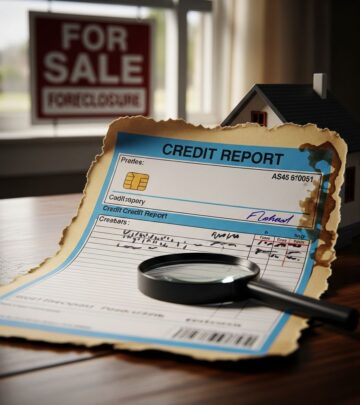
Building Homeownership with Imperfect Credit
Explore viable mortgage pathways designed for borrowers with lower credit scores

Many prospective homebuyers believe that a lower credit score automatically eliminates their chances of obtaining a mortgage. This misconception prevents countless individuals from pursuing homeownership. The reality is significantly more encouraging: multiple pathways exist for buyers with challenged credit histories to secure financing and purchase their first home. Understanding these options and how they operate represents the critical first step toward achieving your homeownership goals.
The Reality of Purchasing Property with Lower Credit Scores
A lower credit score does not definitively prevent mortgage approval, though it does affect the terms you’ll receive. Lenders view borrowers with lower credit scores as presenting higher risk, which typically translates to increased interest rates and more stringent qualification requirements. However, this elevated risk perception has led to the development of specialized loan programs designed specifically for these borrowers.
The mortgage industry has evolved significantly to accommodate diverse credit profiles. Rather than operating under a one-size-fits-all approach, modern lending offers multiple product categories tailored to different financial situations. Whether you’re a first-time buyer, a military service member, or a rural property purchaser, specialized programs can facilitate your path to homeownership.
Government-Backed Mortgage Solutions for Challenged Credit
Three primary government-backed mortgage programs have emerged as the most accessible options for borrowers with lower credit scores. These programs share a common characteristic: they prioritize accessibility over the stricter requirements of conventional lending.
Federal Housing Administration Loans: The Primary Option
Federal Housing Administration (FHA) loans represent the most commonly utilized program for buyers with imperfect credit histories. These mortgages receive backing from the federal government, which allows lenders to extend approval to applicants with credit profiles that would be rejected in the conventional market.
Most lenders accepting FHA applications require a minimum credit score of 580 with a standard 3.5% down payment requirement. However, greater flexibility emerges for borrowers willing to contribute more capital upfront. Applicants with credit scores as low as 500 can qualify for FHA financing if they can provide a 10% down payment. This flexibility recognizes that demonstrated financial capacity through larger down payments can offset concerns about credit history.
FHA loans offer several distinct advantages beyond relaxed credit requirements:
- Lower down payment thresholds compared to conventional mortgages
- Potential qualification without an established credit history, if sufficient non-traditional credit documentation exists
- Government backing that encourages lender participation across various institutions
- Structured pathways for borrowers to demonstrate creditworthiness through compensating factors
The FHA program recognizes that creditworthiness encompasses more than a single numerical score. A comprehensive review of your financial stability, employment history, and ability to manage ongoing obligations can strengthen your application.
Veterans Affairs Loans: Benefits for Military Service Members
For individuals with military service experience, Veterans Affairs (VA) loans present an exceptional opportunity. These mortgages carry no official minimum credit score requirement, reflecting the government’s commitment to supporting those who have served the nation. While some lenders internally prefer applicants with scores around 580 or higher, the absence of a federally mandated minimum creates genuine flexibility for eligible borrowers.
VA loans deliver benefits that extend beyond credit flexibility:
- Zero down payment requirements for eligible borrowers
- No requirement for private mortgage insurance
- Competitive interest rates reflecting government backing
- Eligibility for active-duty military, reservists, National Guard members, and qualifying surviving spouses
This program exemplifies how government-backed initiatives can substantially reduce financial barriers to homeownership.
USDA Rural Development Loans: Geographic Opportunity
For prospective homebuyers targeting rural areas, United States Department of Agriculture (USDA) loans offer another compelling option. These loans similarly feature no official minimum credit score requirement, instead emphasizing the borrower’s demonstrated capacity to manage debt obligations.
USDA loans require that no household member exceeds 115% of the area median income, ensuring the program serves its intended rural population. The zero down payment feature makes this option particularly attractive for credit-challenged buyers with limited liquid savings.
Conventional Mortgages: When They Become Accessible
Conventional mortgages—those backed by private lenders rather than government agencies—traditionally maintain stricter credit requirements. Most conventional programs establish minimum credit scores of 620, which exceeds the thresholds for government-backed alternatives.
However, conventional mortgages do offer a meaningful advantage for borrowers willing to meet their requirements. Private mortgage insurance, required when down payments fall below 20%, can eventually be removed once you build equity to the 20% threshold. This removal option creates long-term savings unavailable in some government-backed programs.
Conventional loans also accommodate vacation homes and investment properties, unlike many government-backed programs designed exclusively for primary residences.
Strategic Approaches to Strengthen Your Mortgage Application
Beyond understanding available loan types, several tactical decisions can substantially improve your qualification prospects and ultimate loan terms.
Increasing Your Down Payment Contribution
A larger down payment accomplishes multiple objectives simultaneously. It reduces your loan-to-value ratio, demonstrating decreased lender risk. It can enable qualification with lower credit scores—for example, reaching 500 credit scores for FHA loans instead of requiring 580. It reduces the total amount borrowed, lowering monthly payment obligations and improving your debt-to-income ratio.
Even modest increases in down payment percentage can create meaningful differences in approval likelihood and interest rate pricing.
Leveraging Co-Signer Support
A co-signer with stronger credit can meaningfully enhance your application profile. This individual co-signs the mortgage, accepting equal responsibility for repayment. Their creditworthiness partially offsets concerns about your own credit history, though you must recognize the significant obligation this places on your co-signer.
Utilizing Non-Traditional Credit Documentation
If you lack an established credit history despite having lower scores, non-traditional credit sources can demonstrate payment reliability. Rent payments, utility bills, insurance payments, and other recurring obligations can document your capacity to manage financial commitments. This documentation proves especially valuable in FHA applications.
Addressing Credit Report Errors
Before applying for mortgages, obtain your credit report and carefully review it for inaccuracies. Errors occur frequently and can depress your score unfairly. Disputing verified errors directly with credit bureaus can improve your score at no cost.
Down Payment Assistance and Grant Programs
Financial barriers to homeownership extend beyond mortgage qualification. Many borrowers with challenged credit also face difficulty accumulating sufficient down payment funds. Recognizing this reality, numerous assistance programs exist at state, county, and municipal levels.
These programs offer:
- Direct grants that do not require repayment
- Forgivable loans that disappear after maintaining the home for specified periods
- Matching programs where government contributions complement borrower savings
- Vouchers and credits toward closing costs
Some lenders actively connect qualifying borrowers with these resources, streamlining the application process. Investigating programs in your specific geographic area can reveal substantial funding opportunities otherwise unknown to individual applicants.
Understanding Interest Rate Implications
While government-backed programs enable access, borrowers with lower credit scores typically pay higher interest rates than those with excellent credit. This represents the lender’s compensation for accepting elevated risk. The interest rate difference can amount to 1-2 percentage points or more, significantly increasing your total mortgage cost over time.
This reality creates a powerful incentive to improve your credit profile. Even modest score increases can translate to meaningful interest rate reductions. For instance, improving from 580 to 620 might reduce your rate by 0.5%, which on a $300,000 mortgage saves tens of thousands across the loan term.
Debt-to-Income Ratio Considerations
Mortgage qualification depends on multiple factors beyond credit scores. Your debt-to-income ratio—the percentage of your gross monthly income consumed by debt obligations—significantly influences approval likelihood. This ratio encompasses mortgage payment, property taxes, insurance, homeowners association fees, auto loans, student loans, and other obligations.
Most lenders accept debt-to-income ratios up to 43%, though some government-backed programs allow higher percentages for well-qualified borrowers. If your ratio exceeds acceptable thresholds, increasing income or reducing other debt obligations can improve your qualification profile.
The Timeline: How Soon Can You Purchase?
Many borrowers with credit challenges wonder whether immediate purchase is possible or if waiting for credit score improvement is necessary. The answer depends on several factors: your current score, available down payment, debt-to-income ratio, and employment stability.
If your score exceeds 500, FHA financing may be available immediately with appropriate down payment. If your score falls below 500, focusing on score improvement over several months may be prudent before applying. Even modest score increases can substantially improve your loan terms, making the waiting period worthwhile.
Common Questions About Low-Credit Mortgages
Frequently Asked Questions
Can I obtain a mortgage with a credit score below 500?
FHA loans have a technical minimum of 500, though most lenders require 580. VA and USDA loans have no official minimums but expect demonstrated ability to manage debt. Scores below 500 substantially limit options; improving your score before applying generally produces better outcomes.
What if I have no credit history at all?
FHA loans can be obtained without an established credit profile if you provide sufficient non-traditional credit documentation, such as rental payment histories, utility bills, and insurance payment records demonstrating reliability.
How much will my interest rate increase due to lower credit?
Interest rate impacts vary by lender and specific circumstances but typically range from 0.5% to 2% above rates offered to borrowers with excellent credit. Exact pricing depends on your specific score, down payment amount, loan program, and current market conditions.
Can I remove private mortgage insurance from a conventional loan?
Yes, private mortgage insurance required on conventional loans with down payments below 20% can be removed once you build equity to the 20% threshold, either through payments or property appreciation.
Should I try improving my credit before applying?
If your score is significantly below 580, improving it over several months before applying can result in substantially better loan terms. However, if you meet minimum requirements for available programs, waiting may not be necessary unless you’re very close to score thresholds that would improve your terms.
Building Forward: Post-Purchase Credit Strategy
Obtaining a mortgage with lower credit represents a beginning rather than an ending point. Successfully managing your mortgage payment—making timely monthly payments without exception—provides the most powerful mechanism for credit score improvement. Over time, consistent mortgage payment history can substantially rebuild your credit profile, enabling you to refinance into better terms.
This refinancing opportunity underscores the importance of mortgage accessibility. Borrowers locked out of homeownership entirely cannot benefit from this credit-building mechanism. Accessible mortgage programs enable entry into homeownership while facilitating future credit rehabilitation.
Conclusion: Your Path Forward
A lower credit score genuinely complicates mortgage qualification but does not prevent it. Multiple pathways exist for borrowers across various circumstances—first-time homebuyers, military service members, and rural property purchasers—to achieve homeownership despite credit challenges. Understanding your available options, strategically increasing down payment contributions, and leveraging assistance programs when appropriate can transform homeownership from an unattainable dream into a concrete reality.
References
- How to buy a house with bad credit — Rocket Mortgage. 2025. https://www.rocketmortgage.com/learn/how-to-buy-house-with-bad-credit
- FHA Loans for Bad Credit & Bankruptcy — Freedom Mortgage. 2025. https://www.freedommortgage.com/learning-center/articles/fha-loans-with-poor-credit
- Can I Buy a House With Bad Credit? — Zillow. 2025. https://www.zillow.com/learn/can-i-buy-a-house-with-bad-credit/
- Home Loans For Bad Credit: Know Your Options — Chase Bank. 2025. https://www.chase.com/personal/mortgage/education/financing-a-home/home-loans-with-low-credit
- Bad Credit Mortgage Lenders | The Best Lenders of 2026 — The Mortgage Reports. 2025. https://themortgagereports.com/71499/best-bad-credit-mortgage-lenders
- Single Family Housing Guaranteed Loan Program — U.S. Department of Agriculture. https://www.rd.usda.gov/programs-services/single-family-housing-programs/single-family-housing-guaranteed-loan-program
- Government-backed home loans and mortgage assistance — USAGov. https://www.usa.gov/government-home-loans
Similar Articles








Read full bio of Sneha Tete