Homeownership and Car Insurance Savings
Discover how owning a home can lower your auto insurance premiums and strategies to maximize savings for renters and owners alike.
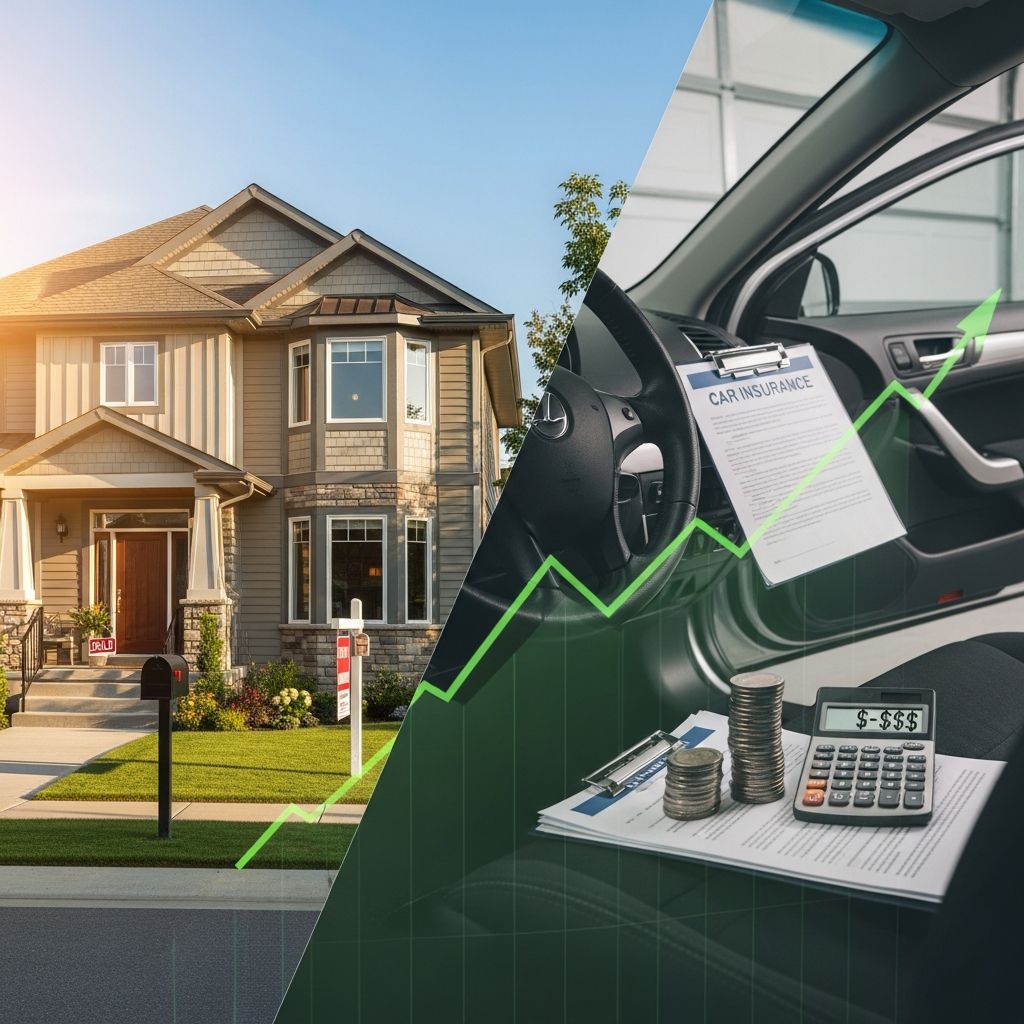
Owning a home frequently translates to reduced car insurance premiums compared to renting, as insurers associate property ownership with greater financial reliability and lower claim risks. This pattern holds in most U.S. states, where data reveals homeowners paying 2-10% less annually on average.
Why Insurers Favor Homeowners in Pricing
Insurance companies evaluate risk through various indicators, including housing status in 46 states and Washington, D.C. Homeowners are statistically less prone to filing claims, prompting lower rates. For instance, national averages show homeowners saving about $35 yearly, or 2.4%, over renters. This stems from actuarial data linking homeownership to stability.
Financial metrics like credit scores and prior coverage history also interplay, but homeownership serves as a proxy for responsibility. Regulators permit this in most areas because it correlates with safer driving behaviors.
State-by-State Rate Comparisons
Premium differences vary widely by location. In New Jersey, renters face 10.6% higher costs ($160 more annually), while Tennessee sees minimal gaps at 0.7% ($10). Four states—California, Hawaii, Massachusetts, Minnesota—ban this factor, and Michigan prohibited it since 2020.
| State | Renter Annual Premium | Homeowner Annual Premium | Difference (%) |
|---|---|---|---|
| New Jersey | $1,650 | $1,490 | 10.6% |
| Rhode Island | $2,110 | $2,076 | 1.6% |
| South Carolina | $1,369 | $1,348 | 1.6% |
| Oregon | $1,393 | $1,373 | 1.5% |
| Alabama | $1,387 | $1,370 | 1.2% |
Metro areas like Jersey City, N.J., exhibit the largest disparities, with renters paying 11.4% ($218) more. East Coast cities dominate these lists due to higher baseline premiums and stricter risk assessments.
Historical Data on Premium Penalties for Renters
Studies from the Consumer Federation of America (CFA) confirm longstanding trends. Their analysis of quotes for safe 30-year-old drivers found renters paying 7% more ($112/year) on average across major carriers. Liberty Mutual showed the steepest hikes at 19% ($307/year), with extremes like Farmers charging 47% more ($768) in Louisville.
City-specific examples include Allstate’s 19% surcharge in Tampa and Liberty Mutual’s 26% in Newark. These patterns disadvantage lower-income renters, whose median income lags homeowners by over $35,000 annually per Federal Reserve data.
Public Perceptions of Fairness
Driver sentiment leans against using homeownership in pricing. Surveys indicate only 21% awareness of this factor, with 46% deeming it unfair. Critics argue it penalizes those facing homeownership barriers like high costs or credit issues, exacerbating inequities.
Proponents counter that it’s actuarially sound, reflecting real risk differences. States banning it prioritize other factors like mileage and record.
Bundling Policies: A Universal Savings Strategy
Regardless of status, combining auto with home or renters insurance yields discounts. Homeowners bundling save 9-12% typically, while renters gain 4-7%. National data shows bundling cuts costs for both groups effectively.
| State | Homeowner % Savings | Homeowner $ Savings | Renter % Savings | Renter $ Savings |
|---|---|---|---|---|
| Alabama | 10.9% | $150 | 5.0% | $69 |
| Arizona | 12.5% | $156 | 6.1% | $76 |
| California | 11.0% | $200 | 4.3% | $79 |
| Colorado | 9.8% | $160 | 5.9% | $96 |
| New Jersey | 7.9% | $120 | 4.2% | $64 |
Strategies to Lower Premiums for Renters
- Shop multiple quotes: Compare carriers, as surcharges vary; some like Progressive minimize renter penalties.
- Bundling aggressively: Pair with renters insurance for immediate 5-10% off.
- Boost credit and history: These outweigh housing in many models.
- Low-mileage discounts: Track driving to qualify for usage-based savings.
- Safe driver programs: Telemetrics can erase status-based hikes.
Renters in restrictive states benefit most from bans, paying identical rates.
Broader Risk Factors Insurers Consider
Beyond housing, premiums hinge on age, vehicle type, location, and claims history. Homeownership complements these, but safe renters can match or beat owner rates via strong profiles. Experian notes top insurers offer 9-10% homeowner edges, averaging $166 yearly savings.
Legal Landscape and Future Changes
Consumer advocates push for nationwide bans, citing discrimination. California’s model—focusing on record and mileage—keeps rates equitable. Monitor state insurance departments for reforms, especially in high-disparity areas.
Frequently Asked Questions
Is car insurance always cheaper for homeowners?
No, but on average yes in 46 states; bans in four plus D.C. equalize it.
How much can bundling save?
5-12% typically, more for multi-policy holders.
Can renters avoid higher rates?
Yes, via shopping, good credit, and discounts.
Why do insurers use homeownership?
It predicts lower claims risk per data.
Which states ban this practice?
California, Hawaii, Massachusetts, Minnesota; Michigan since 2020.
Key Takeaways for Smart Shoppers
– Homeowners save 2-11% on auto insurance nationally.
– Renters: Bundle and compare to close the gap.
– State laws matter—check local rules.
– Fairness debates continue, but data drives pricing.
References
- Renters Pay up to 11% More than Homeowners for Car Insurance — The Zebra. 2023. https://www.thezebra.com/resources/car-insurance/car-insurance-rates-homeowners-vs-renters/
- Study shows renters pay more for auto insurance than homeowners — Capstone Group. 2016-02-10. https://www.capstonegrp.com/capstone-blog/2016/2/10/study-shows-renters-pay-more-for-auto-insurance-than-homeowners
- Good Drivers Pay More for Basic Auto Insurance If They Rent Rather Than Own Their Home — Consumer Federation of America. N/A. https://consumerfed.org/press_release/good-drivers-pay-more-for-basic-auto-insurance-if-they-rent-rather-than-own-their-home/
- Car Insurance Costs Way Less If You’re a Homeowner — Money.com. N/A. https://money.com/car-insurance-more-for-renters-than-homeowners/
- Is Car Insurance Cheaper if You Own a Home? — Experian. N/A. https://www.experian.com/blogs/ask-experian/is-car-insurance-cheaper-for-homeowners/
Similar Articles








Read full bio of medha deb