Homeowners Insurance Rates by State 2025
Compare homeowners insurance costs across all U.S. states and find the best rates for your home.
Understanding Homeowners Insurance Rates Across the United States
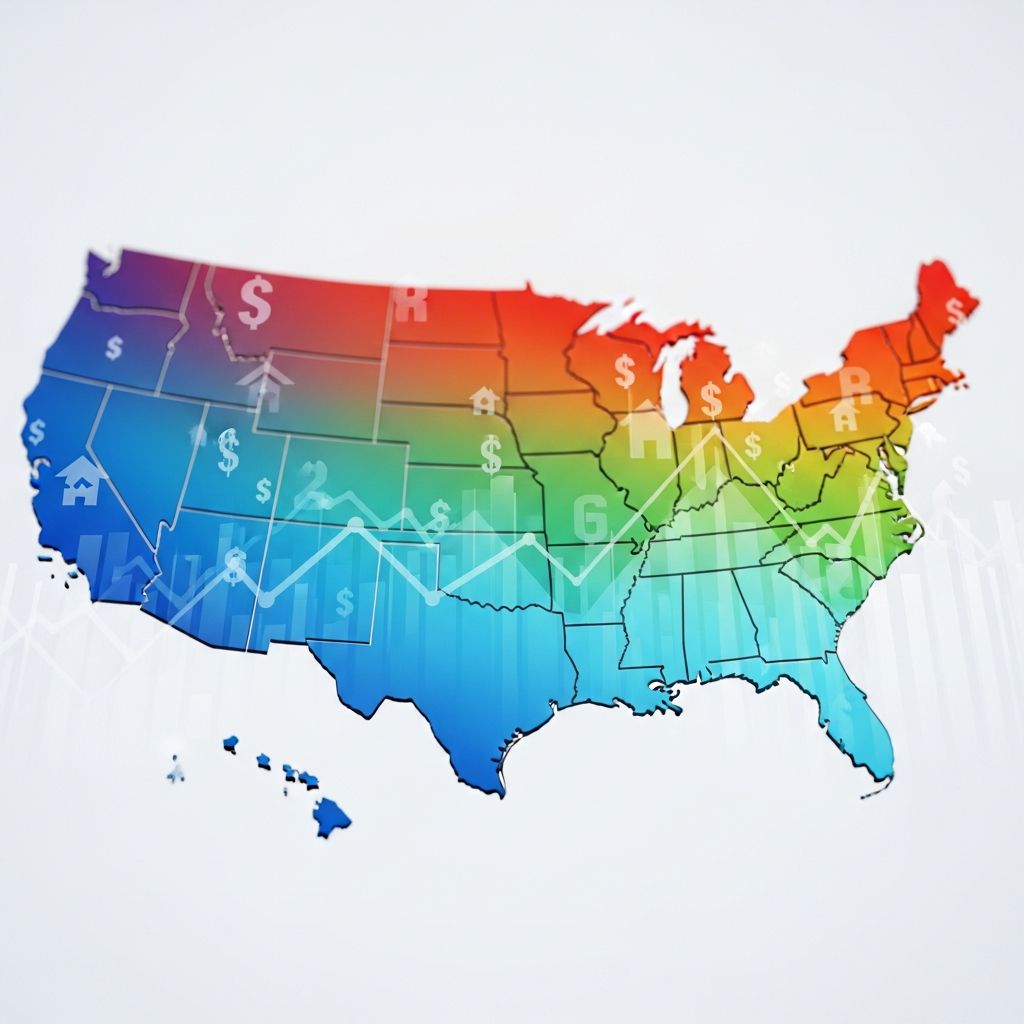
Homeowners insurance is a critical investment for property owners, protecting against financial losses from natural disasters, theft, and other unforeseen events. However, the cost of homeowners insurance varies dramatically depending on where you live. In 2025, understanding state-by-state rates is essential for homeowners looking to budget effectively and make informed decisions about their insurance coverage. The national average cost of homeowners insurance stands at $2,424 per year for $300,000 in dwelling coverage, but this figure masks significant regional variations that can dramatically impact your annual expenses.
Several factors influence homeowners insurance rates across different states, including the frequency of natural disasters, regional weather patterns, building material costs, and local market conditions. States prone to hurricanes, tornadoes, hail storms, and flooding typically experience higher insurance premiums. Additionally, the density of properties in an area, local labor costs for repairs, and even the state’s regulatory environment can affect pricing structures.
The Most Expensive States for Homeowners Insurance
Certain states consistently rank among the most expensive for homeowners insurance, with premiums significantly exceeding the national average. Understanding why these states cost more can help homeowners appreciate the risk factors that insurers consider.
Top Five Most Expensive States
Nebraska leads the nation in homeowners insurance costs, with an average annual premium of $6,587, representing a 172% increase above the national average. This midwestern state faces severe weather challenges, particularly during hail and wind seasons, making it exceptionally expensive for coverage. Oklahoma follows closely with rates of $4,695 annually, representing a 94% increase above the national average. Louisiana ranks second with average premiums of $6,274, or 159% above the national average, primarily due to its vulnerability to hurricanes and tropical storms. Florida claims the third position with average annual premiums of $5,838, representing a 141% increase above the national average, largely attributable to its hurricane-prone location and high frequency of weather-related claims. Kansas rounds out the top five with average premiums exceeding $4,000 annually, facing similar tornado and hail risks as neighboring states.
The reasons behind these elevated costs are rooted in genuine risk factors. Louisiana and Florida’s exposure to hurricanes means insurers face substantial potential losses during storm seasons. Nebraska and Kansas experience some of the most severe hail and wind damage in the nation, leading to frequent and costly claims. These states have witnessed insurance companies withdrawing from markets or significantly raising rates to offset accumulated losses from recent weather events.
The Most Affordable States for Homeowners Insurance
On the opposite end of the spectrum, several states offer significantly lower homeowners insurance rates, providing relief to residents and making homeownership more affordable.
Five Most Affordable States
Vermont boasts the lowest average homeowners insurance premiums in the nation at just $827 annually, representing a 66% reduction below the national average. Delaware follows with rates of $966 per year, 60% below the national average. Alaska offers premiums averaging $1,035 annually, representing a 57% reduction below the national average. New Hampshire provides competitive rates at $1,039 per year, also 57% below the national average. West Virginia completes the list with average premiums of $1,047 annually, maintaining a 57% savings below the national average.
These states benefit from lower frequency of natural disasters, temperate weather patterns, and relatively stable insurance markets. Their geographic locations generally protect them from hurricane paths, major tornado corridors, and severe hailstorm zones. Additionally, these states often have lower population density in vulnerable areas, which can help keep insurance costs reasonable.
Regional Rate Variations and City-Level Pricing
Within states, significant variations exist between cities and regions. Coastal areas typically face higher premiums due to hurricane and flooding risks, while inland locations often enjoy lower rates. Urban areas may have different pricing than rural regions based on factors like fire protection infrastructure and crime rates.
Hawaii Insurance Landscape
Hawaii presents an interesting case study in state-level pricing. While the state average for homeowners insurance is $1,296 annually, city-level variations show how geography matters within a single state. Honolulu averages $1,293, Hilo reaches $1,298, while Kailua, Pearl City, and Waipahu all maintain rates around $1,296. These relatively consistent rates across Hawaiian cities reflect the state’s uniform exposure to tropical weather patterns.
Kansas City Rate Comparisons
Kansas demonstrates substantial internal variation. Wichita, positioned in an area with higher tornado risk, averages $4,945 annually, while Topeka reaches $4,220. Kansas City proper sits at $3,981, and Lawrence offers slightly lower rates at $3,727. Manhattan completes the Kansas list at $4,201. These variations reflect differing exposures to severe weather within the state.
Pennsylvania’s Urban Centers
Pennsylvania shows interesting urban patterns. Pittsburgh averages $1,196 annually, Erie reaches $1,194, and Scranton maintains $1,171, representing some of the lower rates in the state. However, suburban areas like Bensalem ($1,581) and Abington ($1,422) demonstrate higher costs, potentially reflecting different claim histories or property values.
Additional State Markets
Utah’s major cities cluster relatively closely: Salt Lake City at $1,319, Provo at $1,266, Orem at $1,327, West Jordan at $1,229, and Woods Cross at $1,215. West Virginia shows remarkable affordability: Weirton at $965, Wheeling at $978, Parkersburg at $1,013, Charleston at $1,070, and Huntington at $1,113. Wisconsin displays moderate rates with Madison at $1,208, Milwaukee at $1,381, Racine at $1,250, Kenosha at $1,265, and Green Bay at $1,143. Wyoming’s rates include Casper at $1,438, Gillette at $1,531, Torrington at $1,528, Sheridan at $1,272, and Douglas at $1,329.
What Drives Homeowners Insurance Rate Differences
Natural Disaster Risk
The primary driver of homeowners insurance rates is exposure to natural disasters. States positioned in hurricane corridors, tornado alleys, or areas prone to severe hail and wind events face substantially higher premiums. Climate change has intensified weather patterns in many regions, leading to increased insurance costs across multiple states.
Building and Labor Costs
The cost of materials and labor for repairs varies significantly by region. States with higher construction costs typically see corresponding increases in insurance premiums, as insurers must account for more expensive claims resolution. Supply chain disruptions and inflation have further impacted these regional variations.
Claims History and Loss Ratios
Insurance companies analyze historical claims data to establish rates. States with higher frequency of claims or more severe losses command higher premiums. Recent years have seen increased catastrophic losses, causing many insurers to raise rates substantially in high-risk states.
Market Competition
The number of insurers operating in a state affects competitive pricing. States with limited insurer participation often see higher rates, while competitive markets typically offer more affordable options. Some states have experienced insurer exits, reducing consumer choice and potentially raising rates.
Regulatory Environment
State insurance regulations and approval processes influence rate-setting. Some states have stricter rate approval requirements, while others allow more flexibility for insurers to adjust prices based on risk assessments.
Recent Rate Trends and Increases
Homeowners insurance rates have experienced significant increases across multiple states in recent years. Nebraska has seen particularly steep hikes, with average premiums increasing by $881 from 2023 to 2025, the largest dollar-amount increase of any state. California, Michigan, and Louisiana have also experienced substantial rate increases exceeding $500 over the two-year period. These increases reflect insurance companies responding to accumulated losses from severe weather events and adjusting for future risks.
Credit score impacts have become increasingly significant in determining rates. Homeowners in Nebraska face the highest rate increases following a drop in credit score, with average costs increasing by $6,201, the highest dollar amount of any state. Oklahoma follows with increases of $5,590, and Michigan with increases of $5,005 per year following credit score decreases.
Strategic Considerations for Homeowners
Understanding state and regional rate variations helps homeowners make informed decisions about their coverage and location choices. Those relocating should factor homeowners insurance costs into their decision-making process. Existing homeowners can explore rate shopping across different insurers, increasing deductibles, bundling policies, or implementing risk mitigation measures like installing security systems or upgrading roofing to potentially reduce premiums.
Homeowners should recognize that while living in a high-cost insurance state requires higher budgeting for this expense, the coverage itself remains essential. Those in states with lower premiums should not assume they can forgo coverage, as even lower-premium states experience weather events and catastrophic losses that insurance protects against.
Frequently Asked Questions
Q: Why is homeowners insurance so expensive in Nebraska?
A: Nebraska experiences severe weather conditions, particularly during hail and wind seasons. The state faces significant exposure to destructive hailstorms and strong winds that cause extensive property damage, leading insurers to charge premium rates to offset anticipated claims and accumulated losses.
Q: Can homeowners insurance rates change within the same state?
A: Yes, rates vary significantly between cities and regions within individual states based on local weather patterns, property values, claim history, and other risk factors. Coastal areas typically face higher rates than inland locations, and urban areas may differ from rural regions.
Q: How much does homeowners insurance cost on average nationally?
A: The national average cost of homeowners insurance in 2025 is $2,424 per year for $300,000 in dwelling coverage. However, actual rates vary dramatically by state, ranging from $827 in Vermont to over $6,500 in Nebraska.
Q: What can I do to lower my homeowners insurance rates?
A: You can shop around with multiple insurers, increase your deductible, bundle policies for discounts, maintain a good credit score, improve home security, upgrade roofing materials, and implement risk mitigation measures like fire-resistant upgrades.
Q: Are rates higher in states prone to hurricanes or tornadoes?
A: Yes, states with higher exposure to hurricanes, tornadoes, severe hail, and other natural disasters consistently command higher insurance premiums. The frequency and severity of weather events directly influence insurer risk assessments and pricing strategies.
Q: How often should I review my homeowners insurance rates?
A: It’s advisable to review your homeowners insurance rates annually or after major life events. Rate shopping every 1-3 years can help ensure you’re getting competitive pricing and not overpaying for coverage.
References
- Home Insurance Rates by State for 2025 — Bankrate. 2025. https://www.bankrate.com/insurance/homeowners-insurance/states/
- Average homeowners insurance cost in November 2025 — Bankrate. 2025. https://www.bankrate.com/insurance/homeowners-insurance/homeowners-insurance-cost/
- Bankrate’s Home Insurance Affordability Ranking — Bankrate. 2025. https://www.bankrate.com/insurance/homeowners-insurance/the-true-cost-of-home-insurance/
- These Eight States Have the Most Expensive Home Insurance in 2025 — Kiplinger. 2025. https://www.kiplinger.com/personal-finance/insurance/eight-states-with-the-most-expensive-home-insurance
- Average home insurance premiums by state — Axios. 2025. https://www.axios.com/2025/08/26/home-insurance-premiums-cost-map
Similar Articles








Read full bio of Sneha Tete