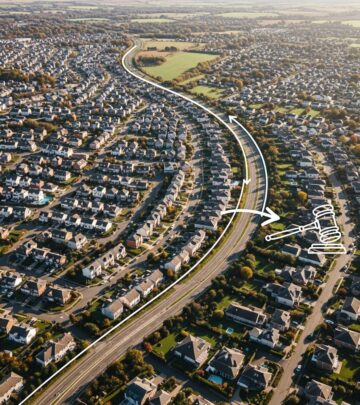
HOA: Homeowners Association Definition & Guide
Complete guide to homeowners associations: rules, fees, governance, and what you need to know.

What Is a Homeowners Association (HOA)?
A homeowners association, commonly abbreviated as HOA, is a private, legally-incorporated organization that governs a housing community, collects dues from residents, and establishes rules for property owners. Also referred to as a homeowners’ association, property owners’ association (POA), common interest development (CID), or homeowner community, an HOA serves as a self-governing entity within neighborhoods or multi-unit residential buildings. These organizations are primarily found in the United States, Canada, and the Philippines, though they exist in other countries as well.
When individuals purchase property within an HOA-governed area, they automatically become mandatory members of the association and must comply with its governing documents, pay required fees, and abide by established rules and regulations. In return, members gain the right to participate in the HOA’s governance structure and access amenities provided by the organization, provided they remain current on their financial obligations.
How HOAs Are Formed and Structured
Homeowners associations are typically formed in one of two ways. They may be established by real estate developers who create them as part of the planning and marketing process for residential subdivisions, or they may be formed through legal necessity in buildings with multiple owner-occupancies. Developers frequently establish HOAs to maintain common areas and later expand their authority to regulate various aspects of property maintenance and community aesthetics.
In terms of organizational structure, HOAs are usually organized as private corporations or private unincorporated associations, often operating on a non-profit basis. They are governed by federal and state statutes applicable to corporations or unincorporated associations, along with their own governing documents. These documents generally include articles of incorporation, covenants, conditions and restrictions (CC&Rs), bylaws, and rules and regulations that bind all current and future property owners within the HOA’s jurisdiction.
HOA Governance and Board Operations
The governance structure of an HOA revolves around a board of directors composed of elected homeowner volunteers. This board is typically elected at annual meetings specified in the HOA’s bylaws. To prevent conflicts of interest and ensure fair representation, bylaws often limit voting rights so that property owners with multiple lots cannot disproportionately control the HOA’s operations.
The board of directors holds significant responsibilities, including:
- Organizing and conducting regular homeowner meetings
- Establishing and maintaining community budgets
- Vetting and hiring vendors and service providers
- Overseeing reserve funds for future projects and emergencies
- Planning community events and social activities
- Enforcing community rules through warnings and fines
- Managing HOA finances and protecting community assets
Board members hold a fiduciary duty to property owners, meaning they are legally obligated to act in the best interests of the community. Violations of this duty can result in personal liability for individual directors. To maintain ethical standards, HOAs often adopt ethics codes for board members to ensure they fulfill their responsibilities appropriately.
Understanding HOA Fees and Assessments
One of the most important aspects of HOA membership is the requirement to pay HOA fees, also called assessments or dues. These monthly or quarterly payments fund the maintenance and operation of community common areas and amenities. The specific services covered vary depending on the HOA’s offerings and the type of community.
Common expenses covered by HOA fees include:
- Lawn care and landscaping maintenance
- General maintenance and repairs of common areas
- Snow removal and ice management
- Trash and recycling pickup
- Security services and surveillance
- Pest control services
- Insurance for common areas and facilities
- Community social events and activities
- Utilities for common areas
- Road and parking lot maintenance
HOA fees are typically collected monthly, though quarterly or annual payment schedules are also common. The frequency of collection generally correlates with the extent of amenities provided—communities with more elaborate amenities require more frequent assessments. Importantly, HOA fees in the United States amount to billions of dollars annually but are not classified as property taxes.
Special Assessments and Reserve Funds
Beyond regular monthly fees, HOAs maintain reserve funds to cover anticipated future expenses and emergency repairs. Often, a portion of monthly HOA dues is allocated to this reserve fund. If unexpected major expenses arise—such as roof repairs, pool renovations, or road resurfacing—and the reserve fund is insufficient, the HOA board may impose special assessments on all property owners. These special assessments represent additional bills levied against homeowners to cover unforeseen costs.
Additionally, HOA boards have the authority to raise regular fees at any time with proper board approval, though most associations provide notice to residents before implementing increases. Property owners should carefully review HOA financial disclosures before purchasing property to understand potential future fee increases or special assessments.
HOA Rules, Regulations, and Enforcement
Homeowners associations establish and enforce a comprehensive set of rules and regulations that govern property use and community standards. These rules create legally enforceable restrictions about what residents can and cannot do with their properties. Common HOA regulations include:
- Exterior paint colors and architectural modifications
- Landscaping requirements and restrictions
- Pet policies, including size and breed restrictions
- Parking regulations and vehicle restrictions
- Noise ordinances and quiet hours
- Sign and advertisement limitations
- Rental restrictions or lease requirements
- Maintenance standards for yards and exteriors
- Holiday decoration guidelines
- Use restrictions for common amenities
When residents violate HOA rules, the board can enforce compliance through a graduated system that typically includes verbal warnings, written notices, fines, and in severe cases, legal action. HOAs possess considerable enforcement power, and violations can affect property values and community quality of life. However, this enforcement authority is limited by state laws and must comply with fair housing regulations and other legal protections.
Types of HOA Communities
Homeowners associations are found in diverse residential settings. Common types of HOA communities include:
- Planned communities: Master-planned residential developments with extensive common amenities
- Subdivisions: Single-family home neighborhoods with shared common areas
- Condominiums: Multi-unit buildings where residents own individual units
- Townhome complexes: Rows of connected homes with shared facilities
- Gated communities: Secured residential areas with controlled access
- Apartment buildings: Some multi-family rental buildings operate under HOA structures
The scope of HOA authority varies significantly depending on the community type. In a condominium building, the HOA may manage the entire property structure. In a neighborhood of single-family homes, the HOA might manage only common areas such as parks, pools, or roads.
Legal Authority and Property Rights
Homeowners associations possess considerable legal authority to govern their communities. This authority derives from state statutes, the HOA’s governing documents, and the principle that governing documents “run with the land.” This means that all current and future property owners within the HOA are bound by these documents as a condition of ownership, regardless of whether they originally agreed to them.
The major power of an HOA is its ability to compel property owners to pay their proportionate share of common expenses. This mandatory assessment power allows HOAs to ensure adequate funding for community maintenance and amenities. However, HOAs do not have unlimited authority—their actions must comply with state laws, fair housing regulations, and constitutional protections. Courts often review HOA decisions to ensure they are reasonable and do not violate homeowners’ legal rights.
Membership and Property Ownership
In most cases, membership in an HOA is mandatory upon property purchase within the HOA’s jurisdiction. Once an owner purchases property in the subdivision, they automatically become an HOA member and must pay assessments and follow all rules. However, some HOAs maintain voluntary membership structures, though this is less common.
Membership rights and obligations continue as long as the owner holds property within the HOA. If an owner sells the property or transfers interest in it, the owner ceases to be an HOA member and loses all associated rights and obligations. The new owner automatically becomes the member in their place.
Advantages of Living in an HOA Community
Despite the fees and restrictions, HOA communities offer several benefits to residents:
- Property value protection: HOA rules and maintenance standards help maintain and enhance property values
- Dispute resolution: When neighbors have conflicts, the HOA provides official channels for addressing complaints
- Professional management: Common areas are maintained by professionals rather than individual owners
- Community amenities: Access to pools, fitness centers, parks, and social events
- Aesthetic consistency: Uniform standards create attractive, well-maintained neighborhoods
- Conflict reduction: Clear rules help minimize neighbor disputes over noise, pets, parking, and maintenance
Considerations Before Buying in an HOA Community
Prospective buyers should carefully evaluate several factors before purchasing property in an HOA community:
- Review all governing documents and CC&Rs before making an offer
- Understand the current HOA fee structure and history of fee increases
- Request financial statements to assess the health of reserve funds
- Examine special assessment history and upcoming planned projects
- Evaluate the composition and experience of the board of directors
- Consider the HOA’s enforcement record and philosophy
- Assess how restrictive the rules are and whether they align with your lifestyle
- Research any pending litigation involving the HOA
Frequently Asked Questions (FAQs)
Q: Are HOA fees tax-deductible?
A: In most cases, HOA fees are not tax-deductible for homeowners. However, the portion of your property taxes attributable to HOA-maintained common areas might be deductible. Consult a tax professional for guidance on your specific situation.
Q: Can an HOA foreclose on my home for unpaid fees?
A: Yes, many states allow HOAs to place liens on properties for unpaid assessments and, in some cases, foreclose on homes. This is why it is crucial to stay current on HOA fee payments.
Q: Can I opt out of an HOA?
A: Once you purchase property in an HOA community, you cannot opt out of membership. Membership is mandatory for all property owners within the HOA’s jurisdiction.
Q: What happens if I disagree with an HOA decision?
A: Property owners can typically voice concerns at annual meetings and request the board reconsider decisions. If disputes cannot be resolved internally, some states allow homeowners to pursue legal action or file complaints with state regulatory agencies.
Q: Can an HOA change its rules?
A: Yes, HOAs can modify rules through a voting process, typically requiring approval from a specified percentage of members. However, major changes often require approval from a higher percentage of the membership.
Q: What is the difference between an HOA and a condo association?
A: While similar, HOAs typically govern single-family home communities or townhome complexes, while condo associations manage multi-unit buildings where residents own individual units. The governance structure and scope of authority may differ.
References
- Homeowner Association — Wikipedia. Accessed 2025. https://en.wikipedia.org/wiki/Homeowner_association
- What Is A Homeowners Association, or HOA? — Bankrate. Accessed 2025. https://www.bankrate.com/real-estate/what-is-an-hoa/
- What Is an HOA? How Homeowners Associations Work — NerdWallet. Accessed 2025. https://www.nerdwallet.com/mortgages/learn/hoa-homeowners-association
Similar Articles








Read full bio of Sneha Tete