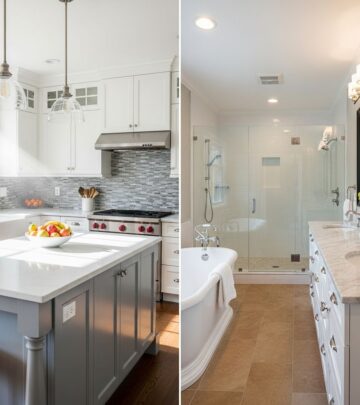
Financing Home Renovations: A Complete Borrowing Guide
Explore multiple loan options to fund your home improvement projects strategically.

Transforming your home through renovations can increase property value, improve functionality, and enhance your quality of life. However, the financial aspect of these projects often requires careful planning and understanding your available options. Whether you’re planning a minor upgrade or a major overhaul, multiple financing solutions exist to help you achieve your renovation goals without derailing your finances.
Understanding Your Home Improvement Financing Options
The landscape of home renovation financing has expanded significantly, offering homeowners and prospective buyers a diverse array of solutions tailored to different financial situations and project scopes. Each financing method carries distinct advantages, disadvantages, and eligibility requirements. Understanding these differences enables you to select the option that aligns best with your financial circumstances, timeline, and renovation objectives.
The fundamental distinction in home improvement lending separates secured loans—which require collateral, typically your home—from unsecured loans that do not. This distinction significantly impacts interest rates, borrowing limits, and approval timelines. Secured loans generally offer more favorable rates due to reduced lender risk, while unsecured options provide faster access to funds and require no collateral but typically come with higher interest charges.
Secured Borrowing: Leveraging Your Home’s Equity
Home Equity Loans: Fixed Stability and Predictability
A home equity loan represents one of the most straightforward approaches to renovation financing. This loan type allows you to borrow a lump sum based on the equity you’ve accumulated in your property—the difference between your home’s current market value and any outstanding mortgage or loan balances against it. The appeal of home equity loans lies in their fixed interest rates and structured repayment terms, typically ranging from five to fifteen years.
Homeowners appreciate home equity loans for large, clearly defined projects with predictable costs. Because the interest rate remains constant throughout the loan term, you’ll know exactly what your monthly payments will be, simplifying budgeting and financial planning. However, this financing method requires you to have already built substantial equity in your property, which may not be possible for newer homeowners or those in the early stages of their mortgage.
Home Equity Lines of Credit: Flexibility for Extended Projects
A home equity line of credit, commonly abbreviated as HELOC, functions differently from a traditional home equity loan. Rather than receiving a lump sum payment, a HELOC establishes a revolving credit line based on your home’s equity, similar to how a credit card works. During the draw period—typically five to ten years—you access funds as needed, paying interest only on the amounts you’ve borrowed.
This structure proves particularly advantageous for renovations that occur in phases or span extended timelines. If your project involves multiple contractor payments scheduled at different intervals, a HELOC’s flexibility allows you to draw funds precisely when needed rather than borrowing a large sum upfront. HELOCs typically feature adjustable interest rates, meaning your rate may change over time based on market conditions.
Cash-Out Refinancing: Combining Mortgage and Renovation Goals
Cash-out refinancing involves replacing your existing mortgage with a larger new mortgage and receiving the difference in cash. This approach allows homeowners to access their accumulated equity while potentially securing a better interest rate on their overall mortgage balance. Typical cash-out refinances require maintaining at least twenty percent equity in your home, and the process generally takes four to six weeks.
This option proves particularly attractive when current mortgage rates are lower than your existing rate. You accomplish two objectives simultaneously: funding your renovation and potentially lowering your monthly mortgage payment. However, cash-out refinancing involves closing costs and resets your mortgage timeline, which may mean additional years of payments.
Government-Backed Solutions for Home Improvement
FHA 203(k) Loans: Combining Purchase and Renovation Financing
The Federal Housing Administration’s 203(k) loan program offers a unique solution by combining home purchase and renovation costs into a single mortgage, eliminating the need for separate loans or double closing costs. This program particularly benefits buyers purchasing fixer-uppers or individuals refinancing older homes requiring substantial upgrades.
The 203(k) program operates in two structures: limited loans capped at $75,000 for minor repairs and upgrades, and standard loans with a minimum of $5,000 for major rehabilitation projects. Borrowers must have a credit score of at least 580, provide a 3.5% down payment, and use the loan for their primary residence. The program can fund projects up to 110% of the home’s projected value after renovations, subject to FHA limits.
Eligible improvements under the 203(k) program include structural repairs, roof replacement, plumbing and electrical upgrades, and modifications to accommodate disabilities. The program explicitly excludes luxury improvements such as swimming pools or tennis courts. The funding timeline typically ranges from four to eight weeks, with repayment terms spanning fifteen to thirty years.
Multiple property types qualify for 203(k) financing, including single-family homes, two- to four-unit properties, townhomes, eligible condominiums, and manufactured homes titled as real estate.
USDA Renovation Financing: Rural Housing Support
For homeowners in eligible rural areas, the USDA offers renovation loan programs designed to finance home purchases or refinances requiring repairs and improvements. These loans come in two structures: direct loans provided by the USDA themselves with subsidized interest rates for low and very-low-income applicants, and guaranteed loans issued by approved lenders for moderate-income borrowers with no down payment requirement.
Additionally, the USDA Section 504 Home Repair program assists eligible homeowners making essential repairs such as roof fixes or health hazard removal, offering loans up to $40,000 or grants up to $10,000.
Unsecured and Alternative Financing Methods
Personal Loans: Speed and Accessibility
Personal loans offer an unsecured borrowing option requiring no collateral or home equity to qualify. This approach proves ideal for smaller renovation projects, emergency repairs, or situations where you need funds quickly without the lengthy approval process of secured loans. Personal loans typically fund within one to seven days and require only a credit score of 620 or higher.
The tradeoff for this speed and accessibility involves higher interest rates compared to secured options and borrowing limits typically ranging from $1,000 to $50,000. Personal loans feature fixed interest rates and predictable monthly payments, providing clarity for budgeting purposes.
Credit Cards: Immediate Access for Smaller Projects
Credit cards provide the fastest access to renovation funds, with approval occurring within minutes to hours. This method works best for minor upgrades or repairs with smaller price tags, typically under $10,000. Homeowners who qualify for introductory zero percent APR periods can benefit from interest-free borrowing for an extended promotional window.
However, credit cards carry variable interest rates that may increase substantially once promotional periods end, making them less suitable for long-term renovation financing.
Specialized Renovation Financing Programs
Construction-to-Permanent Loans: Streamlined Multi-Phase Funding
Construction-to-permanent renovation loans provide a single financing source for both the home purchase and construction phases, automatically converting to a permanent mortgage once renovations complete. This approach streamlines the financing search and reduces the complexity of managing multiple loan products.
While these loans offer convenience through unified financing, borrowers should note that interest rates may exceed more conventional loan options. HomeStyle Renovation loans and similar products function similarly, providing comprehensive financing from purchase through renovation to permanent mortgage status.
After-Renovation Value Lending: Borrowing Against Future Home Worth
Innovative lending programs allow borrowers to access funds based on their home’s projected value after renovation completion, rather than current equity alone. This approach enables homeowners to borrow substantially more than traditional equity-based calculations would permit. For example, if your home currently appraises at $600,000 and projections show a post-renovation value of $750,000, you can potentially borrow against the full $750,000 future value rather than just current equity.
This structure eliminates draw periods, inspection requirements, and the necessity of surrendering your original loan, offering greater flexibility and higher borrowing capacity for substantial renovation projects.
Comparative Analysis of Renovation Financing Options
| Loan Type | Collateral Required | Payout Structure | Typical Timeline | Interest Rate Type |
|---|---|---|---|---|
| Home Equity Loan | Home | Lump Sum | 1-2 weeks | Fixed |
| HELOC | Home | Revolving Line of Credit | 1-2 weeks | Adjustable |
| Cash-Out Refinance | Home | Lump Sum | 4-6 weeks | Fixed or Variable |
| Personal Loan | None | Lump Sum | 1-7 days | Fixed |
| FHA 203(k) Loan | Home | Lump Sum | 4-8 weeks | Fixed |
| Credit Card | None | Line of Credit | Minutes to hours | Variable |
Selecting the Right Financing Method for Your Project
The optimal renovation financing choice depends on several interconnected factors: your project scope and timeline, current home equity position, credit profile, desired interest rate structure, and timeline to funding. A homeowner undertaking a $15,000 bathroom update might benefit from a personal loan’s speed, while someone managing a $200,000 whole-home renovation would likely prefer a home equity loan’s larger borrowing capacity and lower rates.
First-time buyers purchasing fixer-uppers should evaluate FHA 203(k) programs, which eliminate the burden of assembling separate purchase and renovation financing. Established homeowners with substantial equity might compare home equity loans against cash-out refinancing, particularly if current mortgage rates offer potential savings. Those needing flexible, phased funding access should prioritize HELOCs over lump-sum options.
Key Considerations Before Committing to Renovation Financing
- Borrowing Limits and Equity Requirements: Secured loans restrict borrowing to percentages of your home’s value, while unsecured loans cap amounts based on income and creditworthiness
- Interest Rate Implications: Fixed rates provide payment certainty, while adjustable rates introduce variability—particularly important for longer loan terms
- Closing Costs and Fees: Secured loans and refinances involve closing costs, while personal loans and credit cards may charge origination or annual fees
- Approval Timeline: Projects requiring immediate funding favor personal loans and credit cards, while major renovations can accommodate longer approval periods for better rates
- Impact on Overall Debt: Consider how new loan payments affect your debt-to-income ratio and overall financial obligations
- Tax Implications: Certain home improvements may qualify for deductions or credits; consult tax professionals regarding your specific situation
Frequently Asked Questions About Renovation Financing
Can I borrow against future home value increases?
Yes, specialized lenders offer after-renovation value programs that calculate borrowing capacity based on projected post-improvement property values, enabling access to substantially larger amounts than current equity alone would permit.
What credit score do I need for renovation financing?
Requirements vary by loan type: FHA 203(k) loans require a minimum 580 credit score, while most secured and personal loans require 620 or higher. Credit card approval timelines and limits depend on individual issuer criteria.
Can I use renovation loans for any improvement project?
Government-backed programs like FHA 203(k) loans exclude luxury improvements and purely discretionary upgrades. Conventional financing options like personal loans and HELOCs typically permit broader project categories.
How do construction-to-permanent loans differ from traditional financing?
These specialized products combine funding for both construction phases and permanent financing in a single loan structure, automatically converting upon project completion, unlike traditional methods requiring separate loans.
What happens if my renovation project exceeds my loan amount?
HELOCs provide flexibility to access additional funds during draw periods if needed. For other loan types, you would require supplementary financing through additional loans or personal resources.
References
- Types of Home Improvement Loans — PNC Insights. https://www.pnc.com/insights/personal-finance/borrow/how-do-home-improvement-loans-work.html
- The 6 Best Home Improvement Loans | 2026 — The Mortgage Reports. https://themortgagereports.com/38797/home-improvement-loans-which-is-best-for-you
- Mortgages And Loans For Home Renovations — Bankrate. https://www.bankrate.com/mortgages/mortgages-pay-home-renovations/
- A Practical Guide to Home Improvement Financing — First Citizens Bank. https://www.firstcitizens.com/personal/insights/home/loan-types-for-home-improvement
- Types of Home Improvement Loans: What You Should Know — RenoFi. https://www.renofi.com/renovation-loans/types-of-home-improvement-loans/
Similar Articles








Read full bio of medha deb