Home Purchase Closing Costs: Complete 2026 Guide
Learn what closing costs really mean and how to budget for your home purchase.
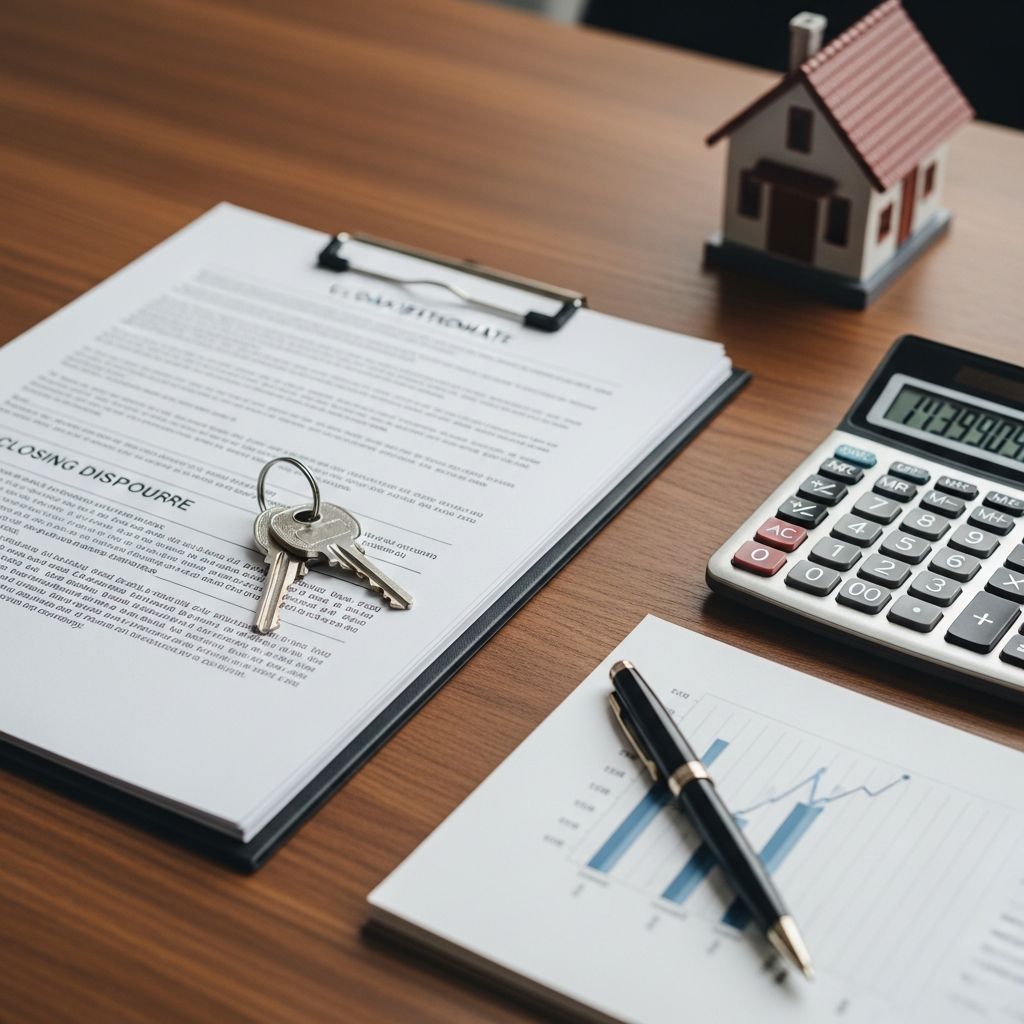
When purchasing a home, most buyers focus on the down payment and monthly mortgage payments, but there’s another significant expense that catches many people off guard: closing costs. These mandatory fees represent one of the largest upfront cash requirements in the home buying process, often totaling thousands of dollars that must be paid before you receive the keys to your new property.
What Exactly Are Closing Costs?
Closing costs are the collective fees and expenses required to finalize a home purchase or mortgage refinance. Unlike your down payment, which goes toward your home’s equity, closing costs pay for various third-party services, government recordings, insurance products, and lender fees necessary to complete the transaction. These expenses are typically paid at the closing table, meaning they must be available in full before the transaction concludes, not spread across monthly payments.
The term “closing” refers to the final step in the home buying journey when all paperwork is signed, funds are transferred, and ownership officially changes hands. The costs associated with this event can vary dramatically based on multiple factors including your location, loan type, home price, and specific lender policies.
Typical Closing Cost Ranges Across America
Buyers should anticipate closing costs ranging from 2% to 5% of their home’s purchase price, though certain loan types and circumstances can push this higher. To illustrate how this translates to actual dollars:
| Home Purchase Price | 2% Low Range | 5% High Range |
|---|---|---|
| $300,000 | $6,000 | $15,000 |
| $400,000 | $8,000 | $20,000 |
| $500,000 | $10,000 | $25,000 |
According to recent market data, the average closing cost for a single-family home hovers around $6,800 to $14,422 nationally, though this figure continues to climb as home values increase. In some regions like Florida, average closing costs exceed $19,800, which represents a significant premium over national averages.
Breaking Down Individual Closing Cost Components
Understanding what comprises your closing costs helps you identify which fees are negotiable and which are standard across the industry. Closing cost breakdowns typically include several major categories:
Lender Fees and Services
Your mortgage lender charges various fees to process, underwrite, and originate your loan. These typically include application fees, credit report fees, underwriting fees, and loan origination charges. For conventional loans on a $450,000 purchase, lender fees alone typically range from $1,695 to $2,500 depending on the lending institution and loan specifics.
Third-Party Professional Services
Several independent professionals conduct services essential to your purchase, each charging their own fees:
- Home appraisal services that determine the property’s market value
- Title search and insurance protecting your ownership rights
- Pest and structural inspections identifying potential problems
- Survey services establishing property boundaries
- Attorney fees for legal document review (varies by state)
These third-party fees typically total $3,000 to $4,000 for a $450,000 purchase.
Government Recording and Transfer Taxes
Local government entities charge fees to record your new deed and transfer ownership. These recording and tax fees usually fall between $2,500 and $3,000 for mid-range purchases, though they vary significantly by county and state.
Prepaid Expenses and Escrow Accounts
Your lender requires prepayment for certain ongoing expenses that will be paid from your escrow account throughout your ownership:
- Homeowners insurance for the first year (typically $2,000-$3,500 annually)
- Property taxes for several months (amount varies dramatically by location)
- HOA fees and insurance where applicable
- Prepaid mortgage interest from closing date through first payment
These prepaids and escrows often represent the largest component of total closing costs, sometimes totaling $8,000 to $15,000 depending on your property location and insurance rates.
How Loan Type Influences Your Closing Costs
Different mortgage programs carry different closing cost structures, with FHA loans being notably more expensive than conventional options.
Conventional Loan Closing Costs
Conventional loans typically offer the most straightforward closing cost structure, with expenses primarily limited to lender fees, third-party services, and prepaids. On a $450,000 conventional purchase with 10% down, total closing costs typically range from $15,195 to $24,500.
FHA Loan Closing Costs
FHA loans generally range from 2% to 6% of the loan amount, with HUD estimating 3% to 4% as typical. However, FHA loans include a substantial upfront mortgage insurance premium (UFMIP) of 1.75% of the loan amount, which represents the biggest single closing cost for these borrowers. On a $350,000 FHA loan, this insurance premium alone totals approximately $6,125. While this can be financed into your mortgage rather than paid upfront, it significantly increases your total loan balance and lifetime interest costs.
For FHA borrowers, realistic closing cost expectations break down as follows:
- $250,000 loan: $5,000-$15,000 total, typically $7,500-$10,000
- $350,000 loan: $7,000-$21,000 total, typically $10,500-$14,000
- $450,000 loan: $9,000-$27,000 total, typically $13,500-$18,000
Regional Variations: Florida as a Case Study
Closing costs vary dramatically based on location, with some regions significantly exceeding national averages. Florida provides an excellent example of regional price premiums in the home buying process.
Florida’s Higher-Than-Average Closing Costs
Florida buyers pay an average of $19,842 in closing costs when purchasing, which represents 37% more than the national average. This premium stems from several factors unique to the Florida market, including elevated homeowners insurance costs, property tax structures, and county-specific fees. Using Rocket Mortgage data paired with regional home prices, Florida’s average closing cost percentage reaches 4.8% of purchase price, compared to the national average of 3.2%.
County-Specific Variations Within Florida
Even within Florida, significant differences exist between counties. Miami-Dade, Broward, and Palm Beach counties show notably different closing cost profiles primarily due to variations in insurance rates, property tax escrows, and prepaid amounts. A $450,000 purchase in Florida typically generates $9,000 to $18,000 in closing costs depending on which county you’re buying in and specific property characteristics.
Detailed Florida Purchase Examples
On a $300,000 Florida home with a conventional loan and 5% down payment, realistic closing costs total approximately $14,322, bringing total cash to close to $29,322. However, if the seller provides $9,000 in credits (the maximum allowed in Florida), your required cash drops to $20,322.
For higher-priced properties, a $450,000 Florida purchase with conventional financing yields approximately $15,195 to $24,500 in closing costs, depending on specific circumstances.
Seller-Side Closing Costs: A Different Picture
While buyer closing costs typically range from 2% to 5% of purchase price, seller closing costs paint a different financial picture. Sellers typically pay 8% to 10% of their home’s sale price, though the components differ significantly from buyer expenses.
Seller closing costs typically include:
- Real estate agent commission (typically 5-6% split between buyer’s and seller’s agents)
- Title insurance for the buyer
- Transfer taxes and recording fees
- Escrow and attorney fees
- Any buyer concessions or credits provided
- Property condition disclosures and required inspections
These higher percentages explain why sellers often prefer to negotiate purchase prices and buyer credits rather than absorb all of these expenses themselves.
Strategies for Reducing Your Closing Costs
While some closing costs are unavoidable, savvy buyers can implement several strategies to minimize their total expenses.
Comparing Lender Offers
Different lenders charge different fees for the same services. Obtaining loan estimates from multiple lenders allows you to compare not just interest rates but also origination fees, underwriting charges, and other lender-specific expenses. Even small differences across multiple fees can result in significant total savings.
Negotiating with Sellers
In many markets, sellers are motivated to help buyers with closing costs through seller concessions or credits. These negotiations should happen early in the offer stage. Conventional loans typically allow 3% seller concessions, though FHA loans may permit higher percentages depending on circumstances.
Requesting Fee Waivers
Some lenders waive certain fees to remain competitive. Application fees, credit report charges, and underwriting fees are sometimes negotiable, particularly if you’re offering a large loan amount or bringing significant assets to the institution.
Shopping Third-Party Services
While your lender may recommend certain service providers, you have the right to choose your own appraiser, title company, and attorney in most states. Comparing quotes from multiple providers can yield savings on these professional services.
Frequently Asked Questions About Closing Costs
Are closing costs included in my mortgage?
Closing costs are typically paid upfront at closing, separate from your down payment and mortgage amount. However, certain costs like the FHA upfront mortgage insurance premium can be rolled into your loan balance. Some lenders also offer “no closing cost” mortgages where they cover your closing costs, but this usually results in a higher interest rate that costs more over the life of the loan.
Can I negotiate closing costs?
Yes, several elements are negotiable including lender fees, seller concessions, and third-party service providers. The earlier in the process you address closing costs, the more flexibility you typically have to negotiate.
What’s included in prepaids and escrows?
Prepaids typically include your first year’s homeowners insurance and prepaid mortgage interest. Escrow amounts depend on your location’s property taxes and insurance costs. These amounts are calculated based on your specific property, down payment percentage, and closing date.
Do I need to pay closing costs twice if I refinance?
Yes, refinancing involves a new closing with associated closing costs. However, refinancing closing costs are typically lower than purchase closing costs since no title insurance, property appraisal, or homeowners insurance is usually required. Average refinance closing costs nationally total around $8,762, compared to $14,422 for purchases.
What’s the difference between closing costs and points?
Closing costs are mandatory fees required to complete your loan. Points are optional fees you can pay to reduce your interest rate. One point equals 1% of your loan amount. While points appear on your closing disclosure, they’re separate from standard closing costs.
Preparing Financially for Closing Costs
Understanding closing cost percentages helps you budget appropriately before making an offer. On a $400,000 home, expect to have $12,000 to $24,000 available for closing costs in addition to your down payment. Lenders require a closing disclosure at least three days before closing, which provides your exact closing cost breakdown, allowing you to verify all charges and arrange final funding.
Many buyers underestimate their true cash-to-close requirement by forgetting to add closing costs to their down payment amount. Planning for 3% to 6% of purchase price in closing costs ensures you’re financially prepared when closing day arrives.
References
- Average Closing Costs 2026 | List of Closing Costs — The Mortgage Reports. 2026. https://themortgagereports.com/35800/guide-to-mortgage-closing-costs-what-average-mortgage-costs-are-and-how-to-keep-yours-low
- Florida Closing Costs Explained: What You’ll Actually Pay in 2026 — Reach Home Loans. 2026. https://www.reachhomeloans.com/florida-closing-costs-explained-what-youll-actually-pay/
- Average Closing Costs in Florida: What Buyers Should Budget in 2026 — EZ Funding Online. 2026. https://www.ezfundingonline.com/blog/average-closing-costs-in-florida-what-buyers-should-budget-in-2026
- FHA Loan Closing Costs in 2026: What to Expect and How to Save — AmeriSave. 2026. https://www.amerisave.com/learn/fha-loan-closing-costs-in-what-to-expect-and-how-to-save
- Closing Cost Calculator – Zillow — Zillow. 2026. https://www.zillow.com/mortgage-calculator/closing-cost-calculator/
- How Much Are Closing Costs in 2026? Average Fees — reAlpha. 2026. https://www.realpha.com/blog/closing-costs-process-understanding
- Average closing costs in Florida | Rocket Mortgage — Rocket Mortgage. 2025. https://www.rocketmortgage.com/learn/average-closing-costs-florida
Similar Articles








Read full bio of medha deb