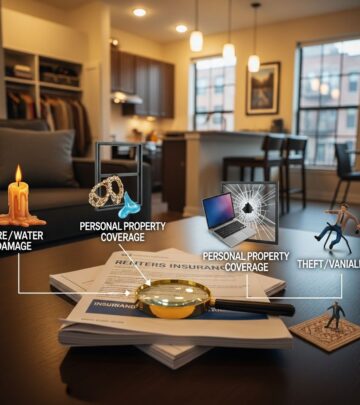
Home Office Insurance Essentials
Discover essential insurance coverage for remote workers and home businesses to protect your assets and liabilities effectively.

Remote work has transformed modern lifestyles, blending professional responsibilities with personal living spaces. As millions adopt home offices, understanding insurance implications becomes vital to avoid financial pitfalls. Standard homeowners policies offer limited safeguards for business activities, often leaving gaps in protection for equipment, liability, and injuries.
Understanding Coverage Gaps in Standard Policies
Typical homeowners or renters insurance covers personal property and liability but falls short for commercial use. For instance, business equipment like computers or printers might qualify under personal property limits, capped at around $2,500 in many policies. This restriction excludes coverage for work-related liabilities, such as client injuries on your property or errors in service delivery.
Remote employees of larger firms may rely on employer policies, but self-employed individuals or home business owners face greater exposure. Without tailored coverage, a single incident—like a visitor slipping in your office space—could lead to substantial out-of-pocket costs.
Key Insurance Types for Home-Based Professionals
Several insurance products address home office risks. Here’s a breakdown:
- Business Owners Policy (BOP): Combines property, liability, and business interruption coverage, ideal for small operations.
- General Liability Insurance: Protects against third-party claims for bodily injury or property damage.
- Professional Liability (Errors & Omissions): Covers claims arising from service mistakes or negligence.
- Commercial Property Insurance: Safeguards business assets beyond homeowners limits.
- Cyber Liability: Essential for data handling, protecting against breaches in remote setups.
| Insurance Type | What It Covers | Typical Limit | Best For |
|---|---|---|---|
| Homeowners Endorsement | Basic equipment up to $2,500 | $2,500 | Occasional remote work |
| General Liability | Injury/damage claims | $1M+ per occurrence | Client visits |
| Workers’ Comp | Employee injuries | Varies by state | Employers with staff |
| BOP | Property, liability, interruption | Customizable | Home businesses |
Remote Employees vs. Self-Employed: Coverage Differences
Employment status dictates insurance needs. Full-time remote workers often fall under employer protections. Employers must verify workers’ compensation extends to home workspaces, covering injuries during work hours if proven job-related.
Self-employed professionals, however, must secure their own policies. Sole proprietors typically skip workers’ comp unless clients mandate it or they hire help. High-risk fields like construction may require it regardless.
Hybrid workers should confirm employer liability covers home incidents, such as delivery accidents. Personal auto policies might exclude business errands, necessitating commercial auto add-ons.
Workers’ Compensation in Home Settings
Most states mandate workers’ comp for businesses with employees, including remote ones. Coverage pays medical bills and lost wages for on-the-job injuries, applicable at home if the incident ties to duties.
Employees bear the proof burden: Was the injury during business hours and work tasks? Employers should document home office setups and require policy confirmations from staff to mitigate risks.
Sole operators in low-risk roles may forgo it, but personal health plans rarely cover occupational injuries, making voluntary purchase wise.
Protecting Business Equipment and Data
Home offices house valuable tech, vulnerable to theft, fire, or failure. Homeowners policies limit reimbursements, prompting endorsements or standalone policies for full replacement value.
Rising cyber threats demand attention. Remote access increases breach risks; cyber insurance covers data recovery, legal fees, and notifications. With hybrid models prevalent, employers should audit policies for remote liabilities.
Liability Risks When Clients Visit
Inviting clients home amplifies exposure. A slip-and-fall could trigger lawsuits, uncovered by standard personal liability. Business policies extend protection, often required by contracts.
Delivery personnel or vendors pose similar threats. Employers’ general liability might respond, but gaps exist without explicit remote endorsements.
Steps to Secure Proper Coverage
- Review your homeowners/renters policy for business exclusions.
- Contact your employer (if applicable) about remote coverage extensions.
- Inventory business assets and estimate replacement costs.
- Shop for quotes from multiple insurers, comparing BOPs and endorsements.
- Consult an agent specializing in home businesses.
- Update policies annually, especially post-equipment upgrades.
Document your home office setup with photos and receipts for claims.
Frequently Asked Questions
Does my homeowners insurance cover my work laptop?
Limited to $2,500 under personal property, excluding business use in many cases. Add an endorsement for more.
Am I covered for injuries while working from home?
Employees: Yes, via employer workers’ comp if work-related. Self-employed: Consider voluntary coverage.
What if a client gets hurt at my home office?
Standard policies may deny claims; secure general liability insurance.
Do I need insurance as a freelancer with no employees?
Yes, for liability and equipment. Professional liability is key for service-based work.
How does remote work affect my auto insurance?
Business use of personal vehicles often requires commercial coverage.
State-Specific Considerations
Regulations vary. Most require workers’ comp for employers, with exceptions for sole proprietors. Check your state’s labor department. Recent laws, like California’s 2026 updates, may influence disaster-related payouts but not directly home offices.
For interstate workers, the employer’s state often governs, complicating multi-state teams.
Cost-Saving Strategies
- Bundle policies: Combine home and business for discounts.
- Increase deductibles: Lower premiums if you have reserves.
- Safety measures: Alarms and sprinklers qualify for reductions.
- Group rates: Industry associations offer affordable plans.
Average BOP costs $500–$1,500 yearly, far less than uncovered losses.
Transitioning to home-based work demands proactive insurance reviews. By bridging coverage gaps, you protect your livelihood amid evolving work norms. Regularly reassess as your setup grows.
References
- What Insurance Do You Need if You Work From Home? — Experian. 2023. https://www.experian.com/blogs/ask-experian/work-from-home-insurance/
- What Insurance Do You Need If You Work From Home? — Insureon. 2023. https://www.insureon.com/blog/work-from-home-insurance
- Everything You Need to Know About Insurance as a Remote Worker — Rate.com. 2023. https://www.rate.com/insurance/resources/everything-you-need-to-know-about-insurance-as-a-remote-worker/
- Insurance Considerations for Employers With Remote/Hybrid Employees — Whiteford Law. 2022-03-28. https://www.whitefordlaw.com/news-events/insurance-considerations-for-employers-with-remotehybrid-employees
Similar Articles








Read full bio of medha deb