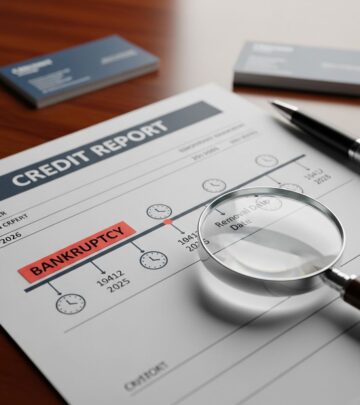
Home Loans After Bankruptcy: 2025 Expert Guide To Approval
Discover waiting periods, loan options, and proven strategies to secure a mortgage post-bankruptcy and rebuild your path to homeownership.
Bankruptcy provides a fresh financial start, but it impacts mortgage eligibility through credit scores and mandatory waiting periods. Government-backed loans like FHA, VA, and USDA offer the shortest timelines, often as little as one year post-discharge, while conventional options require up to four years. Rebuilding credit to at least 580 unlocks better rates and terms.
Understanding Bankruptcy Types and Their Mortgage Impact
Chapter 7 bankruptcy liquidates non-exempt assets to discharge unsecured debts, typically closing cases in 4-6 months. Chapter 13 involves a 3-5 year repayment plan for those with steady income. Both appear on credit reports for 10 years (Chapter 7) or 7 years (Chapter 13), but lenders focus on discharge dates and post-bankruptcy behavior.
- Key Difference: Chapter 7 wipes debts clean; Chapter 13 restructures them.
- Credit Hit: Scores drop 100-200 points initially, but recovery is possible within 1-2 years with disciplined habits.
- Lender View: Emphasis shifts to recent payment history, income stability, and debt management after discharge.
Waiting Periods by Loan Program
Federal guidelines set minimum waits from discharge (Chapter 7) or plan payments (Chapter 13). Exceptions apply for extenuating circumstances like job loss or medical emergencies, potentially halving times with documentation.
| Loan Type | Chapter 7 Wait (from Discharge) | Chapter 13 Wait | Min Credit Score |
|---|---|---|---|
| FHA | 2 years (1 year w/ extenuating) | 1 year on-time payments + court approval | 500-580 |
| VA | 2 years | 1 year on-time payments + court/trustee OK | No min (lenders ~620) |
| USDA | 3 years (1 year w/ extenuating) | 1 year on-time payments | No min (lenders ~640) |
| Conventional | 4 years (2 years w/ extenuating) | 2 years post-discharge | 620 |
During active Chapter 13, court or trustee permission is required before applying. Lenders compare proposed mortgage payments to plan rent equivalents to ensure creditor protection.
Best Mortgage Choices for Bankruptcy Recovery
FHA Loans: Most Accessible Option
FHA-insured loans tolerate lower scores (500+ with 10% down; 580+ with 3.5% down) and flexible debt-to-income (DTI) up to 50%. Post-Chapter 7, provide a detailed bankruptcy explanation; for Chapter 13, verify 12 months of payments. Loan limits apply based on county.
VA Loans: Zero-Down for Veterans
Eligible service members or spouses benefit from no down payment and no official score minimum, though lenders often want 620+. Reestablished credit after 2 clean years post-Chapter 7 qualifies you.
USDA Loans: Rural Homebuyers
For moderate-income buyers in eligible areas, these offer 0% down with income caps. Post-bankruptcy, demonstrate financial responsibility beyond the wait period.
Conventional and Non-QM Alternatives
Standard conventional needs 620+ score and 3-20% down after 4 years. Non-QM (non-qualified mortgage) lenders assess bank statements or assets instead of traditional credit, ideal for unique situations but with higher rates.
Steps to Rebuild Credit and Strengthen Your Application
- Review Reports: Pull free annual credit reports from Equifax, Experian, TransUnion to dispute errors.
- Secured Cards: Use cards with cash deposits to build positive history; pay in full monthly.
- Stable Income: Maintain employment 2+ years; provide pay stubs and tax returns.
- Low DTI: Keep ratios under 43% (36% ideal); pay down debts aggressively.
- Explanatory Letter: Detail bankruptcy causes (e.g., medical bills) and recovery steps like budgeting classes.
Target 620+ score for broader options. Automate payments and avoid new credit inquiries.
Navigating the Application Process
Pre-approval signals readiness. Shop multiple lenders for best rates; provide bankruptcy paperwork upfront. For Chapter 13, secure trustee sign-off early. Expect higher rates (0.5-1% above prime) initially, improving with time.
- Required Docs: Discharge papers, repayment plan proof, 2 years tax returns, bank statements, ID.
- Appraisal Focus: Lenders scrutinize reserves (2-6 months expenses) for risk.
Financial Preparation Checklist
| Action Item | Timeline | Why It Matters |
|---|---|---|
| Discharge bankruptcy | Day 0 | Starts waiting clock |
| Build emergency fund | Months 1-6 | Shows stability |
| Achieve 580+ score | Year 1 | Unlocks FHA/VA |
| Get pre-approved | Post-wait | Strengthens offers |
Common Challenges and Solutions
Challenge: Ongoing Chapter 13. Solution: Prove 12 months payments; justify mortgage affordability.
Challenge: Low Score. Solution: Add authorized user status or rent reporting services.
Challenge: High DTI. Solution: Co-signer or delay purchase until debts reduce.
Frequently Asked Questions
Can I buy a home during Chapter 13 bankruptcy?
Yes, after 12 months of on-time plan payments with court/trustee approval, especially for FHA/VA/USDA.
How long does bankruptcy stay on my record?
10 years for Chapter 7, 7 years for Chapter 13, but mortgage impact fades sooner.
What if I have no credit history post-bankruptcy?
Non-traditional scoring (rent/utilities) or secured loans help build it quickly.
Are rates higher after bankruptcy?
Typically yes, but shop lenders; improve to 700+ for competitive terms.
Does foreclosure after bankruptcy extend waits?
No, bankruptcy discharge governs timelines.
Long-Term Strategies for Homeownership Success
Beyond approval, budget for 28% housing ratio. Consider first-time buyer programs or down payment assistance. Track progress quarterly; many reach conventional eligibility in 4 years. Bankruptcy is a hurdle, not a barrier—consistent effort restores opportunities.
References
- HUD Handbook 4000.1 — U.S. Department of Housing and Urban Development. 2025. https://www.hud.gov/program_offices/administration/hudclips/handbooks/hsgh
- VA Lenders Handbook M26-7 — U.S. Department of Veterans Affairs. 2025. https://www.benefits.va.gov/WARMS/docs/admin26/m26_07/m26-07_complete.pdf
- FHA Loan Rules for Borrowers After Bankruptcy — FHA.com. 2025. https://www.fha.com/fha_article?id=305
- 7 C.F.R. § 3555.151 — U.S. Department of Agriculture Rural Development. 2025. https://www.ecfr.gov/current/title-7/subtitle-B/chapter-XXXV/part-3555
- When Can I Get a Mortgage After Bankruptcy? — Nolo (citing HUD/VA/USDA). 2025. https://www.nolo.com/legal-encyclopedia/when-can-i-mortgage-after-bankruptcy.html
Similar Articles








Read full bio of medha deb