Home Insurance vs Hazard Insurance: Key Differences Explained
Understand the critical differences between homeowners and hazard insurance coverage.
Home Insurance vs. Hazard Insurance: Understanding the Distinction
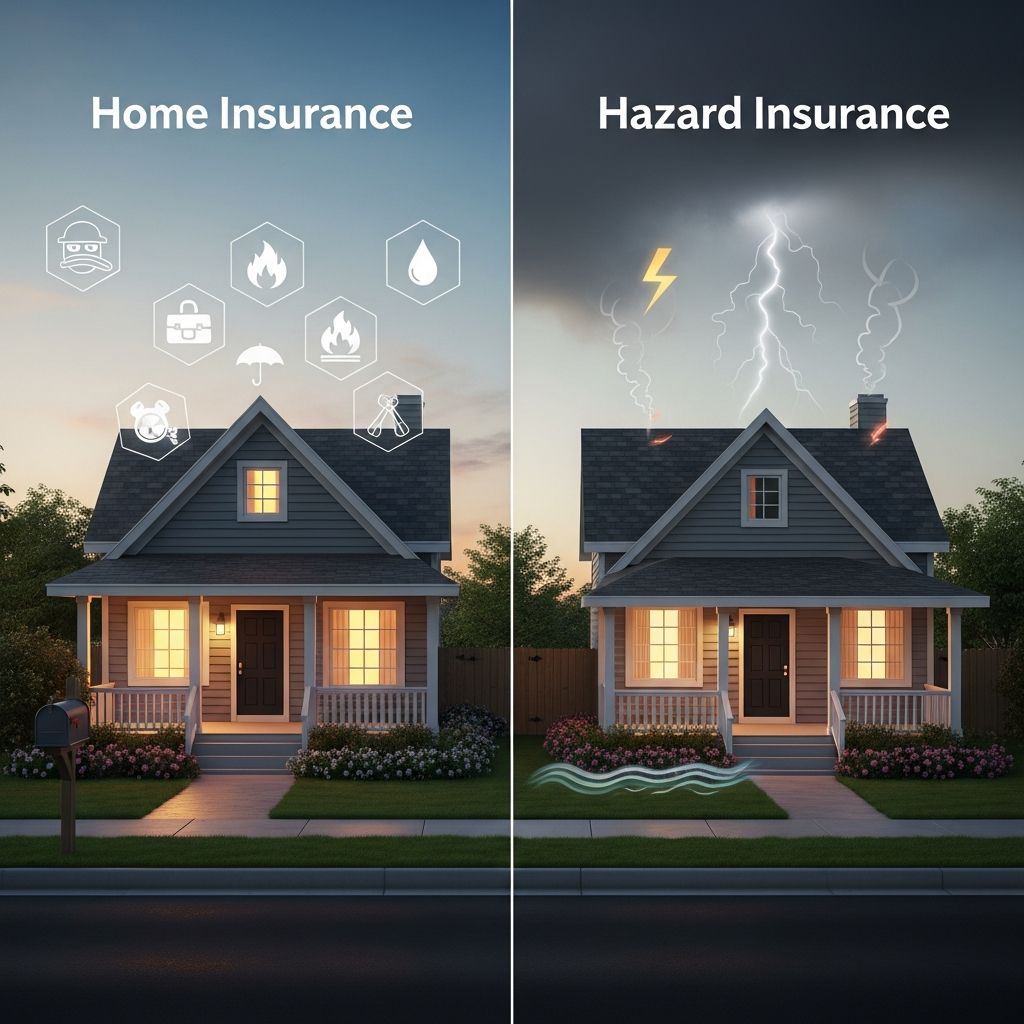
When navigating the world of home protection, many homeowners encounter the terms “hazard insurance” and “homeowners insurance” used interchangeably, leading to confusion about what each actually covers. While these terms may sound similar, they represent distinctly different scopes of financial protection. Understanding the fundamental differences between these two types of coverage is crucial for making informed decisions about your home’s protection strategy.
At its core, hazard insurance represents just one component of a comprehensive homeowners insurance policy. Think of homeowners insurance as an umbrella that encompasses multiple types of coverage, with hazard insurance being one essential spoke under that umbrella. The distinction matters significantly when you’re assessing your financial vulnerability and ensuring adequate protection for one of your most valuable assets.
What Is Hazard Insurance?
Hazard insurance is the specific portion of your homeowners insurance policy that covers physical damage to the structure of your home itself. Also commonly referred to as “dwelling coverage,” this component provides financial protection for repairing or replacing the fundamental elements of your home, including the foundation, roof, walls, windows, and other permanent structural components.
The term “hazard insurance” typically appears most frequently in communications from mortgage lenders. This is because lenders have a vested financial interest in protecting their collateral—your home—and they require this specific coverage before approving a mortgage. The insurance protects not just you, but also the lender’s investment in your property.
Hazard insurance operates under either a “named perils” or “open perils” structure. Named perils policies cover only specific risks explicitly listed in your policy document, while open perils policies provide broader protection with specific exclusions outlined instead. Most standard homeowners policies use open perils for dwelling coverage, meaning damage from covered events is protected unless specifically excluded.
What Does Hazard Insurance Cover?
Hazard insurance protects your home’s structure from various types of damage. Understanding what falls under this protection helps you grasp the scope of your dwelling coverage.
Standard covered perils typically include:
– Fire and smoke damage- Windstorms and hail- Theft and burglary- Vandalism- Lightning strikes- Damage from vehicles or aircraft colliding with your home- Explosions, typically from gas leaks- Fallen trees damaging your home’s structure- Weight of ice, snow, and sleet- Power surges from artificial electrical currents
When any of these covered events damage your home’s structure, hazard insurance steps in to cover the costs of repairs or, in severe cases, reconstruction of the damaged portions.
What Doesn’t Hazard Insurance Cover?
It’s equally important to understand the limitations of hazard insurance. Knowing what falls outside your coverage helps you identify gaps in protection and determine whether you need additional policies.
Notable exclusions from standard hazard insurance include:
– Flood damage- Earthquake damage- Sinkhole damage- Wear and tear on your home- Neglect or improper maintenance- Intentional damage to your property- Pest damage or infestations- Mold growth
If you live in an area prone to flooding or earthquakes, you’ll need to purchase separate insurance policies to cover these risks, as they’re not included in standard hazard insurance coverage.
Understanding Homeowners Insurance
Homeowners insurance is the comprehensive protection plan that encompasses hazard insurance plus several additional coverage types. Rather than focusing solely on your home’s structure, homeowners insurance provides a multi-layered protection strategy that addresses various aspects of home ownership and liability.
A typical homeowners insurance policy includes hazard insurance as its foundation, but extends protection to areas that hazard insurance explicitly excludes. This comprehensive approach is why homeowners insurance is considered the standard protection for most homeowners rather than purchasing hazard insurance alone.
Key Components of Homeowners Insurance
Beyond the hazard insurance component, homeowners insurance includes several critical coverage types:
Dwelling Coverage (Hazard Insurance)
This is the hazard insurance component you now understand covers your home’s physical structure.
Personal Property Coverage
This aspect of your policy protects your belongings—furniture, electronics, clothing, and other contents—against loss, damage, or theft. Importantly, personal property coverage uses a named perils approach, meaning it covers only specific causes of loss listed in your policy, unlike the broader open perils structure used for your dwelling.
Liability Coverage
If someone is injured on your property or you accidentally cause damage to someone else’s property, liability coverage provides financial protection. This can cover medical expenses, legal fees, and court judgments up to your policy limits.
Additional Living Expenses
If a covered event makes your home temporarily uninhabitable, this coverage pays for hotel accommodations, meals, and other reasonable living expenses while your home is being repaired or rebuilt.
Other Structures Coverage
Homeowners insurance typically covers other structures on your property, such as detached garages, sheds, or freestanding gazebos, though usually at a reduced percentage of your dwelling coverage.
The Critical Difference: Coverage Scope Comparison
| Coverage Type | Hazard Insurance | Homeowners Insurance |
|---|---|---|
| Home Structure | Yes | Yes |
| Personal Property/Contents | No | Yes |
| Liability Coverage | No | Yes |
| Additional Living Expenses | No | Yes |
| Other Structures on Property | No | Yes |
| Medical Payments Coverage | No | Yes |
Where Hazard and Homeowners Insurance Align
Both hazard insurance and homeowners insurance provide fundamental protection for your home’s physical structure. If a covered peril damages your roof, foundation, walls, or other structural elements, both types of insurance will compensate you for repairs or rebuilding costs.
Additionally, both types of insurance recognize the same basic categories of covered perils—fire, windstorms, hail, theft, vandalism, and similar events. The financial protection mechanism works similarly: when damage occurs from a covered peril, you file a claim, and the insurance company assesses the damage and reimburses your repair costs up to your policy limits.
Where Hazard and Homeowners Insurance Diverge
The divergence lies in the scope and breadth of coverage. Hazard insurance maintains a singular focus: protecting the physical structure of your home. It doesn’t concern itself with your belongings, your liability if someone is injured on your property, or your need for temporary housing if your home becomes uninhabitable.
Homeowners insurance, by contrast, recognizes that home ownership involves multiple layers of financial risk. It protects not only your physical structure but also your personal property, your legal and financial responsibility for injuries on your property, and your living expenses if displacement becomes necessary.
The Role of Mortgage Lenders
Understanding why mortgage lenders specifically require hazard insurance illuminates the purpose of this distinction. When you borrow money to purchase a home, the lender holds a financial interest in that property. From the lender’s perspective, hazard insurance is the critical protection because it ensures their collateral remains protected.
Lenders care about one thing: ensuring they can recover their investment if catastrophic damage occurs. They don’t directly benefit from your liability coverage or your personal property protection—they only care about the structural integrity of the home that secures their loan. This is why mortgage documents specifically require “hazard insurance” by name rather than simply requiring “homeowners insurance.”
If you fail to maintain required hazard coverage, your lender has the authority to purchase “force-placed insurance” on your behalf. This type of insurance is typically more expensive and offers less comprehensive protection than standard hazard insurance, making it an undesirable outcome for homeowners.
Are Hazard Insurance and Homeowners Insurance the Same?
The simple answer is no. Hazard insurance is a component of homeowners insurance, not a synonym for it. Hazard insurance alone provides structural protection. Homeowners insurance is the comprehensive policy that includes hazard insurance plus personal property, liability, and other essential coverages.
Think of the relationship this way: all hazard insurance is part of homeowners insurance, but not all homeowners insurance is just hazard insurance. Hazard insurance is the foundation; homeowners insurance is the complete structure built upon that foundation.
What About HO-3 Policies?
Most homeowners in the United States have HO-3 policies, the most common homeowners insurance policy type. Understanding how HO-3 policies treat hazard and personal property coverage reveals an important nuance.
HO-3 policies use an open perils structure for dwelling coverage (your hazard insurance), which means broad protection with specific exclusions. However, these same policies use a named perils structure for personal property coverage, which means you’re only protected against specifically listed perils.
This creates a situation where your home’s structure enjoys broader protection than your belongings do. A peril might damage your home in a way that’s covered, but damage the same belongings in a way that’s not covered—or vice versa. Understanding this distinction helps you recognize which losses your policy will cover and which might require additional coverage or out-of-pocket payment.
Making Your Insurance Decision
When evaluating your insurance needs, remember that hazard insurance alone is insufficient for most homeowners. While it provides essential structural protection, it leaves you vulnerable in several critical areas.
You need liability coverage in case someone is injured on your property and sues you for damages. You need personal property coverage to protect your belongings from theft, fire, and other perils. You need additional living expense coverage in case you must temporarily relocate due to covered damage.
Homeowners insurance bundles all these protections together, providing comprehensive coverage that addresses the multiple financial risks inherent in home ownership. While it costs more than hazard insurance alone, the additional protection is worth the investment.
Frequently Asked Questions
Q: Is hazard insurance the same as homeowners insurance?
A: No. Hazard insurance is one component of a homeowners insurance policy. Hazard insurance covers damage to your home’s structure, while homeowners insurance provides comprehensive coverage including personal property, liability, and additional living expenses.
Q: Do I have to purchase hazard insurance separately?
A: No. Hazard insurance is included as part of your standard homeowners insurance policy. You cannot typically purchase it as a standalone product, though your lender may use the term when referring to the dwelling coverage portion of your homeowners policy.
Q: What happens if I don’t maintain hazard coverage?
A: If you don’t maintain required coverage, your lender may purchase force-placed insurance on your behalf. This coverage is typically more expensive and offers less protection than standard homeowners insurance.
Q: Does hazard insurance cover flood damage?
A: No. Flooding is typically excluded from standard hazard insurance policies. You must purchase separate flood insurance if you want coverage for this risk.
Q: What perils does hazard insurance cover?
A: Standard hazard insurance typically covers fire, windstorms, hail, theft, vandalism, lightning strikes, and similar perils. However, exclusions include floods, earthquakes, wear and tear, neglect, intentional damage, and pest damage.
Q: Can I choose my own insurance provider if my lender requires hazard coverage?
A: Yes. You can typically choose your own insurance provider as long as the policy meets your lender’s specific coverage requirements. Your lender will specify the minimum coverage amounts needed.
References
- Home Insurance vs. Hazard Insurance: What You Need To Know — Restoration 1. https://restoration1.com/oak-harbor/blog/home-insurance-vs-hazard-insurance-what-you-need-to-know
- The difference between homeowners insurance and hazard insurance — Bankrate. https://www.bankrate.com/insurance/homeowners-insurance/home-insurance-vs-hazard-insurance/
- Is Hazard Insurance the Same as Homeowners Insurance? — Experian. https://www.experian.com/blogs/ask-experian/is-hazard-insurance-the-same-as-homeowners-insurance/
- What’s The Difference Between Hazard Insurance And Homeowners Insurance? — YouTube. https://www.youtube.com/watch?v=PoPqXFfuIPM
- Is Hazard Insurance the Same as Homeowners Insurance? — Nationwide. https://www.nationwide.com/lc/resources/home/articles/is-hazard-insurance-the-same-as-homeowners-insurance
- Is Hazard Insurance the Same as Homeowners Insurance? — GEICO. https://www.geico.com/information/aboutinsurance/homeowners/is-hazard-insurance-same-as-homeowners-insurance/
- Hazard Insurance vs. Homeowners Insurance — Progressive. https://www.progressive.com/answers/hazard-vs-homeowners-insurance/
Similar Articles








Read full bio of medha deb