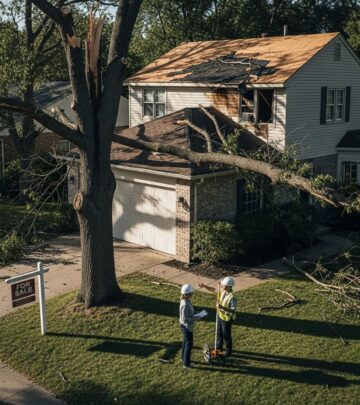
Home Insurance Adjusters Explained
Discover the vital role of home insurance adjusters in evaluating claims, assessing damages, and ensuring fair settlements for homeowners.

Home insurance claim adjusters play a pivotal role in the aftermath of property damage, serving as the key investigators who determine the validity and value of claims filed by policyholders. These professionals meticulously review incidents, inspect affected areas, and calculate appropriate compensation based on policy terms, ensuring that both insurers and homeowners receive equitable outcomes during stressful times.
The Fundamental Responsibilities of Claim Adjusters
At the core of their job, home insurance adjusters verify whether reported damages fall under the scope of a policyholder’s coverage. They begin by scrutinizing policy documents to identify applicable limits, deductibles, and exclusions that could impact the claim. This initial review sets the foundation for all subsequent actions, preventing payouts for non-covered events such as normal wear and tear or intentional damage.
Adjusters then shift focus to fact-finding. They collect evidence through interviews with the homeowner, witnesses, and sometimes contractors or first responders. Police reports, weather data, or maintenance records may also be examined to reconstruct the event sequence accurately. This thorough investigation helps distinguish legitimate claims from potentially fraudulent ones, safeguarding the insurance system’s integrity.
- Policy Verification: Confirming coverage details and exclusions early in the process.
- Evidence Gathering: Securing photos, videos, and statements from all relevant parties.
- Cause Determination: Identifying if damage stems from covered perils like storms or fires versus uncovered issues like neglect.
Types of Home Insurance Adjusters and Their Distinct Roles
Not all adjusters operate under the same banner, and understanding their affiliations is crucial for homeowners. Insurance companies employ three primary categories: company adjusters, independent adjusters, and public adjusters, each with unique incentives and responsibilities.
| Type | Affiliation | Key Duties | Cost to Homeowner |
|---|---|---|---|
| Company Adjuster | Insurance Company Employee | Handles claims internally, inspects damage, recommends payouts | Free (covered by insurer) |
| Independent Adjuster | Hired by Insurer on Contract | Provides objective inspections during high-volume periods like disasters | Free (paid by insurer) |
| Public Adjuster | Hired by Homeowner | Advocates for policyholder, negotiates higher settlements | Fee-based (percentage of payout or hourly) |
Company adjusters, as direct employees, prioritize their employer’s interests while guiding policyholders through the process. Independent adjusters step in during peak claim periods, offering fresh perspectives without long-term bias. Public adjusters, conversely, represent homeowners exclusively, often securing 20-50% more in settlements but at a personal cost.
Step-by-Step Process: What Happens During an Adjuster Visit
When an adjuster arrives—typically within days of claim filing—they conduct a comprehensive site evaluation. On-site visits last 45-60 minutes, though virtual inspections via apps or drones are increasingly common for minor claims.
The inspection commences with an overview discussion, where the adjuster explains procedures and timelines. They then tour the property, documenting interior and exterior damage with high-resolution photos and detailed notes. Attention extends to personal items like appliances, furniture, and outdoor structures such as sheds or decks.
- Initial Briefing: Review of the incident and policyholder’s account.
- Physical Examination: Measurement of affected areas, testing functionality, and noting repair feasibility.
- Contractor Input: Discussion of any bids or quotes obtained by the homeowner.
- Estimate Preparation: On-the-spot calculations using industry software for repair costs.
Post-inspection, adjusters draft reports outlining findings, including whether claims qualify for actual cash value (ACV)—depreciated amount—or replacement cost value (RCV)—full current market price without deduction. Insurers often issue payments within two weeks if uncontested.
Impact of Adjuster Assessments on Claim Outcomes
An adjuster’s report heavily influences final decisions. Favorable findings lead to swift approvals, while reservations may trigger denials or reduced offers. For instance, if damage appears pre-existing or policy-excluded, payouts halt.
Homeowners facing lowball estimates can appeal by submitting supplementary evidence like independent appraisals or expert opinions. Persistent disputes might escalate to mediation or state insurance departments. Statistics from the National Association of Insurance Commissioners indicate that challenged claims often yield higher settlements, underscoring the value of proactive documentation.
Preparing Effectively for Your Adjuster Meeting
To optimize outcomes, homeowners should prepare meticulously. Compile a damage inventory with timestamps, receipts, and professional estimates beforehand. Clean and secure the site for safe access, and note any temporary repairs to mitigate further loss—insurers reimburse these if documented.
- Photograph all damages immediately after the event from multiple angles.
- Gather policy copies, prior claim history, and maintenance logs.
- List affected valuables with purchase details and current values.
- Identify potential safety hazards for the adjuster’s awareness.
Avoid signing anything prematurely or admitting fault, as statements can be misconstrued. If complexities arise, consulting a public adjuster early preserves leverage.
Common Misconceptions About Insurance Adjusters
Many assume adjusters act solely as adversaries, yet ethical professionals aim for fairness per policy terms. Company adjusters don’t receive bonuses tied to denial rates in regulated states, countering the ‘lowballer’ myth.
Another fallacy: All claims require physical inspections. Simple losses like hail-damaged roofs can resolve via photos, accelerating resolutions. Licensing, mandatory in most states, ensures competency through exams and continuing education.
Navigating Disputes and Appealing Adjuster Decisions
If dissatisfied, request the full report and challenge specifics with counter-evidence. Insurers must respond within 30-60 days per state laws. For stalled claims, file complaints with bodies like the Texas Department of Insurance, which oversee compliance.
In extreme cases, arbitration or lawsuits follow, though most settle pre-court. Public adjusters excel here, leveraging negotiation expertise for better terms.
Future Trends in Home Insurance Adjusting
Technology reshapes the field: AI-driven damage estimation tools, drone surveys, and virtual reality walkthroughs promise faster, precise evaluations. By 2026, over 40% of claims may process remotely, per industry forecasts, reducing costs and wait times.
Climate-driven catastrophes amplify independent adjuster demand, prompting firms to bolster training on emerging risks like wildfires.
Frequently Asked Questions (FAQs)
What should I do immediately after filing a home insurance claim?
Contact your insurer promptly, document damages thoroughly, and protect the property from further harm while awaiting the adjuster.
How long does the adjustment process take?
Typically 1-4 weeks from filing to settlement, varying by claim complexity and backlog.
Can I choose my own adjuster?
No, insurers assign company or independent adjusters; you may hire a public one separately.
Does hiring a public adjuster guarantee a higher payout?
It often increases settlements through skilled negotiation, but fees apply.
What if my claim is denied?
Review the denial reasons, gather more evidence, and appeal formally or seek regulatory help.
References
- What Does a Home Insurance Claim Adjuster Do? — Experian. 2023-10-15. https://www.experian.com/blogs/ask-experian/what-does-home-insurance-claim-adjuster-do/
- What is an insurance claims adjuster? — Sentry Insurance. 2024-05-20. https://www.sentry.com/what-we-offer/resources/articles/what-is-an-insurance-claims-adjuster
- Claims Adjuster Job Description — U.S. Bureau of Labor Statistics (via Indeed). 2026-01-10. https://www.bls.gov/ooh/business-and-financial/claims-adjusters-appraisers-examiners-and-investigators.htm
- Home Insurance Adjusters: What to Expect & Prepare — Baldwin. 2024-08-12. https://baldwin.com/insights/home-insurance-adjusters-what-to-expect-and-how-to-prepare/
- The Role of Adjusters in the Claims Process — National Association of Insurance Commissioners (via Brotherhood Mutual). 2023-11-05. https://www.brotherhoodmutual.com/safety-library/claims-adjuster-role
- Working with an insurance adjuster — Texas Department of Insurance. 2025-02-28. https://www.tdi.texas.gov/tips/working-with-adjuster.html
Similar Articles








Read full bio of Sneha Tete