Home Improvement Loans: Pros and Cons
Explore the advantages and drawbacks of various home improvement loans to make informed financing choices for your next renovation project.
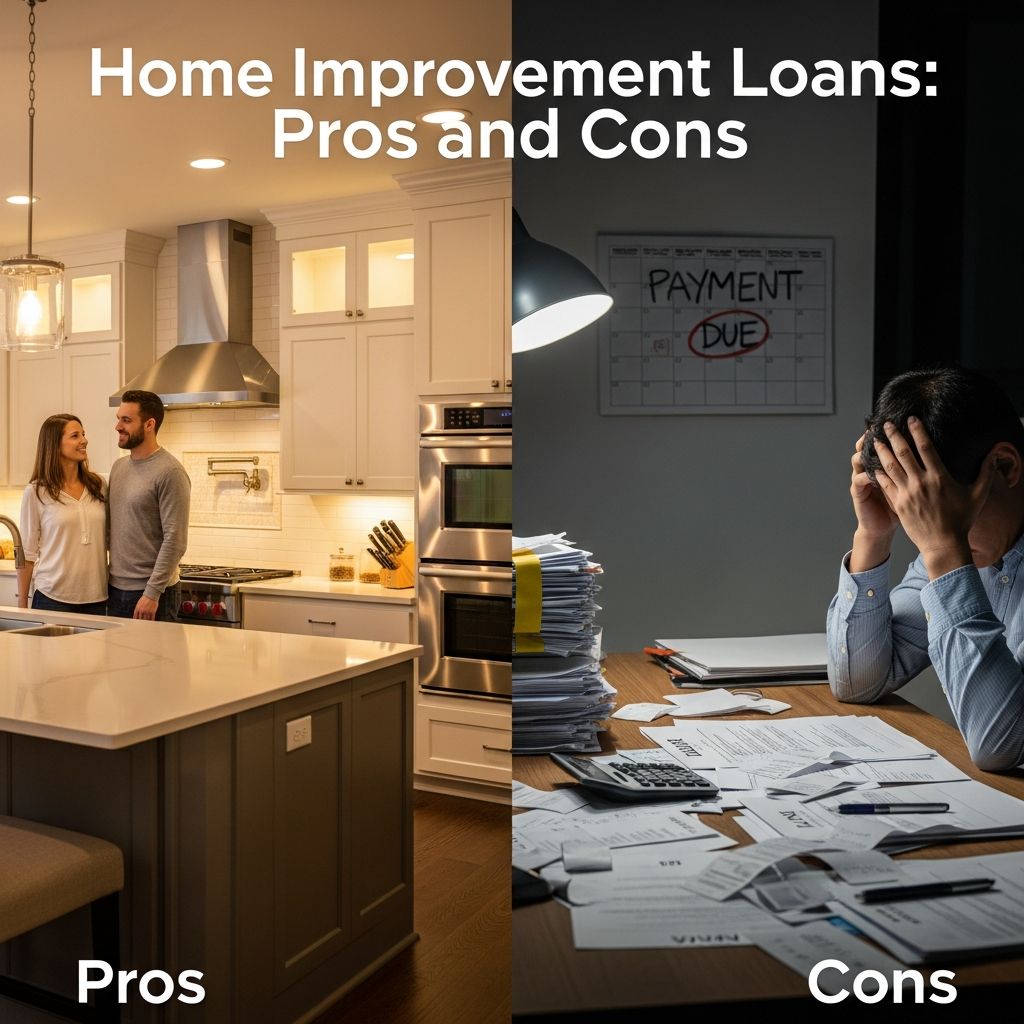
Financing home upgrades can transform your living space, but selecting the right loan type is crucial for affordability and success. Home improvement loans range from secured options tied to property equity to unsecured personal loans, each with unique benefits and risks. This article breaks down the main types, their advantages, disadvantages, and key considerations to guide your decision-making process.
Understanding Home Improvement Financing Basics
Before diving into specifics, it’s essential to grasp what drives the need for these loans. Homeowners often seek funding for everything from kitchen remodels to roof repairs, with average project costs reaching tens of thousands of dollars. Secured loans, backed by your home’s equity—the difference between its market value and outstanding mortgage—typically offer lower rates due to reduced lender risk. Unsecured alternatives, like personal loans, provide quicker access but at higher costs.
Equity requirements generally start at 15-20%, credit scores around 620+, and debt-to-income (DTI) ratios under 45%. Funding timelines vary from days for personal loans to weeks for equity-based products. Tax perks may apply if funds improve the property substantially, potentially making interest deductible.
Key Types of Home Improvement Loans
Several loan varieties cater to different project scales and borrower profiles. Here’s an overview of the most popular options.
Home Equity Loans: Fixed-Rate Lump Sums
A home equity loan provides a one-time payout against your property’s equity, repaid in fixed monthly installments. Ideal for defined projects like additions or replacements.
- Pros: Predictable payments with fixed rates; competitive interest often below 8%; longer terms up to 30 years reduce monthly burdens.
- Cons: Risk of foreclosure if unpaid; closing costs 2-5% of loan amount; less flexibility once funds are disbursed.
Typically, you can borrow 80-90% of available equity, with approval in 2-6 weeks.
HELOCs: Flexible Lines of Credit
Home Equity Lines of Credit (HELOCs) function like a credit card secured by equity, allowing draws during a draw period (often 10 years), followed by repayment.
- Pros: Borrow only what you need; interest-only payments initially; variable rates can drop if market rates fall.
- Cons: Rates fluctuate, potentially rising; balloon payments at end of draw period; home at risk.
Suitable for ongoing work, with limits up to 85% of home value minus mortgage.
Cash-Out Refinance: Mortgage Replacement
This replaces your existing mortgage with a larger one, pocketing the equity difference in cash for improvements.
- Pros: Single payment structure; possible rate reduction; extended terms up to 30 years.
- Cons: Resets mortgage clock, increasing total interest; closing costs 2-6%; not ideal if current rate is low.
Requires 20% equity post-cash-out; best if refinancing to lower rates.
FHA 203(k) Loans: Rehab-Focused Mortgages
Government-backed FHA 203(k) loans bundle purchase/refinance with renovation costs, split into limited (under $75,000) and standard versions.
- Pros: Low 3.5% down payment; flexible credit (580+); covers repairs in one loan.
- Cons: Strict eligible projects (no luxuries); longer approval (4-8 weeks); mortgage insurance adds costs.
Perfect for fixer-uppers; funds up to 110% of post-renovation value.
Personal Loans and Credit Cards: Unsecured Quick Cash
Unsecured options like personal loans or 0% intro credit cards fund smaller jobs without collateral.
- Pros: Fast approval (1-7 days); no home risk; fixed rates on personal loans.
- Cons: Higher rates (10-36%); lower limits ($1K-$100K); short terms spike payments.
Best for minor updates; SoFi offers up to $100K with discounts.
Government and Specialty Options
Additional choices include Fannie Mae HomeStyle, Freddie Mac CHOICERenovation, VA, and USDA loans, allowing luxury upgrades with flexible terms.
- VA/USDA: For veterans/rural buyers, low/no down payment.
- HomeStyle/CHOICERenovation: Up to 75% of post-upgrade value for any property type.
Comparing Home Improvement Loan Options
Use this table to weigh features side-by-side, based on typical 2026 terms.
| Loan Type | Min Credit Score | Loan Amount | Rate Type | Timeline | Best For |
|---|---|---|---|---|---|
| Home Equity Loan | 620+ | Up to 80-90% equity | Fixed | 2-6 weeks | One-time projects |
| HELOC | 620+ | Up to 85% equity | Variable | 2-6 weeks | Ongoing work |
| Cash-Out Refi | 620+ | Up to 80-90% equity | Fixed/Var | 4-6 weeks | Rate shoppers |
| FHA 203(k) | 580+ | $5K-$50K+ | Fixed | 4-8 weeks | Fixer-uppers |
| Personal Loan | 620+ | $1K-$100K | Fixed | 1-7 days | Small jobs |
Advantages of Using Home Improvement Loans
Opting for dedicated financing over savings or high-interest cards yields several upsides:
- Lower Costs: Secured loans average 7-9% APR vs. 20%+ on cards.
- Larger Funding: Access tens or hundreds of thousands via equity.
- Tax Benefits: Deductible interest for qualifying improvements (consult IRS Pub 936).
- Boost Property Value: Strategic upgrades like energy-efficient windows yield high ROI.
- Preserve Liquidity: Avoid draining emergency funds.
Potential Drawbacks and Risks
While powerful, these loans aren’t risk-free:
- Foreclosure Threat: Default endangers your home on secured products.
- Closing Fees: 2-5% of loan, or $4K-$10K on $200K borrow.
- Rate Volatility: HELOCs rise with Fed hikes.
- Equity Drain: Reduces buffer for market dips.
- Overborrowing: Temptation leads to unnecessary debt.
Factors to Consider Before Applying
Assess your situation thoroughly:
- Equity Check: Use online calculators; aim for 20%+ cushion.
- Credit Health: Pull free reports; improve scores for better terms.
- DTI Ratio: Keep under 43%; calculate as (debts/income) x100.
- Project Scope: Match loan flexibility to needs—fixed for known costs, revolving for unknowns.
- Market Rates: Compare via lenders; shop multiple quotes.
- Alternatives: Grants (e.g., USDA repair), contractor financing, or 0% cards for small sums.
Pre-qualify without hard inquiries to gauge options.
Steps to Secure the Best Loan
- Estimate project costs with contractor bids.
- Appraise home value via comps or professional.
- Review credit and pay down debts.
- Compare 3-5 lenders’ rates/APRs.
- Gather docs: income proof, equity statements.
- Apply and review closing disclosure.
- Fund and monitor usage.
Real-World Scenarios: Which Loan Fits?
Kitchen Remodel ($30K): HELOC for phased payments.
Roof Replacement ($20K): Home equity loan for fixed budget.
Fixer-Upper Buy ($250K + $50K repairs): FHA 203(k).
Bathroom Refresh ($8K): Personal loan or card.
Common Myths Debunked
- Myth: All home loans are identical. Fact: Vary by security, rates, uses.
- Myth: No equity? No options. Fact: Personal/FHA Title I available unsecured.
- Myth: Renovations always increase value. Fact: ROI varies; kitchens 50-80%, pools low.
Frequently Asked Questions (FAQs)
What credit score do I need for a home equity loan?
Most require 620+, but 680+ unlocks best rates.
Can I use a HELOC for non-home projects?
Yes, but tax deductions require home improvements.
What’s the difference between limited and standard 203(k)?
Limited caps at $75K for minor work; standard for major rehabs over $5K.
Are closing costs tax-deductible?
Points may be, over loan life or upfront if refinanced.
How much equity is enough?
15-20% minimum; 20%+ ideal for flexibility.
Final Thoughts on Smart Borrowing
Choosing a home improvement loan hinges on your equity, credit, project timeline, and risk tolerance. Prioritize secured options for large sums and low rates, but weigh the home collateral carefully. Always project affordability with total costs, and consider professional advice. With rates stabilizing in 2026, now’s a strategic time to enhance your home without breaking the bank.
References
- The 6 Best Home Improvement Loans | 2026 — The Mortgage Reports. 2026. https://themortgagereports.com/38797/home-improvement-loans-which-is-best-for-you
- Mortgages And Loans For Home Renovations — Bankrate. 2026. https://www.bankrate.com/mortgages/mortgages-pay-home-renovations/
- Types of home improvement loans — Guaranteed Rate. 2026. https://www.rate.com/mortgage/resource/home-repair-loans
- Types of Home Improvement Loans — PenFed Credit Union. 2026. https://www.penfed.org/mortgage/article/types-of-home-improvement-loans
Similar Articles








Read full bio of Sneha Tete