Home Financing FAQs: Essential Mortgage Answers 2025
Essential answers to your most common questions about securing a mortgage and buying a home with confidence.
Navigating the world of home financing can feel overwhelming, but understanding the fundamentals empowers you to make informed decisions. This guide addresses the most pressing questions about mortgages, from initial budgeting to closing the deal, drawing on established processes used by major lenders.
Understanding Mortgage Basics
A mortgage is a loan specifically designed to help you purchase property, repaid over time with interest. Key terms include the principal (the borrowed amount) and interest (the cost of borrowing). The Annual Percentage Rate (APR) encompasses interest plus fees like origination costs, providing a fuller picture of borrowing expenses. Lenders also evaluate your debt-to-income (DTI) ratio, which compares monthly debt payments to gross income, ideally keeping it under 43% for approval.
Another common element is Private Mortgage Insurance (PMI), required for conventional loans with less than 20% down payment. It safeguards the lender against default but adds to monthly costs until you reach 20% equity. Optional discount points let you pay upfront (1 point = 1% of loan amount) to reduce your interest rate, potentially saving money long-term.
Assessing Your Financial Readiness
Before diving in, calculate what you can truly afford. Factor in down payment (typically 3-20%), closing costs (2-5% of loan amount), and ongoing payments like principal, interest, taxes, and insurance (PITI). Use online affordability calculators to estimate based on income, debts, and savings.
- Down payment sources: Savings, gifts from family, or grants for first-time buyers.
- Closing costs breakdown: Appraisal fees, title insurance, lender fees, and prepaid items like taxes.
- Emergency fund: Aim for 3-6 months of expenses post-purchase.
Review your budget rigorously. Lenders assess DTI, but personal comfort matters—ensure housing costs don’t exceed 28-30% of gross income.
Evaluating and Improving Credit
Your credit score significantly influences rates and approval odds. Scores above 740 often secure the best terms; below 620 may limit options or require higher rates. Obtain free reports from major bureaus to spot errors.
| Credit Score Range | Typical Impact |
|---|---|
| 760+ | Lowest rates, easiest approval |
| 700-759 | Competitive rates |
| 620-699 | Higher rates, possible PMI |
| Below 620 | Limited programs, FHA options |
Boost your score by paying down debts, avoiding new credit, and correcting inaccuracies. Wait 90 days post-improvement before applying, as inquiries can temporarily dip scores.
Steps to Mortgage Preapproval
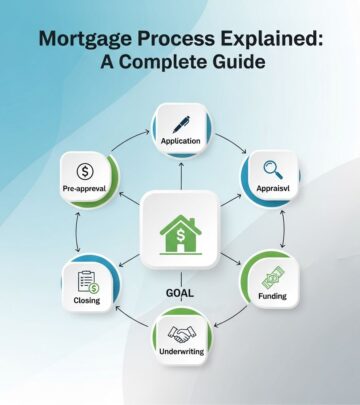
Prequalification offers a rough estimate without docs, while preapproval provides a firm commitment after credit pull and verification, strengthening offers. Here’s how:
- Contact a lender for prequalification using income/assets info.
- Gather docs: 2 years W-2s, recent paystubs (30 days income), 2 months bank statements, tax returns.
- Submit for full preapproval, including SSN, employment history, assets/liabilities.
Preapproval lasts 90-120 days, signaling seriousness to sellers.
Selecting the Right Mortgage Type
Options abound: fixed-rate (stable payments), adjustable-rate (ARM, lower initial but variable), FHA (low down for credit-challenged), VA (no down for veterans), USDA (rural zero-down). Compare via Loan Estimates, which detail rates, fees, and monthly payments within 3 days of application.
- Fixed-rate: Predictable, ideal for long-term stays.
- ARM: Riskier but cheaper short-term.
- Government-backed: Flexible for first-timers.
Lock your rate once under contract to shield against hikes; extensions cost extra.
Searching and Making an Offer
Partner with a real estate agent experienced in your market. Tour homes within preapproval limits, considering inspections early. Submit offers with preapproval letter, earnest money (1-3% deposit), and contingencies (inspection, appraisal, financing).
Upon acceptance, your preapproval converts to a full application. Expect a Loan Estimate outlining costs.
Navigating the Underwriting and Appraisal
Underwriters verify finances; provide updates promptly (e.g., new paystubs). The appraisal, ordered post-contract (fee ~$500), confirms property value matches loan amount. If low, renegotiate or increase down payment.
Schedule home inspection (~$300-500) to uncover issues like roof or plumbing. Secure homeowners insurance, noting exclusions like floods (add separate policy).
Preparing for Closing Day
Final approval follows cleared conditions. Review Closing Disclosure 3 days prior—it mirrors Loan Estimate with final figures. Bring cashier’s check/wire for down payment/closing costs (total 3-6% typically).
- Conduct final walk-through.
- Sign docs transferring title.
- Receive keys post-funding.
Closing takes 30-60 minutes; remote options exist.
Frequently Asked Questions
How long does the mortgage process take?
Typically 30-45 days from application to close, but 60+ in hot markets.
What’s the difference between prequalification and preapproval?
Prequal is informal; preapproval is verified with docs/credit.
Can I remove PMI?
Yes, at 20% equity via refinance or auto-termination.
What if my appraisal comes in low?
Negotiate price drop, challenge appraisal, or cover difference.
Are there programs for first-time buyers?
HUD/FHA offers low-down options; check local assistance.
Common Pitfalls to Avoid
Don’t change jobs, make big purchases, or open new credit during processing— it risks denial. Respond to lender requests within 24 hours. Budget for post-closing reserves.
Shop multiple lenders; even 0.25% rate difference saves thousands over 30 years.
References
- The Mortgage Loan Process in 10 Steps — Navy Federal Credit Union. 2025. https://www.navyfederal.org/loans-cards/mortgage/mortgage-basics/mortgage-process.html
- A Guide to the Home Buying Process — The Peoples Community Bank. 2024. https://www.thepcb.bank/blog/post/a-guide-to-the-home-buying-process
- Your 10-Step Guide to the Mortgage Loan Process — Bank of America. 2025. https://www.bankofamerica.com/mortgage/learn/guide-to-the-mortgage-loan-process/
- Buying a House — Consumer Financial Protection Bureau (.gov). 2025-10-01. https://www.consumerfinance.gov/owning-a-home/
- Home Buying Process Quick Guide — First National Bank of Omaha. 2024. https://www.fnbolending.com/mortgage-loans/home-buying-process-guide
- Home buying and mortgage process — U.S. Bank. 2025. https://www.usbank.com/home-loans/mortgage/first-time-home-buyers/mortgage-process.html
- Buying a Home — U.S. Department of Housing and Urban Development (.gov). 2025. http://www.hud.gov/helping-americans/buying-a-home
Similar Articles








Read full bio of Sneha Tete