Building Home Equity Through Personal Labor and Effort
Transform your skills and effort into down payment value for homeownership
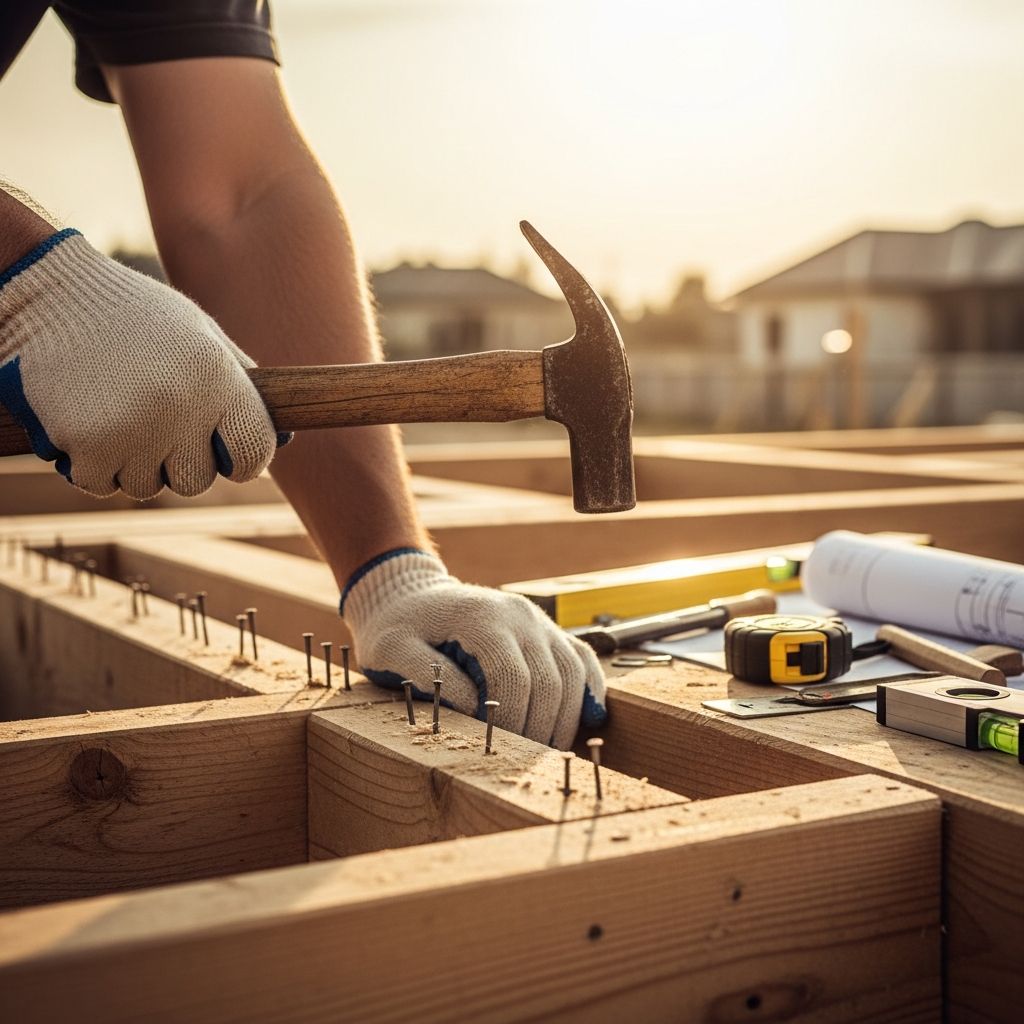
For many prospective homeowners, the largest barrier to purchasing property is accumulating a substantial down payment. Traditional mortgage requirements often demand 10% to 20% of the purchase price in cash before closing. However, an alternative pathway exists for those willing to invest time and effort rather than purely financial resources. This approach, commonly understood as leveraging personal labor for home value creation, offers a practical solution for cash-constrained buyers seeking homeownership without depleting their savings.
Understanding the Concept of Labor-Based Home Value
The fundamental principle underlying labor-based equity involves converting the value of your own work into tangible home value that lenders recognize as a legitimate down payment source. Rather than hiring contractors to perform repairs, renovations, or improvements, you complete the work yourself. The lender then evaluates the increase in property value resulting from this labor and credits that value toward your down payment requirement.
This concept extends beyond simple repairs. Qualifying improvements might include kitchen renovations, bathroom upgrades, structural repairs, electrical or plumbing work, landscaping projects, or other enhancements that demonstrably increase the property’s market value. The key distinction is that the work must be documented, completed prior to closing, and verified through professional appraisals and inspections.
How Lenders Evaluate Labor Value
Mortgage lenders don’t simply accept a borrower’s assertion that they’ve added value to a property. Instead, they require substantial documentation. An independent appraisal must compare the property’s value before improvements to its value after completion of all work. The appraiser determines whether the improvements genuinely increased market value and by what amount.
For a lender to accept labor-based equity, the improvements must be:
- Listed explicitly in the property sales contract
- Included in the formal appraisal report
- Documented with receipts, permits, and inspection records
- Completed before the mortgage closing date
- Improvements that genuinely increase property value rather than merely maintaining current condition
Calculating Your Actual Equity Investment
A common misconception involves overestimating the equity value created through personal labor. Borrowers frequently assume that if they purchase a property for $150,000 and improvements raise its value to $200,000, they’ve created $50,000 in equity. However, this calculation overlooks critical expenses.
The accurate formula accounts for all materials, equipment, and paid labor you’ve invested:
Labor Equity Value = (Post-Improvement Property Value − Original Purchase Price) − Total Material Costs
For example, if you purchase a property requiring renovation for $150,000, spend $20,000 on materials (cabinets, countertops, fixtures, paint), and complete all labor yourself, resulting in a final appraised value of $200,000, your actual labor equity equals $30,000 ($200,000 − $150,000 − $20,000). You cannot count the $20,000 in materials twice—once in the value increase and again as a cost reduction.
Material Costs vs. Labor Value
This distinction proves crucial for proper planning. If improvements cost $50,000 in materials but only increase property value by $40,000, you’ve actually lost money on the project. Lenders recognize this reality and base their equity calculations on the appraised value increase, not the amount spent.
Mortgage Programs Accepting Labor-Based Equity
Not all mortgage programs accommodate labor-based down payments. Borrowers must specifically seek lenders offering this option and understand each program’s unique requirements and limitations.
Federal Housing Administration Programs
The FHA 203(k) loan program stands as the most accessible option for borrowers utilizing labor-based equity. This program explicitly allows homebuyers to incorporate renovation costs into their mortgage balance. Borrowers may use their own labor as part of the down payment, with minimum credit score requirements typically starting at 580. The program requires a minimum 3.5% down payment in cash, but labor-based equity can cover the remaining required down payment amount.
FHA loans also offer flexible LTV (loan-to-value) ratios. Some programs permit up to 97% LTV with 105% total LTV for affordable lending products, meaning borrowers can finance a substantial portion of both purchase price and renovation costs combined.
Conventional Loan Options
Conventional mortgage lenders increasingly recognize labor-based equity as a legitimate down payment source. Freddie Mac, a major mortgage investor, allows borrowers to use documented sweat equity for down payments and closing costs with no stated maximum limit, as long as improvements are properly documented in the contract and appraisal.
Conventional programs typically require:
- Minimum 3% down payment (may be satisfied entirely through labor value)
- Credit score of 620 or higher (660+ preferred)
- Documented improvements with proof of completion
- Independent appraisal confirming value increase
Income and Eligibility Requirements
Beyond credit scores and down payment sources, lenders evaluate borrower income and debt ratios. Income-based programs specifically targeting lower-income buyers often impose income limits. For example, some affordable lending programs restrict borrower income to 80% or less of the area median income (AMI) for the property’s location.
These programs specifically recognize that labor-based equity enables homeownership for families lacking substantial cash reserves. However, borrowers must still demonstrate sufficient income to make monthly mortgage payments, maintain property insurance, and cover property taxes.
Advantages of Labor-Based Home Equity Investment
Reduced Cash Requirements
The most obvious benefit involves accessing homeownership with minimal liquid savings. For first-time buyers who’ve struggled to accumulate down payment funds, this pathway provides genuine opportunity. Rather than delaying homeownership indefinitely while saving for a large down payment, buyers can purchase fixer-upper properties and invest sweat rather than cash.
Lower Property Acquisition Costs
Properties requiring substantial repairs and improvements typically sell for significantly less than move-in-ready homes in comparable locations. A buyer willing to invest labor can acquire property at a discount unavailable to those seeking turnkey properties. This discount represents genuine savings, particularly in competitive real estate markets.
Personal Satisfaction and Community Building
Beyond financial considerations, transforming a neglected property into a welcoming home provides substantial psychological and emotional benefits. The investment of personal time creates deeper attachment to the property and community. For families, particularly those participating in community-based programs, the social aspects of collaborative home building reinforce neighborhood bonds.
Tax Benefits on Capital Improvements
Qualifying capital improvements may increase your home’s cost basis, potentially reducing capital gains taxes when you eventually sell the property. Improvements that extend the property’s useful life or adapt it to new purposes typically qualify. This tax consideration can provide substantial financial benefit over your ownership period.
Significant Risks and Limitations
Overestimating Value Creation
Many homeowners overestimate the value their improvements create. Not all renovations return their full cost in increased property value. Kitchen and bathroom improvements typically offer better returns than specialty projects, but regional variations exist. An appraiser’s determination is final—regardless of your labor investment, the property value increase is what matters to lenders.
Time Investment Constraints
Completing substantial improvements requires significant personal time and often specialized skills. Projects extending far beyond planned timelines drain both financial resources (as costs mount) and personal energy. Additionally, improvements must be completed before closing—delays can jeopardize financing approval.
Quality Control Challenges
Professional contractors carry liability insurance and warranties backing their work. Your own labor carries no such protection. If improvements prove inadequate or fail inspection, you must remediate at your expense before closing. Lenders will not approve mortgages on properties with deferred or incomplete repairs.
Liquidity Constraints During Construction
While completing renovations, you’ll likely encounter unexpected expenses requiring cash reserves. Material costs often exceed estimates, and unforeseen structural problems emerge during renovation. Buyers should maintain emergency funds separate from down payment calculations.
Strategic Approach to Planning Labor-Based Equity
Pre-Purchase Due Diligence
Before making an offer, hire a professional home inspector to identify all necessary repairs and estimate their scope and cost. This inspection informs realistic labor equity calculations and prevents expensive surprises after purchase.
Skill Assessment and Training
Honestly evaluate your capabilities. Simple projects like painting, basic landscaping, or cabinet installation may be within reach for motivated homeowners. Complex work like electrical, plumbing, or structural repairs typically requires professional licensing. Many communities offer home improvement workshops teaching essential skills.
Documentation From the Beginning
From the first improvement, maintain meticulous records: photographs before and after each phase, receipts for all materials, permits obtained, and inspection certificates. This documentation proves essential when the appraiser evaluates your work.
Frequently Asked Questions
Can I use sweat equity for the entire down payment?
Most programs require a minimum cash down payment of 3-3.5%, but labor-based equity can cover the remaining required amount. Some specialized affordable lending programs may allow 100% labor-based equity, but these remain limited.
What improvements qualify for equity credit?
Only improvements that genuinely increase market value qualify. The property sales contract must explicitly list improvements, and the appraisal must document the value increase. Simple maintenance doesn’t qualify; improvements must enhance, expand, or restore significant components.
How long do improvements take to count toward equity?
All improvements must be completed before closing. Lenders won’t approve mortgages based on projected future improvements.
Do I need permits for qualifying improvements?
Most significant improvements require permits and inspections. Lenders typically require documentation that work meets local building codes. Unpermitted work creates title issues and insurance complications.
Conclusion: Labor as Capital
For buyers with limited savings but genuine skills and willingness to invest personal effort, labor-based equity represents a legitimate pathway to homeownership. Success requires honest self-assessment, thorough planning, realistic timeline expectations, and meticulous documentation. The financial benefit—reduced down payment requirements—must be weighed against the substantial time investment and completion risks. When approached strategically, transforming sweat into equity makes homeownership accessible to families for whom traditional down payment requirements would prove prohibitively expensive.
References
- What Is Sweat Equity in Real Estate? — LendingTree. 2024. https://www.lendingtree.com/home/mortgage/how-to-use-sweat-equity-to-get-a-mortgage-with-no-down-payment/
- Make a Down Payment with Your Skills Instead of Cash — Freddie Mac. https://sf.freddiemac.com/working-with-us/affordable-lending/duty-to-serve/rural-housing/sweat-equity-overview
- Sweat equity meaning & how it works — Rocket Mortgage. https://www.rocketmortgage.com/learn/sweat-equity
- What is sweat equity? — Green Mountain Habitat for Humanity. https://vermonthabitat.org/what-is-sweat-equity/
- Sweat equity explained — Habitat for Humanity Northwest New Jersey. https://habitatnwnj.org/profiles/what-is-sweat-equity/
Similar Articles








Read full bio of Sneha Tete