Using Home Equity Loans To Consolidate Debt
Learn how to use a home equity loan to consolidate high-interest debt, lower payments, and manage your finances more efficiently.

Rising interest rates and persistent credit card balances can make it difficult to get out of debt. For homeowners, a home equity loan can be a powerful tool to consolidate high-interest debt into a single, more manageable payment at a lower rate.
This guide explains how home equity loans for debt consolidation work, their benefits and drawbacks, what they cost, and how they compare with options like HELOCs, personal loans, and balance transfer cards.
What Is Debt Consolidation?
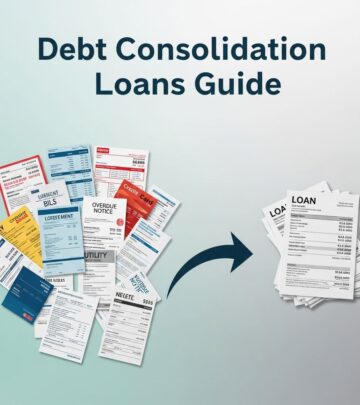
Debt consolidation means combining multiple existing debts into one new loan or credit line. Instead of juggling several payments, you make a single payment each month to one lender.
Common debts people consolidate include:
- High-interest credit card balances
- Personal loans
- Medical bills
- Store cards and other revolving credit
When consolidation works well, you:
- Replace multiple payments with one streamlined bill
- Secure a lower interest rate than your current debts
- Potentially lower your monthly payment by extending the repayment term
What Is Home Equity and How Does It Work for Consolidation?
Home equity is the difference between your home’s current market value and the balance you still owe on your mortgage.
Formula:
Home Equity = Home Value − Mortgage Balance
Example: If your home is worth $400,000 and you owe $250,000 on your mortgage, you have $150,000 in home equity.
Lenders typically allow you to borrow a percentage of that equity (often up to 80–90%, depending on your credit, income, and other factors).
When you use a home equity loan to consolidate debt:
- You apply for a new loan secured by your home.
- If approved, you receive a lump sum.
- You use that lump sum to pay off your existing high-interest debts.
- You then make a single, fixed monthly payment on the home equity loan.
How Home Equity Loan Debt Consolidation Works
A home equity loan is a second mortgage with a fixed interest rate, fixed term, and predictable monthly payments.
Step-by-Step Process
- 1. Assess your equity and debts
Determine your home’s market value and subtract your mortgage balance. List all debts you plan to consolidate, including balances, interest rates, and minimum payments. - 2. Check your credit and eligibility
Lenders review your credit score, income, debt-to-income ratio, and available equity. Better credit usually qualifies you for lower rates. - 3. Apply for a home equity loan
Submit documentation such as pay stubs, tax returns, bank statements, and details about your current mortgage and debts. - 4. Underwriting and appraisal
The lender may order an appraisal to confirm your home’s value and analyze your financial profile before approving the loan. - 5. Receive funds as a lump sum
Once approved, you receive a single payout—sometimes directly to you, sometimes via checks payable to your creditors. - 6. Pay off existing debts
Use the funds to pay off your credit cards, personal loans, and other high-interest debts in full. - 7. Repay the home equity loan
Begin making fixed monthly payments on the home equity loan over the agreed term (often 5–30 years).
Key Features of a Home Equity Loan
| Feature | Details |
|---|---|
| Type of loan | Second mortgage secured by your home |
| Disbursement | Lump-sum payment at closing |
| Interest rate | Generally fixed for the life of the loan |
| Repayment term | Often 5–30 years, depending on lender and amount |
| Monthly payments | Fixed principal and interest payments |
| Collateral | Your home; missed payments can lead to foreclosure |
Advantages of Using Home Equity to Consolidate Debt
Using home equity for debt consolidation can provide several important benefits for qualified borrowers.
1. Potentially Lower Interest Rates
Home equity loans usually charge lower interest rates than unsecured options like credit cards and many personal loans, because they are backed by your home.
- Credit card APRs often exceed 20%.
- Home equity loan rates are frequently closer to first-mortgage rates for qualified borrowers, though they can be higher and vary with market conditions.
- Even a few percentage points of savings can significantly reduce interest costs over time.
2. Simplified, Single Monthly Payment
Instead of managing multiple bills with different due dates, you make one fixed payment each month to one lender.
- Reduces the chance of missed or late payments.
- Makes budgeting and cash-flow planning easier.
- Can lower stress associated with managing multiple accounts.
3. Lower Monthly Payments
Because home equity loans may offer lower rates and longer terms than credit cards or short-term loans, your monthly payment can decrease even if your total balance stays the same.
- Lower interest costs can free more of each payment to go toward principal.
- Spreading repayment over more years (for example, 10–20 years) can reduce the required monthly amount.
- However, a longer term can increase total interest over the life of the loan.
4. Predictable, Fixed Payments
Most home equity loans have fixed interest rates, so your principal and interest payment does not change over the term of the loan.
- Provides stability compared with variable-rate debts.
- Makes it easier to build a long-term repayment plan.
Risks and Drawbacks of Home Equity Loan Debt Consolidation
Despite the potential benefits, there are serious risks you need to consider before using home equity to consolidate debt.
1. Your Home Is at Risk
A home equity loan is secured by your property. If you fall behind on payments and cannot catch up, the lender can ultimately foreclose on your home.
- Unsecured debts like credit cards do not carry this specific risk.
- Consolidating turns unsecured debt into debt backed by your home.
2. You May Pay More Interest Over Time
Lower monthly payments often come from lengthening the repayment period. Stretching a balance over many years can increase the total interest paid, even at a lower rate.
- For example, replacing several 3–5 year debts with a 15–20 year loan may cost more overall.
- Run the numbers to compare total lifetime interest with and without consolidation.
3. Closing Costs and Fees
Like a mortgage, a home equity loan can involve closing costs such as origination fees, appraisal fees, and other charges.
- These costs can reduce or offset the savings from a lower interest rate.
- Some lenders may offer reduced or promotional fees, but it is important to read all disclosures carefully.
4. Risk of Re-Accumulating Debt
If you consolidate debt but continue using credit cards or taking on new loans, you may end up with more total debt than before.
- Consolidation is most effective when paired with disciplined budgeting and spending control.
- Closing or reducing limits on paid-off accounts may help reduce temptation, but can affect your credit profile.
Costs and Requirements to Watch
Before applying for a home equity loan, understand the typical costs and borrower requirements.
Common Costs
- Appraisal fees
- Origination or underwriting fees
- Title search and recording fees
- Potential prepayment penalties (less common but possible)
Some lenders may allow you to roll closing costs into the loan balance, but that increases the amount on which you pay interest.
Typical Eligibility Factors
- Equity: Sufficient equity in your home, often keeping total mortgage plus home equity loan at or below 80–90% of the home’s value.
- Credit score: Stronger credit can qualify you for better rates and terms.
- Debt-to-income ratio: Lenders prefer that total monthly debts (including the new loan) stay within a certain percentage of your gross income.
- Income documentation: Proof of steady income and employment.
Home Equity Loans vs. Other Debt Consolidation Options
Home equity is one of several tools for consolidating debt. Compare it to alternatives before deciding.
| Option | How It Works | Pros | Cons |
|---|---|---|---|
| Home equity loan | Borrow a lump sum secured by your home; pay fixed rate over a set term. | Lower rates than most unsecured options; fixed payments; long terms available. | Closing costs; home is collateral; may pay more interest over time. |
| HELOC (Home Equity Line of Credit) | Revolving credit line secured by your home; draw as needed, often variable rate. | Flexible borrowing; can pay down and re-borrow; interest only on amount used. | Variable rates can rise; temptation to keep using the line; home is collateral. |
| Cash-out refinance | Replace existing mortgage with a larger one; take the difference in cash and use to pay off debt. | May secure a lower mortgage rate; single mortgage payment. | Resets your mortgage term; closing costs; larger mortgage balance. |
| Personal loan | Unsecured installment loan used to pay off other debts. | No collateral required; faster approval; no risk of foreclosure from this loan. | Rates often higher than home equity loans; shorter terms can mean higher monthly payments. |
| Balance transfer credit card | Move balances to a new card with a temporary low or 0% promotional rate. | Very low short-term interest if paid off before promo expires. | Transfer fees; high rates after promo; requires strong credit and discipline. |
When Using Home Equity for Debt Consolidation Can Make Sense
Using a home equity loan to consolidate debt may be appropriate when:
- You have substantial high-interest debt (especially credit cards) at rates significantly above home equity loan rates.
- You have enough equity and stable income to qualify.
- You plan to stay in the home long enough to justify closing costs.
- You want predictable monthly payments and a clear payoff timeline.
- You are committed to changing spending habits and not taking on new high-interest debt.
It may be less appropriate when:
- Your income is unstable or uncertain.
- You expect to move or sell your home soon, which may make closing costs less worthwhile.
- You are uncomfortable with putting your home at risk to pay off unsecured debts.
Practical Tips Before You Apply
- Compare multiple lenders: Rates, fees, and terms can vary widely. Get quotes from banks, credit unions, and online lenders.
- Calculate total cost: Use calculators from reputable banks or financial institutions to compare monthly payments and total interest with and without consolidation.
- Create a budget: Build your new home equity loan payment into a realistic monthly budget to ensure it is affordable.
- Plan to avoid new debt: Establish rules for credit card use or consider reducing limits once balances are paid off.
- Consider advice: If you are unsure, consult a HUD-approved housing counselor or a reputable nonprofit credit counseling agency for guidance.
Frequently Asked Questions (FAQs)
Q: Is using a home equity loan to pay off credit cards a good idea?
A: It can be beneficial if the home equity loan offers a significantly lower interest rate, you can comfortably afford the payments, and you are committed to not running up new credit card balances. However, you must be comfortable putting your home at risk as collateral.
Q: How much equity do I need to consolidate my debt?
A: Many lenders prefer that your total mortgage plus home equity borrowing remain at or below 80–90% of your home’s value, though exact limits vary by lender, your credit profile, and other factors.
Q: Will a home equity loan for debt consolidation hurt my credit score?
A: Applying for the loan triggers a hard inquiry, which can temporarily lower your credit score slightly. Over time, paying off high-interest revolving debt and making on-time payments on the new loan can help your credit, but missing payments can cause serious damage.
Q: What is the difference between a home equity loan and a HELOC for consolidation?
A: A home equity loan provides a lump sum with a fixed rate and fixed payments. A HELOC works more like a credit card secured by your home, allowing you to borrow, repay, and borrow again up to a limit, often at a variable rate. A loan is better for a single known amount; a HELOC may work if you need flexibility over time.
Q: Are there tax benefits to using a home equity loan to consolidate debt?
A: Under current U.S. tax rules, interest on home equity loans is generally only deductible when the loan is used to buy, build, or substantially improve the home that secures the loan. Using home equity to pay off personal debt like credit cards usually does not qualify for a deduction. Consult a tax professional for advice on your situation.
References
- Using Home Equity to Consolidate Debt: What You Should Know — PNC Bank. 2024-02-01. https://www.pnc.com/insights/personal-finance/borrow/using-equity-to-consolidate-debt.html
- Home Equity Loan for Debt Consolidation — Rocket Mortgage. 2024-02-05. https://www.rocketmortgage.com/learn/home-equity-loan-for-debt-consolidation
- How to Use a Home Equity Loan for Debt Consolidation — Heritage Family Credit Union. 2023-09-15. https://www.hfcuvt.com/post/home_equity_loan_for_debt_consolidation.html
- Home Equity Debt Consolidation Calculator — Regions Bank. 2023-06-20. https://www.regions.com/insights/personal/calculator/should-i-use-a-home-equity-loan-for-debt-consolidation
- Should I Use a Home Equity Loan for Debt Consolidation? — Navy Federal Credit Union. 2023-08-10. https://www.navyfederal.org/makingcents/credit-debt/home-equity-loan-for-debt-consolidation.html
- Should You Use a Home Equity Loan to Pay Off Your Debts? — Bankrate. 2024-01-05. https://www.bankrate.com/home-equity/use-home-equity-to-consolidate-debt/
- How a HELOC Can Help You Consolidate Your Debt — Citizens Bank. 2023-11-01. https://www.citizensbank.com/learning/heloc-for-debt-consolidation.aspx
Similar Articles








Read full bio of Sneha Tete