Home Equity Loans for Debt Relief
Discover how tapping into home equity can streamline debt but weigh the serious risks of foreclosure and extended repayment.

Many homeowners facing mounting credit card balances or personal loans turn to their property’s value for financial breathing room. A home equity loan allows borrowing against the difference between your home’s market value and outstanding mortgage, often at rates far below unsecured debt options. This approach can consolidate obligations into one manageable payment, but it secures the debt against your residence, introducing substantial hazards if circumstances change.
Understanding Home Equity Borrowing Basics
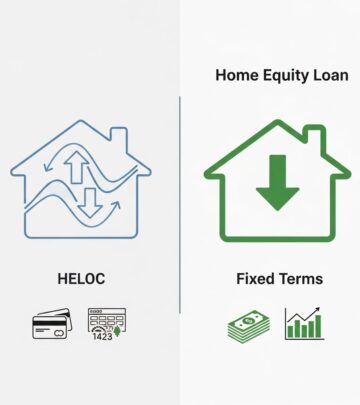
Home equity represents the portion of your property you truly own, calculated by subtracting your remaining mortgage from its appraised worth. Lenders typically permit borrowing up to 80-90% of this amount, depending on creditworthiness and market conditions. Fixed-rate home equity loans provide a lump sum repaid over set terms, usually 5-30 years, while home equity lines of credit (HELOCs) offer revolving access similar to a credit card but tied to your home.14
This mechanism appeals for debt relief because average credit card annual percentage rates (APRs) exceed 20%, whereas home equity products often range from 7-9% as of recent data. The secured nature reduces lender risk, passing savings to borrowers through competitive terms.25
Key Advantages of Consolidating with Home Equity
Streamlining finances stands out as a primary draw. Instead of tracking due dates across multiple creditors, a single monthly installment simplifies budgeting and minimizes oversight errors, which comprise 35% of credit score factors.15
- Cost Savings on Interest: Transitioning high-rate unsecured debt to a secured loan slashes ongoing expenses. Borrowers might halve their APR, redirecting funds toward principal reduction.23
- Extended Repayment Options: Longer durations lower periodic outlays, freeing cash for essentials or emergencies without default risk on original debts.16
- Credit Score Potential Boost: Closing revolving accounts and maintaining on-time payments with low utilization can elevate scores over 6-12 months.1
- Fixed Obligations: Predictable payments shield against rate volatility, unlike variable credit lines.6
These elements combine to accelerate debt freedom when paired with disciplined spending, potentially saving thousands in cumulative interest.2
Significant Drawbacks and Hidden Pitfalls
Despite attractions, this strategy converts unsecured liabilities into a lien on your shelter, amplifying consequences of hardship. Defaulting invites foreclosure proceedings, evicting families and tarnishing records for 7 years.34
- Foreclosure Threat: Your residence secures repayment; missed installments trigger lender action to recover funds via property sale.139
- Upfront Expenses: Expect 2-5% of principal in fees like appraisals, titles, and originations, totaling $2,000-$10,000 on larger sums.457
- Prolonged Indebtedness: Decade-spanning terms inflate total payouts despite modest monthlies.12
- Equity Erosion: Borrowing diminishes ownership stake; market dips could leave underwater mortgages.47
- Behavioral Traps: Cleared cards tempt re-accumulation, doubling burdens atop new obligations.5
Careful projection reveals if savings outweigh costs; short-term unsecured debt rarely justifies home risk.3
Qualifying Criteria and Application Process
Lenders scrutinize stability before approving. Minimum credit scores hover at 620-680, with scores above 740 unlocking optimal rates. Debt-to-income (DTI) ratios under 43% signal affordability, alongside 15-20% equity buffers.4
| Requirement | Typical Threshold | Impact |
|---|---|---|
| Credit Score | 620+ | Higher scores yield better rates |
| DTI Ratio | <43% | Measures payment capacity |
| Equity Needed | 15-20% | Protects lender collateral |
| Income Verification | Stable proof | Confirms repayment ability |
Applications involve home appraisals, income documentation, and credit pulls, spanning 30-45 days. Shop multiple offers, as variances exceed 1% APR.5
Financial Calculations: Is It Worth It?
Run scenarios to validate viability. Suppose $50,000 credit card debt at 22% APR over 5 years costs $37,000 interest. A $50,000 home equity loan at 8% over 15 years totals $23,000 interest but demands commitment.
- Monthly: Credit cards ~$1,200 vs. equity ~$480
- Net Savings: ~$14,000, minus ~$2,500 fees = $11,500 gain
Tools from lenders or calculators refine these, factoring personal variables.25
Strategic Alternatives to Home Equity
Not all profiles suit property-backed borrowing. Consider these options:
- Balance Transfers: 0% introductory cards shift debt interest-free 12-21 months, ideal for quick payoffs.
- Personal Loans: Unsecured fixed-rate financing, higher APRs (10-20%) but no collateral risk.
- Debt Management Programs: Nonprofit counseling negotiates lower rates without new loans.
- Refinancing: Cash-out mortgages blend consolidation into primary payments.
- Bankruptcy: Last resort restructures unsecured debt, preserving home if prioritized.3
Match remedies to debt type: secure assets warrant equity, while cards favor unsecured paths.35
Steps to Implement Safely
- Compute equity via recent appraisal or online estimators.
- Gather financials: statements, pay stubs, tax returns.
- Compare 3-5 lender quotes, noting APR, fees, terms.
- Project budgets ensuring new payment fits post-expense income.
- Secure cards post-payoff to curb relapse.
- Monitor progress quarterly, adjusting as needed.
Professional advice from certified planners clarifies nuances.2
Frequently Asked Questions
Can a home equity loan damage my credit?
Initial inquiries dip scores temporarily, but consolidation and timely payments often improve them long-term.1
What if home values drop after borrowing?
You remain liable for the balance, potentially owing more than property worth, complicating sales.47
Are interest payments tax-deductible?
Only if used for home improvements, not general debt consolidation per IRS rules post-2017 tax reform.
How much can I borrow?
Usually 80-90% of equity, capped by DTI and lender policies.4
HELOC vs. traditional home equity loan?
HELOCs provide flexible draws at variable rates; fixed loans offer stability.810
Conclusion: Proceed with Caution
Home equity consolidation suits stable households with ironclad budgets, delivering rate relief and simplicity. Yet, the home-on-the-line reality demands exhaustive evaluation. Prioritize root causes like overspending, explore alternatives, and consult experts to safeguard your most valuable asset while pursuing relief.
References
- Consolidating debt with home equity: Pros and cons to consider — CBS News. 2023. https://www.cbsnews.com/news/consolidating-debt-with-home-equity-pros-and-cons-to-consider/
- Pros and Cons of Using a Home Equity Loan to Consolidate Debt — Jarrettsville Federal Savings Bank. 2024-04-06. https://www.jarrettsvillefederal.com/2024/04/06/pros-and-cons-of-using-a-home-equity-loan-to-consolidate-debt/
- Pros and Cons of Consolidating Debt with a Home Equity Loan — Money Management International. 2023. https://www.moneymanagement.org/blog/pros-and-cons-of-consolidating-debt-with-a-home-equity-loan
- Should I Use a Home Equity Loan for Debt Consolidation? — Experian. 2024. https://www.experian.com/blogs/ask-experian/home-equity-loan-for-debt-consolidation/
- Should you use a home equity loan to pay off your debts? — Bankrate. 2024. https://www.bankrate.com/home-equity/use-home-equity-to-consolidate-debt/
Similar Articles








Read full bio of medha deb