Home Equity Loan vs HELOC vs Cash-Out Refi
Unlock your home's value wisely: Compare home equity loans, HELOCs, and cash-out refinances to find the best fit for your needs.
Your home is likely your largest asset, and its built-up equity represents a powerful financial resource. When you need funds for renovations, debt consolidation, education, or other big-ticket items, three primary options stand out: the home equity loan, home equity line of credit (HELOC), and cash-out refinance. Each provides a way to convert home equity into usable cash, but they differ significantly in structure, costs, risks, and flexibility. This guide breaks down these options to help you decide which aligns with your financial situation and goals.
Understanding Home Equity: The Foundation of These Loans
Home equity is the portion of your property’s current market value that you own outright, calculated as the home’s appraised value minus any outstanding mortgage balance. For instance, if your home appraises at $400,000 and you owe $250,000, your equity totals $150,000. Lenders typically allow borrowing up to 80-90% of this equity, but requirements vary. Maintaining at least 20% equity post-borrowing is common to avoid private mortgage insurance or higher risks.
Building equity occurs through mortgage principal payments, home value appreciation, or improvements. In today’s market, with steady home price growth, many homeowners have substantial equity to leverage. However, using your home as collateral means default risk could lead to foreclosure, so assess your repayment ability carefully.
Breaking Down the Home Equity Loan
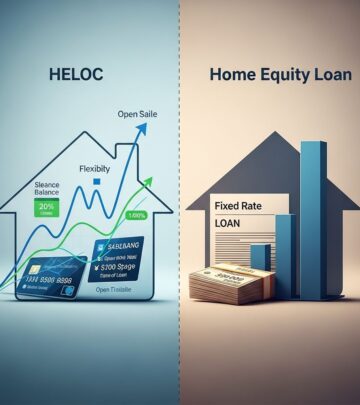
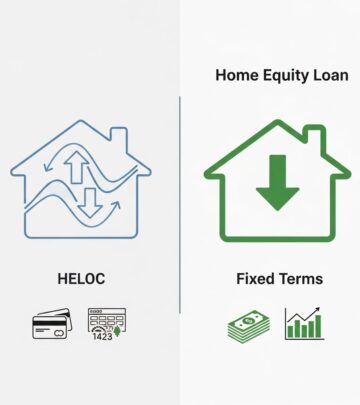
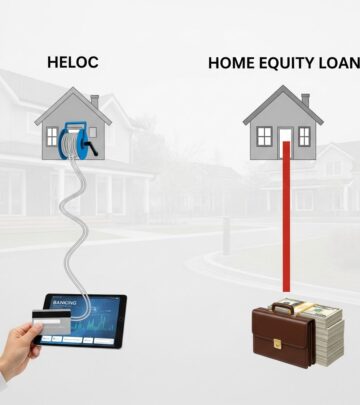
A home equity loan, often called a second mortgage, delivers a one-time lump sum based on your home’s equity. Funds disburse at closing, and you repay via fixed monthly installments over a set term, usually 5-30 years.
Key Features:
- Fixed Rates: Predictable payments shield you from market fluctuations.
- Lump Sum Access: Ideal for known expenses like a kitchen remodel.
- Closing Costs: Typically 2-5% of the loan amount, including appraisal and title fees.
- Qualification: Needs 15-20% equity, credit score around 620+, and debt-to-income (DTI) ratio under 43-50%.
These loans suit borrowers seeking stability. For example, if you borrow $50,000 at 7% over 15 years, monthly payments might hover around $450, offering budgeting ease.
Exploring the Home Equity Line of Credit (HELOC)
A HELOC functions like a credit card secured by your home equity. It features a draw period (5-10 years) for borrowing as needed up to a limit, followed by a repayment phase (10-20 years). During the draw period, payments cover interest only; later, principal repayment kicks in.
Core Characteristics:
- Variable Rates: Tied to prime rate, they can rise or fall, currently averaging higher than fixed options.
- Flexible Draws: Borrow only what you need, paying interest solely on the used amount.
- Lower Upfront Fees: Often minimal or waived, though appraisals are standard.
- Equity Needs: 10-20% minimum, with similar credit and DTI requirements as home equity loans.
HELOCs excel for ongoing or uncertain costs, such as phased home repairs. A $100,000 line might see you draw $20,000 initially, with payments adjusting dynamically. Beware rate spikes, which could inflate costs significantly.
Cash-Out Refinance: Replacing Your Mortgage for Cash
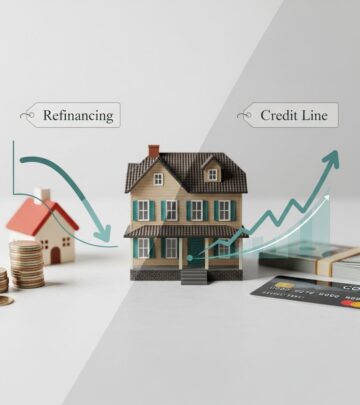
This option swaps your existing mortgage for a larger one, pocketing the equity difference as cash. It resets your primary loan terms, potentially at current rates.
Essential Traits:
- Fixed or Adjustable Rates: Often lower than HELOCs, especially if rates have dropped.
- One-Time Payout: Receive funds after closing, repaid over 15-30 years.
- Higher Closing Costs: 2-6% of the new loan, akin to originating a mortgage.
- Strict Eligibility: 20%+ equity post-refi, 620+ credit, DTI <50%.
Perfect if you want better mortgage terms alongside cash. On a $400,000 home with $250,000 owed, refinancing to $320,000 yields $70,000 cash (minus fees), extending your term but possibly lowering rates.
Side-by-Side Comparison: Key Differences at a Glance
To clarify choices, here’s a table summarizing critical aspects:
| Feature | Home Equity Loan | HELOC | Cash-Out Refinance |
|---|---|---|---|
| Fund Access | Lump sum | Revolving line | Lump sum |
| Interest Rate | Fixed | Variable (some fixed options) | Fixed or ARM |
| Term Structure | 5-30 years, principal + interest | Draw (5-10 yrs) + Repay (10-20 yrs) | 10-30 years |
| Closing Costs | 2-5% | Low/none | 2-6% |
| Best For | Known, one-time needs | Ongoing/uncertain expenses | Rate/term improvement + cash |
| Equity Req. | 15-20% | 10-20% | 20% post-loan |
Pros and Cons of Each Option
Home Equity Loan
Pros: Stable payments, straightforward, potentially tax-deductible interest for qualified uses.
Cons: Less flexibility, second payment adds to monthly burden, home at risk.
HELOC
Pros: Pay interest only on drawn amounts, reusable credit, low startup costs.
Cons: Rate volatility, balloon payments possible, discipline needed to avoid over-borrowing.
Cash-Out Refinance
Pros: Competitive rates, single payment simplifies finances, extend term for lower monthlies.
Cons: Resets mortgage clock, high fees, may increase total interest if term lengthens.
Qualification Criteria Across All Options
All require solid credit (620+), manageable DTI (<50%), and sufficient equity. Cash-out refis demand the strictest scrutiny as they replace your primary mortgage. Appraisals confirm value; recent home improvements can boost eligibility. Shop multiple lenders, as terms vary.
Real-World Scenarios: Which to Choose?
- Fixed Renovation Budget: Opt for a home equity loan’s predictability.
- Variable Project Costs (e.g., Emergency Repairs): HELOC’s flexibility shines.
- High Existing Rate: Cash-out refi to secure lower rates and cash.
Consider total costs: A HELOC might save upfront but cost more long-term if rates rise; refis offer savings if you shorten terms.
Risks and Financial Considerations
Your home secures these loans, so missed payments threaten foreclosure. Variable rates in HELOCs expose you to hikes—recent economic shifts highlight this. Factor taxes: Interest may be deductible if used for home improvements (consult IRS rules). Compare break-even points on fees vs. savings.
Frequently Asked Questions (FAQs)
Can I get both a HELOC and home equity loan?
Possible, but combined debt can’t exceed equity limits, increasing risk.
Is a cash-out refi worth it if rates are higher?
Only if cash needs outweigh costs and you can’t qualify elsewhere.
How do current rates compare?
Fixed options (loans/refis) generally beat HELOC variables.
What’s the impact on my credit score?
Hard inquiries drop scores temporarily; new debt raises DTI.
Are there alternatives like personal loans?
Yes, unsecured but higher rates and limits.
Steps to Get Started
- Calculate equity: Appraised value – mortgage balance.
- Check credit and DTI.
- Prequalify with 3+ lenders.
- Compare APRs, not just rates.
- Consult a financial advisor.
By weighing these factors, you can harness your equity strategically without undue risk.
References
- Cash-Out Refinance vs. HELOC: Which Should You Choose? — NerdWallet. 2023. https://www.nerdwallet.com/mortgages/learn/home-equity-loan-vs-cash-out-refinance
- Cash Out Refinance vs. HELOC: Key Differences — Freedom Mortgage. 2024. https://www.freedommortgage.com/learn/refinancing/cash-out-or-heloc
- Cash-out refinance vs. HELOC — Rocket Mortgage. 2024. https://www.rocketmortgage.com/learn/cash-out-refinance-vs-heloc
- Home Equity Loan vs. HELOC vs. Cash Out Refinance — Experian. 2024. https://www.experian.com/blogs/ask-experian/home-equity-loan-vs-heloc-vs-cash-out-refinance/
- HELOC, Cash-Out Refinance or Home Equity Loan? — Bankrate. 2024. https://www.bankrate.com/home-equity/home-equity-loan-heloc-or-cash-out-refi/
Similar Articles








Read full bio of medha deb