Home Equity Loan vs HELOC: Key Differences
Compare home equity loans and HELOCs to find the right borrowing option for your financial needs.

When you own a home and have built equity through mortgage payments and property appreciation, you have access to significant financial resources. Two primary ways to tap into your home’s equity are through a home equity loan or a home equity line of credit (HELOC). Both options allow you to leverage your property’s value without selling it, but they work quite differently. Understanding these differences is essential to making an informed decision that aligns with your financial goals and circumstances.
What Is Home Equity?
Home equity represents the difference between your home’s current market value and the amount you still owe on your mortgage. As you make regular mortgage payments, your equity grows. Additionally, if your home’s value increases due to market conditions or improvements, your equity expands even further. For example, if your home is valued at $350,000 and you have a remaining mortgage balance of $150,000, you have built $200,000 in equity. However, lenders typically cap how much of your equity you can borrow against, usually between 80 and 90 percent of your home’s total value.
Home Equity Loans Explained
A home equity loan is an installment loan that provides you with a lump sum of money upfront. You then repay this borrowed amount with interest over a set term, typically through fixed monthly payments. This type of loan is secured, meaning your home serves as collateral. If you fail to make the required payments, the lender has the legal right to foreclose on your property to recover the debt.
How Home Equity Loans Work
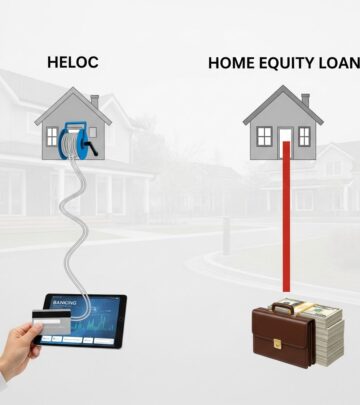
When you apply for a home equity loan, the lender evaluates your creditworthiness, income stability, debt-to-income ratio, and the equity you’ve accumulated in your home. Once approved, you receive the entire loan amount in a single payment at closing. This lump sum approach makes home equity loans ideal for borrowers who have a specific, one-time expense in mind and know exactly how much money they need.
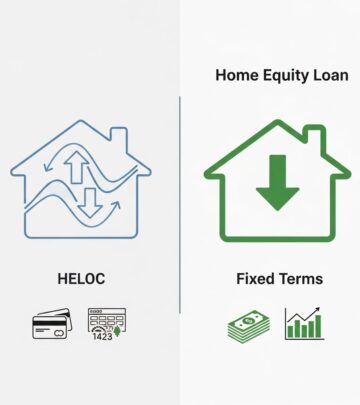
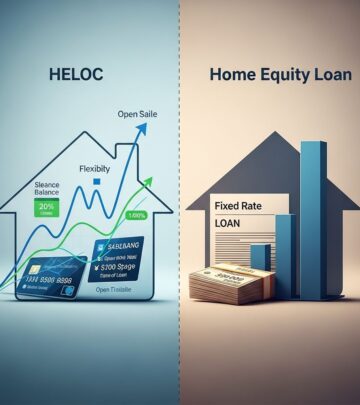
The predictability of home equity loans is one of their defining characteristics. Your interest rate remains fixed for the life of the loan, meaning your monthly payment never changes. This stability allows you to budget accurately and plan your finances with confidence, knowing exactly what your obligation will be each month.
Key Features of Home Equity Loans
Home equity loans typically come with the following characteristics:
- Fixed interest rates that remain constant throughout the loan term
- Fixed monthly payments that don’t fluctuate
- Lump sum distribution at closing
- Interest applied to the entire loan amount from the start
- Principal repayment begins immediately
- Borrowing limits typically up to 85 percent of your home’s equity
Costs and Fees Associated with Home Equity Loans
When obtaining a home equity loan, you may encounter various fees and costs, including origination fees, appraisal fees, closing costs, and potentially prepayment penalties. Understanding these additional expenses is crucial when calculating the true cost of your loan.
Home Equity Lines of Credit (HELOCs) Explained
A HELOC operates similarly to a home equity loan in that it allows you to borrow against your home’s equity and uses your property as collateral. However, instead of receiving a lump sum, you receive approval for a line of credit with a maximum borrowing amount. You can then draw from this line of credit as needed over a designated period called the draw period, typically lasting 5 to 10 years.
How HELOCs Work
During the draw period, you can access funds multiple times, up to your approved credit limit. You pay interest only on the amount you actually withdraw, not on your entire approved line. For instance, if you’re approved for a $50,000 HELOC but only draw $20,000, you’ll pay interest solely on that $20,000. This feature makes HELOCs particularly useful for expenses that may occur gradually over time or for amounts that aren’t precisely known upfront.
After the draw period ends, you enter the repayment period, during which you cannot access additional funds. At this point, you begin repaying both the principal and any remaining interest according to your loan agreement. Many HELOCs require interest-only payments during the draw period, which can result in lower monthly obligations initially.
Variable Interest Rates
A key distinction between HELOCs and home equity loans is that HELOCs typically come with variable interest rates. This means your interest rate fluctuates based on market conditions and your lender’s terms. When interest rates rise, your monthly payments increase; when rates fall, your payments decrease. This unpredictability can make budgeting more challenging, especially in rising-rate environments. However, some HELOCs offer the option to convert some or all of your balance to a fixed rate, though this typically comes with an additional conversion fee.
Key Features of HELOCs
HELOCs typically include the following characteristics:
- Variable interest rates that change over time
- Flexible draw periods allowing access to funds as needed
- Interest charged only on withdrawn funds
- Monthly payments that may fluctuate during the repayment period
- Option to postpone principal repayment during the draw period
- Potential for conversion to fixed rates on portions of the balance
HELOC Fees and Charges
HELOCs often come with annual maintenance fees, transaction fees for each withdrawal, inactivity fees if you don’t use the line for extended periods, and potential cancellation or early termination fees. These costs can add up over time and should be considered when evaluating a HELOC’s true expense.
Direct Comparison: Home Equity Loan vs HELOC
| Feature | Home Equity Loan | HELOC |
|---|---|---|
| Interest Rate | Fixed | Variable (usually) |
| Monthly Payments | Fixed and predictable | Fluctuating |
| Fund Distribution | Lump sum at closing | As-needed during draw period |
| Interest Charged On | Full loan amount | Only amount withdrawn |
| Principal Repayment | Begins immediately | Can be postponed during draw period |
| Best For | One-time large expenses | Ongoing or unpredictable expenses |
| Access to Funds | No further access after closing | Ongoing access during draw period |
Advantages and Disadvantages
Home Equity Loan Advantages
Home equity loans offer several compelling benefits. The fixed interest rate provides certainty and allows for accurate budget planning. You know exactly what your monthly payment will be throughout the loan term. Additionally, receiving funds in a lump sum enables you to complete your intended project quickly without managing multiple withdrawals. For borrowers who prefer predictability and want to avoid watching interest rate markets, home equity loans provide peace of mind.
Home Equity Loan Disadvantages
The primary drawback of home equity loans is their inflexibility. You receive all funds upfront, so you pay interest on the entire amount from day one, even if you don’t immediately need all the money. If your actual expenses fall short of your borrowed amount, you’re still obligated to repay the full loan. Additionally, you cannot access additional funds after receiving your initial distribution without applying for a new loan.
HELOC Advantages
HELOCs provide exceptional flexibility. You only pay interest on funds you actually withdraw, potentially saving significant money if you don’t use your entire approved line. The ability to access funds multiple times over the draw period makes HELOCs ideal for ongoing projects or uncertain expenses. Interest-only payments during the draw period can keep monthly obligations manageable. Furthermore, if interest rates decline, your payments decrease accordingly, allowing you to benefit from favorable market conditions.
HELOC Disadvantages
The variable interest rate is the primary concern with HELOCs. In a rising-interest-rate environment, your monthly payments increase, which can strain your budget unexpectedly. This unpredictability makes long-term budgeting difficult. HELOCs often come with annual fees, transaction fees, and potential prepayment penalties. Additionally, after the draw period ends, some HELOCs have balloon payments where you must repay the entire remaining balance at once, creating financial stress if you haven’t prepared adequately.
Qualification Requirements
Both home equity loans and HELOCs require lenders to evaluate your financial situation. Generally, you’ll need:
- Consistent and verifiable income to demonstrate your ability to repay
- An acceptable debt-to-income ratio, typically around 43 percent or lower
- Sufficient home equity, with lenders typically allowing you to borrow 80 to 90 percent of your home’s equity
- Good credit history and payment track record
The lender will conduct a formal appraisal to determine your home’s current market value, which directly affects how much you can borrow. It’s important to note that while your home equity might seem substantial, lenders cap borrowing amounts conservatively to protect themselves.
Common Uses for Home Equity Borrowing
Homeowners use both home equity loans and HELOCs for various purposes. Common applications include major home renovations and repairs, paying for a child’s college tuition, starting a small business, consolidating high-interest credit card debt, covering wedding expenses, and managing medical or emergency expenses. The flexibility of these products makes them attractive for many financial situations.
Choosing Between a Home Equity Loan and a HELOC
Consider Your Financial Needs
If you have a specific, well-defined expense and know exactly how much money you need, a home equity loan is typically the better choice. You’ll receive all funds at once and can complete your project quickly. However, if your expenses are uncertain, may extend over time, or occur in installments, a HELOC provides the flexibility to access funds as needed.
Evaluate Your Comfort with Rate Variability
Do you prefer predictability and stable payments? A home equity loan offers fixed rates and payments that never change, ideal for budget-conscious borrowers. If you’re comfortable with payment fluctuations and believe interest rates may decline, or if you can manage variable payments, a HELOC could work well for you.
Assess Your Risk Tolerance
Remember that both products use your home as collateral. If you fail to repay, you risk foreclosure. HELOCs carry additional risk from potential balloon payments and rate increases. Ensure you have a reliable income and solid financial foundation before committing to either option.
Frequently Asked Questions
Q: Can I use home equity loans or HELOCs for any purpose?
A: Yes, both products allow you to use funds for virtually any purpose, including home improvements, education, debt consolidation, business ventures, or travel. However, it’s generally advisable to avoid using these products, which have your home as collateral, for non-essential purchases.
Q: What happens if I can’t make payments on my home equity loan or HELOC?
A: Since both are secured by your home, failure to make payments could result in foreclosure. This is a serious consequence, so only borrow amounts you’re confident you can repay.
Q: Can I pay off a home equity loan early?
A: Most home equity loans allow early repayment without penalty, though some may charge prepayment fees. Check your loan terms carefully.
Q: Is it possible to convert a HELOC to a fixed rate?
A: Yes, many HELOCs offer conversion options allowing you to fix the rate on some or all of your balance. This typically involves an additional conversion fee.
Q: How much of my home equity can I borrow?
A: Lenders typically allow you to borrow between 80 and 85 percent of your home’s total equity. Combined with your existing mortgage, your total debt shouldn’t exceed 80 to 90 percent of your home’s value.
Q: What fees should I expect with a HELOC?
A: Common HELOC fees include annual maintenance fees, transaction fees for each withdrawal, inactivity fees, and conversion fees if you change from variable to fixed rates.
References
- HELOC Vs. Home Equity Loan: What’s The Difference? — Bankrate. 2025-08-15. https://www.bankrate.com/home-equity/home-equity-loan-vs-line-of-credit/
- Home Equity Loan vs HELOC: What’s the Difference? — OneMain Financial. https://www.onemainfinancial.com/resources/loan-basics/home-equity-loan-vs-heloc-whats-the-difference
- Mortgage Monitor Report — ICE Mortgage Technology. August 2025. https://www.icemortgagetechnology.com
Similar Articles








Read full bio of medha deb