Home Equity Loan and HELOC Together?
Discover if you can combine a home equity loan and HELOC, their differences, benefits, risks, and strategies for smart borrowing against your home's value.

Homeowners often wonder if they can leverage both a home equity loan and a home equity line of credit (HELOC) simultaneously to access their property’s built-up value. The answer is yes, provided lenders approve and you meet equity and credit requirements, as both are second mortgages secured by your home. This dual approach allows for a lump-sum fixed-rate loan alongside flexible revolving credit, but it increases debt obligations and foreclosure risks if payments falter.
Understanding Home Equity Fundamentals
Home equity represents the difference between your property’s current market value and any outstanding mortgage balance. Lenders typically allow borrowing up to 80-90% of this equity, requiring at least 15-20% remaining to qualify. For example, on a $400,000 home with a $200,000 mortgage, $200,000 equity might support $100,000-$160,000 in new borrowing across products.
Both home equity loans and HELOCs use your home as collateral, making them secured debts with lower rates than unsecured options like credit cards. However, defaulting risks losing your property through foreclosure. Recent data shows average HELOC rates around 8-9% and home equity loans at 7-8% as of early 2026, influenced by Federal Reserve policies.
Key Features of a Home Equity Loan
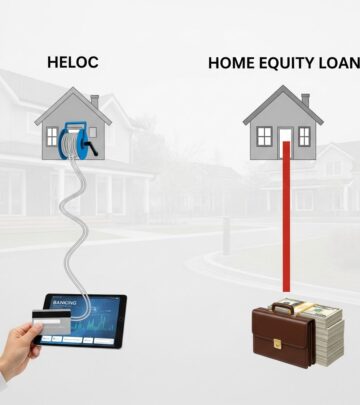
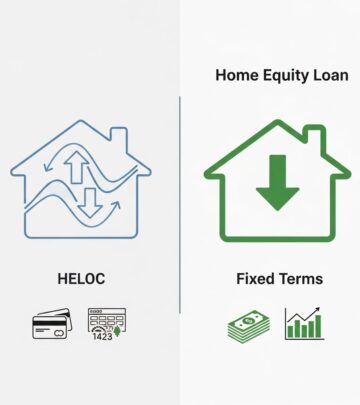
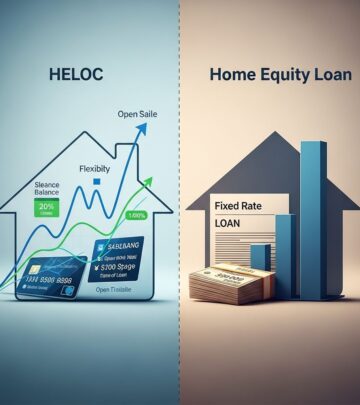
A home equity loan, often called a second mortgage, disburses funds as a single lump sum at closing. Repayment starts immediately with fixed monthly payments covering principal and interest over 5-30 years. This predictability suits one-time expenses like major renovations or debt consolidation.
- Fixed rates: Locked in, shielding from market fluctuations.
- Lump sum access: Full amount available upfront.
- Stable payments: Budget-friendly for planned costs.
Drawbacks include paying interest on the entire amount from day one, even if funds sit unused, and needing a new application to borrow more. Closing costs range 2-5% of the loan.
Key Features of a HELOC
A HELOC functions like a credit card secured by home equity, offering a revolving line during a 5-10 year draw period. Borrow as needed up to the limit, paying interest only on drawn amounts. Post-draw, a 10-20 year repayment phase requires principal plus interest.
- Variable rates: Tied to prime rate, potentially rising but starting lower.
- Flexible draws: Reuse as you repay during draw period.
- Interest-only option: Lower initial payments.
Challenges involve rate hikes increasing costs and temptation to overspend without discipline. Some lenders offer fixed-rate locks on portions.
Can You Combine Both Products?
Yes, many lenders permit a home equity loan and HELOC concurrently, treating them as separate second liens. Total borrowing cannot exceed combined loan-to-value (CLTV) limits, often 85-95%. For instance, you might secure a $50,000 fixed loan for roofing, then a $30,000 HELOC line for ongoing repairs.
Lenders assess overall debt-to-income (DTI) ratio under 43%, credit scores above 620-680, and sufficient equity. Combining maximizes access: fixed certainty plus flexible credit. However, it amplifies monthly payments and risks, as both liens prioritize repayment. Shop multiple lenders, as policies vary.
Comparing Home Equity Loans and HELOCs Side-by-Side
| Feature | Home Equity Loan | HELOC |
|---|---|---|
| Disbursement | Lump sum | Revolving draws |
| Interest Rate | Fixed | Variable (some fixed options) |
| Payments | Fixed principal + interest | Interest-only then full; variable |
| Best For | Known large expenses | Ongoing or uncertain costs |
| Interest Charged On | Full amount | Drawn balance only |
| Repayment Start | Immediately | Draw period flexible |
This table highlights why combining them covers diverse needs: stability from loans, adaptability from lines.
Pros and Cons of Using Both
Advantages
- Diversified access: Lump sum for immediate projects, line for future needs.
- Rate optimization: Lock fixed rates now, use variable for short-term.
- Tax benefits: Interest may deduct if used for home improvements (consult advisor).
- Lower costs: Than personal loans or cards.
Disadvantages
- Higher DTI: Dual payments strain budgets.
- Foreclosure risk: Doubled on both liens.
- Rate volatility: HELOC changes amid economic shifts.
- Fees: Appraisals, closings add up.
Eligibility and Application Process
Qualify with 15-20% equity, 620+ FICO, DTI <43%, stable income. Process mirrors mortgages: application, appraisal (costing $300-500), underwriting (2-6 weeks), closing.
For both: Lenders calculate aggregate CLTV. Existing first mortgage factors in. Improve odds with strong credit history and low debt.
Strategic Uses for Combined Borrowing
Pair for renovations: fixed loan for kitchen ($40k), HELOC for appliances ($10k draws). Debt consolidation: lump sum pays high-interest cards, line handles emergencies. Education or investments if returns exceed rates, but cautiously.
Avoid speculative uses like vacations, prioritizing needs over wants to protect equity gains.
Risks and Mitigation Strategies
Primary risk: foreclosure if unable to pay, as home secures both. Variable HELOC rates rose 5%+ in past cycles, spiking payments. Mitigate by:
- Budgeting extra for rate hikes.
- Building emergency funds covering 6 months payments.
- Choosing HELOCs with rate caps.
- Refinancing if rates drop.
Monitor equity via annual appraisals; falling home values could trigger margin calls on HELOCs.
Frequently Asked Questions
Which has lower rates: home equity loan or HELOC?
HELOCs often start lower but vary; loans offer fixed security.
Can I get a HELOC if I have a home equity loan?
Yes, if remaining equity and qualifications hold.
Are payments tax-deductible?
Potentially for home-related uses; verify with IRS rules and advisor.
What if home values drop?
May limit further borrowing or require repayment.
How to close one early?
Payoff per terms; prepayment penalties rare but check.
Final Considerations Before Applying
Weigh needs against risks; calculate total costs using online calculators. Compare 3-5 lenders for best terms. Consult financial advisors for personalized fit, especially with existing debts. Borrowing against home equity wisely builds wealth; mismanaging erodes it.
References
- What’s the Difference Between a HELOC and a Home Equity Loan? — Navy Federal Credit Union. 2025. https://www.navyfederal.org/makingcents/home-ownership/heloc-vs-home-equity-loan.html
- HELOC Vs. Home Equity Loan: What’s The Difference? — Bankrate. 2026-03-15. https://www.bankrate.com/home-equity/home-equity-loan-vs-line-of-credit/
- Home Equity Loan vs. Line of Credit – What are the Differences? — Bank of America. 2025. https://www.bankofamerica.com/mortgage/learn/home-equity-loan-vs-line-of-credit/
- Home Equity Loan vs HELOC: Key Differences and Comparisons — PNC Bank. 2026-01-20. https://www.pnc.com/insights/personal-finance/borrow/heloc-vs-home-equity-loan.html
- What is the difference between a Home Equity Loan and a Home Equity Line of Credit (HELOC)? — Consumer Financial Protection Bureau. 2024-11-10. https://www.consumerfinance.gov/ask-cfpb/what-is-the-difference-between-a-home-equity-loan-and-a-home-equity-line-of-credit-heloc-en-247/
- Home Equity Loan vs. Home Equity Line of Credit (HELOC) — Equifax. 2025-09-05. https://www.equifax.com/personal/education/loans/articles/-/learn/home-equity-loans-vs-home-equity-lines-of-credit/
Similar Articles








Read full bio of medha deb