Complete Guide to Securing a Home Equity Line of Credit
Learn how to access your home's equity and qualify for competitive rates

Understanding Home Equity and Your Borrowing Potential
Before pursuing a home equity line of credit, it’s essential to understand what home equity represents and how it determines your borrowing capacity. Your home’s equity is calculated as the difference between your home’s current market value and the outstanding balance on your mortgage. For example, if your home is valued at $300,000 and you owe $180,000 on your mortgage, you possess $120,000 in equity.
Most lenders restrict HELOC borrowing to 80 to 85 percent of your home’s appraised value, minus any existing mortgage debt. This means that even if you have substantial equity, you typically cannot access 100 percent of it. Understanding this limitation helps you calculate realistic borrowing amounts before applying.
What Distinguishes a HELOC From Other Borrowing Options
A HELOC functions as a revolving line of credit secured by your home, similar to a credit card in structure but backed by your property as collateral. Unlike traditional home equity loans that provide a lump sum payment, a HELOC allows you to borrow funds on an as-needed basis throughout a designated draw period, typically spanning ten years.
This flexibility offers distinct advantages. You only pay interest on the amount you actually borrow rather than on funds you don’t use. If you anticipate needing $50,000 but only use $30,000 during the first year, you’ll only pay interest on that $30,000, not the full available amount. As you repay borrowed funds, your available credit replenishes, functioning much like a credit card.
Financial Prerequisites for HELOC Qualification
Lenders evaluate multiple financial factors when assessing your HELOC application. The following elements typically influence approval decisions:
- Credit Score: Most lenders prefer credit scores of 620 or higher, though scores above 700 typically result in better rates and terms.
- Home Equity Position: You must possess adequate equity, generally at least 15 to 20 percent of your home’s value.
- Debt-to-Income Ratio: Lenders calculate your total monthly debt payments against your gross monthly income, typically preferring ratios below 43 percent.
- Employment Verification: Stable employment history and consistent income documentation strengthen your application.
- Payment History: Recent late payments or delinquencies negatively impact your chances of approval and the rates offered.
Strategic Steps to Prepare Your HELOC Application
Successful HELOC applicants typically prepare thoroughly before approaching lenders. Taking these preliminary steps increases your likelihood of approval and helps you secure favorable terms:
Assess Your Home’s Current Market Value
Obtain a professional appraisal or assessment of your home’s current value. Online home valuation tools can provide preliminary estimates, but a formal appraisal carries more weight with lenders and provides greater accuracy.
Review and Repair Your Credit Profile
Obtain your credit reports from all three major reporting agencies and correct any inaccuracies. Address outstanding delinquencies or collections accounts. If time permits, pay down existing credit card balances to improve your credit utilization ratio before applying.
Document Your Financial Situation
Compile recent pay stubs, tax returns (typically two years), bank statements, and employment verification letters. Having organized documentation expedites the application process and demonstrates financial responsibility to lenders.
Calculate Your Available Equity
Determine your accessible equity by multiplying your home’s appraised value by the maximum loan-to-value ratio your lender allows (typically 80 to 85 percent) and subtracting your mortgage balance. This calculation reveals your maximum borrowing capacity.
Understanding Interest Rate Structures and Draw Periods
HELOC terms vary significantly among lenders, and understanding these variations helps you compare offers effectively. Most HELOCs feature variable interest rates that fluctuate with market conditions, specifically tracking the prime rate. This contrasts with fixed-rate mortgages and means your monthly payment may increase or decrease over time.
The typical HELOC structure includes two distinct phases. During the initial draw period (usually 10 years), you can withdraw funds as needed and often make interest-only payments. Once the draw period concludes, the repayment period begins (typically 20 years), during which you can no longer withdraw funds and must make full principal and interest payments. The transition from the draw period to repayment can result in significant monthly payment increases, so budgeting accordingly proves essential.
Some lenders now offer fixed-rate HELOC options, allowing you to lock in a portion or all of your balance at a set interest rate for specified periods. This provides protection against market fluctuations, though lenders may charge fees for rate locks.
Comparing HELOC Offers From Multiple Lenders
Different financial institutions structure HELOC products differently. Comparing multiple offers ensures you select terms that align with your financial situation and objectives.
| Comparison Factor | Importance to Evaluate |
|---|---|
| Interest Rate and APR | Variable rates may differ based on the lender’s margin and how closely they track the prime rate. Request both current and historical rate information. |
| Closing Costs | Some lenders charge application, appraisal, and closing fees, while others advertise no closing costs. Calculate total costs beyond the interest rate. |
| Minimum and Maximum Loan Amounts | Verify whether the lender’s minimum and maximum loan amounts align with your borrowing needs. |
| Draw Period Duration | While standard draw periods span ten years, some lenders offer different timeframes. Longer draw periods provide extended access to funds. |
| Repayment Period Terms | Repayment periods typically span twenty years, but terms vary. Longer repayment periods reduce monthly obligations. |
| Access Methods | Some HELOCs provide credit cards, checks, or online fund transfers. Determine which access method suits your preferences. |
The Application and Approval Process
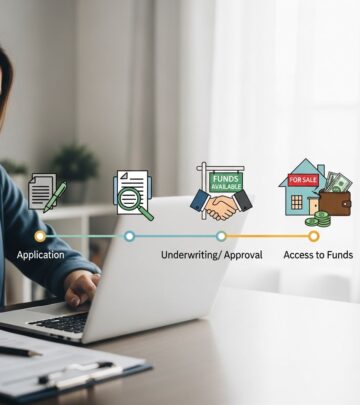
The HELOC application process resembles mortgage applications but typically moves more quickly. After submitting your application, lenders conduct a hard credit inquiry, which may temporarily lower your credit score by a few points. The lender then orders a home appraisal, which typically takes 7 to 14 days. You’ll need to provide financial documentation and authorize background and employment verification.
Once the lender reviews all materials, they extend an approval decision. If approved, you’ll receive loan terms detailing the interest rate, draw period, repayment terms, and any associated fees. Before closing, carefully review these terms and ask questions about any provisions you don’t understand. Closing typically occurs within 30 to 45 days from application, though expedited closings are sometimes possible.
Evaluating the Advantages of HELOC Borrowing
HELOCs offer several compelling benefits for homeowners facing significant expenses or seeking to refinance higher-interest debt. The lower interest rates on home-secured borrowing make HELOCs particularly attractive compared to credit cards or personal loans. Where credit card rates frequently exceed 15 to 20 percent, HELOC rates typically range from 7 to 12 percent depending on market conditions and creditworthiness.
The tax deductibility of HELOC interest provides another advantage for qualifying homeowners. If you use HELOC funds for home improvements or renovations, the interest may be tax-deductible, effectively reducing your borrowing cost. However, tax rules vary based on income levels and how funds are used, so consulting with a tax professional proves wise before relying on this benefit.
The flexibility to borrow only what you need, when you need it, distinguishes HELOCs from lump-sum loans. If your initial estimate of necessary funds proves excessive, you’ve only borrowed and paid interest on actual usage rather than unnecessary funds.
Considering the Risks and Responsibilities
Using your home as collateral for a HELOC introduces significant risk that warrants careful consideration. Should you fail to make required payments, your lender can initiate foreclosure proceedings and potentially force you to sell your home to satisfy the debt. This risk demands disciplined financial management and the confidence that you’ll reliably meet payment obligations.
Variable interest rates present another consideration. While lower rates initially attract borrowers, rising rates increase monthly payments, potentially straining your budget. When draw periods transition to repayment periods, already-rising interest payments increase further as principal repayment begins. Without careful budgeting, this transition can create unexpected financial stress.
Accessing funds too readily during the draw period can also lead to accumulating larger balances than intended. Because many HELOCs allow interest-only payments initially, borrowers can withdraw funds without experiencing immediate payment consequences. This ease of access sometimes encourages spending beyond actual needs, resulting in larger-than-planned debt burdens when the repayment period arrives.
Strategic Uses for HELOC Funds
HELOCs prove most beneficial when used strategically for specific financial goals rather than general spending. Appropriate uses include:
- Home Renovations: Using HELOC funds for home improvements potentially increases your property value while providing tax-deductible interest.
- Debt Consolidation: Consolidating high-interest credit card or personal loan balances into a lower-rate HELOC can reduce total interest costs.
- Education Expenses: Funding college tuition or educational costs for family members represents a productive use of borrowed funds.
- Major Medical Expenses: Covering significant healthcare costs not covered by insurance through a HELOC avoids costlier alternatives.
- Business Investment: Funding a business expansion or startup using home equity capitalizes on lower rates available through secured borrowing.
Frequently Asked Questions About HELOCs
How quickly can I access HELOC funds after approval?
After closing, you typically gain immediate access to your HELOC credit line. Access methods vary by lender but commonly include credit cards, checks, or online transfers, with funds typically arriving within one to three business days of request.
Can I have multiple HELOCs simultaneously?
Yes, you can establish multiple HELOCs with different lenders, though each line appears on your credit report and affects your debt-to-income ratio. Lenders consider your total available credit and existing obligations when evaluating new HELOC applications.
What happens if I don’t use my entire HELOC?
Unused HELOC balances typically incur no interest charges. You only pay interest on borrowed amounts. However, some lenders charge annual maintenance or inactivity fees, so verify your specific lender’s policies.
How do HELOC interest rates compare to other borrowing options?
HELOC rates generally fall between mortgage rates (lower) and credit card or personal loan rates (higher). Current HELOC rates typically range from 7 to 12 percent, compared to 15 to 25 percent for credit cards and 8 to 15 percent for personal loans.
Can I refinance my HELOC if rates drop significantly?
Yes, you can refinance your HELOC with a different lender or convert portions of your balance to fixed rates with your current lender. However, refinancing involves new closing costs, so calculate whether interest savings justify refinancing expenses.
Making Your Final Decision
Deciding whether to pursue a HELOC requires honest assessment of your financial discipline, long-term plans, and comfort with using your home as collateral. HELOCs offer compelling advantages for disciplined borrowers seeking flexible access to competitive-rate borrowing. However, they demand responsible management and clear understanding of the risks involved.
Before applying, ensure you have adequate equity, solid credit credentials, and stable income. Compare multiple lenders thoroughly, understanding all terms and fees. Most importantly, borrow only amounts you can comfortably repay and use HELOC funds for meaningful financial goals rather than discretionary spending.
References
- Pros And Cons Of Home Equity Line Of Credit (HELOC) — Bankrate. 2025. https://www.bankrate.com/home-equity/pros-cons-of-home-equity-lines/
- What is a Home Equity Line of Credit and How Does it Work? — Bank of America. 2025. https://www.bankofamerica.com/mortgage/learn/what-is-a-home-equity-line-of-credit/
- What is a Home Equity Line of Credit? (HELOC) — Citizens Bank. 2025. https://www.citizensbank.com/learning/what-is-a-home-equity-line-of-credit.aspx
- Home Equity Loans and Home Equity Lines of Credit — Federal Trade Commission. 2025. https://consumer.ftc.gov/node/78380
- Home Equity Line of Credit — Los Angeles County Consumer and Business Affairs. 2025. https://dcba.lacounty.gov/portfolio/home-equity-line-of-credit/
- Home Equity Loan vs. Home Equity Line of Credit (HELOC) — Equifax. 2025. https://www.equifax.com/personal/education/loans/articles/-/learn/home-equity-loans-vs-home-equity-lines-of-credit/
- Understanding HELOCs for Homeowners — Comerica. 2025. https://www.comerica.com/insights/personal/home-ownership/how-does-a-heloc-work.html
Similar Articles








Read full bio of medha deb