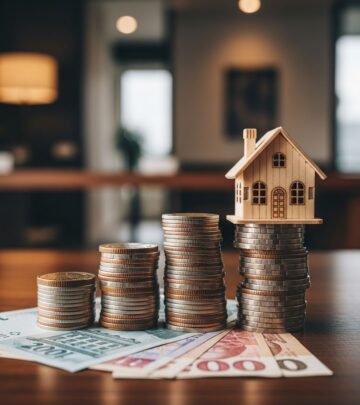
Home Equity: Your Path to Long-Term Financial Prosperity
Transform your monthly mortgage payments into lasting wealth and financial security.

Homeownership represents one of the most significant financial decisions an individual can make. Beyond providing shelter, a home serves as a vehicle for wealth accumulation through the development of home equity. This concept, often overlooked by first-time buyers, forms the foundation of long-term financial stability and opens doors to numerous opportunities throughout your life. Understanding home equity and its implications can fundamentally transform your approach to personal finance and future planning.
Understanding the Fundamentals of Home Equity
Home equity represents the ownership interest you hold in your property, calculated as the difference between your home’s current market value and the outstanding balance remaining on your mortgage. When you purchase a home, this equity grows through two primary mechanisms: regular mortgage payments that reduce your loan balance, and appreciation in your property’s market value. Unlike renting, where monthly payments benefit the property owner, homeownership creates a direct correlation between your financial contributions and personal wealth accumulation.
The concept of home equity becomes particularly powerful when understood as a form of forced savings. Each mortgage payment you make includes a principal component that directly increases your ownership stake in the property. This automatic wealth-building mechanism operates continuously, regardless of market conditions or economic circumstances, making homeownership distinct from other debt-based purchases like vehicles that depreciate over time.
The Multiple Dimensions of Financial Security
Building home equity creates multifaceted financial security that extends far beyond simple asset accumulation. As your equity grows, it establishes a tangible safety net capable of supporting you through unexpected financial challenges. This security manifests in several meaningful ways that affect your overall financial well-being:
- Emergency Financial Reserves: Should unexpected expenses arise, your accumulated equity provides a backstop that can be accessed through various lending mechanisms, reducing dependence on high-interest credit options.
- Retirement Planning Flexibility: Substantial home equity offers options in your later years, including downsizing to release capital or maintaining your current residence with confidence.
- Income Replacement Strategy: In periods of employment disruption or reduced income, home equity can serve as a legitimate financial resource rather than forcing reliance on credit cards or personal loans.
- Generational Wealth Transfer: Unlike consumable assets, a home with substantial equity can be passed to descendants, creating lasting family financial advantage.
Accelerating Wealth Accumulation Through Strategic Approaches
While standard mortgage payments build equity automatically, several strategic approaches can significantly accelerate this process. Understanding these methods empowers homeowners to take control of their wealth-building trajectory and achieve financial goals more rapidly.
Initial Investment Optimization
The moment you close on your home purchase, equity begins accumulating. Making a substantial down payment creates an immediate and significant equity position. For example, a $400,000 home purchase with a 20% down payment immediately establishes $80,000 in equity, providing a strong foundation before mortgage payments even begin. Beyond the obvious wealth advantage, larger down payments often qualify you for better interest rates and eliminate private mortgage insurance (PMI), reducing long-term costs substantially.
However, the down payment strategy requires careful balance. Depleting savings entirely to maximize down payment can create vulnerability to unexpected expenses. Financial experts recommend maintaining adequate reserves equivalent to approximately one percent of the home’s value for first-year maintenance costs, plus emergency funds covering several months of expenses.
Accelerated Mortgage Payoff Strategies
Beyond standard monthly payments, additional principal payments directly reduce your loan balance and increase equity. Even modest extra payments—$50 or $100 monthly—compound significantly over decades. Some homeowners employ annual bonuses, tax refunds, or other windfalls specifically toward mortgage principal, dramatically shortening their payoff timeline.
Loan term selection also profoundly affects equity accumulation speed. A 15-year mortgage requires substantially higher monthly payments than a 30-year loan but builds equity approximately twice as quickly due to the higher proportion of each payment directed toward principal rather than interest. This approach suits homeowners with stable income and sufficient monthly cash flow.
Property Enhancement and Value Appreciation
Strategic home improvements increase both your living enjoyment and property market value. Renovations that appeal broadly to future buyers—kitchen updates, bathroom modernization, energy-efficient systems, and curb appeal enhancements—typically generate positive returns on investment. These improvements increase equity in two ways: directly through increased property valuation and indirectly through the forced savings mechanism of regular mortgage payments on a more valuable asset.
Accessing Your Equity: Financial Flexibility and Opportunity
Home equity transforms from abstract wealth into practical financial resources through several established mechanisms. This accessibility distinguishes home equity from other forms of property ownership, providing liquidity when strategically needed.
Home Equity Lines of Credit (HELOC)
A HELOC functions similarly to a credit card but leverages your home’s equity as collateral. This flexible borrowing mechanism allows you to access funds as needed, paying interest only on amounts actually borrowed. HELOCs typically feature significantly lower interest rates than credit cards due to the secured nature of the loan, making them attractive for major expenses including home renovations, education funding, or debt consolidation.
Cash-Out Refinancing Options
Refinancing your mortgage while extracting a portion of your equity provides access to larger sums at predictable interest rates. This approach works particularly well when market interest rates decline, allowing you to refinance at better terms while simultaneously accessing funds. The borrowed amount adds to your new mortgage balance but provides capital for significant expenses at favorable rates.
Home Equity Loans
Distinct from HELOCs, home equity loans provide lump-sum amounts with fixed interest rates and predetermined repayment schedules. This structure suits defined projects or expenses requiring specific capital amounts. The fixed-rate nature provides payment predictability and often results in lower rates than unsecured personal loans.
Comparative Financial Analysis: Homeownership Versus Renting
| Financial Aspect | Homeownership | Renting |
|---|---|---|
| Monthly Payment Benefit | Builds personal equity and ownership | Supports landlord’s wealth building |
| Long-Term Wealth Creation | Equity accumulation plus appreciation | No asset accumulation |
| Property Value Changes | Benefit from appreciation | No benefit from appreciation |
| Financial Flexibility | Access to equity-based borrowing | Limited borrowing options |
| Maintenance Responsibility | Owner bears all costs | Landlord typically responsible |
Maximizing Sale Proceeds Through Equity Accumulation
When circumstances necessitate selling your home, accumulated equity directly determines your financial outcome. After paying remaining mortgage balance and associated selling costs, any surplus belongs entirely to you. Homeowners with substantial equity can capture significant profit from sale proceeds, especially if purchasing during favorable market conditions and holding the property through appreciation cycles.
This profit potential distinguishes homeownership from renting, where nothing remains when you vacate. Strategic equity building creates meaningful financial outcomes when life circumstances change, whether due to career relocation, family growth, or retirement planning.
Credit Profile Enhancement Through Equity Management
Building home equity contributes positively to your financial health beyond simple asset accumulation. Using home equity to consolidate high-interest debt improves your debt-to-income ratio by replacing expensive credit card balances with lower-rate secured loans. This consolidation positively impacts credit scores and demonstrates responsible financial management to future lenders, creating advantages in accessing future credit at favorable terms.
Frequently Asked Questions About Home Equity
How quickly does home equity typically accumulate?
Equity growth depends on mortgage structure, property appreciation rates, and additional payments made. A standard 30-year mortgage builds equity slowly initially (when most payments cover interest) but accelerates over time. Accelerated payment strategies or property appreciation can dramatically speed this process.
Can I build equity with minimal down payment?
Yes, though a larger down payment creates faster initial equity growth. Even with minimal down payments (3-5%), equity accumulates through mortgage payments and property appreciation. However, PMI requirements with lower down payments increase monthly costs, affecting long-term wealth accumulation efficiency.
What happens to my equity during market downturns?
Market downturns reduce property values and may temporarily decrease equity. However, this reduction is typically temporary, and continued mortgage payments ensure equity growth continues regardless of market conditions. Long-term homeownership typically results in recovery and appreciation beyond previous values.
Is refinancing to access equity financially wise?
Refinancing makes sense when the interest rate differential justifies closing costs and when borrowed funds serve productive purposes. Refinancing to fund renovations that increase property value or consolidate high-interest debt often provides net financial benefits. Refinancing purely for consumption purposes typically represents poor financial strategy.
How much equity should I accumulate before borrowing against it?
Most lenders require minimum equity levels (typically 15-20%) before offering HELOC or home equity loan products. Borrowing should be limited to truly necessary purposes, as using equity for discretionary spending risks your primary residence if repayment becomes difficult.
Strategic Considerations for Long-Term Equity Building
Successful equity accumulation requires viewing homeownership through a long-term lens. Market volatility, interest rate fluctuations, and property condition changes all influence equity development. Homeowners who maintain properties, avoid extracting equity for non-productive purposes, and remain committed to their mortgages maximize this powerful wealth-building mechanism.
The psychological benefit of homeownership—the sense of permanent residence and ownership stability—complements the financial advantages. This psychological security, combined with measurable wealth accumulation, positions homeownership as foundational to comprehensive financial planning for most households.
Conclusion: Your Equity as Financial Foundation
Home equity represents far more than an abstract financial metric; it embodies a practical, accessible wealth-building mechanism available to ordinary homeowners. Through consistent mortgage payments and strategic improvements, you transform housing expenses into permanent assets and financial security. Whether accessed for emergencies, education funding, or eventual retirement security, accumulated home equity provides flexibility and peace of mind that renting cannot replicate. By understanding equity’s multiple dimensions and implementing strategic building approaches, homeowners position themselves for long-term financial success and generational wealth creation.
References
- How to build equity in your home in 2026 (and why you should) — Bankrate. 2026. https://www.bankrate.com/home-equity/how-to-build-equity-in-your-home/
- How Buying a Home Now Can Help Build Equity — Towne Bank Mortgage. 2026. https://townebankmortgage.com/blog/mortgage/how-buying-a-home-now-can-help-build-equity/
- Home Equity: Building Wealth Through Homeownership — Freddie Mac. 2018. https://myhome.freddiemac.com/blog/homeownership/20180226-what-is-home-equity
- How Do I Build Equity in My Home? Tips and Strategies — Chase. 2026. https://www.chase.com/personal/mortgage/education/financing-a-home/building-equity
- Home Equity: What It Is and Why It Matters — NerdWallet. 2026. https://www.nerdwallet.com/mortgages/learn/home-equity-explained-matters
Similar Articles








Read full bio of medha deb