Home Equity Access: Refinancing vs Credit Lines
Explore two powerful strategies for accessing your home's equity and boosting your finances.
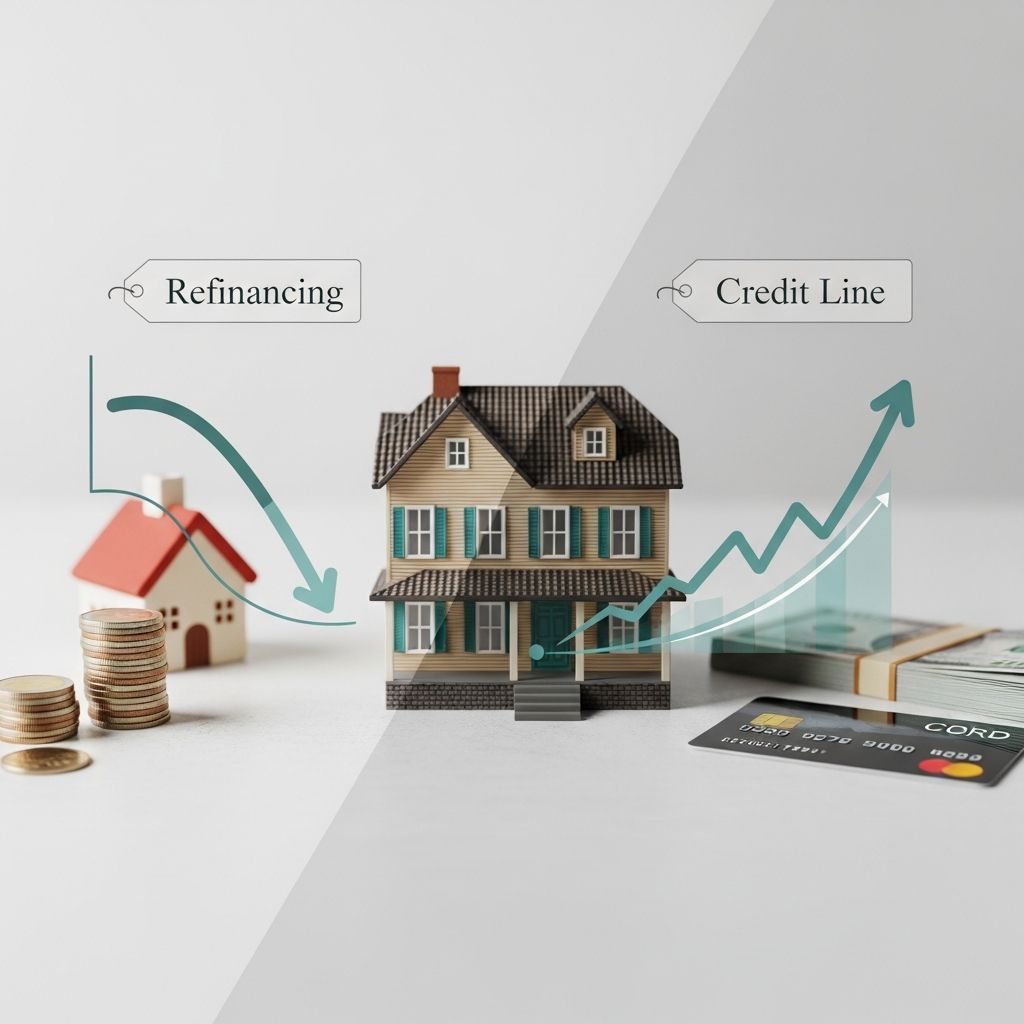
Homeownership brings a unique financial advantage: the ability to build equity over time. As your home appreciates in value and your mortgage balance decreases with each payment, your equity grows. This accumulated wealth represents a substantial financial asset that many homeowners overlook. Understanding how to effectively tap into this equity can provide crucial funds for home improvements, debt consolidation, education expenses, or other major life goals.
Two primary mechanisms exist for accessing your home equity: cash-out refinancing and home equity lines of credit (HELOCs). While both strategies allow you to convert your home’s value into liquid capital, they operate on fundamentally different principles and suit different financial situations. This guide explores both options in depth, helping you make an informed decision aligned with your unique circumstances.
Understanding Home Equity and Why It Matters
Home equity represents the difference between your property’s current market value and the outstanding balance on your mortgage. For example, if your home is worth $400,000 and you owe $250,000 on your mortgage, you have $150,000 in equity. This figure grows as property values increase and as you pay down your mortgage principal.
The significance of home equity extends beyond mere wealth accumulation. It serves as collateral for low-interest borrowing opportunities that can dramatically reduce your overall debt costs compared to unsecured loans or credit cards. Because lenders view your home as security, they typically offer substantially better terms on equity-based financing products.
Distinguishing Cash-Out Refinancing from Home Equity Lines of Credit
Though both mechanisms provide access to home equity, their operational structures differ significantly. A cash-out refinance replaces your existing mortgage entirely with a new, larger loan. You receive the borrowed funds as a single lump sum and immediately begin repaying the entire new mortgage balance. In contrast, a HELOC functions as a revolving line of credit that you can draw from as needed, much like a credit card, while maintaining your original mortgage separately.
This fundamental distinction creates cascading differences in how each option affects your finances. Understanding these structural differences is essential for determining which approach aligns with your borrowing timeline and cash needs.
Structural Comparison: How Each Option Operates
Cash-Out Refinancing Mechanics
With a cash-out refinance, your lender evaluates your home’s current value, existing mortgage balance, creditworthiness, and income. Based on this assessment, the lender approves a new mortgage amount that exceeds your current balance. The difference between your new mortgage and your existing balance becomes your cash proceeds. Once closing occurs, you receive these funds and your original mortgage is satisfied and replaced entirely.
Your new mortgage includes revised terms reflecting current market conditions. These terms include the interest rate (which may be higher or lower than your original rate), the loan duration, and monthly payment amounts. Importantly, you make a single monthly payment that encompasses this entire new mortgage.
HELOC Operating Structure
A HELOC establishes a secured line of credit using your home as collateral. Rather than receiving funds immediately, lenders approve a maximum borrowing limit based on your equity. You then enter a “draw period,” typically lasting ten years, during which you can withdraw funds up to your approved limit as needed. Some lenders allow an initial lump-sum draw at closing.
During the draw period, you may have the option to make interest-only payments on amounts you’ve borrowed, deferring principal repayment to later. Once the draw period expires, the “repayment period” begins, typically lasting up to twenty years. During this phase, you can no longer draw new funds and must repay both principal and interest on your outstanding balance.
Interest Rate Structures and Their Financial Impact
Interest rate characteristics represent one of the most consequential differences between these options. Cash-out refinances traditionally feature fixed interest rates, meaning your rate remains constant throughout the loan term, providing predictability in monthly payments. However, some lenders now offer adjustable-rate mortgages for refinances, providing flexibility for borrowers who anticipate favorable rate movements.
HELOCs traditionally carry variable interest rates, which means your rate and monthly payment can fluctuate based on market conditions. This variability can work in your favor when rates decline but becomes problematic when rates rise. Some progressive lenders now offer fixed-rate HELOC options, allowing borrowers to lock in current rates.
When evaluating costs, recognize that cash-out refinance rates are generally lower than HELOC rates because first mortgages carry less risk for lenders than second liens. However, when comparing total monthly costs, you must add your HELOC payment to your existing mortgage payment and compare that sum to your new refinance payment.
Cost Structures: Fees, Closing Costs, and Break-Even Analysis
The financial expense profile differs markedly between these options. Cash-out refinancing incurs closing costs similar to your original mortgage purchase, typically ranging from 2-5% of the loan amount. These costs include appraisals, credit checks, title searches, processing fees, underwriting costs, and various administrative expenses.
HELOCs typically feature substantially lower closing costs than cash-out refinances. Many lenders charge minimal fees or no closing costs whatsoever for HELOC establishment, making them more accessible for borrowers with tight upfront budgets.
Because of higher refinancing costs, reaching the “break-even point”—where interest savings outweigh closing expenses—takes considerably longer with cash-out refinancing. If you anticipate needing funds immediately and plan to repay within a few years, a HELOC’s lower upfront costs may prove more economical despite slightly higher rates.
Repayment Timelines and Flexibility
Repayment structure profoundly affects your monthly cash flow and long-term financial planning. With cash-out refinancing, you immediately commence repayment through standard monthly mortgage payments covering both principal and interest. Your repayment period typically extends thirty years, though shorter terms are available at higher monthly costs.
HELOCs provide greater flexibility through their two-phase structure. During the draw period, you pay only interest on borrowed amounts, minimizing monthly obligations while you’re still accessing funds. Once the draw period concludes, you transition to repayment mode and must pay principal and interest. This structure suits borrowers anticipating ongoing expenses, as you can borrow gradually and pay flexibly during the draw period.
Comparing Advantages and Limitations
When Cash-Out Refinancing Makes Sense
Singular Monthly Payment: Consolidating multiple debts into one mortgage payment simplifies budgeting and reduces mental accounting complexity. You eliminate tracking separate loan payments and can allocate freed-up income toward other priorities.
Rate Optimization: If current interest rates are lower than your existing mortgage rate, refinancing allows you to capture savings on your entire loan balance, not just the equity portion. This represents a genuine opportunity to meaningfully reduce lifetime borrowing costs.
Debt Consolidation Power: The substantial funds available through refinancing make this option ideal for consolidating high-interest credit card debt or personal loans. Since mortgage rates substantially undercut credit card rates, you achieve dramatic interest savings by paying off consumer debt with refinance proceeds.
Potential Drawbacks: You may borrow more than necessary, resulting in excess interest expenses. Conversely, borrowing too little forces you to seek additional financing elsewhere. Higher closing costs create a significant upfront expense, and extending your mortgage timeline potentially delays your debt-free date.
When HELOCs Provide Superior Value
Flexible Fund Access: HELOCs let you draw only what you need when you need it, avoiding unnecessary borrowing and associated interest costs. This flexibility suits home renovation projects with uncertain final costs or ongoing educational expenses.
Preserving Favorable Mortgage Rates: If your existing mortgage carries a substantially lower rate than current market conditions, a HELOC preserves your advantageous rate on your primary mortgage while providing supplemental borrowing capacity.
Interest-Only Payment Option: During the draw period, making interest-only payments minimizes monthly obligations, preserving cash for other needs or investments. This temporary relief can be invaluable for businesses or those anticipating improved financial circumstances.
Lower Upfront Costs: Minimal or nonexistent closing costs mean more of your available capital remains deployed toward your actual project or need.
Practical Limitations: Variable rates create payment uncertainty that some borrowers find stressful. Balloon payments may be required if the outstanding balance isn’t repaid when the repayment period concludes. Additionally, lenders may reduce or freeze your available credit line during economic downturns, creating unexpected constraints.
Side-by-Side Comparison Table
| Feature | Cash-Out Refinance | HELOC |
|---|---|---|
| Fund Disbursement | Single lump sum at closing | Draw as needed during draw period |
| Interest Rate Type | Typically fixed | Typically variable |
| Rate Level | Generally lower | Generally higher |
| Closing Costs | 2-5% of loan amount | Minimal or none |
| Monthly Payments | One payment (principal + interest) | Two payments during draw; one during repayment |
| Impact on Original Mortgage | Replaces existing mortgage | Leaves original mortgage unchanged |
| Draw Period Flexibility | No flexibility; full amount borrowed immediately | Flexible; draw anytime during 10-year period |
| Maximum Repayment Term | Up to 30 years | Up to 20 years (repayment period) |
Tax Considerations and Financial Benefits
Both cash-out refinancing and HELOCs offer potential tax advantages. Interest paid on funds borrowed specifically for home improvements may be tax-deductible for homeowners who itemize deductions rather than taking the standard deduction. This means your borrowing costs are effectively subsidized by federal tax savings, making the true cost of capital considerably lower than the stated rate.
Consult with a tax professional regarding your specific situation, as tax benefits depend on loan use, total debt levels, and your filing status. The tax deductibility of home equity debt has been subject to regulatory changes, making professional guidance essential.
Decision Framework: Selecting the Right Option for Your Situation
Choose a cash-out refinance if: You need immediate access to substantial funds, current rates are lower than your existing mortgage, you prefer predictable fixed payments, and you want to consolidate multiple debts into a single obligation. This option excels for large, one-time expenses like major renovations or educational costs.
Choose a HELOC if: You prefer drawing funds gradually as needed, want to minimize upfront costs, have an excellent existing mortgage rate you wish to preserve, and anticipate expenses over an extended period. HELOCs work particularly well for ongoing home improvements, business financing, or educational expenses spanning multiple years.
Calculate your specific scenario by comparing total monthly obligations under each option, factoring in closing costs, anticipated fund draw timing, and your risk tolerance regarding variable rates. Many homeowners benefit from consulting with mortgage professionals who can model both scenarios using your personal financial data.
Frequently Asked Questions
Can I combine both options?
Yes, some homeowners use a partial refinance supplemented by a HELOC, balancing the benefits of both approaches.
What happens if home values decline?
Falling property values reduce your available equity, potentially limiting your borrowing capacity on either option.
Are there prepayment penalties?
Most modern refinances and HELOCs impose no prepayment penalties, allowing accelerated payoff without additional costs.
How does debt-to-income ratio affect approval?
Lenders evaluate your total monthly debt payments relative to gross income. Adding HELOC payments to existing mortgage obligations increases your debt-to-income ratio more than a refinance consolidates obligations.
Can HELOC rates ever be fixed?
Increasingly, yes. Many lenders now offer fixed-rate HELOC options, eliminating variable rate uncertainty.
References
- PNC Bank: Cash-Out Refinance vs. HELOC: Key Differences to Know — PNC Bank. Accessed February 2026. https://www.pnc.com/insights/personal-finance/borrow/cash-out-refinance-vs-heloc.html
- NerdWallet: Cash-Out Refinance vs. HELOC: Which Should You Choose? — NerdWallet. Accessed February 2026. https://www.nerdwallet.com/mortgages/learn/home-equity-loan-vs-cash-out-refinance
- South Carolina Credit Union: HELOC Loan vs. Cash-Out Refinancing: Everything You Need to Know — South Carolina Credit Union. Accessed February 2026. https://www.sccu.com/articles/home-mortgage/heloc-loan-vs-cash-out-refinancing
- Freedom Mortgage: Cash Out Refinance vs. HELOC: Key Differences — Freedom Mortgage. Accessed February 2026. https://www.freedommortgage.com/learning-center/articles/cash-out-or-heloc
- Bank of America: Cash Out Refinance vs Home Equity Line of Credit — Bank of America. Accessed February 2026. https://www.bankofamerica.com/mortgage/learn/cash-out-refinance/
Similar Articles








Read full bio of Sneha Tete