Home Appliance Costs in 2026
Navigate 2026 home appliance prices, from budget buys to luxury setups, with breakdowns on purchase costs, energy bills, and smart saving strategies.
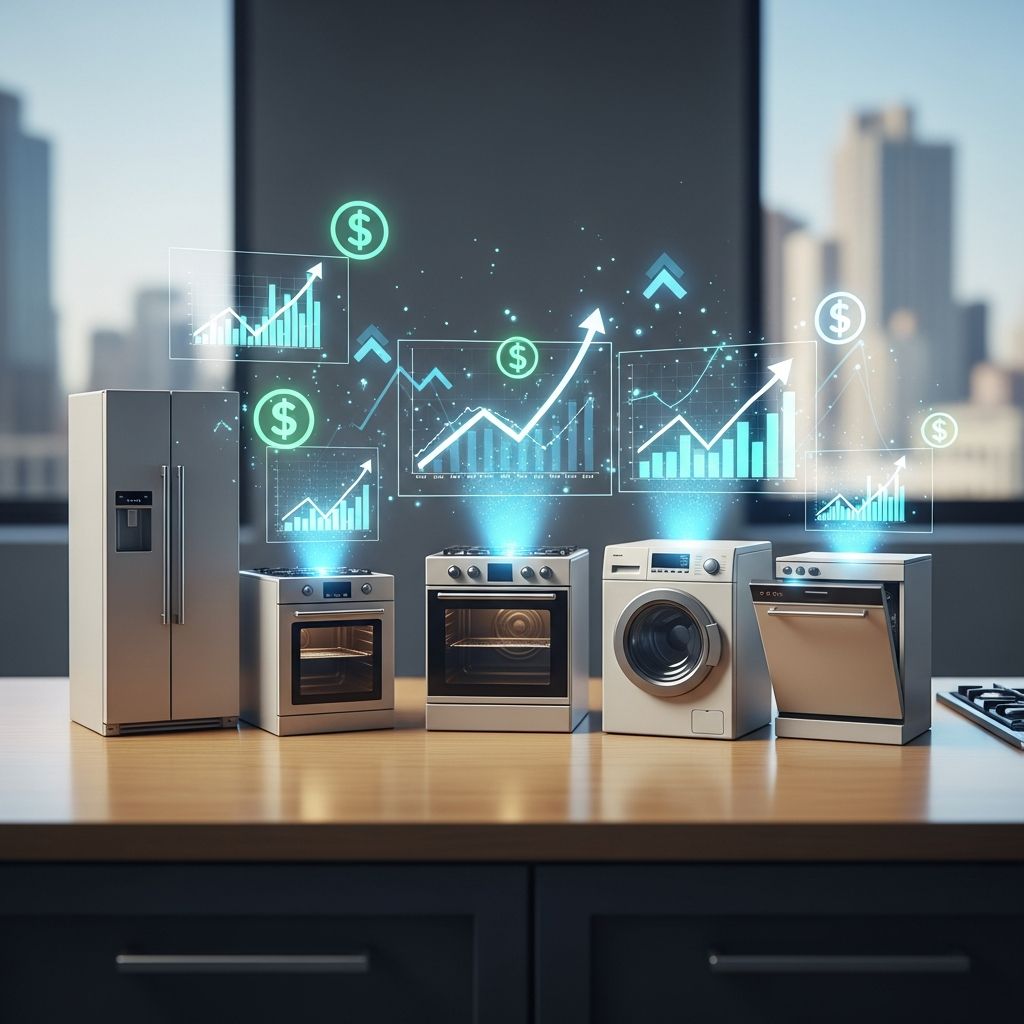
Investing in home appliances represents a significant expense for homeowners and renters alike. In 2026, prices reflect advancements in technology, energy efficiency standards, and supply chain dynamics. This guide breaks down current market averages for key appliances, explores package deals, examines ongoing energy costs, and offers strategies for cost management. Whether replacing a single unit or outfitting a new kitchen, understanding these figures helps in making informed decisions.
Understanding Appliance Pricing Tiers
Appliance costs vary widely based on quality levels: basic models prioritize affordability and functionality, average options balance features and reliability, while high-end units deliver premium materials, smart tech, and extended warranties. Basic appliances suit tight budgets, often under $600 per unit, whereas high-end selections can exceed $3,000 for advanced capabilities like Wi-Fi connectivity and custom finishes.
For a full house setup, expect package pricing from $2,100 to $5,400 covering essentials like a refrigerator, microwave, range, and dishwasher. Stylish kitchen packages push toward $9,000–$15,000, incorporating brands such as Bosch or LG with induction cooking and counter-depth designs.
Core Kitchen Appliances: Price Breakdown
Kitchen staples form the backbone of most appliance budgets. Here’s a detailed look at 2026 averages.
| Appliance | Basic | Average | High-End |
|---|---|---|---|
| Refrigerator | $200–$600 | $600–$2,300 | $2,300–$5,000 |
| Stove/Range | $530–$600 | $600–$1,300 | $1,300–$3,000 |
| Dishwasher | $400–$800 | $800–$1,200 | $1,200–$3,000 |
| Microwave | $60–$100 | $100–$600 | $600–$2,000 |
| Wall Oven | $460–$1,100 | $1,100–$3,400 | $3,400–$5,400 |
Refrigerators dominate spending, with standard 16-25 cubic foot models averaging $600–$2,300. Larger units up to 32 cubic feet climb to $1,300–$3,000. Counter-depth versions, popular for a sleek built-in appearance, start at $1,600 and average $3,000 with features like in-door ice dispensers.
Stoves and ranges hover around $600–$1,300, with slide-in models costing 30-50% more for cabinet integration. Gas options remain cheaper upfront than induction or dual-fuel high-enders at $2,000–$4,000.
Laundry Room Essentials
Laundry appliances are indispensable for daily routines. Washing machines range from $450–$700 for basic top-loaders to $1,300–$2,000 for high-efficiency front-loaders. Dryers mirror this at $400–$800 basic and up to $2,300 premium, with heat pump models emerging as energy savers.
- Key Consideration: High-efficiency washers use less water and energy, ideal for larger households.
- Pairing Tip: Match washer and dryer capacities to avoid imbalance issues.
Older top-load washers consume around 300 kWh annually ($72 at $0.18/kWh), while modern front-loaders drop to 150 kWh ($36).
Specialty and Auxiliary Appliances
Beyond basics, items like freezers, wine fridges, and filtration systems add convenience at varied costs.
| Appliance | Average Cost Range |
|---|---|
| Chest Freezer | $350–$800 |
| Upright Freezer | $450–$1,100 |
| Wine Fridge | $400–$1,200 |
| Range Hood | $100–$600 |
| Whole-House Filtration | $650–$4,800 |
Water softeners average $600–$2,000, enhancing appliance longevity by reducing mineral buildup.
Package Deals for Full Kitchen Overhauls
Buying in bundles saves 10-20% compared to individual purchases. Basic packages run $1,200–$2,100, mid-tier $2,100–$5,400, and luxury $5,400–$13,000. A stylish setup with counter-depth fridge, induction range, vent hood, and quiet dishwasher totals $9,000–$15,000.
- Basic: Functional stainless steel essentials.
- Average: Added smart features and better efficiency.
- High-End: Premium brands, custom panels, pro-level performance.
Hidden Costs: Installation and Upgrades
Purchase prices tell only part of the story. Installation adds $100–$400 for microwaves, $100–$300 for ranges. Electrical upgrades for power-hungry units like new fridges cost $250–$900 in older homes requiring dedicated circuits.
Recent trends show price increases due to costly components like motors and electronics, plus labor shortages. Energy-efficient tech, while pricier upfront, pays off long-term.
Annual Energy Expenses in 2026
Running costs matter as much as buying. At $0.18/kWh, major appliances tally significant yearly bills.
| Appliance | kWh/Year | Annual Cost | Energy Star Savings |
|---|---|---|---|
| Refrigerator | 617 | $111 | $80–$108 |
| Dryer | 680 | $123 | $22–$125 (heat pump) |
| Dishwasher | 112 | $37 | $28–$45 |
| Electric Stove | 290 | $52 | $35 (induction) |
| Washing Machine | 69 | $12 | $2–$56 |
Fridges alone cost $111 yearly, doubling with a secondary unit. New models use 30% less energy than 15-year-old ones. Heat pump dryers halve usage to 150 kWh ($36).
Factors Influencing 2026 Prices
Supply chain recoveries and tech integrations drive fluctuations. Refrigerator prices are dropping on select models, with some slashing $800 overnight due to competition. However, premium segments rise with automation and efficiency mandates.
Regional energy rates vary; high-cost areas could double bills. Opt for Energy Star ratings: they ensure verified savings without sacrificing performance.
Budgeting Strategies for Appliance Purchases
Maximize value with these approaches:
- Shop Sales Cycles: Black Friday, Memorial Day yield 20-40% discounts.
- Energy Audits: Calculate long-term savings via DOE calculators.
- Rebates: Utility incentives for efficient models cover $50–$500.
- Trade-Ins: Retailers offer credits for old units.
- Financing: 0% APR plans spread costs over 12-24 months.
Prioritize high-usage items like fridges and dryers for efficiency upgrades first.
Future-Proofing Your Investments
Choose appliances with updatable software and modular designs. Induction ranges and heat pump dryers lead efficiency trends, potentially saving hundreds annually. Assess home infrastructure—ensure 240V outlets for modern dryers.
For new builds, integrate smart home compatibility from the start to avoid retrofits.
Frequently Asked Questions
What is the average cost of a new refrigerator in 2026?
Average refrigerators cost $600–$2,300, with high-end models up to $5,000.
Are appliance prices rising or falling?
Some fridge models see price drops, but overall costs rise due to tech and components.
How much does it cost to run a dryer yearly?
Standard electric dryers average $123; heat pumps reduce to $36.
Is buying a package deal worth it?
Yes, packages save 10-20% and ensure compatibility.
What appliances have the highest energy costs?
Dryers ($123) and refrigerators ($111) top the list.
References
- How Much Do Home Appliances Cost? (2026) — HomeGuide. 2026. https://homeguide.com/costs/appliances-prices
- Here’s how much it’ll cost to run major appliances in 2026 — Reviewed. 2026. https://www.reviewed.com/refrigerators/features/heres-how-much-costs-run-major-appliances
- How Much Does a Stylish Kitchen Really Cost in 2026? — Yale Appliance Blog. 2026. https://blog.yaleappliance.com/stylish-kitchen-appliance-cost
- Understanding Appliance Price Increases — Town Appliance. 2026. https://www.townappliance.com/blogs/town-appliance-official/appliance-price-increase
Similar Articles








Read full bio of Sneha Tete