Holding Company: Definition, Structure, and Tax Benefits
Understanding holding companies: corporate structures that own and control other businesses.

What Is a Holding Company?
A holding company is a business entity whose primary purpose is to own a controlling interest in the securities of other companies. Rather than producing goods or services itself, a holding company exists principally to manage a portfolio of investments in other firms. This corporate structure allows investors and entrepreneurs to maintain control over multiple companies while keeping them legally separate entities.
The fundamental characteristic of a holding company is that it typically does not engage in operational activities or conduct regular business functions. Instead, its focus remains on acquiring and managing equity stakes in subsidiary companies. By holding controlling interests in these subsidiaries, the parent company can exercise significant influence over their strategic decisions and operations without necessarily being involved in their day-to-day management.
In certain jurisdictions, holding companies are referred to as parent companies. The New York Times commonly uses the term “parent holding company” to describe these entities. Some holding companies identify themselves explicitly by adding “Holding” or “Holdings” to their corporate names, making their nature immediately clear to investors and business partners.
How Holding Companies Work
Holding companies operate through a straightforward mechanism: they acquire voting shares or stock in other companies, thereby gaining the power to control those companies’ activities and decision-making processes. The amount of control correlates directly with the percentage of voting stock owned.
There are two primary methods through which corporations become holding companies. The first involves acquiring sufficient voting stock or shares in an existing company to gain controlling power. The second method entails creating a new corporation and retaining all or a portion of its shares. In both cases, the objective remains the same: to establish a parent-subsidiary relationship where the holding company exercises strategic control.
A critical threshold for control is ownership of more than 50% of the voting stock in another firm. However, it is important to note that control can be established with lower ownership percentages under certain conditions. A parent company may control decision-making even with as little as 10% of a subsidiary’s stock if it is the largest individual shareholder or if other shareholders have placed it in control of operations.
Types of Holding Companies
Holding companies exist in several distinct forms, each with different characteristics and operational approaches:
Pure Holding Companies
A pure holding company is formed exclusively for the purpose of owning stock in other companies. These entities participate in no other business activities beyond controlling one or more subsidiaries. Their entire focus remains on managing their investment portfolio and exercising strategic control over subsidiary operations.
Mixed Holding Companies
Also known as holding-operating companies, mixed holding companies not only control other firms but also engage in their own operational business activities. These entities maintain dual purposes: managing subsidiaries while simultaneously conducting their own commercial ventures. This structure allows them to generate revenue from both their operational activities and their subsidiary investments.
Conglomerates
Holding companies that participate in completely unrelated lines of business from their subsidiaries are classified as conglomerates. This structure provides significant diversification, as the parent company and its subsidiaries may operate in entirely different industries. Such diversification can reduce overall business risk and create multiple revenue streams across various sectors.
Immediate Holding Companies
An immediate holding company retains voting stock or control of another company while itself being controlled by a larger entity. This creates a tiered structure where the immediate holding company serves as both a parent to smaller subsidiaries and a subsidiary to a larger parent. Such arrangements are common in complex corporate hierarchies.
Intermediate Holding Companies
An intermediate holding company functions as both a holding company for smaller entities and a subsidiary of a larger corporation. In some jurisdictions, intermediate holding companies may be exempted from publishing financial records as long as they meet certain criteria, provided they consolidate their accounts with the larger group.
Key Characteristics and Requirements
Control Through Majority Ownership
In the United Kingdom, an organization holding more than 51% of a company’s stock is considered the de facto parent company. This controlling stake provides overriding material influence over the subsidiary’s operations. Once a full acquisition or purchase is enacted, the subsidiary ceases to operate as an independent entity and becomes a dependent subsidiary of the parent company.
Legal Definition Variations
Different jurisdictions define holding companies differently through their legal frameworks. In the United States, owning 80% or more of another company’s stock creates specific tax consolidation benefits. In the United Kingdom, the Companies Act 2006 Section 1159 defines a holding company as one that holds a majority of voting rights in another company or has the right to appoint or remove a majority of its board of directors.
Personal Holding Companies
In the United States, a personal holding company is specifically defined in Section 542 of the Internal Revenue Code. A corporation qualifies as a personal holding company if it meets two requirements: at least 60% of its adjusted ordinary gross income must come from dividends, interest, rent, and royalties, and more than 50% of the corporation’s outstanding stock value must be owned by five or fewer individuals.
Advantages of Holding Company Structures
Risk Limitation
One of the most significant advantages of holding company structures is risk compartmentalization. When a holding company exercises control over several companies, each subsidiary is considered an independent legal entity. If one subsidiary faces litigation, plaintiffs generally cannot claim the assets of other subsidiaries. This legal separation protects the entire corporate group from the liabilities of any single subsidiary, provided that subsidiary acted independently.
Efficient Capital Deployment
Holding companies provide exceptional leverage in capital deployment. By purchasing just 51% or more of a subsidiary, the parent company gains complete control of the acquired firm. This means that a holding company owner can control multiple entities with a relatively small investment. Achieving controlling interest in numerous companies requires substantially less capital than acquiring 100% ownership of each.
Management Preservation
When a parent company acquires subsidiaries, it typically retains the existing management structure. This factor is crucial for subsidiary owners considering acquisition, as their management teams continue in their roles and conduct business as usual. The holding company owner benefits financially without necessarily adding significant management responsibilities beyond strategic oversight and performance monitoring.
Tax Consolidation Benefits
Holding companies that own 80% or more of every subsidiary can achieve substantial tax benefits through consolidated tax returns. A consolidated tax return combines the financial records of all acquired firms with those of the parent company. When one subsidiary incurs losses, these losses offset the profits of other subsidiaries, resulting in reduced overall tax liability. This tax efficiency represents a major financial advantage for parent companies managing multiple profitable and less profitable subsidiaries.
Strategic Control and Flexibility
The holding company structure allows parent companies to exercise strategic control without micromanaging subsidiary operations. Holding companies can concentrate on major strategic decisions and performance monitoring while subsidiary managers retain operational autonomy. This balance between control and independence often enhances overall corporate performance and allows subsidiaries to respond more quickly to market conditions.
Subsidiary Relationships and Structure
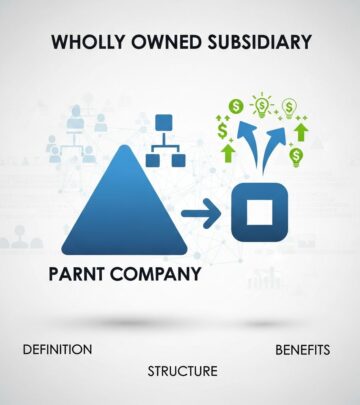
The relationship between a holding company and controlled companies is formally called a parent-subsidiary relationship. The holding company is known as the parent company, while the controlled organization is called a subsidiary. When a parent company controls all voting stock of another firm, that organization becomes a wholly-owned subsidiary.
Each subsidiary maintains its status as an independent legal entity despite being controlled by the parent company. This independence is legally significant because it creates liability firewalls that protect other group members from the actions or debts of any single subsidiary. However, this independence is maintained only when the subsidiary operates independently. If the parent company exercises excessive control over specific decisions or operations, courts may pierce the corporate veil in certain circumstances.
Tax Implications and Dividend Treatment
The tax treatment of holding companies varies significantly based on ownership percentages and jurisdiction. In the United States, if Company A owns 80% or more of Company B’s stock, Company A typically will not pay taxes on dividends paid by Company B to its stockholders. This tax-free dividend treatment reflects the principle that dividend payments from B to A are essentially transferring cash within a single enterprise.
Other shareholders of Company B remain subject to standard tax treatment on dividends, as these represent legitimate ordinary dividends to external shareholders. This preferential tax treatment for majority owners encourages holding company formation and consolidation of corporate groups.
How to Establish a Holding Company
Individuals typically form holding companies for the specific purpose of purchasing and owning shares in other companies. By holding stock, the parent company gains the right to influence and control business decisions. The establishment process requires creating a new corporate entity, typically through state or national business registration, followed by acquiring stock in target companies.
The strategic selection of target companies is crucial, as the holding company’s performance depends on the quality and profitability of its subsidiaries. Investors must conduct thorough due diligence before acquiring controlling interests to ensure the subsidiaries align with long-term strategic objectives.
Frequently Asked Questions
Q: What is the primary purpose of a holding company?
A: The primary purpose of a holding company is to own a controlling interest in other companies’ securities and manage these investments strategically. Unlike operating companies, holding companies do not produce goods or services themselves but instead focus on owning and controlling subsidiary companies.
Q: What percentage of stock ownership is required for control?
A: Generally, owning more than 50% of voting stock guarantees control. However, parent companies can exercise control with lower ownership percentages if they are the largest individual shareholder or if other shareholders have placed them in control. For tax benefits in the United States, 80% ownership is typically required.
Q: How do holding companies reduce risk?
A: Holding companies compartmentalize risk through their subsidiary structure. Each subsidiary operates as an independent legal entity, meaning creditors or plaintiffs of one subsidiary generally cannot claim assets from other subsidiaries. This legal separation protects the entire corporate group from the liabilities of any single member.
Q: What are the tax advantages of holding companies?
A: If a holding company owns 80% or more of its subsidiaries, it can file consolidated tax returns combining all financial records. Losses from some subsidiaries can offset profits from others, reducing overall tax liability. Additionally, dividend payments from subsidiaries to the parent company often receive favorable tax treatment.
Q: What is a wholly-owned subsidiary?
A: A wholly-owned subsidiary is a company in which the parent holding company owns 100% of voting stock. This provides maximum control, as the parent owns every share and has complete authority over all decisions and operations.
References
- Holding Company — Wikipedia. Accessed November 2025. https://en.wikipedia.org/wiki/Holding_company
- Companies Act 2006 — UK Legislation. Section 1159. https://www.legislation.gov.uk/ukpga/2006/46/contents
- Internal Revenue Code Section 542 — U.S. Internal Revenue Service. https://www.irs.gov/
- Holding Company – Defined, How it Works, Pros, Types — Corporate Finance Institute. 2025. https://corporatefinanceinstitute.com/resources/management/holding-company/
Similar Articles








Read full bio of Sneha Tete