HO3 vs HO5: Home Insurance Guide
Discover key differences between HO3 and HO5 policies to choose the best coverage for your home and belongings.
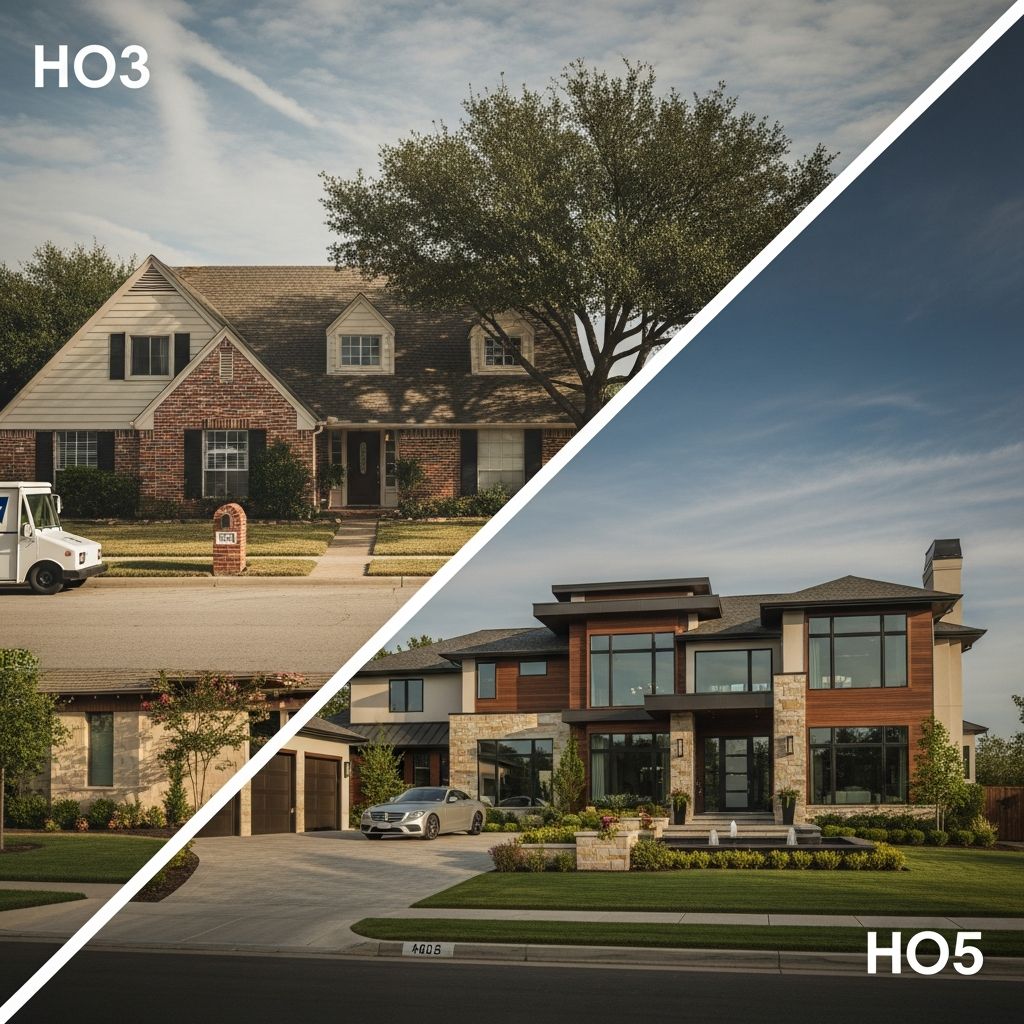
HO3 and HO5 represent two popular homeowners insurance policies, with HO3 being the standard choice for most properties and HO5 offering enhanced protection for select homes. HO5 provides broader coverage, particularly for personal items, making it ideal for owners with valuable possessions.
Understanding the Basics of Homeowners Insurance Forms
Homeowners insurance policies are standardized forms developed by the Insurance Services Office (ISO), each designed for different property types and risk levels. The HO3, or special form, covers the dwelling on an open perils basis while limiting personal property to named perils. In contrast, the HO5 comprehensive form extends open perils coverage to both the structure and contents, reducing claim denials for unexpected events.
These forms typically include five main coverage areas: dwelling (Coverage A), other structures (Coverage B), personal property (Coverage C), loss of use (Coverage D), and liability (Coverage E). The key distinctions arise in how perils are defined and how losses are reimbursed.
Core Coverage Components Explained
Dwelling Coverage (A): Both policies protect the home’s structure against open perils, meaning all risks except those explicitly excluded, such as floods or earthquakes. This includes damage from fire, windstorms, or vandalism.
Other Structures (B): Garages, sheds, and fences receive similar open perils protection under both HO3 and HO5, typically at 10% of the dwelling limit.
Personal Property (C): This is where differences emerge sharply. HO3 limits contents to named perils like theft or fire, while HO5 covers them on an open perils basis, protecting against a wider array of incidents unless excluded.
Loss of Use (D) and Liability (E): Both offer comparable additional living expenses and legal protection, often with higher limits in HO5 policies.
Perils Coverage: Named vs Open Perils
Named Perils in HO3 for personal property cover about 16 specific events, such as lightning, explosions, or falling objects. If damage occurs from an unlisted cause, like a mysterious disappearance, it’s not covered.
Open Perils, standard for HO5 across all coverages, assume protection unless the policy lists an exclusion. This all-risk approach simplifies claims and broadens safeguards against rare events.
| Aspect | HO3 | HO5 |
|---|---|---|
| Dwelling | Open Perils | Open Perils |
| Personal Property | Named Perils | Open Perils |
| Examples of Named Perils | Fire, Theft, Hail | All Risks (Excl. Specified) |
Reimbursement Methods: ACV vs Replacement Cost
HO3 policies often reimburse personal property at actual cash value (ACV), deducting depreciation from the replacement price. For a 5-year-old TV worth $1,000 new but depreciated to $400 market value, you’d receive $400.
HO5 uses replacement cost value (RCV) for both dwelling and contents, paying the full current cost to replace items without depreciation. This ensures you can buy new equivalents post-loss.
- ACV suits budget policies but leaves owners underfunded for replacements.
- RCV in HO5 provides true financial recovery, especially for high-value items.
Eligibility and Availability Factors
HO3 policies are widely available for most homes, regardless of age or location, making them the default for mortgages.
HO5 eligibility is stricter: insurers target newer homes (often under 30 years old) in low-risk areas with minimal crime, natural disasters, or hazards. Older roofs or high-risk zones may disqualify properties.
Property inspections are common for HO5 approvals, ensuring modern construction and safety features like updated electrical systems.
Cost Comparison and Value Assessment
HO3 premiums are lower due to narrower coverage, averaging 5-20% less than HO5. However, HO5’s comprehensive benefits often justify the increase, especially for claims involving contents.
Factors influencing premiums include home age, location, roof condition, and safety upgrades. For eligible homes, HO5 delivers superior value by minimizing out-of-pocket expenses.
| Policy | Avg. Annual Premium Estimate | Key Cost Driver |
|---|---|---|
| HO3 | $1,200 – $1,800 | Basic Coverage |
| HO5 | $1,300 – $2,200 | Enhanced Contents Protection |
Advantages of Upgrading to HO5
- Comprehensive Contents Protection: Open perils reduce coverage gaps for valuables like jewelry or electronics.
- Higher Limits: Often includes elevated coverage for art, collectibles without add-ons.
- Fewer Exclusions: Covers accidental damage more readily, easing claims.
- Replacement Cost Standard: Avoids depreciation losses on claims.
- Loss Mitigation: Better support for temporary housing during repairs.
When HO3 Suffices and Potential Drawbacks
HO3 works well for older homes, rentals, or low-value contents where broad perils aren’t needed. It’s cost-effective and mortgage-compliant.
Drawbacks include claim disputes over unnamed perils and lower payouts due to ACV, potentially requiring endorsements for valuables.
Real-World Claim Scenarios
Consider a kitchen fire damaging appliances: HO3 might deny non-named peril items under ACV, paying depreciated amounts. HO5 covers all via RCV, fully restoring the kitchen.
For theft of unspecified items like sports equipment, HO3 excludes if not listed, while HO5 pays unless excluded.
Factors to Consider Before Choosing
- Home age and construction quality.
- Value of personal belongings.
- Location risks (e.g., storms, crime).
- Budget for premiums vs long-term savings.
- Need for scheduled items coverage.
Steps to Switch or Purchase
- Assess your home’s eligibility with an agent.
- Compare quotes from multiple insurers.
- Review policy declarations for limits.
- Bundle with auto for discounts.
- Update as home value changes.
Frequently Asked Questions
What makes HO5 better for personal property?
HO5 offers open perils and replacement cost, covering more incidents without depreciation.
Is HO5 available for older homes?
Rarely; it’s typically for newer builds in low-risk areas.
How much more does HO5 cost?
Usually 5-20% higher, varying by factors like location.
Does HO3 cover floods or earthquakes?
No, both require separate policies.
Can I add replacement cost to HO3?
Yes, via endorsement, but it won’t expand perils.
Final Thoughts on Policy Selection
Evaluate your assets and risks: HO3 for basics, HO5 for premium protection. Consult an agent for personalized advice.
References
- HO3 vs HO5 Homeowners Insurance Policies — Orchid Insurance. 2023-01-15. https://orchidinsurance.com/blog/ho3-vs-ho5-homeowners-insurance-policies/
- HO5 vs HO3 Homeowners Insurance — CT Lowndes. 2024-05-20. https://ctlowndes.com/blog/ho5-vs-ho3-homeowners-insurance/
- What is HO5 Policy? — Huneycutt Group. 2023-08-10. https://www.huneycuttgroup.com/what-is-ho5-policy/
- Difference Between HO-3 and HO-5 — Andover Companies. 2024-02-28. https://www.andovercompanies.com/homeowners-insurance/difference-between-ho3-and-ho5-homeowners-policy/
- HO-3 vs. HO-5 Insurance Policies — Policygenius. 2025-11-12. https://www.policygenius.com/homeowners-insurance/ho-3-vs-ho-5-insurance-policies-whats-the-difference/
- HO-3 vs HO-5: Home Insurance Comparison — Openly. 2024-07-05. https://openly.com/the-open-door/articles/ho-3-vs-ho-5
- Types of Homeowners Insurance — Bankrate. 2025-03-15. https://www.bankrate.com/insurance/homeowners-insurance/types-of-homeowners-insurance/
Similar Articles








Read full bio of Sneha Tete