HMO vs. PPO Insurance: Key Differences Explained
Understand HMO and PPO insurance plans: compare costs, flexibility, and coverage to choose the right plan for your needs.
Highlights
- HMO insurance plans generally offer lower monthly premiums compared to PPO plans. However, coverage is limited to a relatively small network of providers.
- PPOs offer access to a broader range of providers than HMOs, allowing greater access to out-of-network and specialty care. However, PPO coverage is typically more expensive.
- If you’re looking to choose between an HMO and a PPO, be sure to consider how your budget, location and care requirements may impact your choice.
Understanding HMO and PPO Insurance Plans
When selecting a health insurance plan, understanding the differences between HMO (Health Maintenance Organization) and PPO (Preferred Provider Organization) plans is essential. These two popular plan types offer distinct advantages and disadvantages that can significantly impact your healthcare experience and finances. Both plans provide access to a network of healthcare providers, but they differ substantially in cost, flexibility, and coverage scope. Your choice between these plans should reflect your healthcare needs, budget constraints, and preferred healthcare providers.
What is an HMO Plan?
An HMO (Health Maintenance Organization) plan is a type of health insurance that typically emphasizes preventive care and coordinated services. HMO plans operate by contracting with a network of healthcare providers who agree to offer services at reduced rates. Members select a primary care physician (PCP) who serves as the central coordinator for all their healthcare needs. This structure allows HMO plans to maintain cost efficiency while ensuring coordinated care management.
HMO plans are generally characterized by their emphasis on preventive services and wellness programs designed to keep members healthy and reduce overall healthcare costs. The provider network in an HMO is typically more limited geographically, often restricted to a specific region or service area. This geographic limitation helps control costs but may restrict your choice of providers.
What is a PPO Plan?
A PPO (Preferred Provider Organization) plan offers significantly more flexibility in healthcare choices. Unlike HMO plans, PPO plans do not require you to select a primary care physician or obtain referrals for specialist care. Members can visit any healthcare provider in the plan’s network without prior authorization for most services. Additionally, PPO plans provide coverage for out-of-network providers, though typically at a higher cost to the member.
PPO plans maintain larger provider networks than HMO plans, giving members greater selection when choosing doctors, specialists, and facilities. This expanded network and increased flexibility come at a higher cost, reflected in higher monthly premiums and potentially higher out-of-pocket expenses.
HMO Plans Are Typically
Less Expensive
One of the primary advantages of HMO plans is their affordability. When doctors and hospitals participate in an HMO’s provider network, they agree to work at reduced rates. This cost-sharing arrangement keeps premiums and out-of-pocket costs down for both the insurance company and the insured individual. HMO members typically enjoy lower monthly premiums compared to PPO members, and when deductibles are required, they are generally lower than PPO deductibles.
Less Flexible
The trade-off for lower costs is reduced flexibility in healthcare choices. Except for medical emergencies, HMO coverage is restricted to providers within the plan’s network, which typically covers a limited geographic area. Members cannot simply visit any doctor they choose; instead, care must be coordinated through the selected primary care physician. Any specialized care beyond what the PCP provides requires a referral from the primary care physician. These restrictions significantly limit your ability to choose your own doctors and may restrict the care options available to you.
PPO Plans Are Generally
More Expensive
PPO plans command higher premiums due to the greater provider network access and increased flexibility they offer. The broader network of participating providers and the ability to access out-of-network care come at a premium cost. Members typically pay higher monthly premiums with PPO plans compared to HMO plans. Additionally, PPO plans usually require members to meet an annual deductible before insurance coverage begins. While PPO plans do provide some coverage for out-of-network care, members will pay more for these services and may need to cover costs initially before the insurance company provides reimbursement.
More Flexible
The primary advantage of PPO plans is their flexibility and choice. Members are not required to select a primary care physician, and no referral is needed to see a specialist. This means you can directly access specialty care without navigating through a gatekeeper system. The larger provider network gives you greater selection in choosing in-network doctors, specialists, and facilities. Furthermore, if your preferred doctor is not in the PPO network, you can still see that provider and receive partial coverage, though you’ll pay more out-of-pocket. This flexibility is particularly valuable for individuals with chronic conditions requiring specialist care, those who travel frequently, or those who have established relationships with specific healthcare providers.
Key Differences Between HMO and PPO Plans
| Feature | HMO | PPO |
|---|---|---|
| Monthly Premiums | Lower | Higher |
| Deductibles | Lower or None | Higher |
| Out-of-Pocket Costs | Lower | Higher |
| Primary Care Physician Required | Yes | No |
| Referrals for Specialists | Required | Not Required |
| Out-of-Network Coverage | Emergencies Only | Partial Coverage |
| Provider Network Size | Limited | Broader |
| Geographic Restrictions | Yes | No |
Cost Considerations
Monthly Premiums
The most visible cost difference between HMO and PPO plans is the monthly premium. HMO premiums are typically substantially lower than PPO premiums due to the restricted network and coordinated care model. If budget is your primary concern and you’re willing to accept fewer choices and restrictions, an HMO plan’s lower monthly cost can provide significant savings over the course of a year.
Deductibles
Deductibles represent the amount you must pay out-of-pocket for healthcare services before your insurance coverage begins. HMO plans often have no deductible or significantly lower deductibles than PPO plans. Many HMO plans cover preventive care services without requiring a deductible to be met first. PPO plans typically have higher deductibles, meaning you’ll need to spend more money on healthcare before your insurance company begins sharing costs with you.
Out-of-Pocket Maximum
Both HMO and PPO plans include an out-of-pocket maximum, which is the total amount you’ll pay in a year before your plan covers 100% of additional costs. Generally, HMO plans have lower out-of-pocket maximums than PPO plans. Understanding this limit is important for budgeting and assessing your total potential healthcare expenses.
Network Coverage and Provider Access
In-Network vs. Out-of-Network
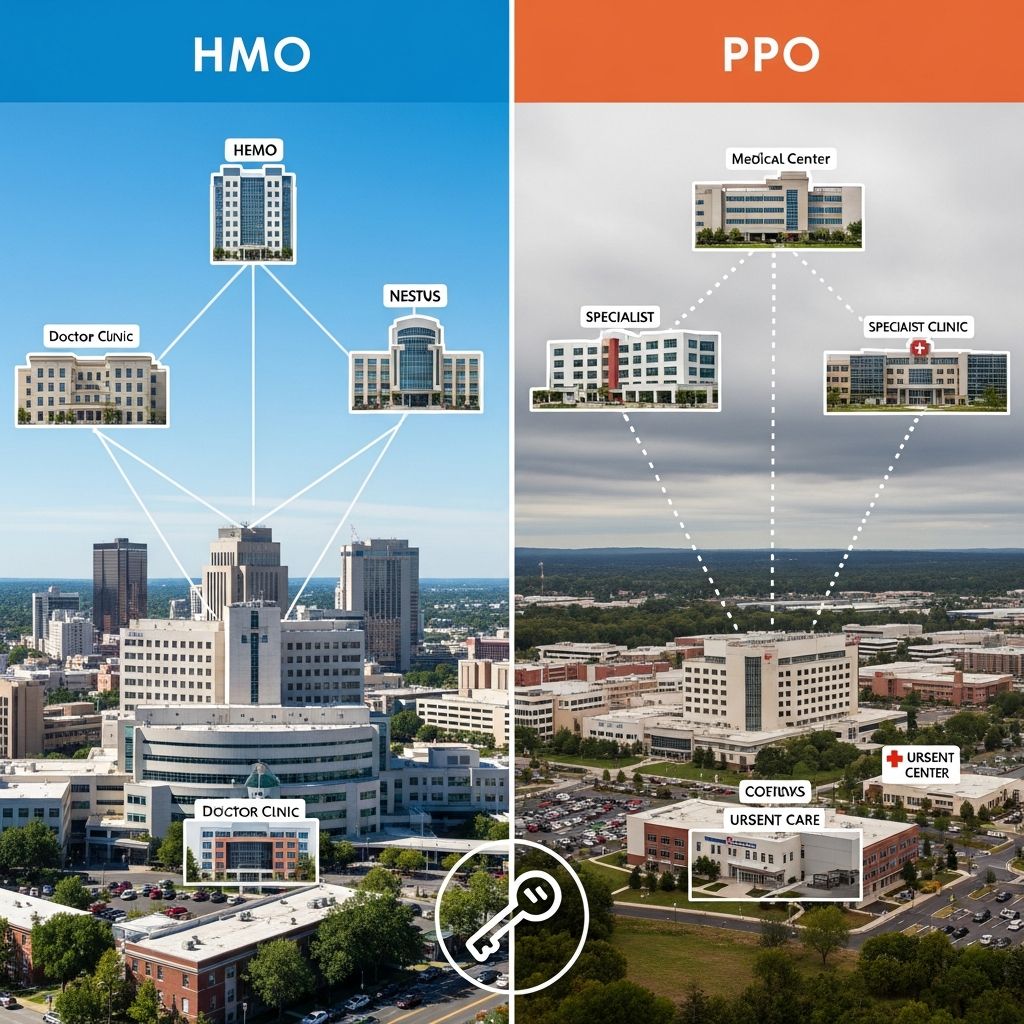
HMO plans restrict coverage to in-network providers except in emergencies. Non-emergency care received from out-of-network providers is generally not covered at all, leaving you responsible for the full cost. PPO plans, conversely, provide partial coverage for out-of-network care, though you’ll pay higher out-of-pocket costs compared to in-network care.
Provider Network Size
PPO plans maintain larger and more comprehensive provider networks than HMO plans. This broader network gives PPO members greater choice when selecting doctors and specialists. HMO networks are more limited, which helps control costs but reduces your options for healthcare providers.
Geographic Service Areas
HMO coverage is typically limited to a specific geographic region or service area. If you relocate or travel extensively, an HMO plan may not provide coverage outside its service area. PPO plans typically offer more extensive geographic coverage, making them better suited for individuals who travel frequently or may relocate.
Choosing the Right Plan for Your Needs
Budget Considerations
If your primary concern is minimizing healthcare costs, an HMO plan is typically the more cost-effective option. HMO plans offer lower premiums, lower deductibles, and lower out-of-pocket costs for in-network care. However, it’s crucial to review each plan individually and compare monthly premiums, deductibles, copays, and coinsurance rates to ensure you understand the total cost implications.
Care Requirements
Your healthcare needs significantly impact which plan type is best suited for you. If you are chronically ill and require frequent specialist care, a PPO plan’s flexibility and broader provider network may be worth the additional cost. PPO plans allow you to access specialists without referrals, which can streamline your care and provide faster access to needed services. Conversely, if you rarely visit specialists and primarily need routine primary care, an HMO’s cost savings may outweigh the restrictions.
Current Providers
Before enrolling in an HMO or PPO plan, verify that your current primary care physician, specialists, and other healthcare providers are included in the plan’s network. If your preferred doctors are in-network, you can continue seeing them without disruption. If your doctors are not in-network with an HMO, you would need to switch providers or pay out-of-pocket. With a PPO, you could potentially continue with your out-of-network doctors and receive partial coverage, though at higher cost.
Travel and Lifestyle
If you travel frequently or live in multiple locations, a PPO plan may be more appropriate due to its broader geographic coverage and out-of-network benefits. HMO plans’ geographic limitations may make them inconvenient for frequent travelers. PPO plans provide greater peace of mind when you’re away from your home service area.
Frequently Asked Questions
Q: Do HMO plans cover emergency care outside the network?
A: Yes, HMO plans typically cover emergency care received outside the network. However, once the emergency stabilizes, you may be required to transfer to an in-network facility for continued care to maintain coverage.
Q: Can I see a specialist with a PPO without a referral?
A: Yes, one of the primary advantages of PPO plans is that you can see a specialist without obtaining a referral from a primary care physician. You can directly access specialty care, though you may receive better coverage rates if you choose an in-network specialist.
Q: Are preventive services covered without a deductible?
A: Many health insurance plans, both HMO and PPO, cover preventive services such as annual check-ups, vaccinations, and screenings without requiring you to meet your deductible first. Always verify your specific plan’s coverage for preventive care.
Q: What happens if I need care while traveling with an HMO plan?
A: HMO coverage outside your service area is limited, typically covering only emergencies. For non-emergency care while traveling, you would likely need to pay out-of-pocket. If travel is frequent, a PPO plan may be more suitable.
Q: How do copays differ between HMO and PPO plans?
A: Both plan types use copays, which are fixed amounts you pay for specific services. HMO copays are typically lower than PPO copays. Additionally, HMO copays apply only to in-network care, while PPO copays may vary between in-network and out-of-network providers.
Q: Can I switch from an HMO to a PPO plan mid-year?
A: Plan changes typically can only be made during the annual open enrollment period. However, certain qualifying life events—such as marriage, birth of a child, or loss of other coverage—may allow you to change plans outside the open enrollment period.
Making Your Decision
Choosing between an HMO and a PPO plan requires careful consideration of your personal circumstances, healthcare needs, and financial situation. HMO plans offer significant cost savings for individuals who don’t mind having fewer choices and are willing to work within a restricted provider network. PPO plans provide greater flexibility and broader provider access for those willing to pay higher premiums for increased options and choice. Review your anticipated healthcare needs, your budget, your current healthcare providers, and your lifestyle to determine which plan type aligns best with your situation. Both plan types have merit; the right choice depends entirely on your individual priorities and circumstances.
References
- PPO vs. HMO Insurance: What’s the Difference? — Medical Mutual. 2025. https://www.medmutual.com/Individuals-and-Families/HMO-vs-PPO-Insurance-Plans
- HMO vs. PPO — WebMD. 2025. https://www.webmd.com/health-insurance/hmo-vs-ppo
- HMO vs. PPO: Understanding the key differences — Kaiser Permanente. 2025. https://healthy.kaiserpermanente.org/georgia/learn/hc.hmo-vs-ppo-advantages
- HMO, PPO, and EPO: What’s the Difference? — Cigna Healthcare. 2025. https://www.cigna.com/knowledge-center/hmo-ppo-epo
- HMO vs. PPO | Health insurance basics — Independence Blue Cross. 2025. https://www.ibx.com/find-a-plan/individuals-and-families/health-insurance-basics/hmo-vs-ppo
Similar Articles








Read full bio of medha deb