Understanding Historical Stock Market Returns
Explore decades of stock market performance data and what returns mean for investors
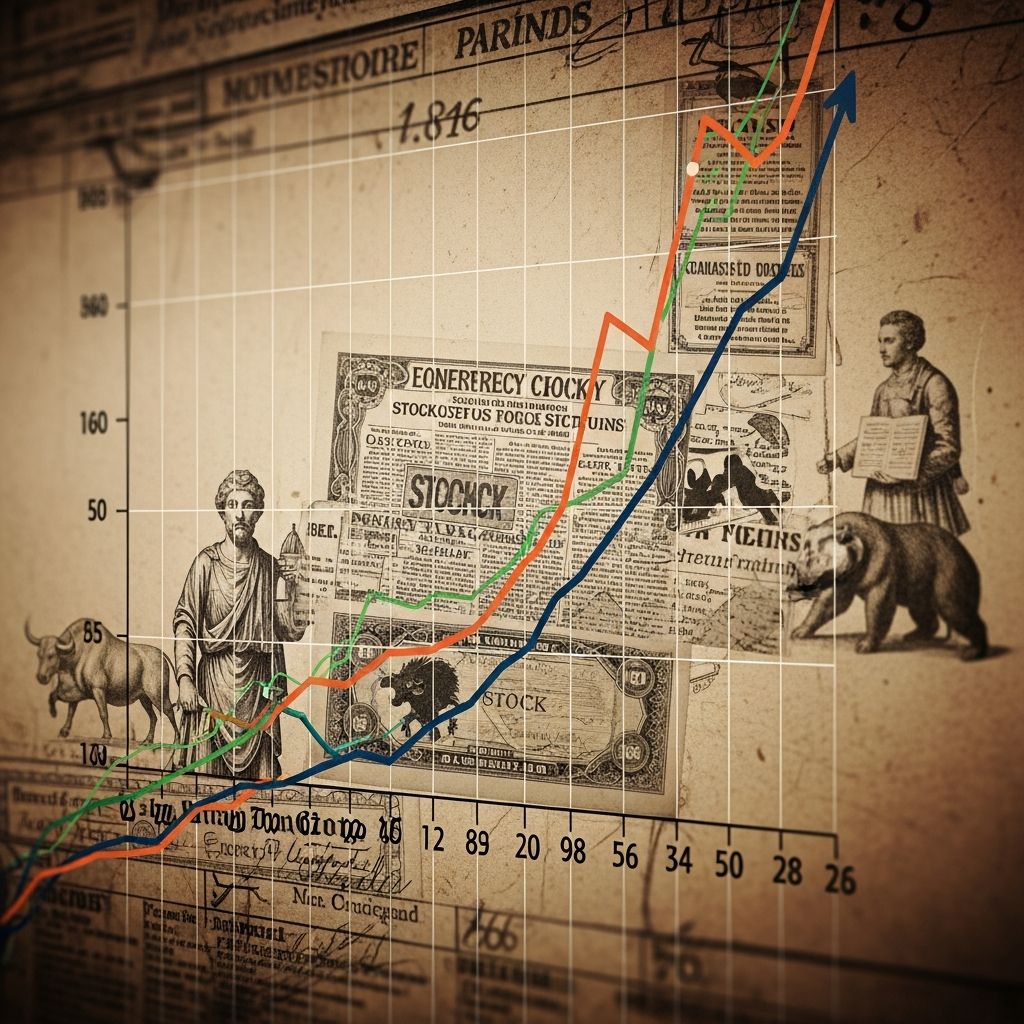
When considering whether to invest in the stock market, one of the most important questions investors ask is: what kind of returns can I expect? This question doesn’t have a simple answer because market performance varies significantly depending on the time frame examined. By studying historical returns across different periods, investors can develop more realistic expectations about potential gains and better understand the long-term trajectory of equity investments.
The Long View: Century-Plus Market Performance
The stock market’s history extends back much further than many investors realize. Research spanning over a century of market data reveals consistent patterns about equity returns. Since approximately 1800, stocks have demonstrated a remarkable consistency in delivering value to investors. Over this extensive historical period, equities have generated average annual returns within the range of 6.5 to 7.0 percent when adjusted for inflation.
The S&P 500 index itself, which serves as the primary benchmark for U.S. stock market performance, was established in 1928. Since its inception nearly a century ago, the index has delivered an average annual return of 10.02 percent. This figure includes the effects of dividends being reinvested and accounts for inflation adjustments. When focusing specifically on the modern composition of the index—after it expanded to include 500 stocks in 1957—the average annual return rises slightly to 10.59 percent.
Comparing Returns Across Different Time Horizons
Understanding how returns vary across different time periods is crucial for investors trying to match their investment timeline with appropriate expectations. The stock market does not perform uniformly year after year; instead, it experiences cycles of expansion and contraction that can significantly impact results depending on when measurement begins and ends.
The Past Four Decades of Market Performance
Examining longer time periods helps smooth out the impact of individual market cycles. Over the past 40 years (1986–2025), the stock market has averaged annual returns of 12.74 percent. This period captured several significant market events, including the 1987 stock market crash, the dot-com boom and subsequent bust in the early 2000s, the 2008 financial crisis, and the rapid market recovery that followed. Despite these dramatic events, the long-term trend remained positive.
Three Decades of Growth
The 30-year return period (1996–2025) provides insight into more recent market behavior. Over this span, investors experienced average annual returns of 11.80 percent. This three-decade window encompasses the transition from the late-stage technology bubble through the modern era of digital transformation and includes the pandemic-driven market disruption of 2020.
Two Decades of Market Expansion
Looking at 20-year performance (2006–2025), the picture becomes more nuanced. The average annual return over this period was 12.39 percent. Beginning in 2006 positions the measurement right before the 2008 financial crisis, one of the most severe market downturns in modern history. The fact that 20-year returns still exceeded 12 percent demonstrates the power of long-term recovery and market resilience.
The Recent Decade
The most recent 10-year period (2016–2025) shows notably strong performance, with average annual returns of 15.75 percent. This period has benefited from accommodative monetary policy, the rise of mega-cap technology stocks, and sustained economic growth. However, investors should recognize that this performance exceeds the long-term historical average, suggesting mean reversion may eventually occur.
Recent Five-Year Performance and Inflation Considerations
Examining the most recent five-year period provides additional context for current market conditions. According to data spanning December 2019 through December 2024, the S&P 500 generated average annual returns of 13.6 percent in nominal terms. When adjusted for inflation, this figure declines to 8.9 percent, highlighting the importance of considering purchasing power when evaluating investment returns.
The 2020-2024 period incorporated significant volatility, including pandemic-related market disruption in early 2020 and inflationary pressures with associated monetary tightening in 2022. Despite these challenges, the five-year result demonstrates continued positive returns for patient investors.
Volatility and Market Cycles Within Long-Term Trends
While long-term returns tell an encouraging story, the path to those returns rarely follows a straight upward trajectory. Individual years can vary dramatically from the average. Understanding this volatility is essential for maintaining perspective during inevitable downturns.
| Time Period | Average Annual Return |
|---|---|
| Past 10 years (2016–2025) | 15.75% |
| Past 20 years (2006–2025) | 12.39% |
| Past 30 years (1996–2025) | 11.80% |
| Past 40 years (1986–2025) | 12.74% |
| Since 1957 (500-stock index) | 10.59% |
| Since 1928 (inception) | 10.02% |
During the 30-year measurement from 1994 to 2024, the S&P 500 experienced significant peaks and valleys. The index peaked at 32 percent return in a single year (at the end of 2013) while bottoming at negative 37 percent (at the end of 2008). This dramatic range illustrates why examining single-year returns can be misleading; the long-term average of 9 percent masks substantial interim fluctuations.
Inflation’s Impact on Real Returns
A critical distinction that often gets overlooked is the difference between nominal returns and inflation-adjusted (real) returns. Nominal returns represent the actual percentage gain in investment value, while real returns account for the declining purchasing power of money over time.
Over the past 20 years, nominal returns averaged 8.4 percent, but when adjusted for inflation, real returns dropped to 5.7 percent. Similarly, the 30-year period showed nominal returns of 9 percent declining to 6.3 percent in real terms. This adjustment is particularly important when considering retirement planning, as investors care most about what their money can actually purchase, not just the numerical return percentage.
The Meaning Behind Historical Returns
Historical returns provide valuable context for developing investment expectations, but they come with important caveats. First, past performance does not guarantee future results. The conditions that generated returns in previous decades—interest rate environments, technological disruption, geopolitical factors, and demographic trends—continue to evolve.
Second, individual investor outcomes depend heavily on behavior and timing. The average market return assumes an investor remained invested throughout the entire period. Investors who attempted to time the market or who panicked during downturns experienced substantially different results.
Third, returns for individual stocks or sectors within the market often diverge significantly from the index average. Sector-specific performance varies considerably year to year, with some industries substantially outperforming or underperforming the broader market.
Factors That Influenced Historical Returns
Several major themes shaped stock market returns throughout the periods examined. The dot-com boom of the late 1990s created exceptional returns for five consecutive years before the subsequent bust. The financial crisis of 2008 produced severe losses that required years of recovery. The rise of mega-cap technology companies in recent years has driven above-average returns in the past decade.
Monetary policy, interest rates, corporate profitability, geopolitical events, and demographic shifts all contributed to the returns observed across different periods. Understanding these contextual factors helps investors appreciate why returns fluctuate so dramatically across different time horizons.
What Historical Returns Mean for Current Investors
For investors developing their strategy today, historical returns offer several insights. First, the long-term upward trend of stock market returns provides reasonable optimism about equity investing over multi-decade time horizons. The consistent delivery of returns around 10 percent annually over nearly a century suggests equities remain a productive asset class.
Second, shorter time horizons introduce substantial uncertainty. While 10, 20, 30, and 40-year returns all exceeded 10 percent, individual years or short periods can produce negative returns. Investors with shorter time horizons should calibrate their expectations and risk tolerance accordingly.
Third, inflation adjustment matters significantly. Real returns—what investors can actually purchase with their gains—run substantially lower than nominal returns. Planning retirement or major expenses requires accounting for inflation’s erosive impact.
The Evolution of Market Measurement
The way we measure stock market returns has evolved considerably. The S&P 500 index began in 1928 with a different composition than today’s 500-stock index. The expansion to 500 stocks occurred in 1957, and the methodology for selecting and weighting constituents has changed multiple times since then. These methodological differences explain why returns since 1957 (10.59%) slightly exceed returns since 1928 (10.02%).
Modern market data collection is far more precise than historical reconstruction, particularly for periods before electronic trading became standard. This suggests confidence in recent returns is appropriately higher than confidence in early twentieth-century figures.
Key Takeaways for Investors
- Long-term consistency: The stock market has delivered average returns around 10 percent annually over the past century, despite dramatic interim fluctuations.
- Time horizon matters: Recent decades have shown returns of 11.80–15.75 percent, exceeding the long-term average, but this may not persist indefinitely.
- Inflation impacts outcomes: Real returns are substantially lower than nominal returns when adjusted for inflation’s purchasing power erosion.
- Volatility is normal: Individual years can produce returns ranging from negative 37 percent to positive 37 percent, even when long-term averages remain positive.
- Behavioral factors matter: Historical average returns assume continuous investment; investors who sell during downturns typically realize substantially different results.
- Diversification remains relevant: Sector performance varies substantially, suggesting the broad-based S&P 500 approach provides more stable returns than concentrated sector bets.
Frequently Asked Questions
What is a realistic annual return expectation for stock market investing?
Based on historical data spanning nearly a century, a reasonable long-term expectation is returns around 10 percent annually. However, actual results will vary substantially by year, and recent returns have exceeded this average. Inflation-adjusted real returns typically run 3–4 percentage points lower.
How do recent returns compare to historical averages?
The past 10 years have been exceptionally strong, with 15.75 percent average annual returns substantially exceeding the historical average of 10.02 percent. This outperformance raises the question of whether mean reversion may occur, but historical performance provides no guarantee of future results.
Should I be concerned about timing my entry into the stock market?
Historical data suggests that time in the market typically matters more than timing the market. While investors who purchased at market peaks experienced temporary losses, those who remained invested through subsequent recoveries participated in the long-term gains reflected in these historical averages.
How important is inflation adjustment when evaluating returns?
Inflation adjustment is critical because it reflects actual purchasing power. A nominal 9 percent return that includes 2–3 percent annual inflation translates to a real return of 6–7 percent. For retirement planning spanning decades, this distinction significantly impacts achievable lifestyle in retirement.
References
- Average Stock Market Returns Since 1928 — Carry. 2025. https://carry.com/learn/average-stock-market-returns
- Average Stock Market Return: S&P 500 Historical Performance — SoFi. 2024. https://www.sofi.com/learn/content/average-stock-market-return/
- Historical Returns on Stocks, Bonds and Bills: 1928-2024 — NYU Stern School of Business. 2024. https://pages.stern.nyu.edu/~adamodar/New_Home_Page/datafile/histretSP.html
- S&P 500 Annual Returns Over the Past 25 Years — McKinsey & Company. 2022. https://www.mckinsey.com/capabilities/strategy-and-corporate-finance/our-insights/the-strategy-and-corporate-finance-blog/markets-will-be-markets-an-analysis-of-long-term-returns-from-the-s-and-p-500
Similar Articles








Read full bio of medha deb