Historical Mortgage Rates: 1970s to 2025
Explore five decades of mortgage rate trends, from historic peaks to record lows.
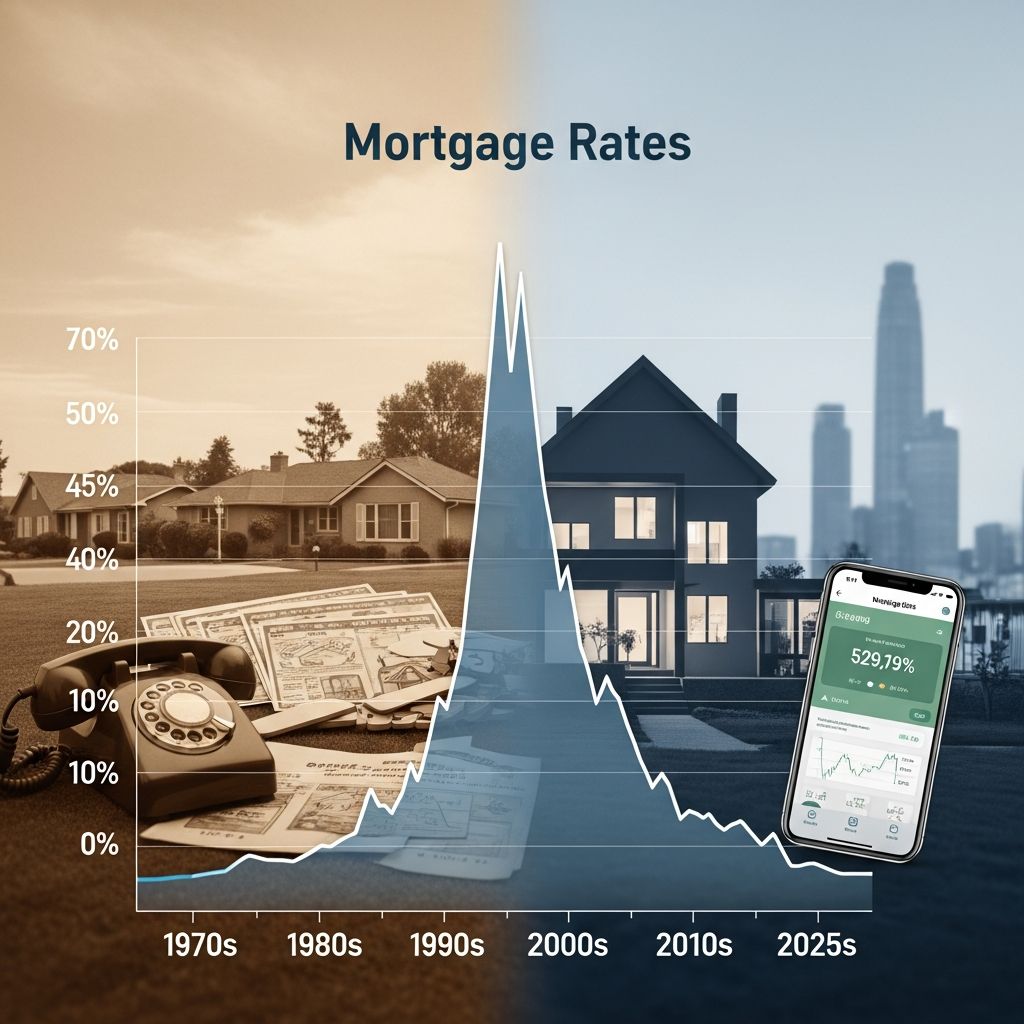
Mortgage rates have experienced dramatic fluctuations over the past five decades, shaped by economic policies, inflation cycles, and market conditions. Understanding this history provides valuable context for today’s homebuyers and investors seeking to comprehend current rate environments and make informed decisions about real estate investments. The 30-year fixed-rate mortgage, the most common home loan product in America, has ranged from historic highs exceeding 16 percent to near-record lows below 3 percent, reflecting the profound economic shifts that have occurred since the early 1970s.
Key Takeaways on Mortgage Rate History
Several critical insights emerge from examining mortgage rate trends over the past forty years:
- The average rate on a 30-year fixed mortgage reached its peak in 1981, rising just above 16 percent as the Federal Reserve fought inflation.
- The average 30-year fixed rate bottomed in 2021 at just under 3 percent, representing historically low borrowing costs.
- Current 2025 mortgage rates have fluctuated between 6.26 percent and 7.19 percent, with the rate standing at 6.19 percent as of November 1, 2025.
- Today’s mortgage rates remain significantly lower than the 40-year average of approximately 7.2 percent.
The 1970s: The Beginning of the Modern Mortgage Era
The 1970s marked the beginning of the data period tracked by Freddie Mac for modern mortgage lending. The average 30-year fixed-rate mortgage started the decade at approximately 7.5 percent in 1971, representing the earliest year for which comprehensive data is available. During this transformative period, mortgage rates experienced steady upward pressure.
By 1979, the rate had risen to an average of 11.2 percent, reflecting the significant economic challenges of the era. This increase occurred due to the Federal Reserve’s expansionary monetary policy and broader inflationary pressures affecting the entire economy. Homebuyers faced increasingly expensive borrowing costs, with monthly mortgage payments escalating substantially as both rates and home prices climbed.
The combination of rising interest rates and property values fundamentally altered housing affordability during this decade. Between 1971 and 1979, the typical monthly mortgage payment increased from approximately $141.65 to $485.67 for a standard home purchase, more than tripling in just eight years. This dramatic increase reflected both the higher interest rates and the appreciation of home values during an inflationary period.
The 1980s: The Inflation-Fighting Era and Record Rates
The 1980s represented perhaps the most dramatic period in modern mortgage rate history. Rates continued climbing at the beginning of the decade as Federal Reserve Chairman Paul Volcker implemented aggressive monetary tightening policies designed to combat the rampant inflation of the 1970s. The average rate on a 30-year fixed mortgage reached its historic peak of 16.64 percent in 1981, representing the highest rate in the data available.
At this extraordinary rate level, the typical monthly mortgage payment reached $771.64 in 1981, placing homeownership substantially out of reach for many American families. The federal funds rate at the time exceeded 20 percent, making mortgages extraordinarily expensive. However, this pain served a purpose: Volcker’s aggressive approach successfully reduced inflation from double digits to more manageable levels.
As inflation subsided and the Federal Reserve began moderating its tight monetary policy in the mid-1980s, mortgage rates declined significantly. The decade ended with the 30-year fixed rate at 9.78 percent in 1989, down substantially from the 1981 peak but still elevated by historical standards. The monthly mortgage payment in 1989 stood at $863.30, reflecting both the lower rates and the appreciation of home values over the decade.
The 1990s: Gradual Decline and Stabilization
The 1990s brought a general trend of declining mortgage rates as the Federal Reserve maintained a more accommodative stance. The decade began with rates in the 9 percent range and gradually worked lower. By the end of the 1990s, the average 30-year fixed rate had declined to 7.46 percent in 1999, creating more favorable conditions for homebuyers.
Monthly mortgage payments during this decade remained relatively stable despite rate variations, reflecting the balance between lower interest costs and the continued appreciation of home values. The 1990s saw a significant expansion in home ownership as rates became more manageable and the economy strengthened following the early-decade recession. This period demonstrated the recovery potential of the housing market when interest rate conditions improve.
The 2000s: The Subprime Crisis and Rate Collapse
The 2000s began with rates around 8 percent and experienced significant downward pressure as the decade progressed. Driven by the subprime mortgage crisis of the late 2000s, the 30-year mortgage rate tumbled from approximately 8 percent at the start of the decade to 5.4 percent by 2009. This decline created unprecedented opportunity for refinancing and new home purchases.
However, the context of this rate decline was deeply troubling. The housing bubble, fueled by loose lending standards and lax regulatory oversight, had inflated home prices to unsustainable levels. When subprime borrowers began defaulting on their mortgages, the financial system experienced severe stress. The collapse of major financial institutions and the ensuing Great Recession triggered the Federal Reserve’s emergency response, including near-zero interest rates and quantitative easing programs designed to stabilize the economy.
Monthly mortgage payments during this period showed extreme volatility. The typical payment rose from approximately $991.02 in 2000 to a high of $1,228.69 in 2006 before declining to $966.60 by 2009 as rates fell. This pattern reflected both the boom-and-bust cycle of the housing market and the economic policies implemented to address the crisis.
The 2010s: The Low-Rate Environment
The 2010s represented a period of historically low mortgage rates supported by Federal Reserve policies implemented in response to the Great Recession. The decade began with 30-year fixed rates at 4.86 percent in 2010 and experienced a general downward trend throughout the period. Interest rates gradually declined as economic recovery remained fragile and the Fed maintained accommodative policies.
By 2019, the average 30-year fixed rate had fallen to 4.13 percent, and the Fed was actually cutting rates in response to trade tensions and slowing economic growth. The end of the 2010s saw rates returning to the 4 percent range, creating favorable conditions for homebuyers and refinancing activity. Monthly mortgage payments during this period averaged between $919.97 and $1,349.60, reflecting both the lower rate environment and the continued appreciation of home values.
The 2020s: Historic Lows, Rapid Increases, and Current Volatility
The 2020s have experienced unprecedented rate volatility in response to extraordinary economic circumstances. When the COVID-19 pandemic struck in early 2020, the Federal Reserve responded with emergency rate cuts and asset purchases, driving mortgage rates to historic lows. By 2021, the average 30-year fixed rate had bottomed at just under 3 percent, representing the lowest rates in the modern data series.
This extraordinarily low rate environment fueled a historic housing boom, with homebuyers and investors rushing to lock in rates that had never been seen before. However, the unprecedented fiscal and monetary stimulus combined with supply chain disruptions created significant inflationary pressures. As inflation accelerated in 2021 and 2022, the Federal Reserve rapidly reversed course, raising the federal funds rate from near zero to over 4 percent by late 2022.
This dramatic policy shift caused mortgage rates to surge. By 2023, the average 30-year fixed rate had risen to 7.00 percent, marking the highest level since the early 2000s. Monthly mortgage payments more than doubled, rising from $1,161.32 in 2020 to $2,270.15 in 2023, placing substantial pressure on housing affordability.
In 2024 and through 2025, mortgage rates have stabilized in the 6-7 percent range. As of late November 2025, rates have fluctuated between 6.26 and 7.19 percent, with the rate at approximately 6.32 percent.[10] This current environment represents rates significantly above the historic averages but substantially lower than the emergency lows of 2021.
Impact on Housing Affordability
The correlation between mortgage rates and housing affordability has remained constant throughout history. When rates rise, monthly payments increase dramatically, reducing the number of buyers who can qualify for mortgages. When rates fall, affordability improves and demand surges. The monthly payment data illustrates this relationship clearly: payments ranged from $141.65 in 1971 to over $2,270 in 2023, demonstrating how powerfully rates and prices interact to affect housing costs.
Economic Factors Driving Rate Changes
Several key economic factors have driven historical mortgage rate movements. Inflation has been perhaps the most significant factor—when inflation rises, the Federal Reserve typically raises rates to combat it, pushing mortgage rates higher. Conversely, recessions and economic weakness prompt the Fed to cut rates to stimulate activity. Credit market conditions, employment data, and wage growth also influence mortgage rates, as lenders price in the risk of economic deterioration and adjust their spreads accordingly.
Mortgage Rate Predictions and Future Outlook
While historical analysis provides valuable context, no one can predict future mortgage rates with certainty. Rates depend on numerous complex factors including Federal Reserve policy, inflation data, employment conditions, and global economic developments. Bankrate regularly surveys economists and mortgage experts to develop weekly predictions and monthly forecasts, but actual outcomes frequently diverge from expectations.
Understanding historical rate patterns can inform decision-making but should not be relied upon for rate predictions. Homebuyers and refinancing borrowers should focus on their personal financial situations and long-term plans rather than attempting to time the market based on rate predictions.
Frequently Asked Questions
What was the highest mortgage rate in history?
The highest average annual 30-year fixed mortgage rate occurred in October 1981 when rates reached 18.4 percent according to Freddie Mac data, with the annual average for 1981 at 16.64 percent. This represented the peak of the Federal Reserve’s inflation-fighting efforts under Chairman Paul Volcker.
What was the lowest mortgage rate ever recorded?
The lowest average annual 30-year fixed mortgage rate occurred in 2021, when rates bottomed just below 3 percent. This historic low resulted from the Federal Reserve’s emergency response to the COVID-19 pandemic and led to unprecedented refinancing and home purchase activity.
How have mortgage rates changed in 2025?
So far in 2025, the average 30-year mortgage rate has fluctuated between 6.26 percent and 7.19 percent, representing relatively stable conditions compared to the volatility of 2022-2023. As of late November 2025, rates stand near 6.32 percent.
How do current mortgage rates compare to historical averages?
Today’s mortgage rates are significantly lower than the 40-year average of approximately 7.2 percent. While substantially higher than the emergency lows of 2021, current rates remain below the rates that prevailed during much of the 1980s and 1990s.
What economic factors cause mortgage rates to change?
Federal Reserve monetary policy, inflation rates, employment conditions, credit market stress, and global economic developments all influence mortgage rates. When inflation rises or the economy strengthens, rates typically increase. When inflation falls or economic weakness emerges, rates typically decline.
Can historical mortgage rate trends predict future rates?
While historical trends provide context, they cannot reliably predict future rates due to the complexity of economic forces and policy decisions involved. Bankrate and other organizations regularly survey experts for near-term predictions, but actual outcomes frequently differ from forecasts.
References
- Mortgage Rate History: 1970s To 2025 — Bankrate. 2025. https://www.bankrate.com/mortgages/historical-mortgage-rates/
- Monthly Mortgage Payments: 1970s to 2025 — Bankrate. 2025. https://www.bankrate.com/mortgages/monthly-mortgage-payments-history/
- Mortgage rate history: 1970s to 2025 — AOL Finance. 2025. https://www.aol.com/finance/mortgage-rate-history-1970s-2023-153843181.html
- Freddie Mac Historical Mortgage Rate Data — Federal Home Loan Mortgage Corporation. 2025. https://www.freddiemac.com/
- Daily Mortgage Rates Archive — Bankrate. 2025. https://www.bankrate.com/mortgages/todays-rates/
- Mortgage Rate Trends And Predictions For Nov. 26 – Dec. 3, 2025 — Bankrate. 2025-11-26. https://www.bankrate.com/mortgages/rate-trends/
- 30-year mortgage rates decline – When will rates change? — Bankrate. 2025-11-28. https://www.bankrate.com/mortgages/todays-rates/mortgage-rates-for-friday-november-28-2025/
Similar Articles








Read full bio of Sneha Tete