Hill Start Assist: Essential Technology for Safe Incline Driving
Master the technology that prevents rollback and enhances safety on slopes

Navigating steep terrain has become significantly safer with the introduction of modern vehicle assistance systems. One particularly valuable technology is hill start assist, a feature designed to eliminate the anxiety of vehicle rollback when accelerating from a stopped position on slopes. Whether you drive in mountainous regions or navigate urban inclines, understanding this technology can enhance your driving confidence and vehicle control.
Understanding the Core Mechanism Behind Incline Holding Systems
Hill start assist represents a fundamental advancement in automotive safety by addressing a common challenge drivers face on slopes. The system functions by maintaining brake pressure during the critical transition period when a driver shifts their foot from the brake pedal to the accelerator. This brief intervention prevents the natural tendency of vehicles to roll backward due to gravitational forces, particularly problematic on steep gradients.
The technology operates through an intelligent coordination of multiple vehicle systems working in harmony. Rather than simply holding brakes indefinitely, the system intelligently releases braking force as the driver applies throttle, ensuring a smooth and controlled acceleration without jerking or hesitation. This proportional release mechanism distinguishes modern hill start assist from basic brake-holding functions and demonstrates the sophistication of contemporary automotive engineering.
Critical Components That Enable Hillside Performance
The functionality of hill start assist depends on several interconnected components working in precise coordination:
- Inclination Detection Sensors: These accelerometer-based devices continuously measure the vehicle’s angle relative to horizontal ground. They determine whether the car sits on a slope and calculate the steepness of the incline, which directly influences how aggressively the system engages braking force.
- Transmission Position Sensors: These sensors identify the current gear selection, enabling the system to understand vehicle intent and adjust its response accordingly.
- Electronic Control Unit (ECU): Serving as the system’s computational brain, the ECU processes signals from all sensors and orchestrates brake actuator responses in real-time.
- Brake Actuator System: These hydraulic or electronic components execute commands from the ECU, applying and releasing brake pressure with millisecond precision.
- Longitudinal Acceleration Sensors: Working through hall effect technology, these sensors estimate road inclination and contribute to the system’s understanding of vehicle dynamics.
The Operational Sequence: How Systems Activate and Respond
Understanding the activation sequence provides insight into how this technology protects drivers. When a vehicle comes to a complete stop on a detectable incline, the system remains dormant but vigilant. The moment a driver releases the brake pedal, the inclination sensors detect this action and signal the ECU.
The ECU evaluates multiple factors simultaneously: the road’s steepness, whether the transmission is in a forward-moving gear, and the driver’s intentions based on throttle input. If the inclination exceeds a predetermined threshold—typically around three to five degrees—the system activates brake holding protocols. The brake actuators engage with precisely calibrated force, maintaining the vehicle’s position against gravitational pull.
As the driver presses the accelerator, the system doesn’t abruptly release all braking force. Instead, it modulates brake pressure proportionally to the throttle input and the slope’s steepness. This graduated release prevents the jarring sensation that would occur with sudden braking cessation and ensures the engine torque builds smoothly into forward motion. Once sufficient acceleration torque generates forward momentum, the system disengages completely, restoring normal brake operation to the driver’s control.
Performance Duration and Hold Times Across Manufacturers
Different automotive manufacturers calibrate their hill start assist systems with varying hold durations. These timing variations reflect different engineering philosophies and target driving scenarios:
| Manufacturer Approach | Typical Hold Duration | Engagement Threshold |
|---|---|---|
| Kia Systems | Approximately 3 seconds | Moderate inclines |
| Toyota/Nissan Models | Approximately 2 seconds | Steeper slopes |
| Premium Systems | Variable (2-5 seconds) | Adaptive to terrain |
These variations allow manufacturers to optimize the system for their target markets and vehicle categories. Commercial vehicles operating in mountainous regions may employ extended hold times, while compact urban vehicles might utilize shorter durations to maintain driver engagement and awareness.
Safety Advantages and Practical Benefits for Daily Driving
The implementation of hill start assist technology delivers tangible safety improvements across multiple driving scenarios:
- Accident Prevention: By eliminating sudden backward motion, the system reduces the risk of collisions with vehicles or obstacles behind the car on slopes. This proves particularly valuable in dense traffic where multiple vehicles occupy close proximity.
- Mechanical Component Longevity: In manual transmission vehicles, traditional hill starts require coordinated clutch engagement, creating significant wear patterns. Hill start assist reduces this mechanical stress, extending clutch lifespan and reducing maintenance costs.
- Driver Confidence Enhancement: Particularly for inexperienced drivers, the psychological assurance of automatic rollback prevention enables more relaxed, focused driving on challenging terrain.
- Universal Accessibility: Drivers with physical limitations affecting pedal coordination benefit significantly from automated control, improving inclusivity in vehicle operation.
- Consistent Performance: Unlike manual techniques dependent on driver skill and experience, the system delivers uniform performance across all driving conditions and driver abilities.
Integration with Complementary Safety Architectures
Hill start assist functions most effectively when integrated within the broader vehicle stability and control ecosystem. Modern vehicles employ multiple overlapping systems that work in concert:
Traction Control Systems: These technologies prevent wheel spin on low-friction surfaces by managing engine torque and brake pressure across individual wheels. While traction control addresses lateral grip, hill start assist focuses on longitudinal motion control.
Anti-Lock Braking Systems (ABS): ABS prevents wheel lockup during emergency braking by modulating pressure to maintain tire contact with road surfaces. This system operates independently of hill start assist but shares communication pathways through the vehicle’s central ECU network.
Electronic Stability Control (ESC): This more comprehensive system maintains vehicle directional stability during aggressive maneuvers by coordinating engine and braking inputs across all wheels. Hill start assist often integrates seamlessly with ESC architecture, allowing the stability control system to manage overall vehicle behavior while hill start assist handles incline-specific challenges.
The synergistic operation of these systems creates a robust safety net. For instance, if a driver experiences wheel slip while accelerating on a wet, inclined surface, the traction control system manages torque distribution while hill start assist manages the initial motion, and ESC monitors overall stability—all occurring transparently to the driver.
Distinguishing Hill Start Assist from Related Technologies
Several related technologies address different aspects of slope management, and understanding their distinctions clarifies the specific value proposition of hill start assist:
Hill Descent Control: Operating in reverse situations, hill descent control automatically manages speed while driving downhill by applying brakes to maintain a controlled, slow pace. This addresses the opposite challenge from hill start assist, preventing acceleration on downward slopes rather than preventing rollback on upward slopes.
Automatic Brake Hold: Some vehicles feature automatic brake hold systems that maintain brake pressure when the vehicle stops, releasing only when the driver applies accelerator input. While superficially similar, this broader system operates on all terrain types, not specifically optimized for inclines.
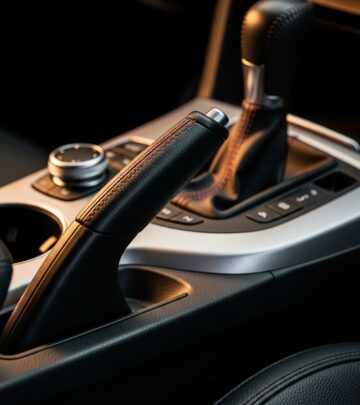
Manual Handbrake Operation: Traditional parking brakes remain necessary for long-term parking on slopes. Hill start assist specifically addresses the brief moment during acceleration initiation and does not replace handbrake functionality.
Availability Across Vehicle Categories and Transmission Types
Hill start assist availability varies across the automotive market based on vehicle class, price point, and market region. While once restricted to premium vehicles, this technology has progressively democratized across mainstream brands. Both manual and automatic transmission vehicles can incorporate hill start assist, though the implementation details may differ slightly.
Manual transmission vehicles particularly benefit from hill start assist, as traditional hill starts require synchronized operation of clutch, brake, and accelerator—a technique that challenges many drivers. Automatic transmission vehicles experience less mechanical strain but still benefit from the refined control and safety advantages the system provides. Some manufacturers restrict the feature to higher trim levels, while others incorporate it as standard equipment across entire model ranges.
System Activation Requirements and Operational Limitations
Hill start assist requires specific conditions for activation and operation. The vehicle must be in a forward-moving gear (drive, first gear, or reverse, depending on direction), and the road inclination must exceed the manufacturer’s sensitivity threshold. On shallow slopes, the system may remain inactive, requiring drivers to manage acceleration manually. Additionally, the system operates only during the transition from brake to accelerator and doesn’t manage sustained uphill acceleration once motion begins.
Maximum hold times prevent indefinite braking, encouraging drivers to complete the acceleration sequence within the designated window. If a driver remains on the brake after the maximum hold period expires, the vehicle rolls back to normal brake operation, returning full control to the driver. This design prevents driver overreliance and maintains engagement with vehicle dynamics.
Frequently Asked Questions About Incline Holding Technology
Does hill start assist function on all slope angles?
Hill start assist activates only when incline angles exceed manufacturer thresholds, typically three to five degrees. Very shallow slopes may not trigger activation, requiring drivers to manage acceleration manually.
Can hill start assist prevent parking on slopes?
No, hill start assist functions exclusively during acceleration transitions. For parking security on slopes, drivers must engage the handbrake or parking brake, as hill start assist disengages after acceleration begins.
How does hill start assist perform in extreme weather conditions?
The system functions based on vehicle position and motion sensors rather than road conditions, maintaining effectiveness in rain, snow, or ice. However, overall traction limitations imposed by weather still apply to the vehicle’s acceleration capabilities.
Is hill start assist available on older vehicles?
Hill start assist represents relatively recent technology, with widespread availability beginning in the 2010s. Vehicles manufactured before this period typically lack this feature, though some manufacturer retrofits may be available for specific models.
Does hill start assist require special maintenance?
Hill start assist relies on standard brake system components, requiring no specialized maintenance beyond regular brake service intervals. However, brake system malfunctions may compromise hill start assist functionality.
The Future Landscape of Incline Management Technology
As vehicle automation advances, incline management systems continue evolving. Emerging technologies integrate with autonomous driving capabilities, potentially enabling vehicles to manage entire incline sequences without driver intervention. Adaptive algorithms may adjust system responsiveness based on learned driver preferences and real-time road conditions, further enhancing safety and comfort across diverse driving scenarios.
Hill start assist exemplifies how modern automotive engineering addresses real-world driving challenges through intelligent, automated solutions. By understanding this technology’s operation, capabilities, and limitations, drivers can operate their vehicles more confidently and safely on the varied terrain that characterizes contemporary road networks.
References
- What Is Hill Start Assist — Capital One Auto Navigator. 2024. https://www.capitalone.com/cars/learn/finding-the-right-car/what-is-hillstart-assist/
- Understanding Hill Start Assist Technology — Shriram General Insurance. 2024. https://www.shriramgi.com/article/hill-start-assist-technology
Similar Articles








Read full bio of medha deb