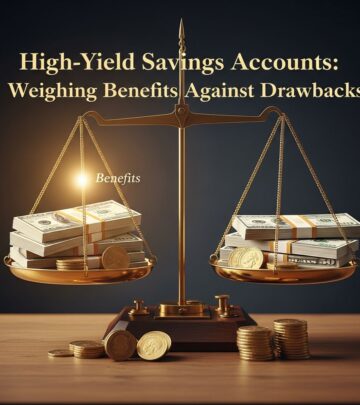
High-Yield Savings for College: Weighing Your Options
Explore whether high-yield savings accounts fit your college funding strategy

Planning for a child’s college education requires careful consideration of various savings vehicles. Among the options available, high-yield savings accounts have gained attention as a potential solution for parents and students seeking to accumulate funds for tuition and related expenses. However, determining whether this approach aligns with your specific situation requires understanding both its advantages and limitations compared to alternative strategies.
Understanding High-Yield Savings Mechanics
A high-yield savings account operates on the same fundamental principles as a traditional savings account, with one primary distinction: the interest rate offered to account holders is substantially higher than conventional savings products. These accounts maintain the same accessible nature of regular savings accounts while providing the opportunity to earn more on deposited funds through interest accumulation.
The mechanics are straightforward. When you deposit money into a high-yield savings account, the financial institution pays you interest based on the stated annual percentage yield (APY). Most high-yield savings accounts impose no monthly maintenance fees, making them accessible to a broad range of savers. The flexibility to transfer funds to a checking account or access them via ATM cards ensures that your money remains liquid and readily available when needed.
It’s important to note that interest rates on these accounts fluctuate based on market conditions and the policies of individual financial institutions. A competitive rate today may decline as broader economic conditions shift, making rate stability a consideration for long-term planning.
The Safety Factor: Principal Protection and FDIC Coverage
One of the most compelling advantages of high-yield savings accounts is the inherent safety they provide. When offered through FDIC-insured banks or NCUA-insured credit unions, these accounts provide deposit protection up to established limits, typically $250,000 per depositor per institution. This protection means your principal cannot be lost due to market volatility or institutional failure, a benefit that distinguishes savings accounts from investment-based college savings vehicles.
For families with a shorter timeline until college enrollment—such as those with high school students—this safety feature becomes particularly relevant. If your child will begin college within a few years, the risk exposure from market-based investments could be problematic. A significant market downturn could reduce the account value precisely when you need to access these funds. High-yield savings accounts eliminate this timing risk entirely.
Comparing Returns: High-Yield Savings Versus Long-Term Growth Vehicles
While high-yield savings accounts offer stable returns without market exposure, the growth potential requires honest assessment. Interest rates on these accounts, though higher than traditional savings products, typically remain insufficient to outpace inflation over extended periods. This means that while your money grows in nominal terms, its purchasing power may actually decline relative to rising education costs.
In contrast, investment-based college savings vehicles such as 529 plans offer access to stock and bond options that historically generate superior long-term returns, though with accompanying market volatility. Over a 10-, 15-, or 18-year savings horizon, the compounding effect of higher investment returns generally produces substantially larger balances than high-yield savings accounts, even accounting for market fluctuations and eventual rebalancing toward conservative positions as college approaches.
The opportunity cost consideration cannot be ignored. By choosing the safety of high-yield savings, you may sacrifice meaningful growth that could substantially reduce your reliance on loans, financial aid, or out-of-pocket payments during college years.
Tax Implications: A Significant Disadvantage
One of the most important distinctions between high-yield savings accounts and purpose-specific college savings vehicles relates to taxation. Interest earned in a high-yield savings account is subject to federal income tax and potentially state income tax as well. This tax burden reduces your effective return and means that a portion of your earned interest flows to tax authorities rather than remaining in your account to compound.
Compare this to a 529 college savings plan, where contributions can potentially qualify for state tax deductions or credits, earnings grow tax-free, and distributions used for qualified education expenses are not subject to federal taxation. Many states offer additional tax incentives for 529 contributions, further enhancing their tax efficiency compared to taxable savings accounts.
A Coverdell Education Savings Account (ESA) similarly provides tax-free growth when funds are used for qualified education expenses. These tax advantages represent real monetary benefits that accumulate throughout your savings period.
Liquidity and Flexibility: When Accessibility Matters
High-yield savings accounts excel in providing immediate access to your funds. Unlike some college-specific savings vehicles or certificate-of-deposit arrangements that impose penalties for early withdrawal, high-yield savings accounts allow you to access your money without restriction. This flexibility carries both benefits and risks.
On the positive side, this accessibility means you can respond to genuine emergencies or unexpected changes in educational plans without incurring penalties. If your child decides to attend a less expensive school or pursues alternative educational pathways, your funds remain available to redirect toward other goals.
Conversely, this same flexibility can present a behavioral challenge. Without the structural restrictions that accompany education-specific accounts, the temptation to withdraw funds for non-educational purposes—a new vehicle, home repairs, or lifestyle expenses—becomes more real. High-yield savings lack the psychological commitment device that dedicated college savings vehicles provide, potentially compromising your education funding goals.
Timeline Considerations: When High-Yield Savings Makes Sense
The appropriateness of high-yield savings for college planning depends significantly on your timeline. For families with young children where college is a decade or more away, high-yield savings accounts generally represent suboptimal choices due to the opportunity cost of foregone investment returns.
However, specific scenarios favor high-yield savings accounts:
- Your child is already in high school and college begins within a few years, making market volatility an unacceptable risk
- You have already maximized contributions to 529 plans and other tax-advantaged education savings vehicles and seek supplemental savings strategies
- You need an emergency fund for your future college student, taking advantage of the account’s liquidity and safety
- You have a shorter savings window or limited funds where capturing higher interest rates on modest amounts makes sense
- Your tolerance for investment risk is extremely low, and the psychological comfort of guaranteed principal protection outweighs return considerations
Alternative Education Savings Vehicles: A Comparative Overview
Understanding how high-yield savings accounts compare to other options clarifies the decision-making process. The 529 plan represents the most popular dedicated college savings vehicle, offering significant advantages that make it the preferred option for many families with longer timelines.
529 plans feature high contribution limits (varying by state from $235,000 to over $500,000 aggregate amounts) that far exceed annual contribution restrictions on other vehicles. When owned by a parent, 529 plans receive favorable treatment in financial aid calculations, with parental assets assessed at a maximum rate of 5.64% toward expected family contribution, compared to 20% for student-owned assets in other account types.
The investment flexibility within 529 plans allows strategy customization—from aggressive portfolios for younger children to conservative positions nearing college enrollment. Age-based options automatically adjust allocations, providing a hands-off approach for those uncomfortable with investment decisions.
Coverdell Education Savings Accounts (ESAs) offer another alternative with similar tax advantages to 529 plans but lower annual contribution limits ($2,000 per year per child). ESAs provide more investment choice than many 529 plans but require beneficiaries to use funds by age 30.
Decision Framework: Assessing Your Situation
Determining the best college savings approach requires honest assessment of multiple factors:
Financial Capacity
Can you maximize contributions to tax-advantaged vehicles like 529 plans? If so, high-yield savings accounts may serve as supplemental options for excess savings. If resources are limited, prioritizing tax-advantaged accounts makes greater sense than high-yield savings due to superior long-term growth and tax benefits.
Time Horizon
How many years until your child begins college? Longer timelines (8+ years) generally favor investment-based vehicles despite market volatility. Shorter timelines (under 5 years) may make high-yield savings more appropriate due to reduced risk exposure.
Risk Tolerance
Your comfort with market fluctuations matters. If you lose sleep over investment volatility, high-yield savings provides psychological benefits worth considering, though this shouldn’t override financial optimization entirely.
Savings Goals and Expected Expenses
Are you planning to cover full education costs or supplement other funding sources? This influences the required balance and thus the growth rate necessary to achieve your objective.
State Tax Benefits
Research whether your state offers tax deductions or credits for 529 contributions. Significant state tax benefits can make 529 plans substantially more attractive than taxable savings vehicles.
Integrating Multiple Strategies
The college savings decision need not be binary. Many financial advisors recommend a blended approach where families maximize contributions to 529 plans and other tax-advantaged vehicles while maintaining high-yield savings accounts for emergency reserves or supplemental savings.
This integrated strategy provides both optimization and flexibility. Your primary college funding relies on vehicles designed for tax efficiency and long-term growth, while high-yield savings accounts serve as accessible reserves for unexpected needs or additional supplemental funding.
Moving Forward: Action Steps for College Savers
If you’re evaluating college savings options, begin by understanding your specific situation. Calculate realistic college costs, determine your target savings goal, and assess your timeline.
Next, research 529 plans available in your state and through other states’ programs. Compare investment options, fee structures, and any state tax benefits. For most families with adequate time horizons, 529 plans should form the foundation of college savings strategy.
Once you’ve optimized tax-advantaged savings, high-yield savings accounts become more relevant as supplemental vehicles. Open an account at an FDIC-insured institution and monitor rates as competitive offerings shift.
Finally, consider consulting with a financial advisor who can analyze your complete financial situation and help optimize your college savings strategy within the context of your broader financial goals and constraints.
Key Takeaways
- Safety versus growth: High-yield savings accounts eliminate market risk but provide returns insufficient for long-term college funding goals
- Tax efficiency matters: The tax treatment of high-yield savings interest significantly reduces effective returns compared to tax-advantaged education accounts
- Timeline determines appropriateness: High-yield savings work best for short-term horizons (under 5 years) or as supplemental strategies
- Behavioral factors count: The absence of restrictions in high-yield savings can undermine savings discipline compared to dedicated education accounts
- Integration is optimal: Rather than choosing exclusively between options, combining tax-advantaged plans with high-yield savings often represents the best approach
References
- Should You Use a High-Yield Savings Account to Save for College? — Experian. Accessed March 2026. https://www.experian.com/blogs/ask-experian/should-you-use-high-yield-savings-account-to-save-for-college/
- What’s the Best Type of Account to Save for College? — Hancock Whitney. Accessed March 2026. https://www.hancockwhitney.com/insights/whats-best-account-save-college
- Pros and Cons of High-Yield Savings Accounts — The People’s Federal Credit Union. Accessed March 2026. https://tpfcu.com/blog/pros-and-cons-of-high-yield-savings-accounts/
- Pros and Cons of 529 Plans: Is a 529 Right for Your Education Savings? — Saving for College. Accessed March 2026. https://www.savingforcollege.com/article/what-are-the-pros-and-cons-of-using-a-529-plan
- Which account is right for your education savings goals? — Vanguard. Accessed March 2026. https://investor.vanguard.com/investor-resources-education/education-college-savings/which-account-is-right-for-your-education-savings-goals
- 5 Types of Education Savings Accounts You Should Consider — Citizens Bank. Accessed March 2026. https://www.citizensbank.com/learning/types-of-college-savings-accounts.aspx
- Do 529 Plans Outperform Savings Accounts? — Wiser Investor. Accessed March 2026. https://wiserinvestor.com/is-a-529-plan-better-than-a-savings-account/
Similar Articles








Read full bio of medha deb