High-Yield Alternatives to Traditional Bank Savings
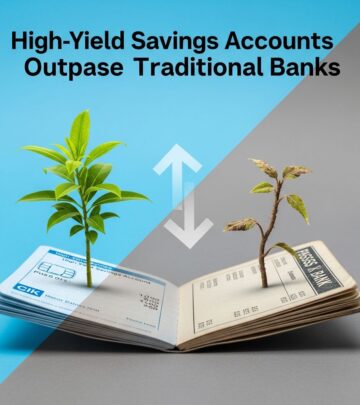
Discover how modern savings accounts outperform legacy banks significantly.

The landscape of personal savings has undergone a significant transformation over the past decade. While traditional brick-and-mortar banks have historically served as the default choice for consumers seeking to store and grow their money, the emergence of digital-first financial institutions has fundamentally disrupted this paradigm. Today’s savers face a critical decision: should they remain loyal to established banking institutions, or should they explore alternatives that consistently deliver superior returns on their deposits?
This question becomes increasingly urgent when examining the disparity between what conventional banks offer and what competing financial institutions provide. The difference in earning potential can translate to hundreds or even thousands of dollars over time, making the choice between banking options far more consequential than many consumers realize.
Understanding the Current Interest Rate Environment
Interest rates represent the compensation banks provide to depositors for allowing the institution to use their funds. When a bank advertises an Annual Percentage Yield (APY), it reflects the total interest earned over twelve months, accounting for compounding effects. This metric serves as the primary mechanism through which savers evaluate different savings vehicles.
The federal funds rate, which the Federal Reserve adjusts to influence broader economic conditions, indirectly impacts what banks offer depositors. However, different financial institutions interpret their obligations to customers differently. Some banks prioritize customer acquisition and retention by offering competitive rates, while others leverage their physical infrastructure as justification for lower returns.
Understanding this framework is essential because the implications are substantial. A savings account earning 0.01% APY will generate minimal returns regardless of deposit size, while accounts offering rates several hundred basis points higher create meaningful wealth accumulation opportunities.
The Limitations of Legacy Banking Institutions
Traditional banks, despite their ubiquity and brand recognition, often struggle to offer compelling savings products. Several structural factors contribute to this limitation:
- High operational overhead: Maintaining thousands of physical locations, staffing branches, and managing real estate creates substantial costs that must be recovered through reduced customer returns or higher fees.
- Dated technology infrastructure: Many established banks have legacy systems that require continuous maintenance and limit their ability to innovate rapidly.
- Regulatory burden: Larger institutions face more stringent compliance requirements and capital allocation mandates that affect profitability and customer offerings.
- Competitive complacency: Long-standing market dominance has historically reduced the pressure to offer market-leading rates.
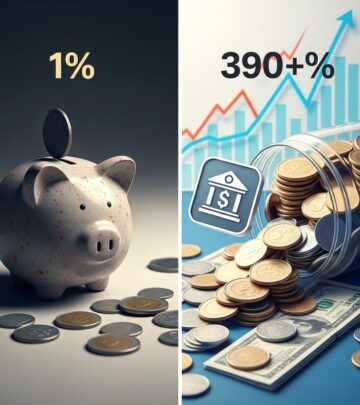
Consider a practical example: a traditional bank might offer 0.01% APY on basic savings accounts, with marginally higher rates of 0.05% APY available only to customers who maintain substantial minimum balances or link multiple accounts. These tiers create barriers that exclude average savers from better returns while simultaneously failing to provide competitive compensation.
Beyond rate limitations, many traditional banks impose monthly maintenance fees that further erode returns. A $5 or $12 monthly fee might seem modest individually, but annually these charges represent a significant percentage of the interest earned on typical savings balances. For customers with modest deposits, fees can actually eliminate positive returns entirely.
The Rise of Digital-First Financial Institutions
Digital-first banks and online-only financial institutions have fundamentally restructured the economics of savings products. By eliminating physical branch networks and investing heavily in technology infrastructure, these companies operate with substantially lower overhead costs than traditional competitors.
This cost advantage translates directly to customer benefits through higher interest rates and lower or eliminated fees. The business model is straightforward: by passing savings to customers through superior rates, online banks attract deposits that generate revenue through lending and investment activities. This creates a positive feedback loop where competitive rates drive customer acquisition, which enables loan and investment revenue that justifies continued rate competitiveness.
Modern fintech companies have also introduced features that enhance the savings experience beyond raw interest rates. Goal-setting tools help customers visualize progress toward specific objectives. Automatic transfer features enable “pay yourself first” strategies. Mobile-first interfaces provide real-time account management. These innovations reflect a fundamentally different philosophy regarding customer relationships and product design.
Comparative Rate Analysis and Earning Potential
The numerical comparison between traditional and modern savings options reveals the magnitude of opportunity cost for remaining with legacy institutions.
| Account Type | APY Rate | Annual Earnings on $10,000 | Annual Earnings on $50,000 |
|---|---|---|---|
| Traditional Bank Standard | 0.01% | $1.00 | $5.00 |
| Traditional Bank Tiered (High Balance) | 0.05% | $5.00 | $25.00 |
| Online Bank Standard | 3.85% | $385.00 | $1,925.00 |
| Online Bank Premium (High Balance) | 4.00% | $400.00 | $2,000.00 |
These figures immediately illustrate the scale of difference. On a $50,000 deposit held for one year, the gap between a traditional bank’s standard offering (0.05% APY generating $25) and a competitive online bank (4.00% APY generating $2,000) amounts to $1,975 in foregone earnings. Over a five-year period, this gap compounds to approximately $10,000 or more, representing genuine wealth that remains uncaptured through suboptimal banking choices.
The opportunity cost becomes even more pronounced for customers with larger savings. Someone maintaining a $100,000 emergency fund in a traditional savings account earning 0.01% APY receives $10 annually, while the same balance in a 4.00% APY account generates $4,000—a difference of $3,990 per year.
Key Differentiators Among Modern Savings Alternatives
Not all digital-first institutions are identical, and evaluating options requires understanding several important distinctions:
Interest Rate Structure
Some institutions offer tiered rates where higher balances qualify for better APY. Others provide uniform rates regardless of balance size. Additionally, certain banks offer promotional rates for initial deposits or limited-time offers. Understanding whether rates are promotional or permanent affects long-term planning.
Account Features and Tools
Beyond raw interest rates, modern banks increasingly differentiate through features. Savings goal-tracking helps customers organize money toward specific objectives. Automatic transfer capabilities enable disciplined saving. Mobile app quality affects the user experience significantly. These features appeal particularly to customers who value technology and want savings to align with specific goals.
Deposit Insurance and Safety
All deposits in accounts at FDIC-insured institutions receive protection up to $250,000 per depositor per bank. This protection applies equally to traditional banks and online-only institutions, meaning choosing an online bank does not increase financial risk from an insurance perspective.
Integration with Checking Accounts
Some customers prefer maintaining both checking and savings with a single institution for simplicity. Modern banks increasingly offer competitive checking products alongside savings accounts, eliminating the need for account splitting across institutions.
Factors to Consider When Evaluating Switching Costs
Despite clear interest rate advantages of modern alternatives, some customers hesitate to switch from established institutions. Understanding the actual costs of transitions helps overcome inertia:
- Time investment: Opening a new account typically requires 10-15 minutes of online interaction, far less than many anticipate.
- Existing relationship complexity: If a customer has multiple products with their current bank, potential coordination benefits may exist, though often these are overstated.
- Direct deposit setup: Updating direct deposit instructions is straightforward and typically takes minutes through most employer systems.
- Recurring payment changes: Automatic bill payments may need updating, but most modern financial institutions facilitate this transition process.
The switching process itself has become increasingly frictionless. Most online banks offer seamless onboarding, account funding through instant transfers, and customer support designed to facilitate transitions from competitors.
Maximizing Returns Through Strategic Account Selection
Sophisticated savers often employ strategies to optimize total returns across their banking relationships. These approaches might include:
- Primary savings allocation: Directing the majority of savings to the institution offering the highest rate.
- Multi-account strategies: Utilizing multiple accounts at different institutions to organize money by purpose while capturing different rate offerings.
- Rate monitoring: Periodically reviewing rates at various institutions and redeploying funds when competitive advantages shift.
- Promotional bonus capture: Moving deposits to capture welcome bonuses offered by banks seeking new customer acquisition.
These approaches require minimal effort in the modern banking environment given that transferring money between institutions is nearly instantaneous and free through ACH transfers.
The Technology Advantage Beyond Interest Rates
Modern banks have invested extensively in technology that enhances the savings experience. Many offer tools that traditional institutions are only beginning to implement:
Real-time notifications: Customers receive alerts when interest is credited or when specified balance thresholds are reached, enabling active engagement with their accounts.
Spending and savings analytics: Integrated dashboards show customers their savings progress relative to goals and provide insights into their financial behavior.
Automated optimization: Some platforms automatically sweep idle funds into higher-yield vehicles when balances exceed certain thresholds.
Seamless transfers: Moving money between institutions or within the same bank happens in minutes rather than days, providing flexibility that older systems cannot match.
Common Misconceptions About Online Banking
Several persistent myths prevent consumers from taking advantage of better savings opportunities:
Myth: Online banks are less safe than traditional banks. Reality: FDIC insurance protection applies equally. Online banks are subject to identical regulatory oversight as traditional competitors.
Myth: You cannot access your money when you need it. Reality: Modern online banks offer 24/7 access, instant transfers, and in many cases debit cards tied to savings accounts.
Myth: Customer service is inferior at online institutions. Reality: Many digital-first banks provide chat support, phone support, and email assistance that rivals or exceeds traditional institutions.
Myth: Rates at online banks will suddenly collapse. Reality: Competitive market forces and business models designed around rate competitiveness create sustainable rate advantages.
Making the Transition: Practical Steps Forward
For customers considering switching to higher-yield alternatives, a straightforward process facilitates the transition:
- Research current rates at multiple online banks to identify the best option for your needs.
- Gather required documentation (typically just identification and Social Security number).
- Complete online account opening, which usually takes less than 15 minutes.
- Fund the new account through ACH transfer or external transfer.
- Update direct deposit instructions with your employer if applicable.
- Redirect automatic bill payments to the new account.
- Monitor the new account for several weeks to ensure seamless operation.
Throughout this process, customers can maintain their traditional bank account until comfortable with the transition, eliminating risk and reducing transition anxiety.
Frequently Asked Questions
Will switching to an online bank affect my credit score?
No. Opening a savings account does not appear on credit reports or affect credit scores, as savings accounts are not credit products. Only credit-related activities (loans, credit cards, etc.) impact credit ratings.
What happens if an online bank fails?
Deposits are protected up to $250,000 through FDIC insurance. If an institution fails, the FDIC compensates depositors up to this limit, ensuring deposits remain safe regardless of the bank’s financial situation.
Can I maintain multiple savings accounts?
Yes. There is no limitation on the number of savings accounts you can maintain. Many customers maintain multiple accounts at different institutions to organize savings by purpose and capture various rate offerings.
How quickly do I earn interest?
Interest accrues daily in most modern savings accounts and is typically credited monthly, quarterly, or annually depending on the institution’s structure.
Are there penalties for withdrawals?
Savings accounts have no withdrawal limits or penalties. However, federal regulations historically limited transfers to six per month, though this restriction has been relaxed by most institutions.
Conclusion: The Financial Case for Modern Banking Alternatives
The disparity between interest rates offered by traditional banks and competitive online alternatives represents a concrete financial opportunity. The decision to remain with a legacy institution versus transitioning to a modern alternative is fundamentally a decision about personal wealth accumulation.
Given that switching involves minimal effort and no financial risk, while the potential returns improvement is substantial and measurable, the case for evaluation is compelling. Even customers with modest savings can capture meaningful improvements in returns through straightforward account transitions. For those with larger savings balances, the opportunity cost of inaction can measure in thousands of dollars annually.
The modern financial landscape offers consumers unprecedented ability to optimize their banking decisions. By understanding the options available and taking advantage of superior alternatives, savers can meaningfully improve their financial outcomes without accepting increased risk or sacrificing convenience.
References
- Wells Fargo Savings Account Interest Rates — Bankrate. 2026-03-05. https://www.bankrate.com/banking/savings/wells-fargo-savings-rates/
- Savings and Certificate of Deposit (CD) Interest Rates — Wells Fargo Bank, N.A. 2026-03-28. https://www.wellsfargo.com/savings-cds/rates/
- Best High-Yield Savings Accounts for March 2026 — NerdWallet. 2026-03-18. https://www.nerdwallet.com/banking/best/high-yield-online-savings-accounts
- FDIC Deposit Insurance Coverage — Federal Deposit Insurance Corporation. https://www.fdic.gov/resources/deposit-insurance/
Similar Articles








Read full bio of Sneha Tete