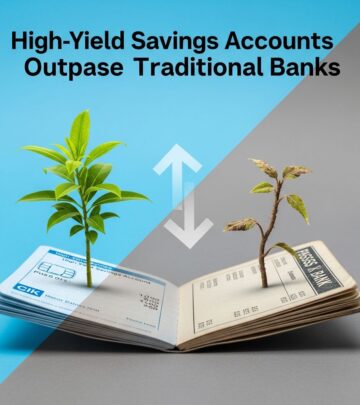
High-Yield Savings Accounts Outpacing Traditional Banks
Discover how modern online savings accounts are delivering superior returns compared to conventional banking options.

The landscape of personal savings has undergone a significant transformation in recent years, with digital-first financial institutions fundamentally reshaping how consumers earn returns on their deposits. Traditional brick-and-mortar banks, which have historically dominated the retail banking sector, are finding themselves increasingly challenged by agile online competitors offering substantially higher interest rates on savings accounts. This shift reflects broader changes in the financial services industry, where technological innovation and reduced operational overhead enable newer entrants to pass superior value directly to customers.
The disparity between what consumers can earn through conventional banking channels and what online-only institutions offer has reached historic levels. While major national banks continue to offer returns that barely keep pace with inflation, a new generation of financial technology companies and specialized online banks are delivering rates that are multiples higher. Understanding this competitive landscape has become essential for anyone seeking to optimize their savings strategy and build financial security.
The Widening Performance Gap Between Banking Models
The fundamental difference between traditional banks and modern online savings institutions stems from their cost structures and business models. Conventional banks maintain extensive physical infrastructure—brick-and-mortar branches, administrative staff, and associated overhead—that requires substantial funding. These costs are ultimately passed along to customers through lower deposit rates and higher fees. In contrast, online-only financial institutions operate with minimal physical presence, allowing them to allocate resources more efficiently toward customer returns.
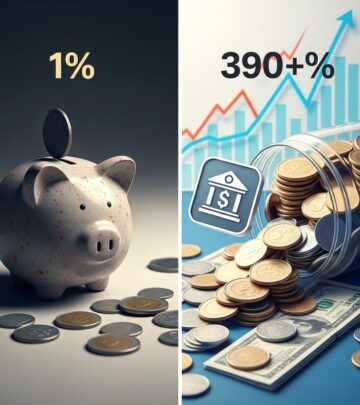
The Federal Deposit Insurance Corporation (FDIC) publishes regular surveys tracking the national average savings account rate, which currently hovers near historical lows. Meanwhile, leading online banks are offering rates that represent seven to eight times the national average. This multiplication effect demonstrates how significantly the competitive environment has shifted in favor of digitally-native consumers willing to move their money away from familiar national brands.
Several structural factors contribute to this gap:
- Reduced operational costs associated with digital-only operations
- Lower customer acquisition expenses through targeted online marketing
- Elimination of physical branch maintenance and staffing requirements
- More efficient use of deposit capital in lending and investment portfolios
- Ability to quickly adjust rates in response to market conditions
Understanding Annual Percentage Yield (APY) and Rate Structures
When evaluating savings account options, the Annual Percentage Yield (APY) represents the actual return a depositor will receive over a twelve-month period, accounting for the effect of compound interest. This metric differs from the simple interest rate by reflecting how frequently interest compounds and is credited to an account. For savings products, understanding APY is crucial because it enables accurate comparison across different institutions regardless of their internal compounding schedules.
Many high-yield savings accounts structure their rates in ways that affect the actual returns earned. Some institutions offer variable rates that can change monthly or quarterly in response to broader interest rate movements. Others provide tiered structures where rates depend on account balance levels—higher balances may earn premium rates while smaller balances receive lower returns. Several institutions combine their base APY with promotional bonuses or APY boosts available for limited periods, typically one to six months.
Current market leaders are demonstrating several distinct rate architecture approaches:
| Account Structure Type | Typical Use Case | Consideration |
|---|---|---|
| Simple Variable Rate | Straightforward deposit with no conditions | Rate subject to change; transparency about adjustments |
| Balance-Tiered Rates | Larger deposits seeking premium returns | Lower balances may earn reduced rates |
| Promotional Bonus Period | Temporary rate enhancement for new customers | Rate reverts to base after bonus period expires |
| Deposit-Requirement Linked | Rates conditional on direct deposit activity | Must maintain qualifying transactions monthly |
Premium Offerings From Market Leaders
The current competitive tier includes several institutions consistently offering rates in the 4.2% to 5.0% range. These institutions represent different categories—some are technology-focused fintech companies, others are traditional banks that have adapted their digital strategies, and a few are specialized savings-focused institutions.
Leading providers by APY include:
- Varo Money — Offers up to 5.00% APY on balances up to $5,000, though earning the maximum rate requires meeting specific direct deposit requirements. This represents the current market-leading rate and appeals to customers prioritizing maximum returns on modest balances.
- Axos Bank — Delivers up to 4.21% APY with the Axos ONE savings account, applicable to balances up to $249,999. This option suits larger savers and requires a $1,500 minimum balance combined with monthly direct deposit activity.
- Newtek Bank — Provides 4.20% to 4.35% APY through its Personal High Yield Savings account with no minimum deposit requirement and no monthly fees. This accessibility makes it particularly attractive for savers at any level.
- Wealthfront — Rounds out the premium tier at 4.20% APY, offering competitive returns through its technology-driven advisory platform.
Each of these options requires evaluating personal circumstances, as the “best” choice depends on balance size, direct deposit frequency, and account management preferences. Smaller savers might prioritize maximum APY regardless of balance caps, while larger account holders may prefer institutions with higher balance thresholds and no qualifying deposit requirements.
Additional Strong Performers Worth Considering
Beyond the market leaders, numerous institutions continue to offer compelling rates and features that merit consideration depending on individual priorities. LendingClub provides a 4.00% APY account with no minimum deposit requirement, appealing to those seeking simplicity without balance restrictions. Barclays delivers a tiered savings structure with rates up to 3.85% APY plus a $200 welcome bonus for new customers, combining competitive returns with established banking credentials.
EverBank offers 3.90% APY with no minimum balance requirement, and integrates performance savings with money market accounts and interest-bearing checking options. This integration appeals to consumers seeking comprehensive banking solutions within a single institution. Capital One 360 provides 3.30% APY with in-person customer service access through Capital One retail locations, addressing the preferences of customers who occasionally require face-to-face banking interaction.
CIT Bank presents multiple savings products, including its Platinum Savings account offering 3.75% APY with a $5,000 minimum balance. The multi-product approach allows customers to optimize across different account types and balance levels. Peak Bank and Openbank each deliver competitive rates in the 4.0% to 4.09% range with low minimum deposits, making them accessible entry points for new high-yield savers.
Minimum Deposit Requirements and Accessibility
One critical distinction among high-yield savings accounts involves the minimum deposit requirements needed to open accounts and maintain premium rates. These requirements range dramatically across institutions, from zero minimum deposits to requirements of $5,000 or higher. Understanding these thresholds helps consumers identify institutions that accommodate their current financial situation.
No-minimum-deposit accounts have become increasingly common among competitive online banks, recognizing that accessibility attracts broader customer bases. Institutions like Newtek Bank and SoFi have eliminated minimum deposit barriers entirely, allowing customers to start earning competitive rates with any deposit amount. This democratization of high-yield savings has expanded access beyond traditionally wealthy customers.
Conversely, some institutions maintain meaningful minimum deposits tied to rate guarantees. The rationale typically involves risk management and operational efficiency—ensuring that account holders carry sufficient balances to justify the costs of account administration and regulatory compliance. Customers with smaller savings amounts can still access these accounts but may earn lower promotional rates until balances reach qualifying thresholds.
Monthly Fees, Service Charges, and Hidden Costs
A defining characteristic of modern high-yield savings accounts is the elimination of monthly maintenance fees that plagued traditional banking products for decades. Most competitive online options explicitly state zero monthly fees, recognizing that fee elimination represents a significant customer value proposition. This differs markedly from traditional banks where savings accounts routinely carried $3-5 monthly service charges, creating substantial drag on returns over time.
However, certain institutions tie premium rates to subscription services. SoFi offers an APY boost when customers subscribe to SoFi Plus, which carries a $10 monthly fee. The mathematics of this arrangement must be evaluated individually—for larger account balances, the boost might more than offset the subscription cost, while smaller savers might find the standard APY without subscription more economical.
Additional service considerations include overdraft protection, transfer fees, and early withdrawal penalties. Most modern high-yield savings accounts impose no penalties for transfers or withdrawals, maintaining the liquidity that distinguishes savings accounts from certificate of deposit (CD) products. Overdraft services vary by institution; some offer overdraft protection linked to connected checking accounts, while others assess standard overdraft fees if available.
Direct Deposit Requirements and Rate Qualifications
An increasingly common feature among competitive savings accounts involves linking premium rates to direct deposit activity. Institutions implement these requirements as mechanisms to increase customer engagement and reduce funding costs. When customers receive regular direct deposits, the institution gains predictable liquidity and enhanced customer loyalty.
Direct deposit requirements typically specify minimum monthly deposit amounts—commonly ranging from $500 to $2,500—or require qualifying transactions to occur within specific timeframes. Meeting these requirements remains straightforward for employed individuals with regular paycheck deposits, but presents challenges for self-employed individuals, retirees, or those with irregular income patterns.
For customers unable to meet direct deposit qualifications, alternative paths to premium rates often exist. Some institutions allow rate qualification through alternative direct deposit sources, including regular transfers from external accounts, while others offer base rates slightly below the premium tier but still superior to traditional banking alternatives. Careful review of qualification terms ensures consumers understand which rate structures match their actual banking patterns.
Variable Rates, Market Responsiveness, and Future Outlook
An essential consideration for high-yield savings account investors involves understanding that virtually all current offerings feature variable rates subject to change. Unlike certificate of deposit products that lock in rates for specified terms, savings account rates can adjust upward or downward based on Federal Reserve policy and competitive market conditions.
The current high-rate environment reflects elevated interest rates established by the Federal Reserve to combat inflation. If macroeconomic conditions shift and the Federal Reserve begins reducing its benchmark rate, banks will likely decrease savings rates correspondingly. This reality suggests that current 4.2-5.0% rates may not persist indefinitely, making the present environment particularly opportune for depositing funds.
Competitive intensity will continue driving rates as long as multiple institutions compete for deposits. Should the competitive landscape consolidate—through mergers, institutions withdrawing from the savings account market, or reduced competitive pressure—rates might compress downward. Consumers should view today’s premium rates as a window of opportunity rather than a permanent feature.
Integration with Broader Financial Planning
High-yield savings accounts function as foundational components within comprehensive financial strategies. Emergency funds benefit particularly from high-yield savings placement, as the superior returns on easily-accessible deposits create a meaningful advantage compared to traditional alternatives. A three-to-six-month emergency fund earning 4.5% APY rather than 0.4% generates substantial additional returns while maintaining the liquidity that defines emergency fund requirements.
Short-term savings goals—down payments for vehicles, home repairs, vacation planning—likewise benefit from high-yield placement. The combination of competitive returns, deposit insurance protection, and immediate access makes these accounts ideal staging areas for near-term financial objectives.
Many institutions now offer integrated products combining high-yield savings with checking accounts, money market accounts, and certificate of deposit options. This integration allows customers to optimize across multiple products—holding emergency reserves in high-yield savings while parking longer-term funds in certificates of deposit offering slightly higher rates in exchange for liquidity restrictions.
Frequently Asked Questions
What makes online banks able to offer higher rates than traditional banks?
Online institutions eliminate expensive physical branch networks and associated overhead, redirecting those savings toward customer deposit rates. Reduced operational costs enable them to offer substantially higher APY while maintaining profitability.
Are deposits in online banks protected by FDIC insurance?
Yes, deposits in FDIC-insured online banks receive identical coverage as traditional banks—up to $250,000 per depositor per institution. FDIC insurance protects against bank failure regardless of whether the institution operates online or maintains physical branches.
Can savings account rates decrease after I open an account?
Yes, virtually all high-yield savings rates are variable and subject to change at any time. Institutions typically provide notice before decreasing rates, allowing customers to evaluate alternatives if desired.
How do tiered rate structures work?
Tiered rates apply different APY percentages to different balance ranges. A customer might earn 4.5% on balances up to $250,000 and a slightly lower rate on balances exceeding that threshold, with the institution calculating interest based on which tier each portion of their balance occupies.
What’s the difference between APY and APR in savings accounts?
APY (Annual Percentage Yield) reflects the actual return including compound interest effects, while APR (Annual Percentage Rate) shows the simple interest rate. For savings products, APY provides the more accurate picture of actual earnings.
Making Your Decision
Selecting among competitive high-yield savings accounts requires evaluating personal priorities and financial circumstances. Customers with modest balances and regular direct deposits might prioritize Varo Money’s maximum 5.0% rate despite balance limitations. Those with larger account balances might prefer Axos Bank’s 4.21% rate extending to $249,999. Customers prioritizing accessibility and no minimum deposits should consider Newtek Bank’s 4.35% offering or LendingClub’s 4.0% option.
The current competitive environment provides unprecedented opportunity for savers to dramatically improve returns on accessible funds. The disparity between traditional banking rates and modern high-yield alternatives justifies the minimal effort required to transition deposits to superior-performing accounts. Given that deposit insurance protection remains identical across institutions, and that accessibility is preserved, the mathematical case for prioritizing high-yield accounts over traditional banking becomes compelling.
References
- Best High-Yield Savings Accounts for March 2026 — Fortune. March 25, 2026. https://fortune.com/article/best-savings-account-rates-3-25-2026/
- Best High-Yield Savings Accounts for March 2026 — NerdWallet. March 2026. https://www.nerdwallet.com/banking/best/high-yield-online-savings-accounts
- Best High-Yield Savings Accounts Of March 2026 — Up to 4.21% — Bankrate. March 2026. https://www.bankrate.com/banking/savings/best-high-yield-interests-savings-accounts/
- Federal Deposit Insurance Corporation Deposit Insurance Overview — FDIC. https://www.fdic.gov/resources/deposit-insurance/
- Understanding Annual Percentage Yield (APY) — Consumer Financial Protection Bureau. https://www.consumerfinance.gov/ask-cfpb/
Similar Articles








Read full bio of medha deb