High-Yield Savings Accounts Outpace Traditional Banks
Discover how online savings accounts deliver superior returns compared to major bank offerings.
The landscape of personal savings has undergone a dramatic transformation over the past decade. While traditional banking institutions continue to dominate the physical landscape with their brick-and-mortar branches, a new generation of online financial platforms has fundamentally disrupted how consumers approach savings. The disparity in interest rates between conventional banks and their modern counterparts has reached unprecedented levels, making the choice of where to deposit your savings more consequential than ever.
Understanding the Current Rate Environment
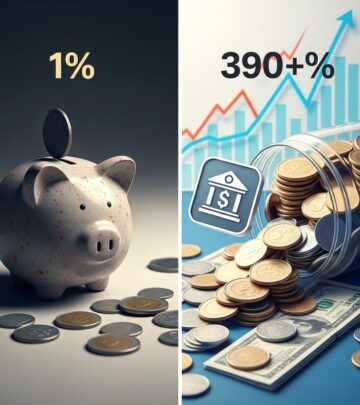
The current interest rate climate presents both challenges and opportunities for savers. As of March 2026, the national average for savings accounts hovers around 0.39% to 0.6% annually. This represents a stark contrast to the high-yield options now available in the marketplace. Leading institutions are offering rates that reach 5.00% APY, meaning your money could earn more than ten times the national average.
This substantial gap reflects fundamental differences in how banks operate and allocate their resources. Traditional banking institutions, with their extensive branch networks and overhead costs, must distribute customer deposits across multiple revenue streams and operational expenses. Online platforms, by contrast, minimize physical infrastructure and redirect those savings into competitive interest rates, directly benefiting depositors.
The Top Performers in Today’s Market
Several financial institutions have emerged as leaders in offering competitive savings rates. Understanding the landscape of available options helps consumers make informed decisions about where their money can work hardest.
Premium Rate Offerings
The highest tiers of savings accounts currently available demonstrate what modern financial technology can deliver. Varo Money leads the field with rates reaching 5.00% APY, establishing the benchmark for competitive savings returns. Axos Bank follows closely with up to 4.21% APY, while Newtek Bank and Wealthfront both offer 4.20% APY. These rates represent what savvy consumers can access when they’re willing to move beyond traditional banking relationships.
The appeal of these rates extends beyond simple mathematics. A $10,000 deposit earning 5.00% would generate $500 in annual interest, compared to just $39 at the national average. Over five years, this difference compounds to thousands of dollars in additional wealth accumulation.
Mid-Tier and Accessible Options
Not every high-yield savings account requires substantial deposits or complex qualification criteria. Several institutions bridge the gap between premium rates and accessibility:
- CIT Bank offers 4.10% APY with a minimum balance of just $100
- Bask Bank provides up to 4.00% APY with a $10,000 minimum requirement
- Barclays delivers 3.85% APY with no minimum deposit
- SoFi Bank allows customers to earn up to 4.00% APY when certain qualifications are met
- Marcus by Goldman Sachs offers 3.65% APY with no minimum balance
This diversity of options ensures that virtually any saver, regardless of their initial deposit amount or financial situation, can access rates substantially above national averages.
Breaking Down the Rate Advantage
| Account Type | Typical APY | Annual Interest (on $10,000) | Earnings Multiple vs. National Avg. |
|---|---|---|---|
| National Average Savings | 0.39% – 0.60% | $39 – $60 | 1x |
| Traditional Bank Savings | 0.50% – 1.00% | $50 – $100 | 1.3x |
| Mid-Range High-Yield | 3.65% – 4.10% | $365 – $410 | 6x – 10x |
| Premium High-Yield | 4.20% – 5.00% | $420 – $500 | 11x – 13x |
This comparison illustrates the substantial financial impact of account selection. Over a decade, the difference between a 0.50% savings account and a 4.50% account could exceed $4,000 on an initial $10,000 deposit, even before accounting for reinvested interest.
Key Features Beyond Interest Rates
While interest rates form the primary basis for comparison, several additional factors distinguish leading high-yield savings accounts from their conventional competitors.
Fee Structures
Most competitive high-yield savings accounts eliminate monthly maintenance fees entirely. This absence of fees means the full interest rate applies to your balance without deductions. Traditional banks frequently charge monthly fees ranging from $5 to $15, which can significantly erode returns on smaller balances.
Deposit Requirements
Modern online savings accounts have largely abandoned significant minimum deposit requirements. Many leading accounts require no minimum deposit whatsoever or only $100 to earn the advertised rate. This democratization of high-yield savings makes superior returns accessible to casual savers, not just those with substantial capital.
Account Access and Features
Digital banking platforms offer features that extend beyond simple interest accrual. Many accounts feature:
- Unlimited transfers and withdrawals without penalties
- Connected checking accounts that also earn interest
- Organizational tools like “savings vaults” for goal-based saving
- Instant online account opening with minimal documentation
- Mobile applications for complete account management
Why Traditional Banks Can’t Compete on Rates
The structural disadvantages facing traditional banks explain their inability to match high-yield rates. These institutions must maintain:
- Physical branch locations requiring real estate, utilities, and staffing
- Extensive customer service infrastructure with telephone and in-person support
- Legacy technology systems requiring continuous maintenance and updates
- Diversified business models supporting investment banking, lending, and wealth management divisions
- Higher regulatory compliance costs associated with their regulatory complexity
Online-first financial institutions eliminate most of these expenses, allowing them to redirect a larger percentage of deposits back to customers through competitive interest rates.
Safety and Security Considerations
A common concern among savers considering non-traditional banks involves account safety. The Federal Deposit Insurance Corporation (FDIC) protects deposits up to $250,000 at member institutions, regardless of whether the bank operates physical branches. Nearly all leading high-yield savings accounts hold FDIC membership, providing identical protection to traditional banking relationships.
Online security technologies employed by modern financial institutions often exceed those found at traditional banks. Multi-factor authentication, encryption protocols, and fraud monitoring systems protect accounts from unauthorized access.
Strategies for Maximizing Your Savings Returns
Tiered Deposit Strategy
Sophisticated savers often maintain accounts across multiple institutions to maximize rates while respecting FDIC insurance limits. Dividing deposits among several high-yield accounts ensures that each $250,000 segment receives maximum insurance coverage while accessing the highest available rates across different providers.
Rate Monitoring and Switching
Interest rates fluctuate based on market conditions and competitive pressures. Successful savers review their account rates quarterly and transition deposits when better opportunities emerge. Modern online banking makes such transfers painless, typically requiring just a few clicks.
Taking Advantage of Promotional Bonuses
Several institutions offer introductory bonuses for new account holders. These bonuses may include cash rewards, elevated APY rates, or rate boosts that apply for limited periods. Strategic timing of account openings can substantially enhance returns.
The Long-Term Wealth Impact
The seemingly modest annual percentage yields deliver substantial cumulative benefits over time. Consider a saver maintaining $50,000 in reserves:
- At 0.50% APY (traditional bank average): $250 annual interest
- At 4.00% APY (high-yield average): $2,000 annual interest
- Annual difference: $1,750
- Five-year difference: approximately $8,750 (before compounding)
- Ten-year difference: approximately $17,500 (before compounding)
When compound interest is factored in, these differences become even more pronounced. The choice of savings vehicle represents one of the highest-return financial decisions available to average consumers.
Frequently Asked Questions
Q: Are high-yield savings accounts completely safe?
A: Yes, FDIC-insured high-yield accounts provide identical safety to traditional banks, with coverage up to $250,000 per depositor per institution.
Q: How quickly can I access my money in a high-yield savings account?
A: Most high-yield accounts allow unlimited transfers and provide access to deposited funds within one to two business days, often faster than traditional banks.
Q: Will rates stay at current levels?
A: Interest rates fluctuate with market conditions. Current rates may decline as monetary policy adjusts, making it important to lock in competitive rates when available.
Q: What’s the catch with these high rates?
A: High-yield accounts achieve competitive rates through operational efficiency rather than hidden costs. No catch exists; the rates reflect genuine business model advantages.
Q: Can I lose money in a high-yield savings account?
A: As FDIC-insured deposits, high-yield savings accounts cannot lose principal. Your balance remains guaranteed up to $250,000.
Making the Transition
Switching from traditional banking to high-yield savings involves straightforward steps. Most online banks facilitate transfers from existing accounts, often providing deposit verification within days. The process typically requires just an initial online application, minimal documentation, and authorization of your first transfer.
No penalties attach to closing traditional savings accounts. Banks anticipate that some customers will migrate to competitors offering superior rates.
Conclusion: Taking Control of Your Financial Future
The availability of high-yield savings accounts fundamentally changes how consumers should approach cash management. The gap between traditional banking rates and modern alternatives has become too significant to ignore. Even conservative savers who keep money in accessible savings accounts—rather than investing in stocks or bonds—can dramatically improve their financial outcomes by simply choosing the right account.
The financial institutions leading the high-yield market have demonstrated that competitive rates and customer-friendly practices can coexist with profitability. By leveraging online-first business models, these banks prove that savers no longer need to sacrifice returns to maintain flexibility and safety in their emergency funds or short-term savings.
The question facing today’s savers is not whether high-yield alternatives exist—they clearly do—but rather which option best aligns with individual financial goals, deposit amounts, and banking preferences. Taking action to evaluate and transition savings represents one of the quickest wins available in personal finance management.
References
- Top high-yield savings rates: Up to 5.00% on March 25, 2026 — Fortune. 2026-03-25. https://fortune.com/article/best-savings-account-rates-3-25-2026/
- Best High-Yield Savings Accounts Of March 2026 – Up to 4.21% — Bankrate. 2026-03. https://www.bankrate.com/banking/savings/best-high-yield-interests-savings-accounts/
- Best High-Yield Savings Accounts for March 2026 — NerdWallet. 2026-03. https://www.nerdwallet.com/banking/best/high-yield-online-savings-accounts
- Account Rates for Savings, Checking, CDs & IRAs — Bank of America. Federal Deposit Insurance Corporation. https://www.fdic.gov/resources/deposit-insurance/


Read full bio of medha deb