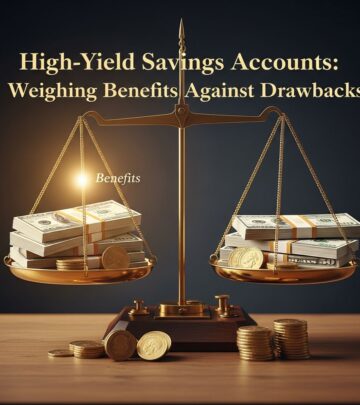
High-Yield Savings Accounts: Benefits and Drawbacks
Discover how high-yield savings accounts can supercharge your savings with superior rates while navigating their unique limitations for smarter financial planning.

High-yield savings accounts provide a powerful tool for individuals seeking to grow their money more effectively than with standard savings options. These accounts typically deliver annual percentage yields (APYs) several times higher than traditional ones, often reaching 4% or more, compared to the national average of about 0.60%.
Understanding the Fundamentals of High-Yield Savings
At their core, high-yield savings accounts function similarly to regular savings accounts but stand out due to their elevated interest rates. When you deposit funds, interest begins accruing immediately, usually on a daily basis, and compounds monthly, allowing earnings on both the principal and accumulated interest. This compounding effect accelerates growth over time, making them suitable for anyone prioritizing low-risk accumulation.
Banks promote these accounts using APY, which reflects the true yearly return including compounding. Unlike fixed-rate products, these rates are variable and can fluctuate with market conditions, influenced by the Federal Reserve’s policies.
Key Advantages That Make Them Stand Out
These accounts offer several compelling features that appeal to savers at various life stages.
- Superior Earnings Potential: With APYs often 5-10 times higher than traditional accounts, your money works harder. For instance, rates can hit 4%-4.20%, far exceeding the 0.01%-0.05% of standard options.
- Federal Safety Net: Deposits are FDIC-insured up to $250,000 per depositor, per bank, per ownership category, shielding your funds if the institution fails.
- Flexible Access: Funds remain liquid without penalties for withdrawals, ideal for emergencies or short-term goals like vacations or home down payments.
- Minimal Costs: Many have no monthly fees or low minimum balances, sometimes $0, reducing barriers to entry.
- Online Convenience: Primarily offered by online banks, they enable quick setup and 24/7 management via apps.
Potential Shortcomings to Consider
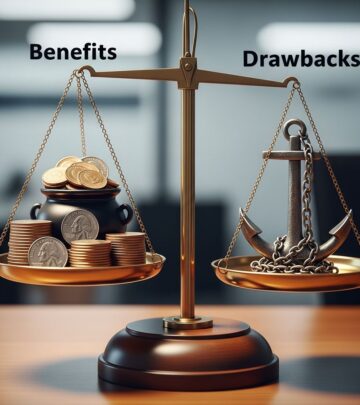
Despite their strengths, high-yield savings accounts aren’t without limitations that could impact certain users.
- Rate Volatility: APYs can change frequently, potentially dropping if economic conditions shift, unlike locked rates in CDs.
- Withdrawal Restrictions: Federal rules historically limited transactions to six per month, though some banks now enforce stricter policies or convert accounts upon excess activity.
- No Branch Access: Online-only nature means no in-person service, which may inconvenience those preferring physical interactions.
- Tiered Structures: Some accounts apply higher rates only to larger balances, reducing benefits for smaller deposits.
- Opportunity Cost: While safe, they offer lower long-term returns than investments like stocks.
Comparing High-Yield Options to Alternatives
To determine fit, evaluate against other savings vehicles using this comparison table:
| Feature | High-Yield Savings | Traditional Savings | Money Market Account | Certificate of Deposit |
|---|---|---|---|---|
| Typical APY | 4%-4.20% | 0.01%-0.05% | 0.5%-1% | 4%-4.20% (fixed) |
| Access to Funds | Limited withdrawals | Limited withdrawals | Limited, often with checks | Locked until maturity |
| Minimum Balance | Often $0 | Varies $0-$1,000+ | Usually higher | $500-$1,000+ |
| Monthly Fees | Usually $0 | $5-$15 possible | Possible if balance low | Usually $0 |
| FDIC Insured | Yes | Yes | Yes | Yes |
| Rate Type | Variable | Variable | Variable | Fixed |
This table highlights high-yield savings as balancing yield and liquidity better than CDs for non-long-term needs, while outperforming traditional accounts in returns.
Ideal Scenarios for Using These Accounts
They excel for specific purposes where safety and modest growth align.
- Emergency Funds: Keep 3-6 months of expenses accessible yet earning interest securely.
- Short-Term Goals: Target milestones like car purchases or travel within 1-5 years without market risk.
- Parking Cash: Temporarily hold funds between investments, benefiting from yields while awaiting opportunities.
Avoid them for long-term retirement, where stocks historically outperform despite volatility.
Strategies to Maximize Your Returns
To optimize these accounts:
- Shop Around: Compare APYs across FDIC-insured online banks; even 0.5% differences compound significantly.
- Leverage Multiple Accounts: Use tiered or separate accounts for different goals to capture best rates.
- Automate Deposits: Set recurring transfers to harness dollar-cost averaging and compounding.
- Monitor Rates: Switch if a competitor offers better terms, as no lock-in applies.
- Combine with Laddering: Pair with CDs for blended liquidity and fixed yields.
Frequently Asked Questions
What is the current average APY for high-yield savings accounts?
Rates typically range from 4% to 4.20%, well above traditional averages.
Are high-yield savings accounts safe?
Yes, when FDIC-insured, protecting up to $250,000 per depositor.
Can I lose money in a high-yield savings account?
No, principal is safe with FDIC coverage, though inflation may erode purchasing power.
How often do rates change?
Variable rates adjust with market conditions, often monthly or as Fed decisions occur.
Do I need a large deposit to qualify for high rates?
Many have no minimums, but tiered rates may reward larger balances.
Navigating Taxes and Inflation Impacts
Interest earned is taxable as ordinary income, reported on Form 1099-INT. Estimate impacts using tools from the IRS website. Inflation, around 2-3% annually, can reduce real returns if APYs dip below it, underscoring the need for periodic reviews.
Steps to Open and Manage Effectively
- Verify FDIC insurance on the bank’s site.
- Compare APYs, fees, and minimums via aggregator tools.
- Gather ID, SSN, and funding source.
- Open online in minutes and link external accounts.
- Automate contributions and track via app.
Regular maintenance ensures alignment with goals.
References
- What is a High Yield Savings Account and How Do They Work? — PNC Bank. 2024. https://www.pnc.com/insights/personal-finance/save/what-is-a-high-yield-savings-account.html
- What Is a High-Yield Savings Account? — TD Bank. 2024. https://www.td.com/us/en/personal-banking/learning/what-is-a-high-yield-savings-account
- How a High-Yield Savings Account Works — Sallie Mae. 2024. https://www.salliemae.com/blog/how-a-high-yield-savings-account-works/
- What Is a High Yield Savings Account? Pros, Cons and How It Works — Synchrony Bank. 2024. https://www.synchrony.com/blog/bank/what-is-a-high-interest-savings-account
- What Is A High-Yield Savings Account? — Bankrate. 2024. https://www.bankrate.com/banking/what-is-a-high-yield-savings-account/
- Pros and Cons of a High-Yield Savings Account — Hancock Whitney. 2024. https://www.hancockwhitney.com/insights/pros-cons-high-yield-savings
Similar Articles








Read full bio of Sneha Tete