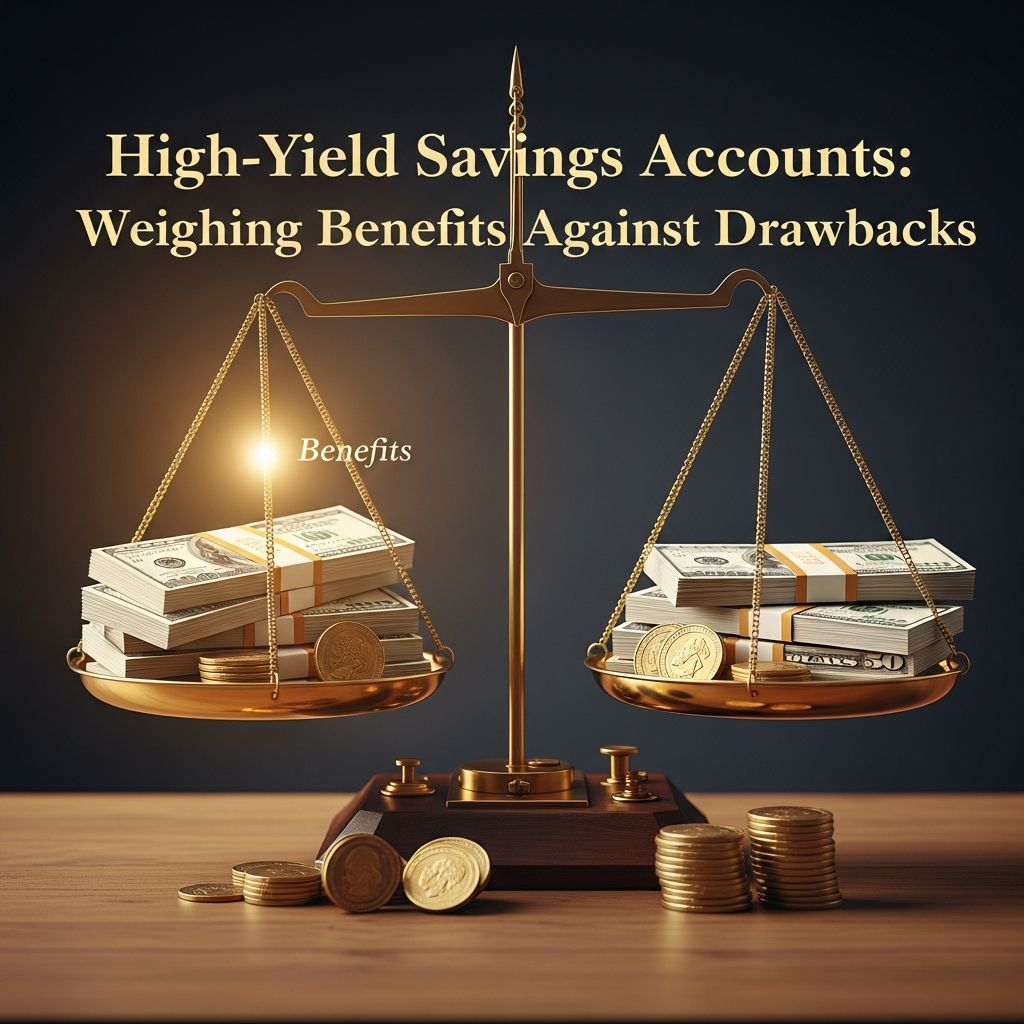
High-Yield Savings Accounts: Weighing Benefits Against Drawbacks
Understand the advantages and limitations of high-yield savings for your financial goals.
In an era where traditional savings accounts offer minimal returns, high-yield savings accounts have emerged as an increasingly popular option for individuals seeking to maximize their deposited funds. These accounts represent a middle ground between the safety of conventional banking and the growth potential typically associated with investment vehicles. Understanding both their strengths and limitations is essential for making informed financial decisions that align with your specific savings goals and risk tolerance.
Understanding the Fundamentals of High-Yield Savings
A high-yield savings account functions much like a standard savings vehicle, but with a critical distinction: it offers substantially elevated interest rates compared to traditional bank offerings. The annual percentage yield, commonly referred to as APY, demonstrates the total return you can expect over a twelve-month period when accounting for compound interest. This compounding effect means your earnings generate their own returns, creating an accelerating growth pattern over time.
The mechanics are straightforward. When you deposit funds into a high-yield savings account, the financial institution compensates you for maintaining your money with them by paying interest at a predetermined rate. Current market conditions have made these accounts particularly attractive, with many institutions offering APYs reaching approximately 4% or higher, compared to the national average of around 0.60% for traditional savings accounts.
Primary Advantages of High-Yield Savings Accounts
Superior Interest Rate Performance
The most obvious benefit is the dramatic difference in earning potential. By selecting a high-yield account, you can earn significantly more on identical principal amounts compared to conventional savings products. For example, a $10,000 deposit in a traditional account earning 0.05% APY would generate merely $5 annually, whereas the same amount in a 4% APY high-yield account would earn $400 yearly. Over a decade, this difference becomes exponential, with the high-yield account potentially accumulating substantially more wealth through compounding.
Inflation Protection Through Rate Alignment
Traditional savings accounts frequently fail to keep pace with inflation rates, meaning your money’s purchasing power gradually diminishes despite holding deposits. High-yield savings accounts with their elevated rates provide better alignment with inflationary trends, helping preserve the actual value of your savings. While no savings vehicle perfectly hedges inflation, these accounts offer considerably more protection than conventional alternatives.
Accessibility and Liquidity Without Penalties
Unlike certificates of deposit that require funds to remain locked away until maturity dates, high-yield savings accounts provide unrestricted access to your money. You can withdraw funds whenever needed without facing early withdrawal penalties or surrender charges. This flexibility makes these accounts ideal for individuals building emergency reserves or accumulating funds for near-term objectives. The combination of safety, growth, and accessibility creates a unique value proposition.
Robust Safety and Insurance Coverage
All reputable high-yield savings accounts carry Federal Deposit Insurance Corporation protection, safeguarding deposits up to $250,000 per depositor at each insured institution. This government-backed insurance means your funds remain protected even if the hosting bank experiences financial failure. This safety net eliminates the market risk associated with investment portfolios while still providing competitive returns.
Minimal Fee Structures
High-yield savings accounts typically charge substantially fewer fees than traditional banks. Many accounts feature zero monthly maintenance fees, no minimum balance requirements to avoid charges, and no penalties for routine transactions. This fee-light environment ensures more of your earned interest remains in your account rather than being consumed by administrative charges.
Streamlined Account Opening and Digital Management
Most high-yield savings accounts can be established entirely online within minutes. The digital-first approach of many providers eliminates geographic constraints and reduces administrative friction. Account management occurs through intuitive mobile applications and online platforms, providing real-time balance updates, transaction histories, and fund transfers.
Significant Limitations and Drawbacks
Variable Interest Rate Vulnerability
High-yield savings accounts feature variable interest rates that can fluctuate based on broader economic conditions and Federal Reserve policy decisions. When the central bank reduces interest rates, financial institutions typically lower their savings account rates correspondingly. This means the attractive APY that initially drew you to an account may decline substantially over time. Unlike certificates of deposit where rates lock in for the account’s duration, savers face ongoing rate uncertainty.
Withdrawal Limitations and Access Restrictions
Some high-yield savings accounts impose limits on the number of withdrawals permitted monthly, sometimes capping transactions at six per month. While regulations have relaxed compared to historical restrictions, certain institutions maintain withdrawal boundaries. For individuals requiring frequent access to funds or managing multiple financial obligations, these limitations can create operational inconveniences.
Inability to Outpace Investment Returns
Despite competitive rates compared to traditional accounts, high-yield savings accounts cannot match potential returns from diversified investment portfolios over extended timeframes. Stock market investments historically generate returns substantially exceeding savings account rates, though this comes with corresponding volatility and risk. For individuals with longer time horizons and higher risk tolerance, relying exclusively on savings accounts may represent a missed opportunity for wealth accumulation.
Minimum Balance Requirements at Select Institutions
While many high-yield providers waive minimum balance requirements, some institutions maintain thresholds for accessing optimal rates. Tiered-rate accounts structure different APYs based on balance levels, meaning you must maintain substantial deposits to qualify for the advertised highest rates. This creates a two-tiered outcome where smaller savers earn less favorable returns.
Inflation Erosion Despite Rate Advantages
Even with improved rates, high-yield savings account returns may not fully compensate for inflation in high-inflation environments. If inflation runs at 3% annually while your account earns 4% APY, you achieve only marginal real purchasing power gains. During periods of elevated inflation, the rate advantage narrows considerably.
Comparative Analysis with Alternative Savings Vehicles
| Account Type | Typical APY Range | Fund Access | Minimum Balance | Best Use Case |
|---|---|---|---|---|
| High-Yield Savings Account | 4%-4.20% | Unrestricted with possible withdrawal limits | Often $0 | Emergency funds, short-term savings goals |
| Traditional Savings Account | 0.01%-0.05% | Unrestricted | Varies ($0-$1,000+) | Day-to-day banking, minimal growth expectations |
| Certificate of Deposit | 4%-4.20% | Locked until maturity | Varies ($500-$1,000+) | Predictable savings with fixed timelines |
| Money Market Account | 3.5%-4% | Limited transactions monthly | Often $500+ | Moderate savings with checkbook features |
Ideal Applications for High-Yield Savings Accounts
High-yield savings accounts excel as repositories for emergency financial reserves. Financial advisors typically recommend maintaining three to six months of living expenses in accessible accounts, and high-yield vehicles accomplish this while generating meaningful returns. These accounts also serve well for accumulating funds designated for specific near-term purposes: down payments on homes, vehicle purchases, wedding expenses, or vacation funding.
Individuals with conservative financial philosophies who prioritize capital preservation alongside modest growth particularly benefit from these accounts. They provide a psychologically comfortable solution for those uncomfortable with market volatility but frustrated by traditional savings account inadequacy.
Situations Where High-Yield Savings May Disappoint
Those pursuing aggressive wealth-building strategies over decades will find high-yield savings limiting, as investment portfolios historically generate substantially superior long-term returns. Similarly, individuals expecting to maintain deposits for extended periods without accessing funds should evaluate certificates of deposit, which offer comparable rates with full rate guarantees.
People requiring unlimited transaction capabilities or frequent fund transfers may encounter frustrating withdrawal restrictions with certain providers. Additionally, savers in high-tax brackets should consider the tax implications, as interest earnings face federal and potentially state taxation.
Strategic Considerations for Account Selection
When evaluating specific high-yield savings accounts, prioritize APY over advertised features or brand recognition. Even fractional rate differences (0.5% variations) accumulate to hundreds of dollars over multi-year periods on substantial balances. Verify FDIC insurance coverage at your chosen institution and examine the provider’s rate adjustment history. Some institutions maintain more competitive rates than others during rate-declining environments.
Assess withdrawal frequency needs and any associated limitations before committing deposits. Consider whether tiered-rate structures apply and whether your expected balance qualifies for premium rates. Evaluate online platform quality, customer service responsiveness, and integration capabilities with your broader financial infrastructure.
Frequently Asked Questions
Are high-yield savings accounts genuinely safe?
Yes, FDIC-insured high-yield savings accounts provide government-backed protection up to $250,000 per depositor per account category. Your funds remain protected even if the hosting institution fails, making these accounts exceptionally safe compared to uninsured alternatives.
Can I withdraw money anytime from a high-yield savings account?
Generally yes, though some accounts limit monthly withdrawals to six transactions. Most providers allow unlimited online transfers and unrestricted ATM access, making these accounts functionally accessible despite occasional transaction caps.
How frequently do high-yield savings account rates change?
Rates adjust periodically based on Federal Reserve policy and competitive pressures among financial institutions. While not changing daily, rates can shift multiple times annually, making accounts subject to rate volatility.
Do high-yield savings accounts require substantial minimum deposits?
Many modern high-yield savings accounts require zero minimum balances to open and maintain accounts. However, some institutions impose minimums to access advertised rates, particularly for tiered-rate structures.
Should I move my entire emergency fund into a high-yield savings account?
Absolutely. High-yield accounts provide the optimal combination of safety, accessibility, and growth for emergency reserves. They offer superior returns compared to traditional savings while maintaining full liquidity for unexpected financial needs.
Conclusion: Finding Your Financial Fit
High-yield savings accounts represent a valuable tool within a comprehensive financial strategy, though they’re not universally appropriate for every objective or timeline. Their primary strength lies in delivering competitive returns on safe, accessible deposits—an appealing combination for short-term savings and emergency reserves. The elevated rates compared to traditional accounts create meaningful growth through compound interest, addressing one of savers’ primary frustrations.
However, the variable rate environment, potential withdrawal restrictions, and inability to match long-term investment returns present legitimate limitations. Success requires honestly assessing your financial timeline, risk tolerance, and specific savings objectives. For emergency funds and near-term goals, high-yield savings accounts deliver exceptional value. For longer-term wealth accumulation, diversified investment approaches likely serve better. Many financially sophisticated individuals employ high-yield savings accounts as one component within a diversified strategy, utilizing them for specific designated purposes rather than as comprehensive solutions.
References
- How a High-Yield Savings Account Works | Within Reach — Sallie Mae. Accessed March 2026. https://www.salliemae.com/blog/how-a-high-yield-savings-account-works/
- What Is A High-Yield Savings Account? — Bankrate. Accessed March 2026. https://www.bankrate.com/banking/what-is-a-high-yield-savings-account/
- What Is a High Yield Savings Account? Pros, Cons and How It Works — Synchrony. Accessed March 2026. https://www.synchrony.com/blog/bank/what-is-a-high-interest-savings-account
- What Is a High-Yield Savings Account? — TD Bank. Accessed March 2026. https://www.td.com/us/en/personal-banking/learning/what-is-a-high-yield-savings-account
- How Do High Yield Savings Accounts Work? — Openbank. Accessed March 2026. https://www.openbank.us/resources/high-yield-savings/how-do-high-yield-savings-accounts-work
- What is a High-Yield Savings Account — Chase Bank. Accessed March 2026. https://www.chase.com/personal/banking/education/basics/high-yield-savings-account
- What is a High Yield Savings Account and How Do They Work? — PNC Bank. Accessed March 2026. https://www.pnc.com/insights/personal-finance/save/what-is-a-high-yield-savings-account.html
Similar Articles








Read full bio of Sneha Tete