Undefined High-Yield Checking Accounts: Key Benefits & Earnings
Discover how high-yield checking accounts let you earn competitive interest on everyday spending money while enjoying full access to funds.
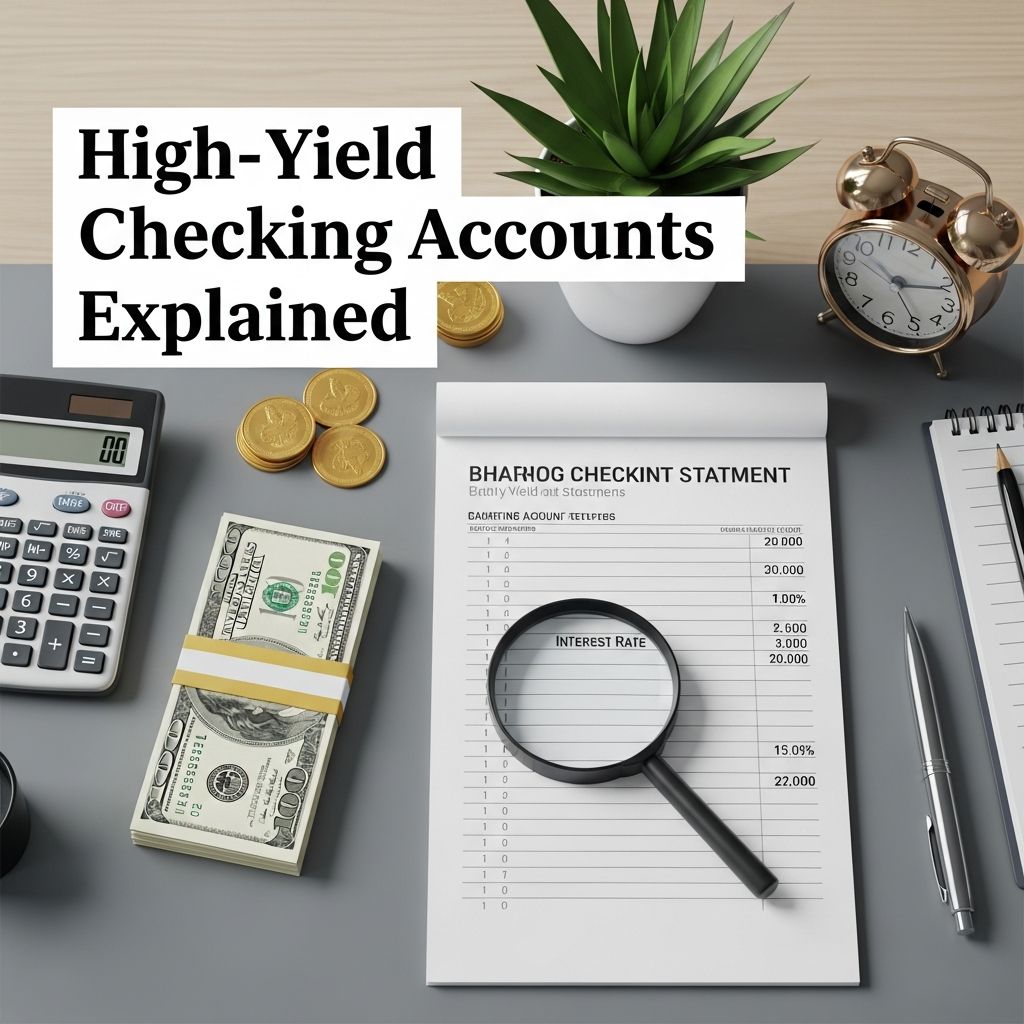
High-yield checking accounts provide the flexibility of standard checking with the added advantage of earning substantial interest on balances, often rivaling savings accounts.
Understanding the Basics of High-Yield Checking
These accounts function like everyday checking options, allowing deposits, withdrawals, bill payments, and debit card use, but they pay significantly higher annual percentage yields (APY) than traditional ones, which hover around 0.01% to 0.07%. Rates can reach 1% to 5% or more, calculated daily on closing balances.
For instance, institutions offer up to 5.00% APY on balances up to $10,000, making them ideal for those maintaining moderate daily funds. Federal protections via FDIC or NCUA insure deposits up to $250,000 per depositor.
Key Advantages for Everyday Bankers
The primary draw is turning idle checking funds into earning assets without sacrificing liquidity. On a $10,000 balance at 5% APY, you could earn $500 annually versus just $5 at 0.05% in a standard account.
- Superior Returns: Earn 25x to 100x more interest than average checking.
- Unlimited Access: No withdrawal limits like CDs or some savings accounts.
- Added Perks: Often include free debit cards, ATM reimbursements, cash back, and overdraft protection.
- Digital Convenience: Full online/mobile banking, direct deposit, and e-statements.
Credit unions frequently provide better rates and lower fees due to member-focused models.
Typical Requirements to Maximize Earnings
To qualify for top rates, most accounts demand monthly activities ensuring engagement. Failure to meet them drops APY to a base rate near zero.
| Common Requirement | Example Threshold | Purpose |
|---|---|---|
| Debit Card Purchases | 10-12 transactions | Promotes active use |
| Direct Deposits | One or more per month | Encourages payroll setup |
| Online Banking Login | One session | Boosts digital adoption |
| e-Statements | Opt-in | Reduces paper costs |
No minimum balance is often required to open or avoid fees, but higher balances yield more.
Comparing High-Yield to Traditional and Savings Accounts
| Feature | High-Yield Checking | Traditional Checking | High-Yield Savings |
|---|---|---|---|
| APY | 1%-5%+ (with qualifiers) | 0.01%-0.07% | 4%-5% (variable) |
| Access | Unlimited transactions | Unlimited | Limited withdrawals (Reg D) |
| Fees | Often none with activity | Possible monthly | Low or none |
| Best For | Active spenders/savers | Basic needs | Pure saving |
High-yield checking bridges spending and saving, outperforming traditional accounts while avoiding savings restrictions.
Potential Drawbacks and Considerations
Not ideal for everyone: requirements may feel burdensome if you’re not digitally savvy or have irregular spending. Watch for tiered rates where only portions earn high APY.
- Activity compliance needed or APY plummets.
- Limited to certain balances (e.g., up to $10k-$25k).
- Less common at big banks; seek credit unions/online options.
Overdraft fees could apply without protection; compare full terms.
How to Choose and Open the Right Account
Evaluate based on your habits: if you use debit often and get direct deposit, it’s a fit. Steps include:
- Research rates via FDIC/NCUA sites or bank comparison tools.
- Verify requirements match your routine.
- Check fees, ATM networks, and insurance.
- Open online, fund via transfer, set up direct deposit.
Monitor monthly to sustain high yields.
Real-World Earnings Scenarios
Assume $5,000 average balance:
- 5% APY: ~$250/year.
- 3% APY: ~$150/year.
- 0.05% (traditional): ~$2.50/year.
Compounding daily amplifies growth for consistent holders.
Frequently Asked Questions
What is the average APY for high-yield checking?
Rates range from 1% to 5%+, far above the 0.07% national average for interest checking.
Are high-yield checking accounts safe?
Yes, if FDIC/NCUA-insured, protecting up to $250,000.
Do I need a minimum balance?
Often no for opening/interest, but caps apply to high rates.
Can I have multiple high-yield checking accounts?
Yes, across institutions to diversify, mindful of total insured limits.
How do rates compare to CDs?
Similar APYs but with liquidity; CDs lock funds.
Strategies to Boost Your Returns
Automate direct deposits and card use; park excess funds up to cap; pair with savings for overflow. Review quarterly as rates fluctuate with Fed policy.
These accounts empower proactive users to earn passively on transactional money, enhancing overall financial efficiency.
References
- Should You Open a High-Yield Checking Account? — MIDFLORIDA Credit Union. 2023. https://www.midflorida.com/resources/insights-and-blogs/insights/checking-savings/should-you-open-a-high-yield-checking-account-in
- What Is a High Yield Checking Account? A Comprehensive Guide — ATFCU. 2024. https://www.atfcu.org/about/telco-blog/what-is-a-high-yield-checking-account-a-comprehensive-guide
- What is a High-Yield Checking Account? — Credit Union 1. 2024. https://www.creditunion1.org/learn/cu1-education/what-is-a-high-yield-checking-account/
- The Benefits of a High-Yield Checking Account — First South Financial. 2023. https://www.firstsouth.com/blog/the-benefits-of-a-high-yield-checking-account
- What Is a High-Yield Checking Account? — Experian. 2024-02-06. https://www.experian.com/blogs/ask-experian/what-is-high-yield-checking-account/
Similar Articles








Read full bio of Sneha Tete