High-Yield Bonds: 2025 Guide To Income, Risks, And Returns
Discover the potential rewards and risks of high-yield bonds, also known as junk bonds, and how they can enhance your investment portfolio.

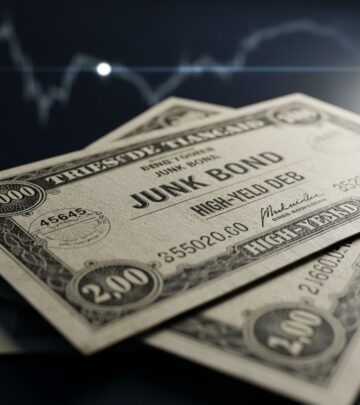
High-yield bonds, often referred to as junk bonds, represent a compelling segment of the fixed income market for investors willing to accept elevated risk in pursuit of superior returns. These bonds are issued by companies with lower credit ratings, offering higher interest rates to compensate for the increased likelihood of default. Understanding high-yield bonds is essential for diversifying portfolios beyond traditional investment-grade securities.
What Are High-Yield Bonds?
High-yield bonds are corporate debt securities rated below investment grade, typically BB+ or lower by Standard & Poor’s and Ba1 or lower by Moody’s. Unlike investment-grade bonds rated BBB- or higher, high-yield bonds come from issuers with weaker balance sheets or higher leverage, leading to higher yields to attract investors.
The term ‘junk bonds’ stems from their speculative nature, but the market has matured significantly. Issuers span industries like technology, energy, and real estate, where growth potential justifies higher borrowing costs. For instance, a young tech firm might issue high-yield bonds to fund expansion when unable to secure investment-grade status.
Key characteristics include higher coupon payments, shorter maturities, and often secured collateral in modern issuances. As of recent data, the U.S. high-yield market totals around $1.5 trillion, with BB-rated bonds comprising 50% of the index, reflecting improved quality.
Investment Grade vs. High-Yield Bonds
Investment-grade bonds offer stability with lower yields, suitable for conservative investors, while high-yield bonds promise greater income but with volatility. The dividing line is clear: bonds rated BBB- or equivalent are investment grade; those below are high yield.
| Feature | Investment Grade | High Yield |
|---|---|---|
| Credit Rating | BBB- or higher | BB+ or lower |
| Yield | Lower (e.g., 5.2% projected) | Higher (e.g., 6.1% projected) |
| Default Risk | Low | Higher (though low at 1.4% currently) |
| Duration | Longer, more rate-sensitive | Shorter, less rate-sensitive |
| Volatility | Lower | Higher |
This comparison highlights why blending the two can optimize portfolios.
Risks of High-Yield Bonds
While attractive, high-yield bonds carry substantial risks that demand careful consideration.
- Credit Risk/Default Risk: Issuers are more prone to missing payments. However, current default rates are low at 1.4%, below historical averages, supported by healthy balance sheets (leverage 4.2x, coverage 4.7x).
- Liquidity Risk: High-yield bonds trade less frequently than investment-grade, potentially leading to price swings during market stress.
- Interest Rate Risk: Shorter durations mitigate this compared to investment-grade bonds, making them less sensitive to rate hikes.
- Market Volatility: High-yield spreads widen in downturns, but they showed resilience, e.g., -2% drawdown vs. S&P 500’s -15% in recent volatility.
- Call Risk: Issuers may redeem bonds early if rates fall, limiting upside.
Investors must assess personal risk tolerance, time horizon, and diversification needs before allocating.
Benefits and Rewards of High-Yield Bonds
High-yield bonds offer several advantages that can enhance fixed income portfolios.
- Higher Yields: Mid-single-digit yields rival equities with potentially lower risk. Historical annualized returns: 6.9% vs. 5.4% for investment grade.
- Diversification: Low correlation to other fixed income sectors and equities provides portfolio balance.
- Equity-Like Returns with Priority: Similar long-term returns to stocks but with seniority in bankruptcy, improving recovery rates.
- Improved Quality: Rising stars (upgrades to IG) outnumber fallen angels; 35% secured, shorter maturities reduce risks.
- Inflation Hedge: Higher coupons help in rising rate environments.
BB-rated bonds, now dominant, have shown low defaults (<1% since 1982) and strong performance (7.1% annualized).
Historical Performance of High-Yield Bonds
Over decades, high-yield bonds have delivered robust results. From 2000-2025, a blended portfolio (80% IG, 20% HY) yielded 5.50% annualized with 5.95% volatility (Sharpe 0.92), outperforming IG-only (5.14%).
Long-term, HY returned 6.9% vs. IG’s 5.4%. Projections: HY 6.1%, IG 5.2%. During stress, HY demonstrated resilience.
Performance Table (Annualized Returns):
| Period | HY Return | IG Return | Equity Return |
|---|---|---|---|
| Long-Term Avg | 6.9% | 5.4% | Varies |
| BB-Rated | 7.1% | – | – |
| B-Rated | 6.4% | – | – |
| 2000-2025 Blend | 5.50% | 5.14% | – |
Current Market Conditions for High-Yield Bonds
The U.S. HY market has shrunk 8% to $1.5T since 2021 due to upgrades. Fundamentals are strong: low defaults, healthy metrics. Spreads are tighter but yields remain attractive. Secured debt at 35%, shorter durations enhance safety.
Who Should Invest in High-Yield Bonds?
Suitable for investors with high risk tolerance, long horizons (5+ years), and diversified portfolios. Not ideal for conservatives or those needing liquidity. Consider income needs and net worth.
- Experienced fixed income investors seeking yield enhancement.
- Those blending with IG for optimal Sharpe ratios.
- Avoid if near retirement or low risk capacity.
How to Invest in High-Yield Bonds
Options include direct purchases via broker-dealers or indirect via mutual funds/ETFs managed by professionals. Funds offer diversification, lower entry barriers.
- Direct: Buy individual bonds; requires research.
- Funds/ETFs: Broad exposure, liquidity.
- Allocation: 20% HY in fixed income for balance.
Consult advisors; understand covenants for issuers.
High-Yield Bonds in a Portfolio
A 20% HY allocation historically boosts returns, cuts volatility via blending. Reduces duration risk, adds resilience.
High-Yield Bond Funds and ETFs
Popular vehicles provide instant diversification. Actively managed funds select quality issuers; passive track indices.
Tax Considerations for High-Yield Bonds
Interest is taxed as ordinary income. Municipal high-yield options exist but are rarer. Hold in tax-advantaged accounts like IRAs for efficiency.
Future Outlook for High-Yield Bonds
With strong fundamentals and quality shifts, HY remains promising. Monitor rates, economy; potential for continued outperformance.
Frequently Asked Questions (FAQs)
What are high-yield bonds also called?
High-yield bonds are also known as junk bonds or speculative bonds due to their below-investment-grade ratings.
Are high-yield bonds safe?
No, they carry higher default and liquidity risks than investment-grade bonds, though current conditions are favorable.
How do high-yield bonds perform in recessions?
They can underperform due to credit stress but have shown resilience with low defaults and quick recoveries.
What’s a good allocation to high-yield bonds?
A 20% allocation in fixed income portfolios has historically improved risk-adjusted returns.
Can beginners invest in high-yield bonds?
Beginners should start with funds/ETFs rather than individual bonds to mitigate risks.
References
- High yield bonds: Unlocking the potential value of your fixed income portfolio — J.P. Morgan Private Bank. 2025. https://privatebank.jpmorgan.com/eur/en/insights/markets-and-investing/high-yield-bonds-unlocking-the-value-of-your-fixed-income-portfolio
- What Are High-yield Corporate Bonds? — U.S. Securities and Exchange Commission (SEC.gov). Accessed 2026. https://www.sec.gov/files/ib_high-yield.pdf
- High Yield Bonds: The Complete Issuer’s Guide – US Edition — Mayer Brown. 2023-04. https://www.mayerbrown.com/en/insights/publications/2023/04/high-yield-bonds-the-complete-issuers-guide-us-edition
- Understanding investment grade and high yield bonds — Standard Chartered. Accessed 2026. https://www.sc.com/sg/wealth/insights/understanding-investment-grade-and-high-yield-bonds/
- Understanding High Yield Bonds — PIMCO. Accessed 2026. https://www.pimco.com/us/en/resources/education/understanding-high-yield-bonds
- High-yield Corporate Bonds — Investor.gov (SEC). Accessed 2026. https://www.investor.gov/introduction-investing/investing-basics/investment-products/bonds-or-fixed-income-products/high
Similar Articles








Read full bio of Sneha Tete