High Yield Bonds: Definition, Risks, and Returns
Understanding high-yield bonds: Higher returns come with greater risks and default potential.

What Are High Yield Bonds?
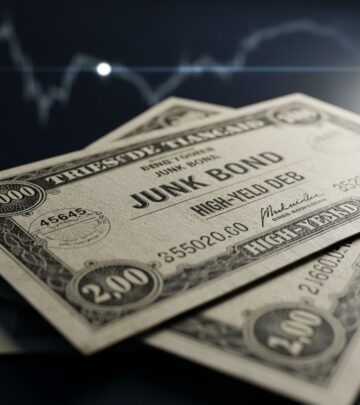
High-yield bonds, commonly referred to as “junk bonds,” are debt securities issued by corporations with lower credit ratings than investment-grade bonds. These bonds offer significantly higher interest rates to compensate investors for the elevated risk of default. Unlike investment-grade bonds, which are issued by financially stable companies with strong credit ratings, high-yield bonds are typically issued by companies with weaker financial positions, higher leverage, or greater business uncertainty.
The term “junk bond” emerged during the 1980s when these securities gained prominence in corporate takeovers and leveraged buyouts. Despite the pejorative connotation, high-yield bonds play a legitimate role in the financial markets and investment portfolios, offering opportunities for investors willing to accept greater risk in exchange for higher potential returns.
Understanding Bond Ratings and Credit Quality
Bond ratings are assigned by credit rating agencies such as Moody’s, Standard & Poor’s (S&P), and Fitch. These ratings serve as indicators of creditworthiness and default risk. The rating scale typically ranges from AAA (highest quality) to D (in default).
Investment-Grade vs. High-Yield Ratings
- Investment-Grade Bonds: Rated BBB- or higher by S&P, or Baa3 or higher by Moody’s. These bonds carry lower default risk and offer lower yields.
- High-Yield Bonds: Rated BB+ or lower by S&P, or Ba1 or lower by Moody’s. These bonds carry significantly higher default risk but offer substantially higher yields.
The boundary between investment-grade and high-yield bonds is crucial for institutional investors, as many pension funds and insurance companies are restricted by their charters from investing in bonds below the investment-grade threshold. This regulatory limitation can create significant price disparities between bonds on either side of the rating boundary.
Characteristics of High-Yield Bonds
Higher Coupon Rates
High-yield bonds offer significantly higher coupon rates compared to investment-grade bonds. The spread, or difference in yield between high-yield bonds and government securities, typically ranges from 3% to 6% or more, depending on market conditions and specific company fundamentals. This higher coupon compensates investors for accepting greater credit risk.
Lower Credit Quality
Issuers of high-yield bonds often have higher debt levels relative to earnings, weaker competitive positions, or operate in cyclical industries. These companies may have limited operating history or face significant business challenges that increase the probability of default.
Increased Volatility
High-yield bond prices tend to be more volatile than investment-grade bonds, particularly during periods of economic uncertainty or market stress. When investor sentiment turns negative, high-yield bond prices can decline sharply, reflecting increased default concerns.
Call Risk
Many high-yield bonds include call provisions that allow issuers to redeem the bonds before maturity. This creates uncertainty for investors, as bonds are typically called when interest rates decline, forcing investors to reinvest proceeds at lower rates.
Advantages of High-Yield Bonds
Higher Income Generation
The most obvious advantage is the higher coupon payments. For income-focused investors, this can provide substantially greater cash flow compared to investment-grade alternatives. In a low-interest-rate environment, high-yield bonds may be necessary to achieve desired income levels.
Diversification Benefits
When added to a portfolio of stocks and investment-grade bonds, high-yield bonds can provide diversification benefits. Their price movements often differ from other asset classes, potentially reducing overall portfolio volatility.
Capital Appreciation Potential
Beyond coupon income, investors can benefit from price appreciation if the issuer’s credit quality improves. If a company successfully restructures its operations or improves its financial position, its bonds may be upgraded by rating agencies, driving up prices.
Economic Growth Benefits
During periods of strong economic expansion, high-yield bonds typically perform well as default rates remain low and companies improve their financial positions. This procyclical nature can amplify returns during bull markets.
Risks and Disadvantages
Default Risk
The most significant risk is that the issuer may fail to make interest payments or repay principal at maturity. High-yield bonds have historically experienced default rates significantly higher than investment-grade bonds. During economic recessions or sector-specific downturns, default rates can spike dramatically.
Market Risk and Volatility
High-yield bond prices are sensitive to changes in market interest rates and economic conditions. In periods of market stress, liquidity can evaporate quickly, making it difficult to sell bonds at fair prices. The bid-ask spreads can widen substantially, increasing transaction costs.
Interest Rate Risk
Like all bonds, high-yield bonds are subject to interest rate risk. When interest rates rise, bond prices fall, and the longer the maturity, the greater the price decline. However, high-yield bonds exhibit less interest rate sensitivity than government bonds due to their lower duration.
Liquidity Risk
While actively traded high-yield bonds can be relatively liquid, less popular issues may be difficult to sell without accepting significant discounts. In market stress periods, even popular high-yield bonds can experience liquidity challenges.
Subordination Risk
High-yield bonds are often junior to other debt obligations. In bankruptcy or restructuring, high-yield bondholders may recover only a fraction of their investment after senior creditors are paid.
High-Yield Bond Market Dynamics
Spreads and Yield Relationships
High-yield spreads fluctuate based on market conditions, risk appetite, and economic expectations. During risk-on periods, spreads narrow as investors accept lower premiums for taking on risk. During risk-off periods, spreads widen dramatically as investors demand higher compensation for increased uncertainty.
Economic Cycle Sensitivity
High-yield bonds are cyclical, performing best during economic expansions and worst during recessions. Understanding where we are in the economic cycle is crucial for high-yield investing. At the peak of the cycle, default rates are typically lowest and prices highest. As the economy weakens, default rates rise and prices fall.
Industry and Sector Variations
High-yield bonds are concentrated in certain industries, particularly cyclical sectors such as energy, telecommunications, retail, and industrials. Economic shocks specific to these sectors can have outsized impacts on high-yield performance.
Investment Strategies in High-Yield Bonds
Active Management Approach
Many investors employ active management strategies, selecting individual high-yield bonds based on company analysis and credit assessment. This approach requires significant expertise but can generate returns above market benchmarks by identifying mispriced securities or avoiding defaults.
Index and ETF Approach
Passive investors can gain exposure to high-yield bonds through index mutual funds or exchange-traded funds (ETFs). These vehicles provide broad diversification and lower fees but offer no ability to avoid underperforming issuers. The iShares iBoxx High Yield Corporate Bond ETF (HYG) and SPDR Bloomberg High Yield Bond ETF (JNK) are popular options.
Ladder Strategy
Bond laddering involves purchasing bonds with different maturity dates. This strategy can reduce reinvestment risk and provide predictable cash flows while allowing participation in potential price appreciation.
Blended Portfolio Approach
Many investors combine high-yield bonds with investment-grade bonds and other asset classes to achieve target risk and return objectives while managing volatility.
Comparing High-Yield Bonds to Other Investments
| Investment Type | Yield | Risk Level | Liquidity | Best For |
|---|---|---|---|---|
| U.S. Treasuries | Low (2-4%) | Very Low | Very High | Capital Preservation |
| Investment-Grade Bonds | Moderate (3-5%) | Low | High | Conservative Income |
| High-Yield Bonds | High (5-8%+) | High | Moderate | Income and Growth |
| Dividend Stocks | Moderate (2-4%) | Moderate-High | High | Growth and Income |
| Emerging Market Bonds | High (4-7%+) | High | Moderate-Low | High-Return Portfolios |
Frequently Asked Questions About High-Yield Bonds
Q: What is the difference between high-yield bonds and junk bonds?
A: These terms are used interchangeably. “High-yield bond” is the professional designation, while “junk bond” is the informal term. Both refer to bonds rated below investment grade with higher default risk and higher yields.
Q: How can I invest in high-yield bonds?
A: You can invest in high-yield bonds through individual bond purchases, mutual funds, ETFs, or through your brokerage account. ETFs offer diversification and lower minimum investments compared to individual bond purchases.
Q: What is a reasonable allocation to high-yield bonds in a portfolio?
A: This depends on your risk tolerance, time horizon, and income needs. Conservative investors might allocate 5-10% to high-yield bonds, while aggressive investors might allocate 20-30%. Consult a financial advisor for personalized guidance.
Q: Do high-yield bonds always perform poorly during recessions?
A: Yes, historically, high-yield bonds experience significant losses during recessions as default rates rise and credit spreads widen. This is why they are considered cyclical investments.
Q: Are high-yield bonds suitable for retirees?
A: Most financial advisors recommend limiting high-yield bond exposure for retirees due to their volatility and default risk. Conservative income-focused portfolios typically emphasize investment-grade bonds and dividend stocks instead.
Q: What metrics should I examine when evaluating high-yield bonds?
A: Key metrics include debt-to-equity ratio, interest coverage ratio, cash flow analysis, credit rating, yield spread, time to maturity, and industry dynamics. Understanding the issuer’s business model and competitive position is also essential.
References
- Understanding Bond Ratings and Credit Quality — Standard & Poor’s Global Ratings. 2024. https://www.spglobal.com/ratings/en/rating-definitions-documents
- High-Yield Bond Market Characteristics and Risk Analysis — Moody’s Investors Service. 2024. https://www.moodys.com/research
- Default and Recovery Rates: 1983-2023 — S&P Global Market Intelligence. 2024. https://www.spglobal.com/marketintelligence
- Bond Market Association: Fixed Income Investment Guidelines — Securities Industry and Financial Markets Association (SIFMA). 2024. https://www.sifma.org
- The Role of High-Yield Bonds in Portfolio Diversification — CFA Institute. 2024. https://www.cfainstitute.org
Similar Articles








Read full bio of Sneha Tete